 Anacortes Siding
 Roofing in Burlington's Wet, Mossy Corner of Skagit County
Burlington sits in the Skagit River valley, a few miles inland from Anacortes and the salt water of Fidalgo Bay and the Sound. That inland location doesn't mean the roof gets an easier ride. The same weather systems that push salt-laden marine air across Anacortes still move through Burlington, and the valley adds its own problems: heavy tree cover, low winter sun angles, and long stretches of damp, still air that never quite dry a roof out between storms. Add up driving rain off the water, road and farmland moisture rising off the valley floor, and a moss season that can run eight months or more, and you get a roofing environment that's tougher on shingles, underlayment, and flashing than most manufacturers assume when they write their warranty fine print.
We replace roofs across Skagit County, and Burlington homes show a fairly consistent pattern of wear: moss and algae staining well before the shingles themselves are worn out, soft or delaminating decking under valleys and north-facing slopes, and rusted or failing flashing around chimneys and skylights years ahead of the shingle field. A roof replacement done right here has to plan for that pattern from the start, not just swap old shingles for new ones.
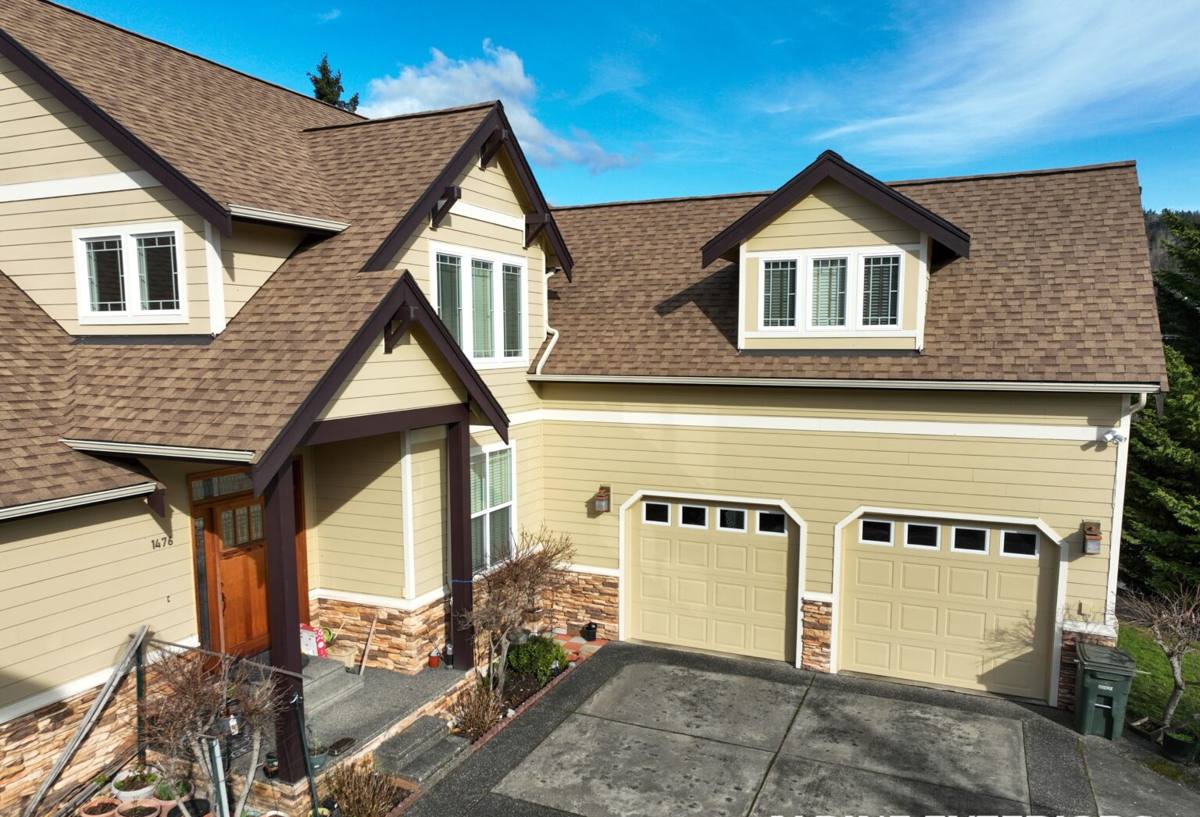
Signs a Burlington Roof Needs Replacing, Not Just Repairing
What you can see from the ground or attic
- Granules collecting in gutters or downspouts, or shingles that look bald and gray in patches
- Moss growth thick enough to hold water against the shingle surface, especially on north-facing slopes and under tree cover
- Curling, cupping, or cracked shingles, particularly on slopes that get direct afternoon sun
- Daylight visible through the roof deck from inside the attic, or stains on attic insulation after storms
- Sagging in the roofline, which usually means deck or rafter damage, not just a worn shingle layer
Repair versus replacement
Not every stained or aging roof needs full replacement. A roof with isolated flashing failure, a handful of wind-lifted shingles, or moss that hasn't yet compromised the shingle mat can often be repaired and cleaned instead. We'll say so plainly if that's the honest call. Replacement makes sense once the shingles are past their service life across most of the roof, the decking has soft spots in more than one area, or repeated patch repairs are starting to cost more, over a few years, than one properly done replacement.
What a Correct Roof Replacement Involves
Tear-off and deck inspection
We remove the old roofing down to the deck rather than layering over it. That's the only way to actually see what's underneath — soft plywood, rot around old flashing penetrations, or ventilation gaps that have been hidden for years. Any damaged decking gets replaced before anything new goes down; nailing new shingles over a compromised deck is how a roof fails early, and it's not something we'll do quietly and hope nobody notices.
Underlayment and water protection
Given how much moisture this area sees, underlayment choice matters more here than in drier climates. We use synthetic underlayment as standard, with self-adhering ice-and-water membrane at vulnerable points — eaves, valleys, around chimneys and skylights, and anywhere roof planes meet a wall. That membrane is the roof's last line of defense against wind-driven rain that gets under the shingle edge, which is a real risk during the region's winter storm pattern.
Flashing and penetrations
Flashing fails long before shingles do, and it's the single most common source of leaks we find on Burlington roofs. New flashing goes in at every chimney, vent pipe, skylight, and wall intersection, formed and lapped correctly rather than caulked over old metal — caulk is a temporary fix, not a flashing method.
Ventilation
A roof deck that can't breathe holds moisture, which feeds moss, rots sheathing from underneath, and shortens shingle life regardless of the product installed. We check intake at the eaves and exhaust at the ridge and correct the balance where it's missing, which is very common in older Burlington homes that were built before ventilation codes tightened up.
Choosing Materials for This Climate
There's no single "right" roofing material for every home, but some perform noticeably better than others under Skagit County's rain, moss, and gray-sky humidity. Here's how the common options actually compare in this climate, not just on a spec sheet.
| Material | Typical Lifespan Here | Moss & Moisture Behavior | Honest Trade-Offs |
|---|---|---|---|
| Architectural asphalt shingle | 20–30 years | Good with algae-resistant granules; still needs periodic moss removal on shaded slopes | Best value, wide color range, easiest to repair in sections later |
| 3-tab asphalt shingle | 15–20 years | More prone to moss holding moisture against a flatter profile | Lower upfront cost, but shorter life in this climate often narrows the savings over time |
| Metal (standing seam or panel) | 40–50+ years | Sheds water and moss far better than any shingle; minimal debris buildup | Higher upfront cost, noise and expansion noise considerations, requires an experienced installer |
| Composite/synthetic shake | 30–50 years | Good moisture resistance; doesn't absorb water like wood shake does | Higher material cost than asphalt, appearance varies by manufacturer |
We don't install traditional cedar shake as a standard offering. It can look great new, but wood shake absorbs moisture, and in a climate with this much sustained dampness and shade, that means faster moss colonization, more frequent maintenance, and a higher long-term risk of rot than most homeowners expect going in. If a homeowner wants that look, composite shake gets close to the appearance without that moisture liability, and we're happy to walk through the difference in person.
Moss and Algae: The Part of the Job Homeowners Don't See
Moss isn't just cosmetic. Once it establishes on a roof, its root structure lifts shingle edges and holds water against the mat, which accelerates granule loss and, eventually, leaks. A replacement is the right time to break that cycle: proper ventilation, algae-resistant shingle granules, and — where a roof has heavy tree overhang — a conversation about trimming back branches that keep the roof shaded and damp longer than the rest of the neighborhood. None of that is glamorous, but it's the difference between a roof that looks new for two years and one that stays clean for most of its service life.
Our Replacement Process, Start to Finish
- On-site inspection and estimate. We look at the whole roof system — deck, ventilation, flashing, gutters — not just the shingle surface, and give a written estimate with no pressure to sign on the spot.
- Material selection. We walk through options and honest trade-offs for the specific slope, sun exposure, and tree cover on that particular home.
- Scheduling around weather. Roof replacement needs a dry work window, so we plan around the forecast rather than fighting it, which matters more here than in drier parts of the state.
- Tear-off, deck repair, and dry-in. Old roofing comes off, deck damage gets fixed, and the roof is protected from weather the same day whenever possible.
- Installation. Underlayment, flashing, ventilation correction, and the new roofing system go in to manufacturer specification.
- Final walk-through. We inspect the finished roof with the homeowner, clean up the site fully, and go over warranty paperwork before we consider the job done.
Why Hiring a Crew That Already Works Burlington Matters
Roofing crews that only pass through occasionally tend to treat every job the same way regardless of climate. A crew that regularly works Burlington and the wider Anacortes area already knows which slopes on which home orientations grow moss fastest, which older neighborhoods commonly have under-ventilated attics, and how to sequence a tear-off around a weather pattern that can turn in a few hours. That local pattern recognition shows up in fewer surprises mid-project and a roof that's built for the conditions it will actually face, not a generic install.
Local presence also matters after the job is done. Warranty callbacks, storm damage follow-up, and simple questions a year or two down the road are easier to handle with a crew that's still working in the area, not one that has moved on to a different region entirely.
What Affects the Cost of a Burlington Roof Replacement
Every roof is different, and we won't quote a number without seeing the actual roof, but the factors below are what consistently move the price up or down. As a very rough range, most full replacements on a typical single-family home land somewhere between $10,000 and $30,000, with steep pitches, complex rooflines, and premium materials pushing toward the higher end.
- Roof size and pitch — steeper roofs take longer and require more safety equipment
- Number of layers to remove — tearing off two layers of old roofing costs more than one
- Deck condition — rot or soft sheathing discovered during tear-off adds material and labor
- Roof complexity — valleys, dormers, skylights, and multiple chimneys all add flashing work
- Material choice — asphalt, metal, and composite carry different upfront costs, as shown above
- Ventilation corrections — adding intake or exhaust venting where none currently exists
- Access — steep sites, limited driveway access, or tall trees can affect equipment and labor time
If your Burlington roof is showing moss buildup, granule loss, or you're just not sure whether repair or replacement is the right call, we're happy to take a look. Estimates are free and there's no pressure to commit — just a straight assessment of what your roof actually needs. The contact form below is the fastest way to get started.