 Anacortes Siding
 Siding on March Point: A Different Kind of Exposure
March Point sits out on its own peninsula between Fidalgo Bay and Padilla Bay, which means homes here take weather from more directions than a typical inland Anacortes lot. Wind off the water carries salt and moisture onto siding, trim, and window frames almost year-round, and there's very little in the way of tall timber or ridgelines to break it up. That combination of open exposure and marine air is the single biggest factor we weigh when we look at a siding job out here.
It's not dramatic weather, most of the time. It's steady, low-grade weather that never really stops. Rain that comes in sideways during a fall blow. Fog and dew that sit on north-facing walls into the late morning. A moss and algae season that, in Skagit County's cool, wet climate, can run eight or nine months out of the year on shaded or damp elevations. None of that is unusual for this part of Washington, but a peninsula lot with open water exposure gets a heavier dose of it than a home tucked into town.
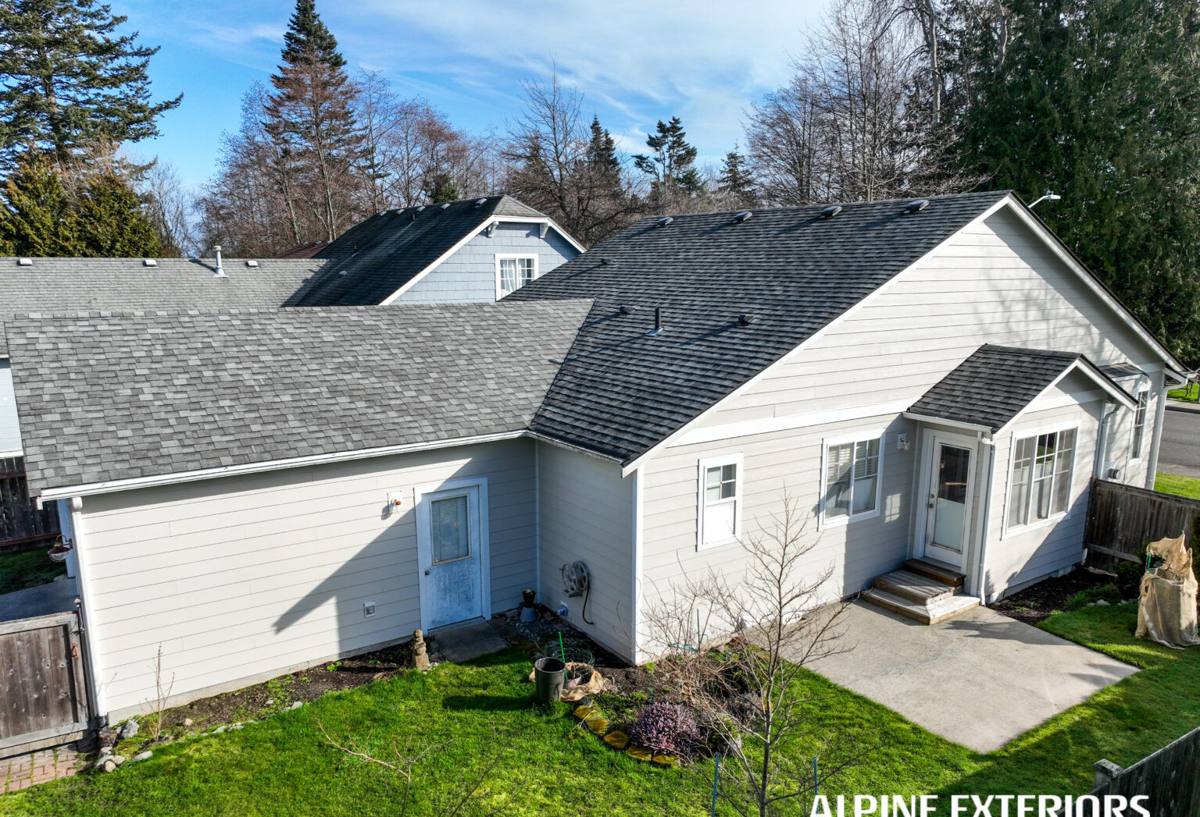
What We See on March Point Homes
When we walk a property out here, a few patterns show up more often than they do elsewhere in our service area:
- Salt-influenced corrosion on fasteners, flashing, and any exposed metal trim, especially on the water-facing side of the house.
- Moss and algae staining on north and west walls that stay damp longer after a storm passes through.
- Paint and caulk failure around windows and butt joints, driven by repeated wet-dry cycling rather than any single big storm.
- Wind-driven rain intrusion at poorly flashed penetrations — vents, hose bibs, light fixtures — on the more exposed elevations.
- Older wood or engineered wood siding that's swelling, delaminating at the edges, or showing soft spots near the bottom courses.
None of this means March Point is a hard place to keep a house looking good. It means the exterior has to be chosen and installed with that exposure in mind, rather than treated the same as a sheltered lot a few miles inland.
Why We Only Install James Hardie Fiber Cement
We made a decision as a company to install James Hardie fiber cement siding exclusively — no vinyl, no LP SmartSide, no Cemplank or Allura, no primed spruce or cedar. On a peninsula lot like March Point, that decision matters more than it might on a sheltered inland property.
Fiber cement is non-combustible, dimensionally stable, and doesn't absorb and swell with moisture the way wood-based or engineered-wood products can. Hardie's HZ5 product line is specifically engineered for wetter, harsher climates, and the ColorPlus factory finish is baked on under controlled conditions rather than field-applied paint that has to cure in whatever weather shows up that week — a real advantage when you're trying to get a clean paint job on a house that sees fog most mornings. It also carries a strong transferable warranty, which matters on a coastal-influenced property where owners want assurance the exterior will hold up over decades, not just survive the first few winters.
We're not going to tell you that other siding products are junk — vinyl, LP SmartSide, and engineered wood all have a place, and plenty of homes wear them fine in the right conditions. What we will tell you is that on an exposed, salt-air, high-moisture site like March Point, the trade-offs of those products — moisture sensitivity, edge swelling, field-applied paint that has to compete with damp weather, shorter practical service life — are trade-offs we're not willing to install and then stand behind. James Hardie is the product we're comfortable putting our name on for this area.
How Hardie Handles This Climate
| Concern on March Point | How Hardie fiber cement responds |
|---|---|
| Wind-driven rain and humidity | Dimensionally stable, doesn't swell or warp with moisture cycling |
| Salt air corrosion | Paired with stainless or coated fasteners and proper flashing details |
| Moss and algae growth | Factory ColorPlus finish resists staining better than field-painted wood surfaces |
| UV and weathering | Baked-on factory finish holds color longer than most site-applied paint systems |
| Fire exposure risk | Non-combustible material composition |
Our Process for a March Point Siding Job
Assessment
We start by walking every elevation, not just the ones visible from the road. On a peninsula lot the water-facing and north-facing walls usually tell a different story than the sheltered side, so we look at fastener condition, flashing at windows and penetrations, the state of any existing paint or caulk, and signs of moisture behind the current siding wherever we can check it.
Prep and Water Management
Before any new siding goes up, we address the water management layer — house wrap, flashing at windows, doors, and penetrations, and drainage behind the cladding. This is the part of a siding job that doesn't show once it's finished, but it's the part that determines whether the house stays dry for the next thirty years or not. On a site with this much wind-driven rain exposure, we don't cut corners here.
Installation
We install to James Hardie's published specifications — correct fastener type and spacing, proper clearances at grade and roof lines, and joint treatment that's built for a wet climate rather than a dry one. Installation quality is what actually determines whether fiber cement performs the way it's designed to; a good product installed wrong will fail early regardless of the warranty on the box.
Finish and Walkthrough
Once siding, trim, and any flashing details are complete, we walk the job with the homeowner, point out anything worth watching over the following year, and go over basic care specific to a marine-influenced property.
Beyond Siding: The Same Exposure Hits the Whole Exterior
We don't just do siding. Roofing, windows, and decks on a March Point property face the same salt air, wind, and moss pressure that the walls do, and treating the exterior as one connected system tends to get better long-term results than patching each piece separately.
- Roofing: moss and algae growth on roofs in this climate is constant, and a roof that's failing quietly can undermine even brand-new siding by driving water into the wall assembly from above.
- Windows: window flashing and siding work have to be coordinated, since a poorly integrated window is one of the most common sources of hidden water intrusion on exposed lots.
- Decks: outdoor structures on a peninsula lot take direct sun, salt air, and standing moisture, and they're worth evaluating at the same time as the siding since they often share ledger and flashing details with the house.
What Drives Cost on a March Point Job
| Factor | Why it matters here |
|---|---|
| Existing siding condition | Hidden moisture damage behind old wood or engineered siding adds repair scope |
| Water management upgrades | House wrap and flashing improvements are often warranted given wind-driven rain exposure |
| Home size and elevation count | More exterior wall area and more penetrations mean more labor and material |
| Trim and detail work | Corner boards, window casing, and fascia detailing add time regardless of siding brand |
| Access and site conditions | Peninsula lots with limited staging area can affect scaffolding and material handling |
We don't quote exact numbers without seeing the property — every one of these variables changes the scope — but we'll walk you through what's driving the estimate line by line so there are no surprises.
Why a Local Crew Matters on a Site Like This
A crew that mostly works drier, more sheltered lots inland doesn't always think about wind-driven rain and salt exposure the same way. Working regularly in Skagit County, including exposed water-facing properties, means we default to the flashing details, fastener choices, and joint treatments that hold up out here, rather than treating every job the same regardless of site conditions. It also means we're a short drive away if something needs a look after the job is done — not a crew that has to be scheduled weeks out because the site is out of their normal range.
Simple Maintenance for a March Point Exterior
- Rinse siding and trim once or twice a year to knock down salt residue and slow moss growth, especially on north and water-facing walls.
- Keep gutters clear so water isn't overflowing directly onto siding or pooling near the foundation.
- Trim back vegetation that's shading walls and keeping them damp longer than necessary.
- Check caulking around windows and trim annually — it's a small job that prevents a much bigger one.
- Have the roof looked at for moss buildup before it has a chance to hold moisture against the surface.
If you're on March Point and dealing with tired siding, roofing, windows, or a deck that's showing its age from years of salt air and rain, we're happy to come take a look. The estimate is free, there's no pressure, and we'll give you a straight read on what your exterior actually needs.