 Anacortes Siding
 Siding in Cap Sante: A Different Set of Conditions
Cap Sante sits right up against the water — the marina, the boat haven, and the bluff overlooking Guemes Channel all put homes in this part of Anacortes in near-constant contact with marine air. That's a big part of what makes this neighborhood beautiful, and it's also exactly why siding here ages differently than it does a few miles inland in Skagit County. Salt-laden air, wind-driven rain coming straight off the water, and a long, wet moss season each put their own kind of stress on an exterior. Siding that would hold up fine in a drier, more sheltered spot can start showing problems years ahead of schedule on a Cap Sante home.
Salt Air and Marine Exposure
Airborne salt doesn't just affect metal fasteners and hardware — it accelerates the breakdown of paint films, causes premature chalking and fading, and works its way into any seam or fastener point that isn't properly sealed. Homes closer to the marina and the open water tend to see faster finish degradation on lower-quality siding than homes set back or shielded by terrain.
Wind-Driven Rain
Cap Sante's exposure to Guemes Channel means rain rarely falls straight down here — it comes in sideways, driven by wind off the water. That matters because most siding failures aren't caused by water sitting on a surface, they're caused by water being forced up under laps, around trim, and into fastener penetrations. A siding system and installation method that isn't built to handle wind-driven rain will eventually let moisture behind the cladding, and once that happens, the sheathing and framing underneath are at risk long before anyone notices a problem from the street.
Moss, Mildew, and a Long Wet Season
Skagit County's marine climate means extended stretches of damp, overcast weather, and homes with any shade or north-facing exposure are prone to moss and mildew growth on siding, trim, and roofing. Organic growth holds moisture against the surface longer, which is a problem for wood-based products in particular, and it's a maintenance headache no matter what's on the wall.
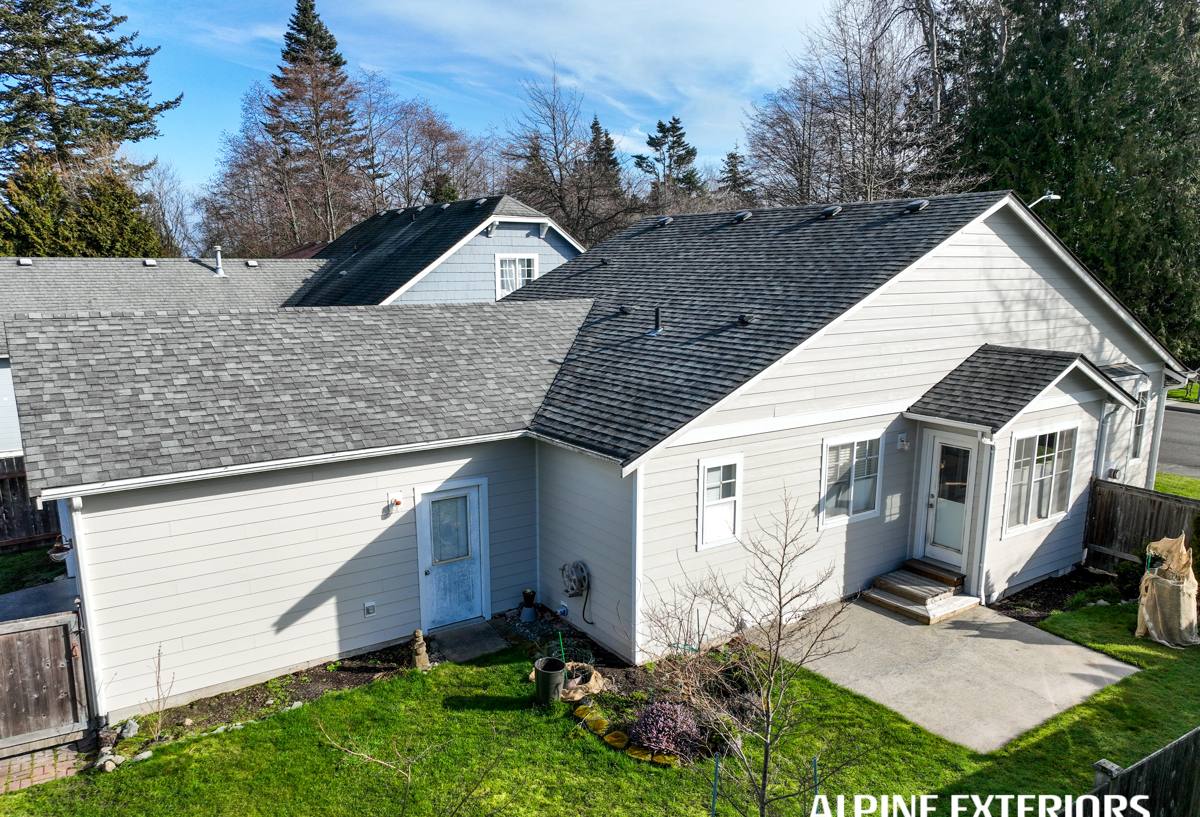
Why the Material Choice Matters More Here Than Elsewhere
In a drier climate, the gap between a good siding product and a mediocre one might take a decade or more to show up. In a location like Cap Sante, that gap shows up faster — often in the finish first, then in the joints and seams, and eventually in the substrate if moisture gets behind the cladding. That's the practical reason we standardized on one product rather than offering a menu of options.
| Material | Behavior in Salt Air / High Moisture | Long-Term Concern in This Climate |
|---|---|---|
| James Hardie fiber cement | Non-combustible, dimensionally stable, factory-cured finish resists moisture-driven failure | Correct installation and flashing still required, but the material itself doesn't rot, swell, or feed organic growth |
| Vinyl siding | Won't rot, but expands/contracts with temperature and can warp or crack in wind-driven conditions | Seams and J-channels are common points for wind-driven rain intrusion; color fades over time and can't be repainted easily |
| LP SmartSide / engineered wood | Wood-based core is vulnerable if the factory edge seal is compromised or cut edges aren't field-treated | Sustained damp exposure and shaded, moss-prone conditions raise the stakes if moisture reaches the substrate |
| Cedar / primed spruce | Natural material, absorbs and releases moisture constantly; needs ongoing finish maintenance | Salt air and moss season shorten the interval between refinishing; highest long-term maintenance burden |
Why We Install Only James Hardie Fiber Cement
We made a deliberate decision to install one siding system rather than several, and it comes down to what actually holds up in this part of Washington. James Hardie fiber cement is non-combustible, doesn't expand and contract the way vinyl does, and doesn't have a wood-fiber core that can be compromised by long-term moisture exposure the way engineered wood products can. Hardie's HZ5 product line is engineered specifically for climates with significant moisture exposure — which describes Cap Sante about as well as any neighborhood in Anacortes.
The ColorPlus finish is baked on at the factory under controlled conditions, rather than field-applied, which gives it better fade and wear resistance than a job-site paint job — a meaningful advantage when the finish is fighting salt air and UV reflection off the water. Hardie also backs the product with a strong transferable warranty, which matters to buyers if the home is ever sold. We're not going to pretend other products don't have their place in the industry — LP SmartSide and vinyl both have legitimate uses and plenty of installers who stand behind them. We simply concluded that for the homes we work on, in this climate, fiber cement is the product we're willing to put our name behind.
What Correct Installation Looks Like on a Home Like This
Moisture Management Behind the Cladding
The siding itself is only part of the system. A proper installation includes a weather-resistant barrier and, where appropriate, a rainscreen gap that lets any moisture that does get past the cladding drain and dry out instead of sitting against the sheathing. This is especially relevant on a bluff exposed to wind-driven rain — the goal isn't just to keep water out, it's to manage the water that inevitably finds its way to the wall.
Flashing and Fastening
Every window, door, and trim transition is a potential entry point. Flashing details at these locations, along with correct fastener spacing and embedment per Hardie's installation specifications, are what actually determine whether a siding job performs for decades or starts failing at the seams within a few years. This is where a lot of installation quality gets lost — the siding looks fine going up, but the details that matter are the ones you can't see once the job is finished.
Caulking and Sealant at the Right Points — Not Everywhere
Over-caulking is a common mistake that traps moisture rather than letting it escape. Correct Hardie installation uses sealant at specific points and relies on lap geometry and drainage elsewhere, rather than sealing every seam shut.
Beyond Siding: The Whole Exterior Envelope
Siding doesn't work in isolation — it's one part of a home's exterior envelope, alongside the roof, windows, and any attached structures like decks. We handle all four because they interact with each other. A roof with a compromised drip edge can send water straight down a wall assembly. A window that isn't flashed correctly will undermine even a well-installed siding job around it. A deck ledger board attached to the house is a common site of hidden rot if the siding and flashing around it weren't detailed correctly. Treating these as one connected system, rather than four separate trades, is part of how problems get caught before they become expensive.
Signs Your Current Siding Is Losing the Fight
Homes in Cap Sante and similar waterfront-adjacent parts of Anacortes tend to show wear in fairly predictable ways. Worth checking for:
- Soft or spongy spots when you press on siding near the bottom courses or around windows
- Persistent moss or dark streaking on north- or shade-facing walls that keeps returning after cleaning
- Visible gaps, warping, or buckling at seams and corners
- Paint or finish that's chalking, peeling, or fading unevenly, especially on sides facing the water
- Any staining on interior walls or ceilings near exterior corners, which can indicate moisture already behind the cladding
- Caulk that's cracked, shrunk, or pulled away from joints
None of these are emergencies by themselves, but they're worth having looked at before they turn into sheathing or framing repairs.
Maintenance in a Salt-Air, Moss-Prone Climate
Even a well-installed fiber cement exterior benefits from periodic attention in this climate. Rinsing accumulated salt residue off exterior surfaces, keeping gutters and downspouts clear so water isn't dumping against the wall, and trimming back vegetation that keeps a wall shaded and damp all extend the life of any siding system. Fiber cement doesn't demand the repainting cycle that cedar or primed wood does, but it's not maintenance-free — periodic inspection of caulking, trim, and flashing points is still worthwhile, especially after a rough winter storm season off the water.
Why a Local Crew Matters
Cap Sante's exposure isn't identical to a sheltered inland lot elsewhere in Skagit County, and it isn't identical to a similarly waterfront property somewhere with a different wind pattern or rainfall total. A crew that works in Anacortes regularly knows which walls in this neighborhood take the brunt of the weather, how the wind actually moves off the channel, and where moss and moisture problems tend to show up first. That local pattern recognition shapes decisions on flashing details, rainscreen use, and where extra attention is warranted — decisions that are harder to make well from a general specification sheet alone.
If you're weighing a siding project for a home in Cap Sante — or want a second opinion on roofing, windows, or a deck while we're looking at the exterior — we're happy to come take a look. The estimate is free, there's no pressure, and you'll get a straight answer about what your home actually needs.