 Anacortes Siding
 Windows Near Cap Sante Take a Different Kind of Beating
Homes close to Cap Sante and the Anacortes waterfront sit in a microclimate that's harder on windows than most inland Skagit County neighborhoods. The combination of salt-laden marine air, wind-driven rain off Fidalgo Bay, and long stretches of gray, damp weather works on window assemblies year-round, not just during winter storms. It shows up as pitted or sticky hardware, fogged glass units, soft trim, and frames that swell or stick long before a homeowner expects them to.
Custom windows in this setting aren't a luxury upgrade — they're often the correct fix for a house that was originally built with standard, off-the-shelf units that never quite matched its rough openings, its orientation to the water, or the exposure it actually gets. When we talk about "custom" here, we mean windows sized, built, and installed to fit a specific opening and a specific exposure correctly, not a one-size-fits-all product forced into place.
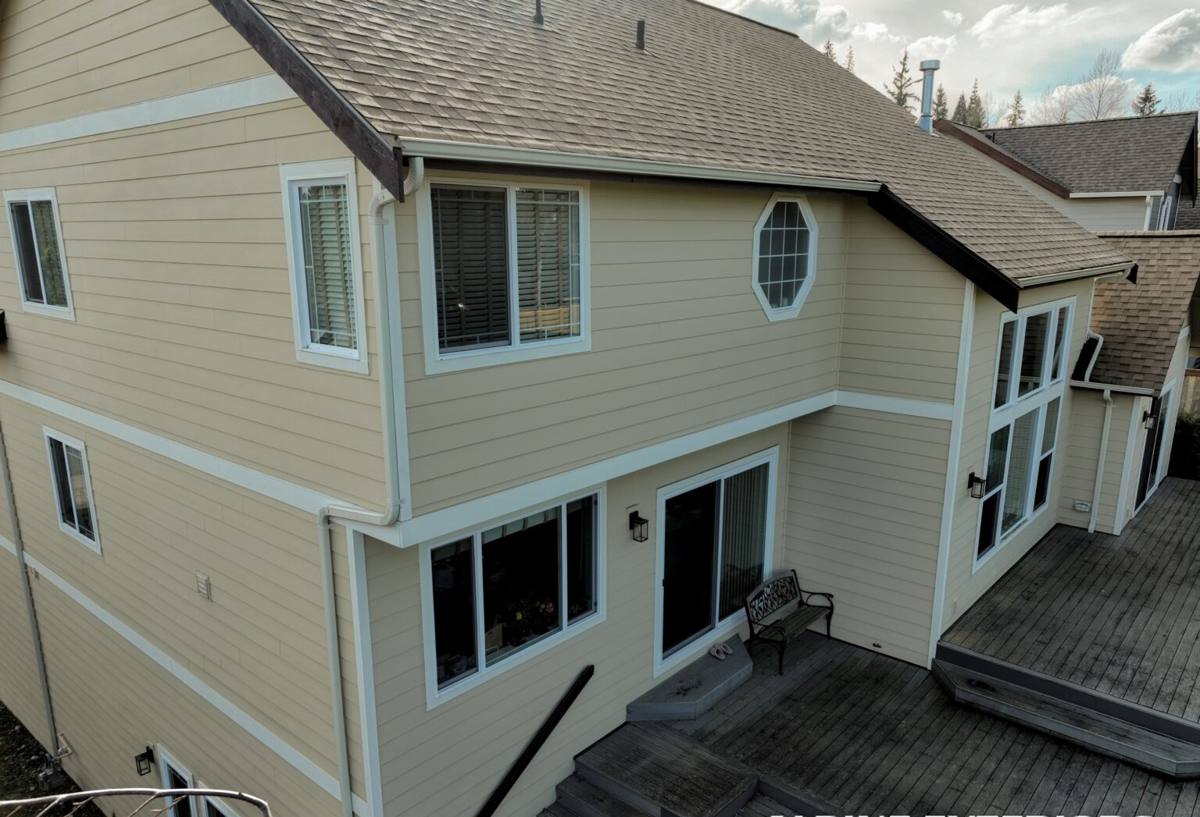
What the Marine Climate Actually Does to a Window
Salt Air and Metal Components
Salt air accelerates corrosion on anything metal — window locks, hinges, screen frames, and especially lower-cost aluminum or steel components. Once hardware starts to corrode, seals around it are compromised too, which is how small maintenance problems turn into moisture problems. Homes with a direct or partial view toward the water tend to see this happen faster than homes set back a few blocks.
Wind-Driven Rain
Anacortes doesn't get the heaviest rainfall totals in Western Washington, but wind off the water pushes rain sideways into wall assemblies rather than letting it run straight down. That means window flashing, sill pans, and sealant joints matter more here than they would on a calmer, more sheltered lot. A window that would perform fine in a low-exposure location can leak on a Cap Sante-facing wall if it wasn't detailed for wind-driven rain in the first place.
Moss, Mildew, and the Long Damp Season
Skagit County's extended wet season keeps humidity around window openings elevated for months at a time, especially on north- and west-facing walls that don't get much direct sun. That's exactly the environment moss, algae, and mildew need to take hold on wood trim, sills, and casings. Left alone, that growth holds moisture against the wood and shortens the life of paint, caulk, and the wood itself.
Signs a Cap Sante-Area Home Needs Window Work
- Windows that are difficult to open, close, or lock — often a sign of corroded hardware or a swollen frame
- Visible fogging or a permanent haze between panes of a double- or triple-glazed unit, meaning the seal has failed
- Soft, dark, or spongy wood at the sill or lower corners of the frame
- Moss or dark green/black growth building up on wood trim, especially on shaded or water-facing walls
- Drafts or a noticeable temperature difference near the window even when it's fully closed
- Peeling or bubbling paint on interior or exterior trim, which usually points to moisture getting in somewhere
- Water staining on interior drywall or trim below or beside a window during storms
Any one of these on its own might just need a repair. Several of them together, especially on an older home, usually means the windows and their surrounding details have reached the end of their useful service life.
Frame Material Choices for This Exposure
There's no single "correct" material for every home — it depends on the home's exposure, its architectural style, and the owner's tolerance for maintenance. Here's how the common options hold up specifically against salt air, wind-driven rain, and a long damp season:
| Frame Material | Salt Air / Corrosion | Moisture Behavior | Maintenance |
|---|---|---|---|
| Vinyl | Does not corrode; hardware quality varies by manufacturer | Won't rot; relies on correct sealant detailing at the frame | Low — occasional cleaning, no painting |
| Fiberglass | Excellent resistance; dimensionally stable in temperature swings | Very good; low expansion/contraction reduces seal stress | Low to moderate; higher upfront cost |
| Wood, unclad | No metal frame corrosion, but hardware still exposed | Most vulnerable to rot without diligent upkeep | Highest — regular painting/sealing required |
| Wood-clad (vinyl or aluminum exterior) | Exterior shell resists weather; wood interior stays protected | Good if cladding and flashing are installed correctly | Moderate — interior wood side still needs occasional attention |
For homes closest to the water, we generally steer owners toward vinyl or fiberglass on the exterior-facing side of the equation, simply because it removes ongoing maintenance from the list of things that can go wrong. That's not a knock on wood — a well-built wood or wood-clad window can last decades — it's a matter of matching the material's maintenance demands to what the owner actually wants to keep up with.
What a Correct Installation Looks Like Here
The window unit itself is only part of the job. In a wind-driven-rain environment, the installation details around the window matter as much as the product:
Sill Pans and Flashing
A sloped sill pan under the rough opening gives any water that does get past the exterior seal a way out instead of a way in. Flashing tape and building paper or house wrap need to be layered correctly — upper courses lapping over lower ones — so water sheds down and away from the framing, not into it.
Sealant Joints
Exterior sealant around the window perimeter needs to be continuous, compatible with the siding material it meets, and applied to a clean, dry surface. On a home exposed to salt air, we also pay attention to sealant longevity — some products break down faster under UV and salt exposure than others.
Fastening and Squaring
A window that isn't shimmed square will bind, won't seal evenly, and puts uneven stress on weatherstripping and hardware — which shortens the life of both. This is a basic step, but it's the one most often rushed on a fast production install.
Our Process for Cap Sante Custom Window Projects
- On-site assessment. We look at each opening individually — exposure direction, current condition of the framing behind the trim, and any existing moisture damage — rather than quoting from a photo or a phone call alone.
- Accurate measurement and product selection. Custom means built to the actual opening, not the nearest stock size. We'll talk through frame material, glazing options, and trade-offs based on that specific wall's exposure.
- Removal and inspection. Once old windows come out, we check the rough opening and sheathing for hidden rot or past water intrusion before anything new goes in. This is often where a "just replace the windows" job turns up a wall repair that actually needed to happen first.
- Correct flashing and installation. Sill pans, flashing, and sealant are installed to shed water outward, not just to look finished from the street.
- Final check and cleanup. Every window gets operated, checked for square and even reveal, and the site is cleaned up before we consider the job done.
Why a Crew That Already Works Cap Sante Matters
A contractor who works this specific stretch of Anacortes regularly has already seen how salt air, wind direction off the water, and the region's moss season play out on real homes here — which walls take the worst of the weather, which older builds tend to have thinner original flashing, and which details actually hold up over a Skagit County winter versus which ones look fine on install day and fail two years later. That's not something you can fully substitute with a generic install crew that mostly works drier, more sheltered inland lots.
It also matters for accountability. A local crew is around for warranty work, follow-up caulking touch-ups, or answering questions a year or two after the install — not just for the day the windows go in.
Living With Custom Windows in a Marine Climate
Even a well-installed, correctly matched window benefits from a little seasonal attention in this environment:
- Rinse salt residue off exterior frames and glass periodically, especially after storms with strong wind off the water
- Keep gutters and downspouts clear so roof runoff isn't dumping extra water near window heads
- Trim back vegetation and clear debris that holds moisture against sills and trim, which also cuts down on moss growth
- Check exterior caulking annually and touch up any cracked or separated joints before the wet season sets in
- Operate locks and hardware periodically even on windows you don't open often, so corrosion doesn't get a chance to set in unnoticed
None of this is difficult, but skipping it is how a good installation ends up with an avoidable problem five or ten years down the road.
Get a Straight Answer on Your Windows
If you're dealing with sticking sashes, foggy glass, moss buildup on trim, or you're just not sure whether your current windows are holding up the way they should this close to the water, we're happy to take a look. We'll give you a straightforward assessment of what's actually going on and what your real options are — no pressure, no upsell. Reach out using the form below to schedule a free estimate for your Cap Sante-area home.