 Anacortes Siding
 What Primed Spruce Siding Actually Is
Primed spruce siding is solid wood lap siding, usually finger-jointed spruce or pine boards, milled to a bevel profile and coated at the factory with a coat of primer. It's been a staple in Pacific Northwest home building for decades because it's affordable, it's easy for crews to cut and nail with standard tools, and it takes paint well right out of the box. A lot of homes around Anacortes and across Skagit County were built or re-sided with it in the 1980s through the 2000s, and plenty of it is still on walls today, some of it aging fine, some of it not.
We get asked to quote primed spruce replacement jobs regularly, and we understand why homeowners still like the look — the tight, clean lap lines and the ability to paint it any color read as "classic Northwest house." But we made a decision as a company to stop installing it, and we think homeowners considering a re-side deserve the real reasons why, not just a sales pitch for something else.
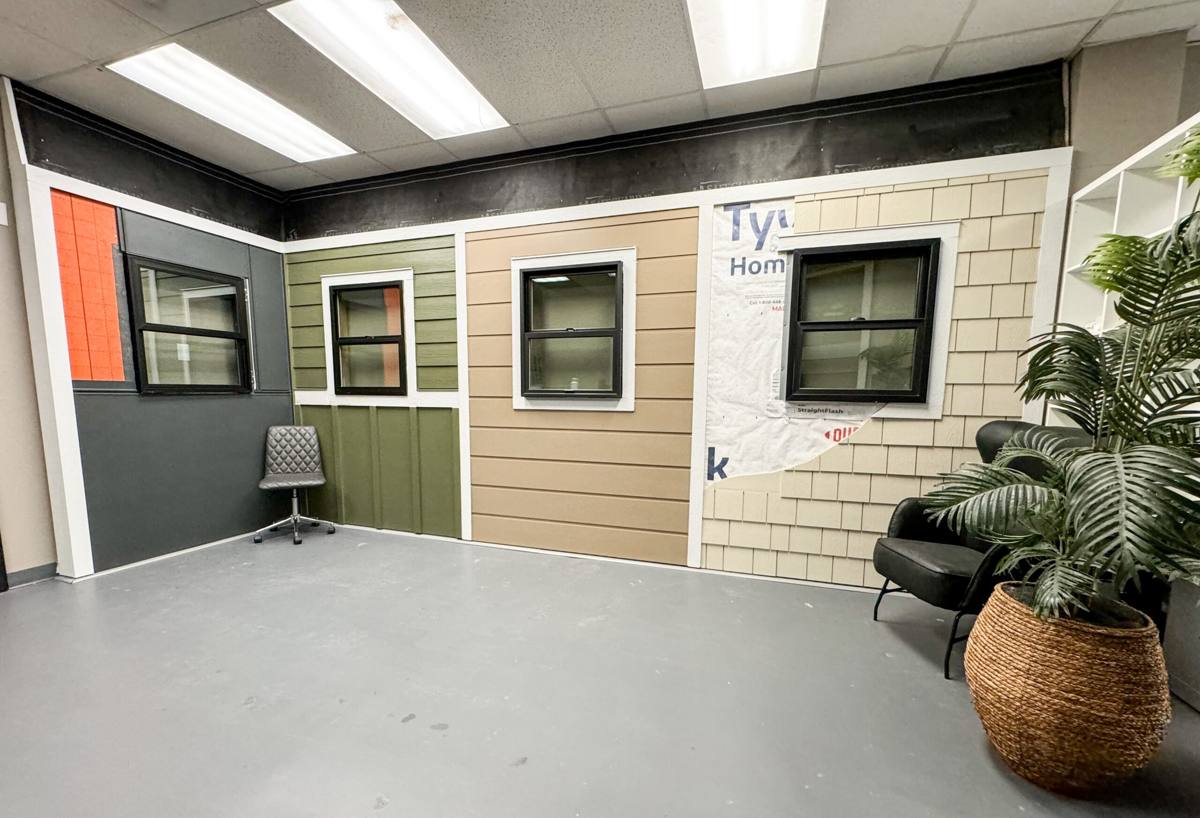
What Primed Spruce Gets Right
To be fair to the product, it isn't a bad material when it's installed correctly, back-primed on all six sides, kept off wet grade, and maintained on a real schedule. A few honest points in its favor:
- Low material cost compared to fiber cement or engineered wood siding.
- Familiar to most painting and carpentry crews, so labor is widely available.
- Real wood grain and profile options that some homeowners simply prefer aesthetically.
- Easy to patch or replace a single damaged board without specialty tools.
If a homeowner wants that specific look and is committed to an aggressive repaint and caulk schedule, spruce isn't irrational. It's a maintenance-intensive choice, and that's the part that doesn't get said often enough.
Why We Don't Install It Here
Solid Wood and Moisture Don't Mix Well on This Coastline
Spruce is a solid, unengineered wood product. It swells and shrinks with moisture content the way any raw lumber does, and it has no inherent resistance to fungal decay once the primer coat is compromised. Anacortes sits right on the water, and that means the siding on most homes here deals with driving rain off the Sound, near-constant marine humidity, and salt-laden air that accelerates the breakdown of paint films faster than it would inland. Once bare wood is exposed at a nail head, a butt joint, or a cracked caulk line, moisture gets in and doesn't leave quickly in our climate.
Skagit County's Long Wet Season Doesn't Give Paint Film Time to Recover
Our wet season runs long, and even in the drier months the mornings carry heavy dew and fog off the water. That means primed spruce siding here spends more of the year damp than siding in a drier climate would. Paint film that's supposed to last 7-10 years on a house in eastern Washington often needs attention closer to the 4-6 year mark on a house exposed to Anacortes weather, especially on south and west-facing walls that take the worst of the wind-driven rain.
Moss and Organic Growth Add a Maintenance Burden Most Homeowners Underestimate
The long moss season in this part of the state isn't just a roof problem. Moss, algae, and mildew take hold on shaded, damp siding surfaces too, and on wood siding that organic growth holds moisture against the board longer than it would on a smooth, inorganic surface. Left alone, that trapped moisture is exactly what starts soft spots, checking, and rot at butt joints and lower courses. Keeping spruce siding clean enough to avoid this requires periodic washing that a lot of homeowners don't budget for or don't want to deal with.
Installation Sensitivity Raises the Stakes on Workmanship
Primed spruce is only as good as the install. It needs to be back-primed on cut ends and the back face before hanging, properly gapped for expansion, correctly flashed at every horizontal joint, and caulked with a product rated for real movement. Skip any one of those steps and the failure shows up years later as a soft board or a paint bubble, by which point it's a repair, not a warranty claim. Because the material itself has no manufactured protection built in, every mistake in the install becomes the homeowner's long-term problem.
What "Failure" Actually Looks Like With Primed Wood Siding
We're not talking about a product that falls off the wall in year one. The problems with primed spruce are slow and cumulative:
| Stage | What You'll See | Typical Timeline Here |
|---|---|---|
| Paint film breakdown | Chalking, fading, hairline cracking at joints | 4-6 years on exposed elevations |
| Moisture intrusion begins | Soft spots at butt joints, nail pops, dark staining | Following unmaintained paint failure |
| Localized rot | Board softness you can press with a thumb, especially near grade | Varies, often 8-15 years without upkeep |
| Board replacement needed | Individual courses swapped, patch-painted | Ongoing, piecemeal |
None of this means every primed spruce house is doomed. It means the material puts the burden of prevention entirely on the paint film and the homeowner's maintenance discipline, and in a marine climate like ours that burden is heavier than most people realize when they're comparing sticker prices at the estimate stage.
The Real Cost Comparison Isn't Just Materials
Spruce siding usually wins on day-one price. It tends to lose on total cost of ownership once you factor in what it actually takes to keep it looking good and structurally sound over 20-30 years.
| Factor | Primed Spruce | James Hardie Fiber Cement |
|---|---|---|
| Repaint interval (this climate) | Every 4-7 years | 15+ years with factory ColorPlus finish |
| Moisture/rot resistance | None inherent; depends on paint film integrity | Engineered to resist moisture damage and won't rot |
| Combustibility | Combustible | Non-combustible |
| Pest vulnerability | Susceptible to woodpeckers, carpenter ants, rot-driven insects | Not a food or nesting source |
| Warranty on the material | Typically limited or none beyond the primer manufacturer | Long-term, transferable manufacturer warranty |
Why We Standardized on James Hardie Instead
We stopped installing primed spruce, along with a few other products, so we could put our labor and our name behind one system we trust in this exact climate. James Hardie fiber cement is engineered specifically to handle moisture cycling, and Hardie makes climate-specific HZ formulations built for regions that see the kind of wet, temperate weather Skagit County gets. It's non-combustible, it holds its factory-applied ColorPlus finish far longer than field-applied paint on wood, and it comes with a strong transferable warranty that follows the house, not just the original owner.
It isn't that Hardie is magic or maintenance-free forever. It's that the moisture management, the finish durability, and the warranty structure are built into the product at the factory instead of depending entirely on a paint schedule the homeowner has to keep up with for the next three decades. In a place where houses face driving rain, salt air, and months of damp shade, that difference matters more than it does in a drier climate.
Questions Worth Asking Any Contractor Before You Choose a Siding Material
- What does this material need from me in year 5, year 10, and year 20?
- Is the warranty on the material itself, or only on the labor?
- How does this product perform specifically in a marine, high-moisture climate, not just in general?
- What happens at butt joints and inside corners, the spots that fail first?
- Will the crew back-prime, gap, and flash correctly, and will that be in writing?
If You Already Have Primed Spruce Siding
If your Anacortes home currently has primed wood siding and it's holding up, you don't need to panic or replace it early. Keep an eye on south and west walls, check caulk lines annually, and don't let moss or algae sit against the boards. Soft spots near the bottom courses or around windows are the signal it's time to get it looked at rather than just repainted over. When it does come time to re-side, that's the point where we'd talk through switching to a material that doesn't put all the pressure on a paint job to keep water out.
Getting an Honest Assessment
Every house and every wall exposure is a little different, even within the same neighborhood. If you're weighing a re-side decision, or you just want an honest read on how your current siding is holding up, we're happy to come take a look and give you a straightforward estimate, no pressure, no scare tactics. Fill out the form below and we'll set up a time to walk your property.