 Anacortes Siding
 Similk Beach Sits Right Where Weather Meets Water
Similk Beach's location near the water and Similk Bay puts homes in a specific weather lane: salt-tinged air moving off the water, wind-driven rain that hits siding at an angle instead of straight down, and long stretches of gray, damp months where surfaces barely get a chance to fully dry out. It's a beautiful place to live for exactly the same reasons it's hard on a house exterior. Anyone who's owned a home out here for more than a few years has probably already noticed it — paint that fails faster than it should, trim that goes soft, or a north-facing wall that seems to grow moss no matter how often it gets cleaned.
None of that is unusual for this part of Skagit County. It's just the tradeoff of living close to the water. The point of this page is to explain what that environment actually does to siding over time, and what we do differently as a local crew working on homes in this specific area.
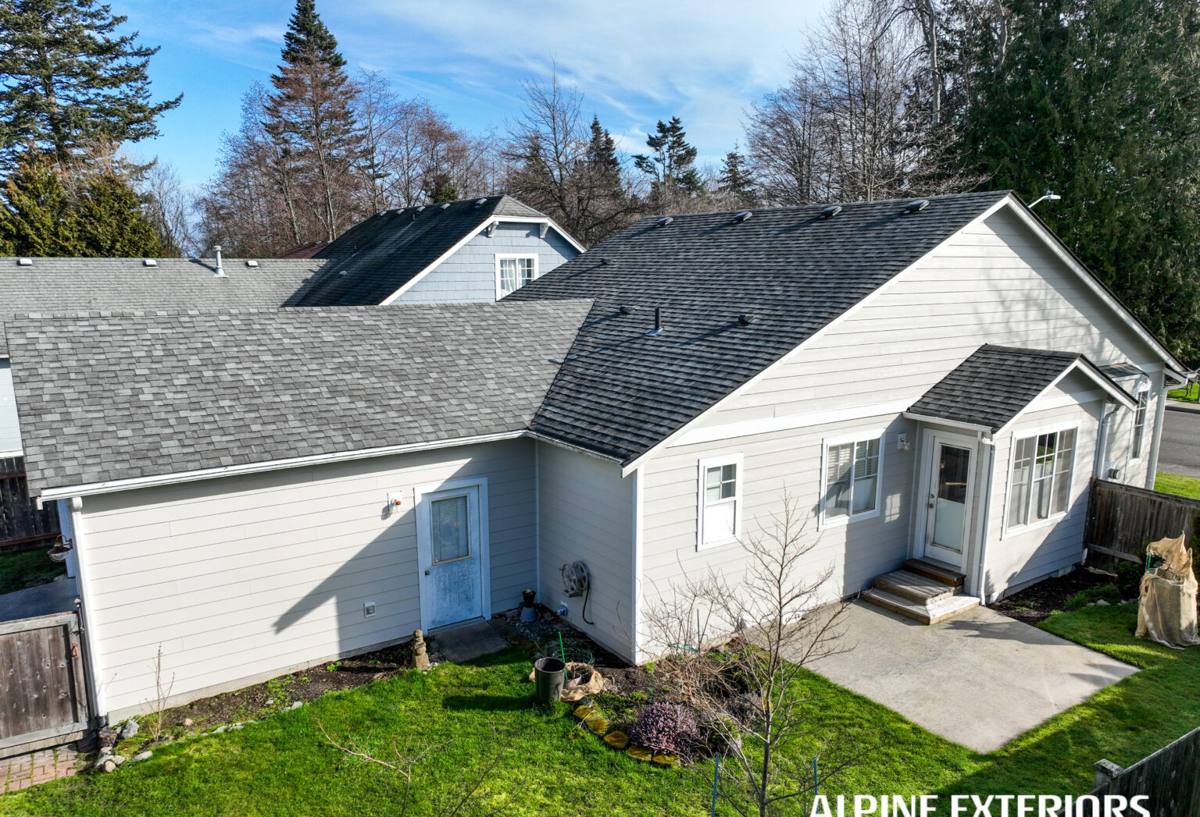
What Salt Air and Driving Rain Actually Do to a House
Salt Air
Salt-laden air doesn't just sit on a surface — it works its way into anything porous or poorly sealed. Over years, it accelerates corrosion on fasteners, hardware, and any exposed metal trim. It also speeds up the breakdown of lower-grade paints and coatings, which is why homes closer to the water tend to need repainting more often than homes just a few miles inland.
Driving Rain
Wind off the water rarely lets rain fall straight down. It gets pushed sideways into wall assemblies, which means seams, laps, corners, and any gaps around windows and trim take on more water than they would in a calmer inland setting. Siding that isn't installed with correct clearances, flashing, and lap spacing will find those weak points eventually — sometimes as cosmetic staining, sometimes as something more serious behind the wall.
Moss and Sustained Moisture
Western Washington's long wet season means north- and west-facing walls, and anything shaded by trees, can stay damp for extended periods. That sustained moisture is exactly what moss, mildew, and algae need to take hold. Once organic growth gets established on a wood-based or poorly sealed surface, it holds even more moisture against the material, and the cycle accelerates.
Why This Changes What We Recommend for Siding
Given that combination — salt exposure, sideways rain, and months of sustained dampness — we install James Hardie fiber cement siding exclusively. It's not a marketing preference; it's a decision built around what actually holds up in this specific climate over decades, not just the first few years.
- Fiber cement core: Hardie siding is made from cement, sand, and cellulose fiber — it doesn't rot, and it isn't a food source for the mold and mildew that thrive in damp coastal air.
- Factory-applied ColorPlus finish: baked-on in a controlled environment rather than field-painted, which matters enormously here — hand-painted or job-site-primed surfaces are far more exposed to the moisture and salt that shorten paint life near the water.
- Non-combustible: a separate advantage, but a real one for regional wildfire-season air quality and insurance considerations.
- Climate-engineered HZ product lines: Hardie makes region-specific formulations, and the HZ5 line is built for exactly this kind of wet, moderate Pacific Northwest climate.
Why We Don't Install Everything on the Market
Homeowners in this area sometimes ask us about vinyl, LP SmartSide, or other engineered-wood and composite products, since they're common and often less expensive up front. We don't install them, and we think it's worth explaining why rather than just saying no.
Vinyl siding is not adhered to the wall — it's designed to expand, contract, and hang loosely on its track. In a location with regular wind-driven rain, that loose-fit design and its seams are more vulnerable to water intrusion than a rigid, correctly-flashed fiber cement installation. Engineered wood products (LP SmartSide and similar) use wood strand cores treated with resin — a real engineering improvement over old-style hardboard, but the core is still wood, and wood-based products depend heavily on perfect installation, caulking, and long-term maintenance to keep moisture out. In a salt-air, high-rainfall environment, we've made a professional decision that the long-term maintenance burden and moisture risk of those products isn't what we want to put our name behind. Fiber cement carries none of that same vulnerability to sustained moisture.
This isn't a claim that those products are junk — plenty of homes around the country carry them without issue. It's a statement about what we've chosen to stand behind specifically for homes exposed to this stretch of Skagit County coastline.
How Siding Work Actually Goes for a Similk Beach Home
Assessment
We start by walking the exterior and looking at exposure by wall — which sides take the brunt of the weather off the water, where moss and staining are already showing, where trim and flashing are original versus already replaced, and what the sheathing and framing look like once old siding comes off.
Moisture and Flashing Correction
In a lot of older coastal-adjacent homes, we find flashing details that were adequate when the house was built decades ago but don't meet what's needed for the way weather actually hits this property today. Window and door flashing, kick-out flashing at roof-wall intersections, and proper weather-resistive barrier installation all get addressed before new siding ever goes up — because the siding is only as good as what's behind it.
Installation to Manufacturer Spec
James Hardie warranties depend on installation following their published specifications — correct fastening, clearances above grade and roofing, proper lap spacing, and sealed joints. We install to that spec as standard practice, not as an upsell.
Ballpark Cost Factors
| Factor | Why It Matters Here |
|---|---|
| Home size and wall complexity | More corners, dormers, and transitions mean more flashing detail and labor time |
| Existing siding removal | Tear-off and disposal of old material adds time versus a clean substrate |
| Water/rot damage found underneath | Sheathing or framing repair is common on older coastal homes and is priced once uncovered |
| Hardie product line and profile | Lap width, panel style (board-and-batten, shingle-look, etc.) affects material cost |
| Trim and accessory work | Corner boards, window trim, and fascia are often replaced alongside siding for a consistent result |
We give exact numbers only after seeing the home in person — anything else would be a guess, and guesses aren't useful when you're planning a real project.
Beyond Siding: Roofing, Windows, and Decks
Siding is rarely the only exterior system under stress in this environment. We also handle roofing, window replacement, and decks, and on a lot of Similk Beach projects those trades overlap directly with siding work:
- Roofing: roof-wall flashing details connect directly to how well siding sheds water at intersections — we look at both together rather than treating them as separate systems.
- Windows: old or failing window flashing is one of the most common sources of hidden water intrusion we find when we open up a wall for siding replacement.
- Decks: ledger board attachment and deck-to-house flashing are another common weak point in coastal-adjacent homes, and decks take their own beating from the same salt air and rain.
Being able to address these as one crew, rather than coordinating between separate specialty contractors, tends to produce a cleaner, better-sealed result — especially at the points where these systems meet.
Why a Local Crew Matters Here
A contractor who works across a wide, generic territory doesn't necessarily know that a Similk Beach wall facing the water needs different attention than a sheltered inland wall a few miles away in Anacortes. We work this part of Skagit County regularly, which means we've seen how these specific conditions — salt air, wind direction off the water, the length of the wet season — actually play out on real homes, not just in a manufacturer's climate chart. That local pattern recognition shapes decisions we make on-site: where to add extra flashing attention, which walls need a heavier-duty approach, and what's worth doing differently than a standard inland install.
Signs Your Siding Is Already Under Stress
- Paint that's peeling, chalking, or needing repainting more often than every 6-8 years
- Soft or spongy spots when you press on siding or trim, especially near the bottom edges
- Persistent moss or algae growth that comes back quickly after cleaning
- Visible gaps, cracking, or warping at seams and corners
- Staining or discoloration around window and door trim
- A musty smell or visible staining on interior walls that share a wall with problem siding
Any of these on their own might be minor. Several together, especially on the sides of the house facing the water or prevailing wind, usually mean it's worth having someone take a real look rather than waiting.
What to Expect From an Estimate
We look at the whole exterior, not just the obviously damaged section, since problems in one area often point to conditions affecting the whole house. We'll walk you through what we see, what we'd recommend and why, and what it would cost — in plain terms, without pressure to decide on the spot. If we think a smaller repair makes more sense than a full replacement for your situation, we'll say so.
If you're noticing any of the wear signs above, or you're planning ahead for a home near Similk Beach, we'd be glad to come take a look. The estimate is free, there's no pressure, and you'll walk away with a clear, honest picture of where your siding actually stands.