 Anacortes Siding
 Building a Deck for Similk Beach's Marine Climate
Similk Beach sits close enough to the water that the air itself becomes a construction material problem. Homes here catch wind off the bay, salt-laden moisture that settles into wood grain and metal hardware, and a wet season that stretches for months at a time. A deck built to a generic spec sheet — the kind sold at big box stores or installed by crews who mostly work inland — tends to show its age fast in a location like this: rusted fastener heads bleeding rust streaks down the boards, moss creeping across shaded sections by the second winter, and railings that loosen because the hardware wasn't rated for salt exposure.
None of that is inevitable. It's a matter of choosing the right materials, using the right hardware, and building the substructure so water sheds instead of sitting. This page covers what actually matters when you're putting a deck on a Similk Beach home, and what our process looks like from first visit to final walkthrough.
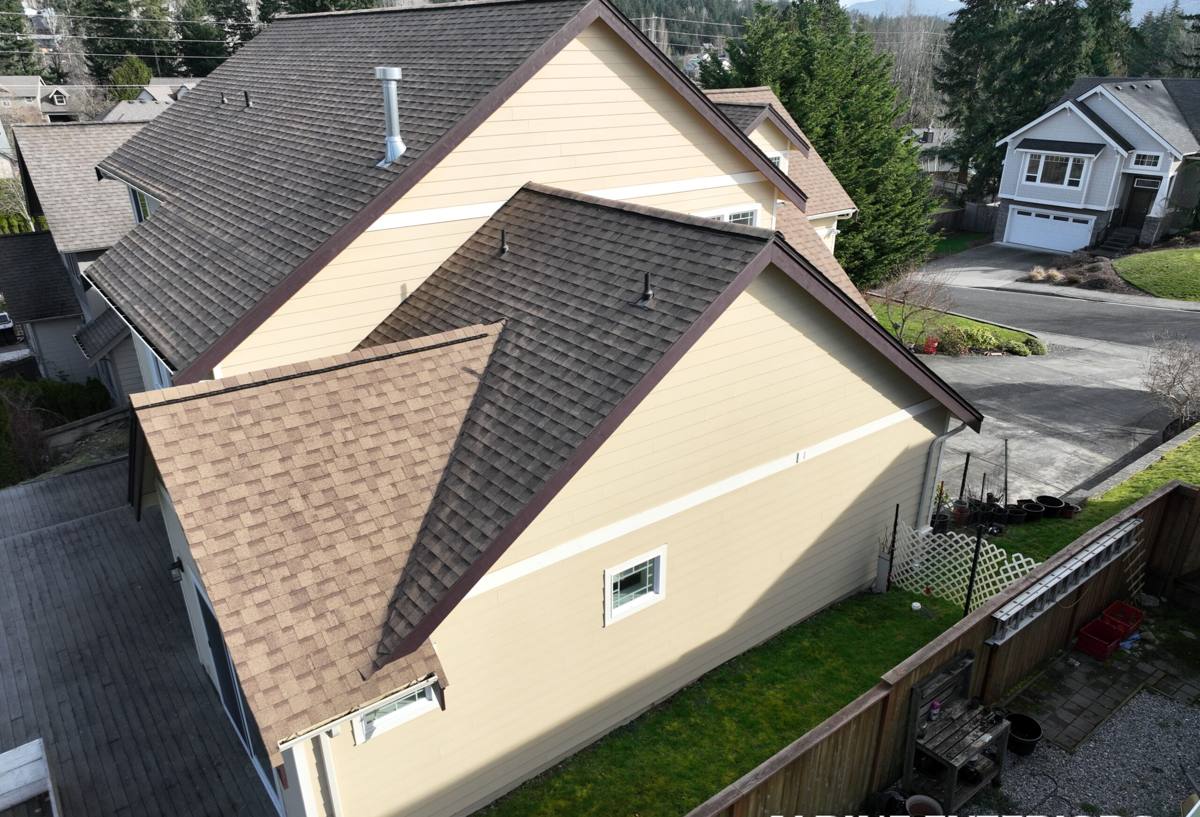
What Salt Air and Driving Rain Do to a Deck
Salt Air and Metal
Salt in the air accelerates corrosion on anything metal — screws, joist hangers, bolts, railing brackets. Standard galvanized hardware, which holds up fine twenty miles inland, can start showing rust bleed within a year or two this close to open water. Once a fastener starts corroding, it loses holding strength, and on a structural connection like a ledger bolt or a joist hanger, that's not cosmetic — it's a safety issue.
Driving Rain and Wind-Driven Moisture
Rain here doesn't just fall straight down. Wind off the water pushes it sideways, which means it gets up under railing caps, into fastener holes, and behind ledger boards in ways a calm-weather install doesn't account for. Flashing details that would be optional in a more sheltered yard aren't optional here.
Moss Season
Skagit County's wet stretch runs long, and any deck surface that stays shaded and damp for weeks at a time will grow moss and algae if the boards can't dry out between rains. Moss isn't just unsightly — it holds moisture against the board surface and makes the deck slick and genuinely dangerous underfoot, especially on stairs.
Choosing Decking Material for a Similk Beach Lot
There's no single right answer for every homeowner — budget, maintenance appetite, and how close the lot sits to the water all factor in. Here's how the common options actually compare in this environment:
| Material | Upfront Cost | Maintenance | Salt-Air Performance |
|---|---|---|---|
| Pressure-treated wood | Lowest | Annual cleaning, periodic sealing/staining | Fine if sealed regularly; neglect shows fast in moss and graying |
| Cedar | Mid-range | Regular sealing to hold color and resist checking | Naturally rot-resistant, but still needs upkeep near salt spray |
| Capped composite | Higher | Occasional washing, no sealing or staining | Strong — cap layer resists moisture absorption and staining |
| PVC/cellular decking | Highest | Lowest — occasional washing only | Excellent — doesn't absorb moisture, won't rot or splinter |
We're honest with clients that pressure-treated and cedar decks can absolutely work well in Similk Beach — plenty of good-looking, long-lasting wood decks exist right in this neighborhood. The tradeoff is maintenance discipline: skip a season of cleaning and sealing, and a wood deck this close to the water will show it in moss growth and surface graying well before an inland deck would. Composite and PVC cost more upfront but take that maintenance burden off your plate, which is why we see more homeowners here leaning that direction for main living decks, while sometimes still choosing wood for a smaller secondary structure like stairs or a utility deck.
Framing and Substructure: The Part That Actually Determines Lifespan
The decking boards get all the attention, but the framing underneath is what determines whether a deck lasts fifteen years or thirty. This is also where a lot of corner-cutting happens because it's invisible once the boards go down.
Footings and Posts
Footings need to be sized and set to the actual load and soil conditions on your lot, not a rule-of-thumb spacing pulled from a generic plan. Post bases should keep wood off the concrete and off standing water — a detail that matters more here than in a drier climate, because ground moisture around Similk Beach lots tends to stay elevated through the wet months.
Ledger Attachment and Flashing
Where the deck attaches to the house is the single most common failure point on decks we've inspected in this area. A proper ledger install uses correct flashing — installed in the right order relative to the house's existing weather barrier — so wind-driven rain can't work its way behind the ledger board and into the rim joist or wall framing. Done wrong, this is a slow, hidden rot problem that doesn't show up until the deck starts to feel spongy or pull away from the house.
Joist Spacing
Joist spacing should match the decking material's span rating. Composite and PVC boards often require tighter joist spacing than solid wood to avoid flexing over time — a detail worth checking if you're switching materials on a rebuild rather than assuming the old framing will work as-is.
Hardware and Fasteners That Actually Hold Up Near the Water
This is the detail that separates a deck that ages gracefully from one that starts rust-staining within a couple of winters. For structural connections — joist hangers, ledger bolts, post bases — we use stainless steel or hardware specifically rated for coastal/high-corrosion exposure, not standard galvanized. It costs more per piece, but replacing a rusted-out joist hanger years later means tearing into a finished deck, which costs far more than getting it right the first time.
Decking fasteners matter too. Standard exterior screws can develop surface rust that streaks down composite or wood boards within a season this close to salt air. We match fastener coatings to the decking material and the exposure level of the specific deck, not a one-size-fits-all screw bought in bulk.
Drainage, Slope, and Keeping Moss Off the Deck
A deck surface should have a slight slope built in so water runs off rather than pooling. Board gaps need to be sized correctly and kept consistent so air can move underneath and dry the structure out between storms — too tight, and moisture gets trapped; too wide, and you lose comfort and durability. Under a low deck or one with limited airflow underneath, we look at whether additional under-deck drainage or ventilation is worth adding, especially on shaded sides of the house where moss pressure is highest.
A Simple Maintenance Checklist for Salt-Air Decks
- Sweep debris out of board gaps a few times a year so water and organic matter don't sit and feed moss growth
- Rinse salt residue off the surface periodically, especially after storms with onshore wind
- Check railing hardware annually for looseness or early rust bleed — catching it early is a five-minute fix, not a rebuild
- Reseal or restain wood decking on schedule rather than waiting until it's visibly gray or worn
- Keep gutters and downspouts near the deck clear so roof runoff isn't dumping extra water onto the structure
- Address any soft or spongy spots near the ledger or stairs right away — that's the earliest sign of hidden moisture damage
Permits and Building Code Considerations
Most deck projects require a permit, and the requirements — guardrail height, baluster spacing, stair geometry, footing depth — are set by code, not preference. If your lot sits close to the water's edge, Skagit County shoreline management rules can also come into play for waterfront or near-waterfront construction, which adds a layer of review beyond a standard building permit. We handle the permitting conversation as part of the process so you're not left figuring out county requirements on your own, and so the project doesn't stall waiting on paperwork that should have been sorted before the first board was cut.
How We Build Decks in Similk Beach
The process is the same discipline whether it's a full rebuild or a new deck from scratch:
- Site visit: We look at sun and wind exposure, existing drainage, soil conditions, and how close the structure sits to the water, since that changes hardware and material recommendations.
- Design and material selection: We walk through the tradeoffs — wood versus composite versus PVC, railing style, layout — in plain terms, based on your budget and how much maintenance you actually want to do.
- Permitting: We prepare and submit what's required for your lot, including any shoreline review if applicable.
- Framing and structure: Footings, ledger flashing, and joist layout done to code and matched to the decking material's actual requirements — not shortcuts.
- Decking, railing, and finish work: Installed with fasteners and hardware rated for this environment, not standard inland-grade hardware.
- Final walkthrough: We go over the finished deck with you, including what maintenance it actually needs going forward so it holds up.
Why Hire a Crew That Already Works This Neighborhood
Every coastal Fidalgo Island lot is a little different, but a crew that's already built and repaired decks in Similk Beach isn't guessing about how salt air, wind exposure, and this area's wet season affect a build — it's routine knowledge, not a surprise discovered after the fact. That shows up in the hardware we default to, the flashing details we don't skip, and the maintenance guidance we give you at handoff. It also means we're not far away if a question comes up two years in.
If you're planning a new deck or need to replace one that's showing its age, we'll come out, take an honest look at your lot, and walk you through what it actually needs — no pressure, no upsell. Fill out the form below to schedule a free estimate.