 Anacortes Siding
 Windows on Fidalgo Island's Waterfront: Why Flounder Bay Is Different
Flounder Bay sits close enough to the water that homes there deal with a different set of conditions than houses a few miles inland in Anacortes. Wind carries salt spray off the bay, rain comes in sideways more often than it falls straight down, and the marine layer keeps humidity high for long stretches of the year. Windows in this kind of setting work harder than windows almost anywhere else in Skagit County. A window that would hold up fine in a dry, sheltered yard can start failing years early here if it wasn't built, sealed, and installed with that exposure in mind.
Energy efficiency and durability aren't separate issues on a property like this — they're the same problem. A window that leaks air also tends to be a window that eventually leaks water, and a window that's losing its seal is a window that's losing its insulating value at the same time. When we talk about "energy-efficient windows" for a Flounder Bay home, we're really talking about windows and installation details built to survive the exposure while keeping conditioned air where it belongs.
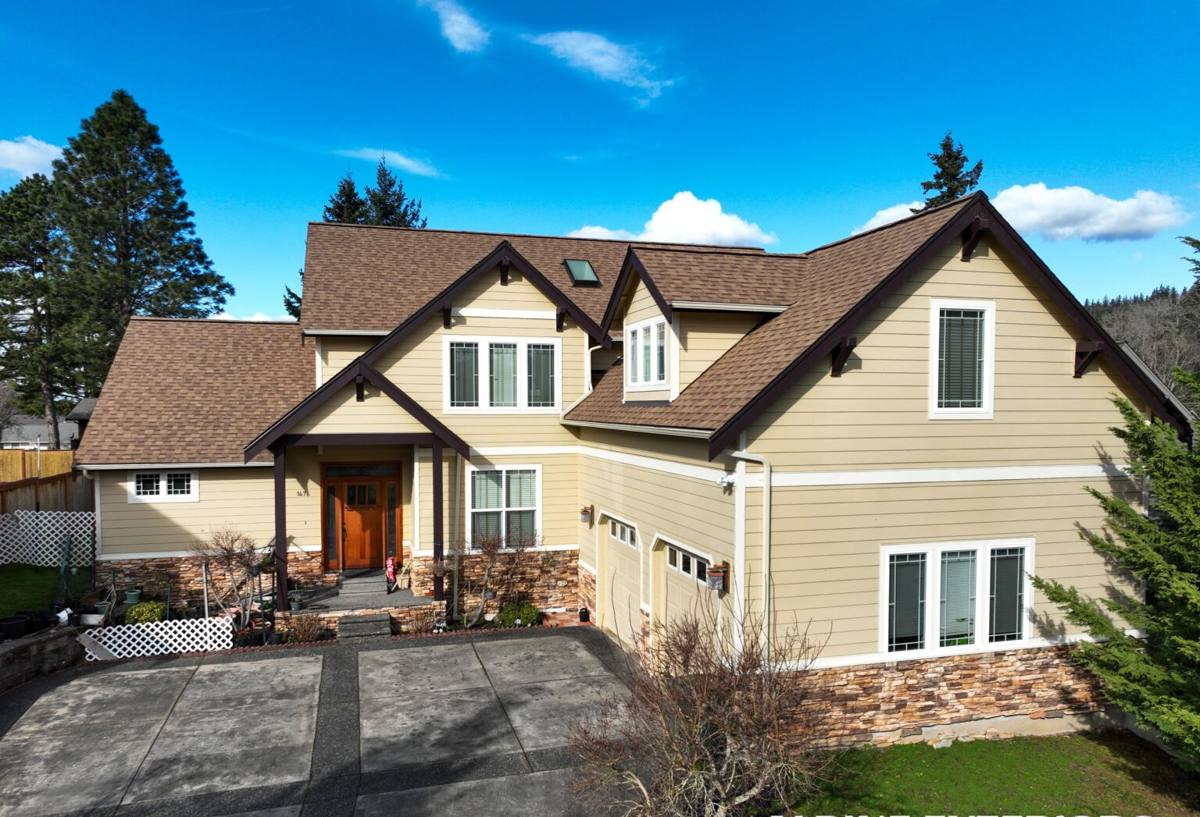
What Salt Air, Driving Rain, and Moss Season Do to Ordinary Windows
Salt Air and Hardware Corrosion
Salt-laden air accelerates corrosion on anything metal — window hardware, hinges, cranks, and especially lower-grade aluminum components. Once hardware starts to pit or seize, windows stop closing tightly, and a window that doesn't close tightly can't hold its seal no matter how good the glass package is. This is one reason frame and hardware material selection matters more here than it would on a home set back from the water.
Wind-Driven Rain and Water Intrusion
Anacortes gets plenty of rain that falls more or less straight down, but waterfront exposure means Flounder Bay also gets rain pushed sideways by wind off the bay. Wind-driven rain finds gaps that vertical rain never would — around poorly flashed openings, through failed sealant joints, and behind trim that was never properly integrated with the home's water-resistive barrier. Over time, this shows up as soft trim, stained drywall below sills, or a musty smell that never fully goes away.
Moss, Humidity, and Seal Failure
The long, wet moss season in this part of Skagit County keeps wood trim and sills damp for extended periods. Sustained moisture is what breaks down exterior caulking, swells wood-framed sashes, and speeds up seal failure in insulated glass units — which is what causes that foggy, permanently condensated look between panes. Once the seal on a dual-pane unit fails, the argon or air fill escapes and the insulating performance drops, even though the window may still look intact from the street.
What "Energy-Efficient" Actually Means
The term gets used loosely, so it's worth breaking down what it actually measures. Every window sold in the U.S. carries an NFRC label with a handful of ratings that matter far more than marketing language:
- U-factor — how well the window resists heat loss. Lower is better; this is the number that matters most for keeping heat inside during our cool, wet winters.
- Solar Heat Gain Coefficient (SHGC) — how much solar heat passes through the glass. In our climate, moderate SHGC values are usually the right call since we don't get the intense summer sun that drives cooling costs in other regions.
- Air Leakage (AL) — how much air passes through the window assembly itself. Lower numbers mean less drafts around the sash and frame.
- Condensation Resistance — a rating that matters directly here, given how much humidity Flounder Bay homes deal with for much of the year.
Low-E (low-emissivity) coatings and gas fills like argon between panes are what get those numbers down. Triple-pane windows push performance further but add weight and cost, and aren't always necessary for every elevation of a home — we'll walk through where they make sense and where a well-built dual-pane unit does the job.
Choosing the Right Frame Material for a Marine Climate
Frame material affects both energy performance and how the window holds up to salt air and moisture. There's no single "best" material for every home — it depends on budget, exposure, and the look you're after — but here's how the common options compare for a property like this:
| Frame Material | Moisture & Salt Air Behavior | Maintenance | Typical Fit for Flounder Bay |
|---|---|---|---|
| Vinyl | Won't corrode or rot; performs consistently in humid conditions | Low — no painting or sealing needed | Strong all-around choice for budget-conscious, low-maintenance replacement |
| Fiberglass | Very stable dimensionally, holds paint well, resists moisture damage | Low to moderate | Good option where a painted, more custom look is wanted alongside durability |
| Wood-clad | Interior wood warmth with an exterior cladding shielding it from weather, but any breach in the cladding lets moisture reach the wood core | Moderate — cladding needs to stay sealed and intact | Best reserved for sheltered elevations, not direct salt-spray exposure |
| Aluminum | Prone to corrosion and pitting in salt air unless marine-grade and properly finished | Moderate to high | We're selective about where we recommend it on waterfront properties |
We're not against any of these materials on principle — each has a legitimate use. Our job is matching the material to the specific wall, elevation, and exposure it's going on, rather than installing the same product everywhere regardless of conditions.
What a Correct Installation Involves
Even a well-built window will underperform if it's installed carelessly. The window itself is only part of the system — the flashing, sealant, and integration with the wall's water-resistive barrier are what actually keep water out over the long run. On a property exposed to wind-driven rain, this detail work matters more than the brand name on the glass.
A correct installation, done in the order that actually protects the wall assembly, includes:
- Removing the old window and inspecting the rough opening for hidden rot or water damage before anything new goes in
- Installing sill pan flashing so any water that does get past the window drains back out, not into the wall
- Integrating side and head flashing correctly with the home's existing water-resistive barrier, shingle-style so water sheds downward and outward
- Setting the window level, plumb, and square, then shimming it properly so it operates smoothly for years
- Sealing and insulating the gap between the window frame and rough opening — properly, not overfilled with expanding foam that can bow the frame
- Finishing exterior sealant joints with a product rated for our climate, and interior trim work that doesn't trap moisture
Skipping or rushing any one of these steps is how a brand-new, high-performance window ends up with a water stain under it two winters later.
Signs Your Flounder Bay Home's Windows Are Underperforming
Homeowners often assume a window is fine as long as it opens and closes. In a marine climate, that's not a reliable test. Watch for:
- Fogging or a permanent haze between panes — a sign the insulated glass seal has failed
- Visible corrosion, pitting, or hardware that's getting harder to operate
- Cold drafts near the frame even with the window fully latched
- Soft or discolored trim, drywall, or sill material below or around the window
- A noticeable jump in heating costs without any other explanation
- Condensation forming on the inside of the glass regularly during cooler months
- Visible daylight or gaps around the frame from outside
Any one of these on its own might not mean full replacement is needed — sometimes it's a resealing or hardware repair issue. But on a waterfront property, it's worth having someone look before a small leak becomes a framing problem.
Our Process for Flounder Bay Window Projects
- On-site assessment. We look at each window individually — sun exposure, wind exposure, condition of the surrounding trim and wall assembly — rather than quoting a blanket number for the whole house.
- Material and performance recommendations. We walk through frame material, glass package, and where triple-pane or upgraded coatings actually pay off versus where they don't.
- Written estimate. Clear scope, materials, and timeline before any work starts.
- Removal and inspection. Old windows come out carefully so we can check the rough opening for hidden moisture damage before it's covered back up.
- Flashing, installation, and sealing done in the sequence that actually protects the wall, not just the fastest sequence.
- Final walkthrough so you understand what was done, how the windows operate, and any care they need going forward.
What Affects the Cost of a Window Project Here
Costs vary widely depending on the home, so we won't quote fake numbers — but the factors that actually move the price on a Flounder Bay project are consistent:
| Factor | Why It Matters |
|---|---|
| Frame material | Vinyl is typically the most budget-friendly; fiberglass and wood-clad cost more upfront |
| Glass package | Dual-pane with Low-E coating versus triple-pane changes both performance and price |
| Number of window openings | Larger jobs bring efficiencies per-unit; single window replacements carry more fixed cost |
| Condition of the rough opening | Hidden rot or water damage found during removal adds repair scope |
| Exposure of the elevation | Sides facing direct wind and rain may warrant upgraded flashing or sealant details |
| Full-frame vs. insert replacement | Full-frame replacement addresses flashing and rot but costs more than an insert into a sound existing frame |
Why Local Experience with Flounder Bay Conditions Matters
A window contractor who mostly works inland doesn't always think about sill pan flashing, salt-air hardware corrosion, or wind-driven rain the same way a crew that regularly works waterfront Anacortes properties does. It's not that the physics are different — it's that the failure points show up faster and more often here, so the details that prevent them can't be an afterthought. Skagit County's building codes and permitting also apply consistently across the area, and a crew familiar with local inspection expectations can keep a project moving without surprises.
We treat every Flounder Bay window project as a waterfront job first and a window replacement second — because the exposure is what determines whether the installation actually lasts.
If your windows are drafty, fogged, or just due for an honest look, we're glad to come take a look and give you a straightforward, no-pressure estimate using the form below.