 Anacortes Siding
 Why Siding Fails Faster Here Than in Other Parts of Washington
Anacortes sits at the edge of Fidalgo Island, surrounded by salt water on three sides, which means homes here take on a different kind of weathering than houses further inland in Skagit County. Salt-laden air accelerates corrosion on fasteners and trim, wind-driven rain off Rosario Strait and Guemes Channel pushes moisture into joints and seams that would stay dry elsewhere, and the long, gray moss season — often running from October through April — keeps north-facing walls damp for months at a time. None of this means siding is doomed to fail. It means the siding and the installation have to be matched to the environment, and homeowners benefit from knowing what early failure actually looks like before it turns into a rot repair or a full tear-off.
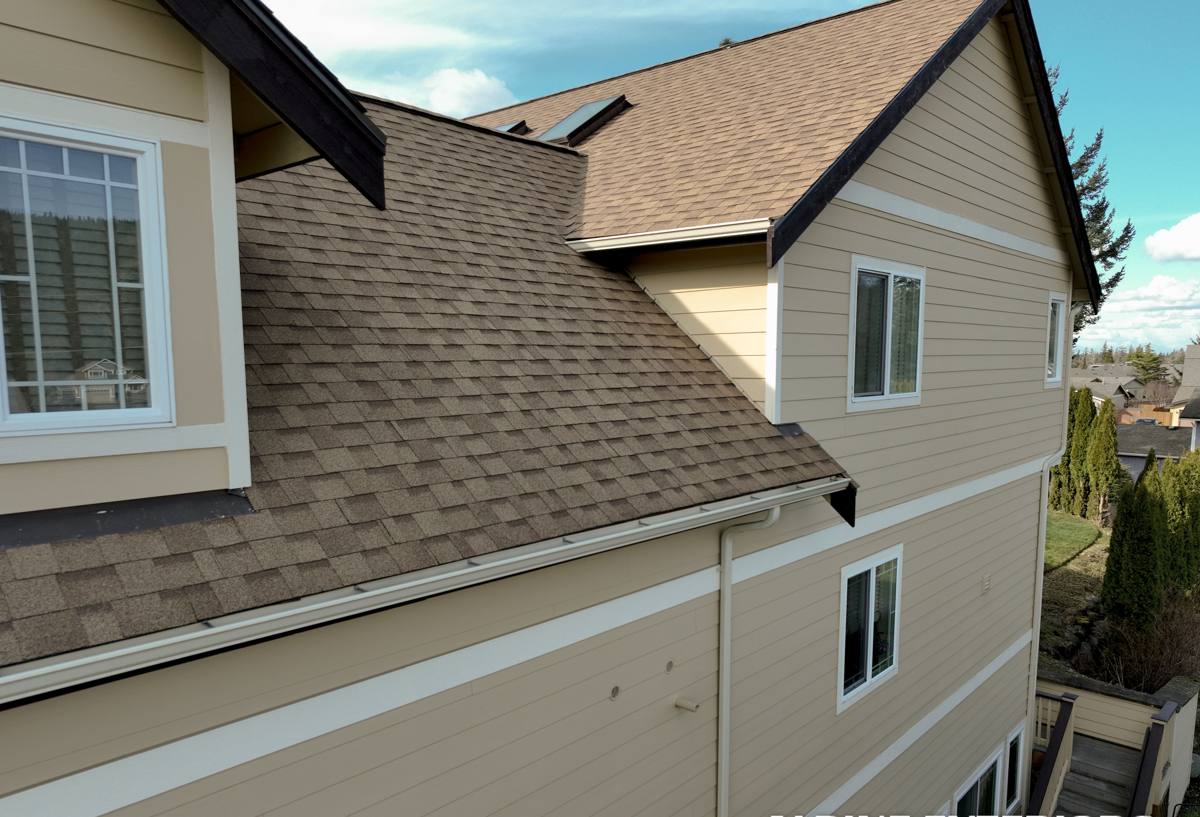
The Visual Signs Worth Walking Your House For
Cracking, Splitting, and Warping
Hairline cracks near nail heads or at panel seams are usually the first visible clue that a siding material is losing its fight with moisture cycling. Wood-based products swell when wet and shrink when they dry out, and that repeated movement eventually splits the fibers. Warping — where a board no longer lays flat against the wall — is a stronger signal, because it means the material has already absorbed enough water to change shape permanently.
Bubbling or Peeling Paint
Paint failure is rarely just a cosmetic issue. When paint bubbles, alligators, or peels in sheets rather than wearing evenly, it's often because moisture is trapped behind the film and pushing it off from underneath. On field-painted siding, this can happen within a handful of years in a marine climate, especially on the sides of the house that catch the prevailing weather off the water.
Fading and Chalking
Some UV fading is normal on any exterior finish. But if you run a finger across the siding and it comes away with a chalky residue, the finish is breaking down faster than it should, and the substrate underneath is losing its protection.
Signs You Can Feel Before You Can See
A lot of siding failure hides just behind the surface. A short walk around the exterior with your hand is one of the most useful five minutes a homeowner can spend each fall.
- Soft or spongy spots when you press on the siding, especially near the bottom courses, around windows, and at any point where a deck or porch roof ties into the wall
- Bulging or rippled sections that suggest swollen material or trapped water underneath
- Visible gaps at seams and corners where caulking has shrunk, cracked, or pulled away entirely
- Rust streaking below nail heads or fasteners, a sign the fastener itself is corroding
- Moss or dark green-black staining concentrated on shaded, north- or west-facing walls
- A musty smell near exterior walls inside the house, which can indicate moisture has already worked its way through the wall assembly
What's Happening Behind the Siding
Siding is the visible layer, but the real damage usually happens in the sheathing and framing behind it once water gets past a failure point. Rot doesn't announce itself with a clean visual cue — by the time you see staining, sagging, or a soft spot on the exterior, there's a good chance the wood sheathing behind it has already been compromised. Carpenter ants and other wood-boring insects are also drawn to damp, softened wood, so an active pest problem near an exterior wall is sometimes the first real evidence that siding has been letting water in for a while. This is why we always recommend pulling a section of failing siding rather than just patching over the visible symptom — what's underneath tells you whether you're looking at a cosmetic repair or a structural one.
How Failure Signs Differ by Siding Material
Not all siding fails the same way, and knowing what's typical for your specific material helps you judge whether what you're seeing is normal wear or a real problem.
| Material | Common Early Failure Signs | Why It Happens in This Climate |
|---|---|---|
| Vinyl | Cracking, warping, fading, panels popping out of track | UV exposure and temperature swings make vinyl brittle over time; wind off the water can work panels loose at the locks |
| Primed wood / spruce trim | Splitting, rot at end grain, paint failure at joints | End grain soaks up moisture fast; repeated wet-dry cycling in a marine climate accelerates decay |
| Engineered wood (OSB-based) | Edge swelling, soft spots, delamination if the factory finish is breached | Once moisture gets past the coating at a cut edge or fastener hole, the wood-strand core absorbs water and swells |
| Cedar | Graying, cupping, checking, moss growth on shaded faces | Natural wood needs ongoing sealing or staining to resist the long damp season here |
| Fiber cement (factory-finished) | Caulk failure at joints, fastener corrosion if incorrect fasteners were used | The board itself resists moisture absorption well; most failures trace back to installation details rather than the material |
Installation Problems That Masquerade as Product Failure
A surprising share of "siding failure" we get called out to inspect isn't really about the siding material at all — it's about how it was put on. Flashing installed backwards or omitted above windows and doors, siding nailed too tight against trim with no room to move, caulk used in place of proper flashing, or panels installed hard against a walkway or roofline with no clearance — all of these create moisture entry points regardless of what product is on the wall. This matters for two reasons: first, it means a homeowner shouldn't necessarily blame a whole product category for a failure that was actually an installation error, and second, it's exactly why we're selective about installation practices in a climate this unforgiving. Correct water management — proper flashing, appropriate gaps, correct fasteners — determines how long any siding actually lasts here more than the marketing on the product itself.
A Seasonal Self-Inspection Checklist
Given how much of Skagit County's weather cycles through wet fall and winter months, early fall — before the heavy rains set in — is the best time to do a walk-around.
- Walk the full perimeter and press on siding near the bottom courses, under windows, and near any roof-to-wall intersections
- Check caulk lines at corners, window and door trim, and panel seams for cracking or gaps
- Look for moss or algae concentrations, especially on north and west walls and anywhere shaded by trees
- Inspect fastener heads for rust streaking or backing out
- Check for daylight or gaps where siding meets trim, vents, or utility penetrations
- Look inside at ceiling and wall corners near exterior walls for staining or a musty smell
- Note any areas where sprinklers or downspouts spray directly onto siding
Repair, Recoat, or Replace?
Not every sign above means a full re-side. A cracked caulk joint or a few popped fasteners are legitimate repairs. But there are a few thresholds where patch repairs stop making sense: when soft spots show up in multiple, unrelated areas of the house rather than one isolated spot; when the underlying sheathing tests wet or spongy in more than one location; or when the siding is old enough that matching materials and colors for a patch isn't realistic. At that point, spot repairs become a short-term expense that doesn't address the bigger picture, and a full replacement — done with correct flashing and water management this time — is usually the more honest recommendation.
What We Install Instead, and Why
When a siding replacement conversation comes up, we install James Hardie fiber cement almost exclusively. It's not because every other product is bad — it's because, after years of tearing failing siding off Anacortes and Skagit County homes, we kept seeing the same climate stresses (salt air, wind-driven rain, extended moss season) hit certain materials harder than others. Hardie's fiber cement doesn't absorb water the way wood-based products do, it doesn't become brittle in cold snaps the way vinyl can, and its ColorPlus factory finish is baked on under controlled conditions rather than applied on site, which removes a lot of the paint-failure risk described above. It's not maintenance-free, and it still depends on correct flashing and installation — but it removes several of the failure modes that bring us out on inspection calls in the first place.
Get a Second Opinion Before It Gets Worse
If you're seeing any of the signs above — soft spots, persistent moss, cracked caulk, or paint that's peeling faster than it should — it's worth having someone look at it before the next wet season. We offer free, no-pressure estimates and inspections for homeowners across Anacortes and Skagit County, with an honest read on whether you're looking at a simple repair or something more. Use the form below to get started.