 Anacortes Siding
 Siding Built for Mount Vernon's Skagit Valley Climate
Mount Vernon sits inland from Anacortes along the Skagit River, but "inland" doesn't mean the coastal weather patterns stop at the city limits. Homes here still see the same wet, gray stretches that define Skagit County winters, plus the valley's own version of humidity that settles in low-lying areas near the river and surrounding farmland. Add in salt-tinged air pushing in off Fidalgo Bay and the Sound on windy days, and you get a climate that is genuinely tough on exterior building materials, even a fair distance from the water.
We're based nearby in Anacortes and work throughout Skagit County, and Mount Vernon is one of the communities we're in regularly. That matters for siding work more than most homeowners realize. A crew that only shows up for one job and then leaves the area doesn't build the local knowledge that catches problems early: which house styles in this part of the valley tend to trap moisture behind old siding, which orientations take the worst weather, and what a proper installation actually needs to hold up here long-term.
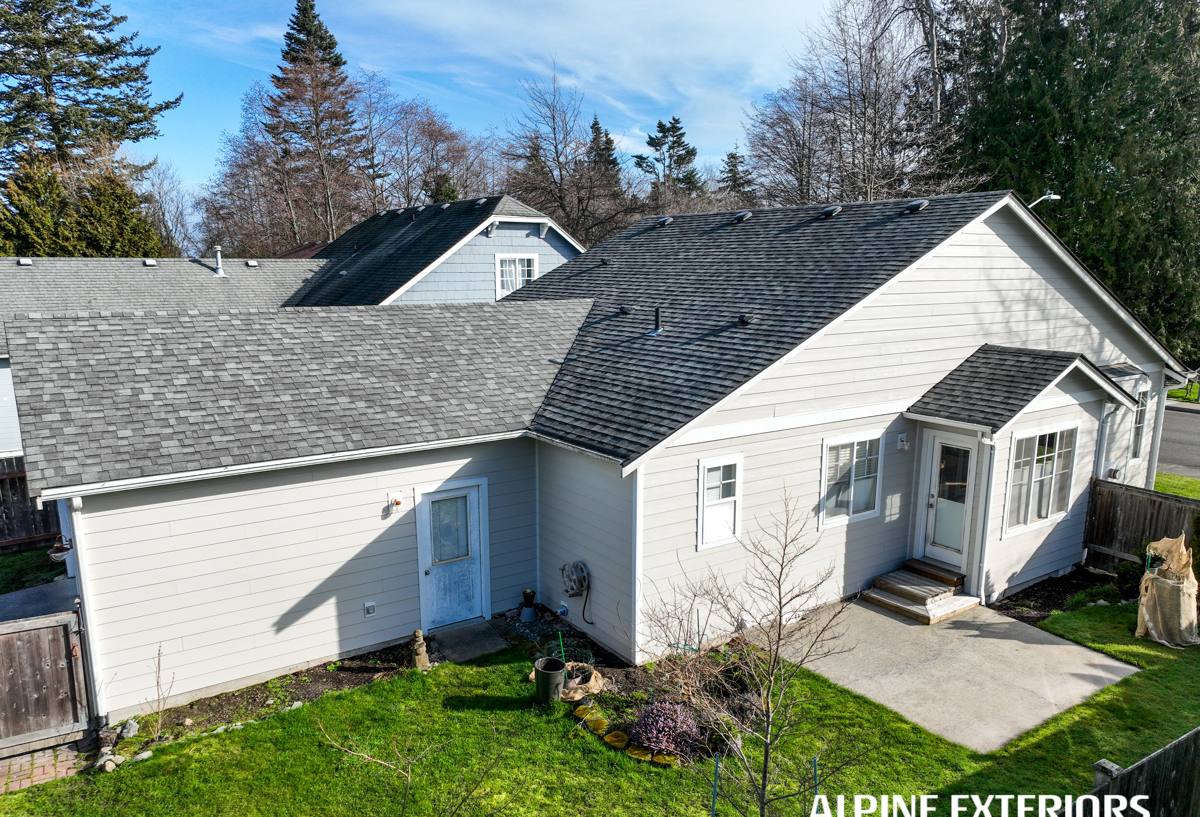
What Mount Vernon Homes Are Up Against
Driving Rain and Wind-Driven Moisture
Skagit County doesn't just get rain — it gets rain pushed sideways by wind coming off the water and across open valley farmland. That wind-driven moisture finds its way into seams, laps, and fastener points that would stay dry in a calmer climate. Over years, siding systems that aren't detailed correctly for this kind of exposure let water behind the cladding, and once moisture is trapped against wood sheathing, rot follows.
A Long Moss and Algae Season
The combination of shade, moisture, and mild temperatures in the Skagit Valley creates an extended moss and algae season — longer than most homeowners transplanting from drier climates expect. Roofs get the obvious attention, but siding on the north and west sides of a house, especially near landscaping or tree cover, collects the same green growth. Some siding materials absorb moisture into their surface and give algae something to root into. Others resist it because the material itself doesn't hold water at the surface.
Salt Air, Even at a Distance
Mount Vernon is far enough from open water that homeowners sometimes assume salt exposure isn't a factor. It's reduced compared to a waterfront lot, but it isn't zero — coastal air moves inland across Skagit County, and combined with the near-constant regional moisture, it accelerates corrosion on fasteners, trim, and any exposed metal components. Material choice and installation detailing both matter more here than in a dry inland climate.
Why We Install Only James Hardie Fiber Cement
We made a deliberate decision as a company to install James Hardie fiber cement siding exclusively — not vinyl, not LP SmartSide, not cedar, not primed spruce, and not other fiber cement brands like Cemplank or Allura. That's not a marketing angle; it's a standard we hold because of what we've seen play out on homes in this exact climate over time.
Vinyl siding is affordable and low-maintenance in mild weather, but it's a thin material that expands and contracts with temperature swings and can warp or crack under wind-driven rain and impact. Wood products like cedar or primed spruce look good initially, but they need consistent upkeep — repainting, caulking, moisture checks — to survive a climate this wet, and skipping a cycle of maintenance in the Skagit Valley can mean rot sets in faster than in a drier region. LP SmartSide and other engineered wood products use a wood-strand core that, while treated, is still an organic material that can be vulnerable if moisture gets past the coating or a seam fails.
James Hardie fiber cement is cement, sand, and cellulose fiber — not organic wood fiber, so it doesn't feed rot or absorb water the way wood-based products do, and it's non-combustible. Hardie's ColorPlus factory-applied finish is baked on under controlled conditions, which holds up better against UV and moisture than field-applied paint, and it comes with product lines engineered for different climate zones (their HZ5 line is built for exactly the wet, temperate exposure Western Washington delivers). It's also backed by a strong transferable warranty, which matters if you plan to sell the home down the road.
None of this means other products are junk — plenty of homes around the country do fine with vinyl or wood siding in milder, drier climates. It means that for what Skagit County actually throws at a house, fiber cement is the material we're willing to put our name behind.
How Siding Materials Compare in This Climate
| Material | Moisture Resistance | Maintenance Needs | Typical Lifespan Here |
|---|---|---|---|
| James Hardie Fiber Cement | Excellent — inorganic material | Low; occasional cleaning | 30-50+ years with proper install |
| Vinyl | Fair; seams and panels can fail under wind-driven rain | Low, but prone to warping/cracking | 15-25 years, shorter with storm exposure |
| Cedar / Primed Wood | Poor without diligent upkeep | High — repainting, sealing, inspection | Highly variable, often 10-20 years before major repair |
| Engineered Wood (LP SmartSide, etc.) | Good if coating stays intact | Moderate; seams and cut edges need attention | 20-30 years, dependent on installation quality |
What Correct Installation Looks Like
Fiber cement siding is only as good as its installation. We see the same mistakes on older homes throughout Skagit County, and correcting them is often what separates a siding job that lasts three decades from one that starts failing in five.
- Proper weather-resistive barrier and flashing details behind every seam and penetration
- Correct fastener spacing, type, and depth — over-driven or under-driven nails are a leading cause of early failure
- Adequate clearance between siding and grade, roofing, decks, and other surfaces to prevent wicking moisture
- Caulking and sealing at trim, window, and door transitions using materials rated for the exposure
- Painted or factory-finished cut edges — exposed raw edges are a common entry point for moisture
- Ventilation behind the siding plane so any incidental moisture can dry out instead of getting trapped
These aren't exotic techniques, but they take discipline on every single course of siding, on every wall, in every kind of weather. It's the difference between a warranty that actually protects you and one that gets voided by an installation shortcut nobody notices until the siding is already failing.
Roofing, Windows, and Decks — The Rest of the Building Envelope
Siding doesn't work in isolation. On most homes we look at in Mount Vernon and the surrounding valley, the roof, windows, and siding all interact at the same trouble spots — flashing transitions, trim details, and drainage paths. We also handle roofing, window replacement, and deck construction, which means when we're on-site for a siding job, we're looking at the whole envelope, not just one component. A roof leak that's been quietly wetting the top of a wall, or a window that's no longer sealing properly, will undermine even a well-installed siding job if it's left unaddressed.
For homeowners planning a larger exterior project, it's worth having those systems evaluated together rather than as separate, disconnected jobs over several years. Sequencing matters — for example, addressing roof flashing before finishing new siding against it avoids redoing work later.
Planning a Siding Project in Mount Vernon
Signs It's Time to Look Closer
- Soft or spongy spots when you press on siding, especially near the bottom courses
- Persistent moss or dark staining that returns quickly after cleaning
- Visible warping, buckling, or gaps at panel seams
- Paint that's peeling or bubbling, which can signal moisture trapped underneath
- Rising energy bills that may point to a compromised building envelope
What Affects Project Cost
| Factor | Why It Matters |
|---|---|
| Home size and wall complexity | More corners, dormers, and trim details mean more labor and cut material |
| Existing siding removal | Tear-off and disposal of old material adds time versus a bare wall |
| Sheathing or framing repair | Rot found once old siding comes off can extend the scope |
| Hardie product line and profile | Lap width, texture, and finish options vary in material cost |
| Access and site conditions | Steep lots, tight setbacks, or landscaping can affect labor time |
Every home is different, which is why we walk the property in person before giving a number — a phone estimate on siding work isn't a real estimate.
Working With a Local Crew
Hiring locally in Skagit County isn't just a convenience — it affects the quality of the work itself. A crew that's installed siding on homes throughout this region understands the specific weather patterns, the way moisture moves through this valley, and the kind of detailing that holds up here versus in a different climate. It also means we're accountable and reachable after the job is done, not a name that pulled a permit and moved on to the next county.
If you're considering new siding, or you're not sure whether what's on your home now is doing its job, we're happy to take a look. Reach out for a free, no-pressure estimate — we'll walk the exterior with you, answer your questions honestly, and give you a clear picture of what we'd recommend and why.