 Anacortes Siding
 Why Mount Vernon Homes Need Siding Built for This Climate
Mount Vernon sits in the Skagit Valley, close enough to Puget Sound and the tidal reaches of the Skagit River that homes here deal with a specific combination of weather stress most siding products were never designed for. It's not one big storm event that wears out a house — it's the accumulation of small, constant exposure: salt-tinged air drifting in off the water, long stretches of driving rain in fall and winter, and a moss and mildew season that can run most of the year on shaded, north-facing walls. Add in the freeze-thaw swings we get during cold snaps, and you have a climate that punishes any siding material with weak points at the seams, the finish, or the substrate itself.
We install siding across Skagit County, and Mount Vernon's older neighborhoods and newer developments alike show the same wear patterns: swollen and delaminating wood-composite panels, vinyl that's gone brittle and cracked at the corners, and paint film failing years ahead of schedule on anything that wasn't factory-finished. Fiber cement siding — specifically James Hardie's engineered products — was built to resist exactly this kind of slow, cumulative moisture and biological exposure, which is why it's the only siding system we install.
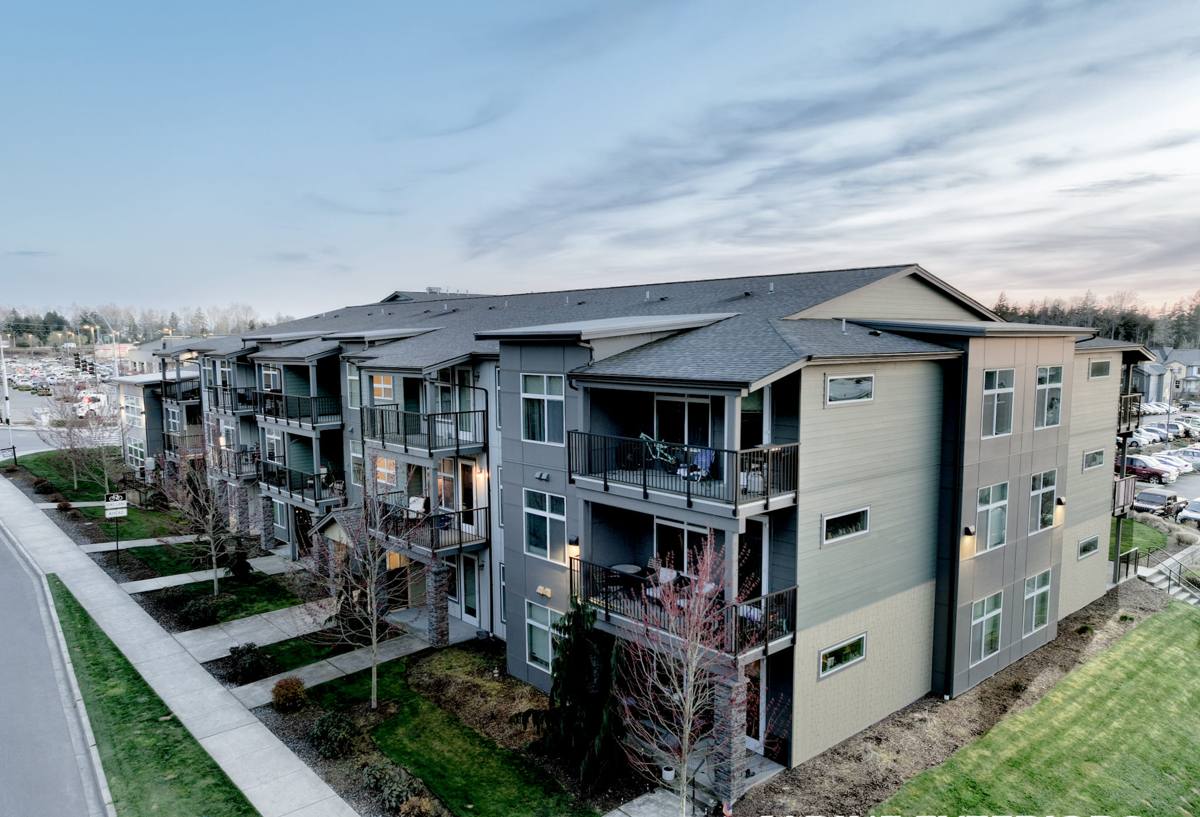
What "Correct" Fiber Cement Installation Actually Involves
Fiber cement siding is only as good as the installation behind it. A huge share of the siding failures we get called out to inspect in Mount Vernon aren't product failures at all — they're installation shortcuts that let moisture in behind a material that's otherwise doing its job. A correct install means:
- A drainable weather-resistive barrier installed and lapped correctly, with all penetrations properly flashed before a single board goes up
- A rainscreen or furring strategy that gives water a path to drain and air a path to dry, rather than trapping moisture against the sheathing
- Butt joints, corners, and trim sealed and fastened to Hardie's published fastening schedule — not "close enough"
- Proper clearance from grade, decks, roof lines, and hardscape so siding never sits in standing water or constant splash-back
- Caulking and sealant used only where Hardie specifies it, with the right product for a coastal climate — not as a substitute for correct flashing
Skip any one of these steps and you can end up with moisture intrusion behind fiber cement that looks fine from the curb for a year or two before problems show up. This is the single biggest reason we tell Mount Vernon homeowners to vet the installer as carefully as the product.
Why We Install Only James Hardie
We made a decision as a company to install James Hardie fiber cement exclusively — not vinyl, not LP SmartSide, not other fiber cement brands like Cemplank or Allura, not primed spruce or cedar. That's not a marketing position, it's a standard we hold ourselves to because of what we've seen hold up in this specific climate over time.
James Hardie manufactures fiber cement specifically engineered for regional climate zones, including a HardieZone HZ10 product line built for wetter, more humid conditions like ours. The ColorPlus factory finish is baked on under controlled conditions rather than field-painted, which matters enormously in an area where field-applied paint has to cure in unpredictable rain windows. Fiber cement itself is non-combustible, doesn't provide a food source for moss and mildew the way wood-based products can, and doesn't go brittle or expand and contract the way vinyl does across our seasonal temperature swings. Hardie also backs its products with a strong transferable limited warranty when installed to spec, which gives homeowners real recourse — something that matters more, not less, in a marine climate that's hard on every exterior material.
We're not saying every other product is unusable. We're saying that after years of installation work in this region, we don't think the trade-offs of the alternatives are worth it on homes we're putting our name behind, and we'd rather install one system correctly and stand behind it than spread ourselves across products we don't have full confidence in for Skagit County conditions.
Comparing How Common Siding Materials Hold Up Locally
| Material | Moisture Behavior in Marine Climate | Moss/Mildew Resistance | Typical Finish Durability |
|---|---|---|---|
| James Hardie Fiber Cement | Engineered HZ10 formulation for wet climates; dimensionally stable | Not an organic food source; resists sustained moss growth | Factory-baked ColorPlus finish, long field life |
| Vinyl | Can warp or become brittle with temperature swings; seams can allow water behind panels | Moderate; growth often forms in panel laps and J-channels | Color fades over time; no refinishing option |
| LP SmartSide (wood-strand) | Engineered to resist moisture but still wood-based; edge sealing is critical | Better than untreated wood but still an organic substrate | Field or factory paint; edges are the vulnerable point |
| Primed Spruce/Cedar | Natural wood movement; prone to swelling in sustained rain exposure | Higher susceptibility; requires regular treatment | Repainting needed on a recurring cycle |
This isn't a claim that the other materials are defective — plenty of them perform reasonably well in drier climates or with diligent maintenance. It's a reflection of what tends to hold up with the least maintenance burden specifically in a Puget Sound-adjacent, high-moisture environment like Mount Vernon's.
Our Process for a Mount Vernon Siding Project
1. On-Site Assessment
We walk the exterior with you, looking at current siding condition, trouble spots (north walls, areas near grade, spots with poor sun exposure), existing moisture damage, and any structural or sheathing concerns that need to be addressed before new siding goes up.
2. Product and Color Selection
We go over the relevant Hardie panel and plank profiles and ColorPlus color options, and talk through what performs best given your home's exposure — for example, homes closer to open water or with more direct wind-driven rain may warrant different detailing at joints and trim than a more sheltered lot.
3. Tear-Off and Substrate Check
Old siding comes off and we inspect the sheathing underneath. Any rot, water damage, or compromised framing gets addressed before anything new goes on — installing new siding over a damaged substrate just hides the problem.
4. Weather Barrier and Drainage Plane
We install a code-compliant weather-resistive barrier and drainage strategy suited to fiber cement in a wet climate, with careful attention to window and door flashing, which is where the majority of moisture intrusion problems originate.
5. Installation to Manufacturer Spec
Panels and planks go up per James Hardie's fastening, clearance, and joint-treatment specifications — not shortcuts, because that spec is what your warranty coverage depends on.
6. Final Walkthrough
We review the finished work with you, covering care and maintenance basics and answering any questions about how the system will perform through the coming wet season.
What to Look for When Hiring a Siding Contractor in Skagit County
Siding work is highly installation-sensitive, and the visible product is only part of the story — most of what determines whether siding lasts is hidden behind it. Before hiring anyone for a fiber cement project in Mount Vernon or elsewhere in Skagit County, it's worth asking:
- Are they a factory-certified or trained James Hardie installer, and can they explain their flashing and drainage approach in detail?
- Do they carry proper licensing and insurance for exterior contracting work in Washington State?
- Will they put the fastening schedule, clearances, and warranty terms in writing as part of the contract?
- Do they have experience specifically with coastal/marine-climate installations, not just siding in general?
- Are they willing to inspect and address sheathing or moisture issues discovered during tear-off, rather than covering them up?
A crew that already works regularly in Mount Vernon and the surrounding Skagit County area will have a working knowledge of which details — flashing at deck ledgers, clearance at grade near irrigation and sprinkler zones, venting behind north-facing walls — actually matter here, rather than applying a generic installation approach that may have been developed for a drier climate.
Maintenance Realities for Mount Vernon Homeowners
Even the best siding system benefits from basic upkeep, especially in a moss-prone climate. Fiber cement dramatically reduces the maintenance burden compared to wood-based products, but it isn't zero-maintenance. A realistic annual routine includes a gentle rinse to clear pollen, dust, and early moss growth (avoid high-pressure washing directly into seams), a visual check of caulking at trim and penetrations, and prompt attention to any gutter or downspout issues that could be directing extra water onto a wall section. None of this requires repainting or resealing the siding face itself — that's the advantage of the factory-applied ColorPlus finish holding up over time instead of relying on field-applied coatings that break down faster in our rain patterns.
Get an Honest Look at Your Home's Siding
If your Mount Vernon home is showing signs of siding wear — swelling, paint failure, persistent moss, or visible gaps at seams and trim — it's worth getting a straightforward, no-pressure assessment before the next wet season sets in. We'll walk the exterior with you, tell you honestly what we see, and explain what a correctly installed James Hardie system would look like for your specific home. Use the form below to request a free estimate.