 Anacortes Siding
 Building Exteriors for the Flounder Bay Area
Flounder Bay sits close to the water on Fidalgo Island, in the kind of setting that makes Anacortes special and also makes it hard on a house. Homes here live with salt-laden air off the marina and the Guemes Channel, wind-driven rain that comes at the wall sideways instead of straight down, and a long gray season where moisture just sits against the building. We've worked on homes throughout this part of Skagit County long enough to know that what works on a dry-side Washington home doesn't always hold up a mile from saltwater, and we build our recommendations around that reality rather than a generic checklist.
This page covers what we see most often in the Flounder Bay area, how our siding, roofing, window, and deck work fits together for waterfront and near-waterfront properties, and why we install one siding product across every job instead of offering a menu of options.
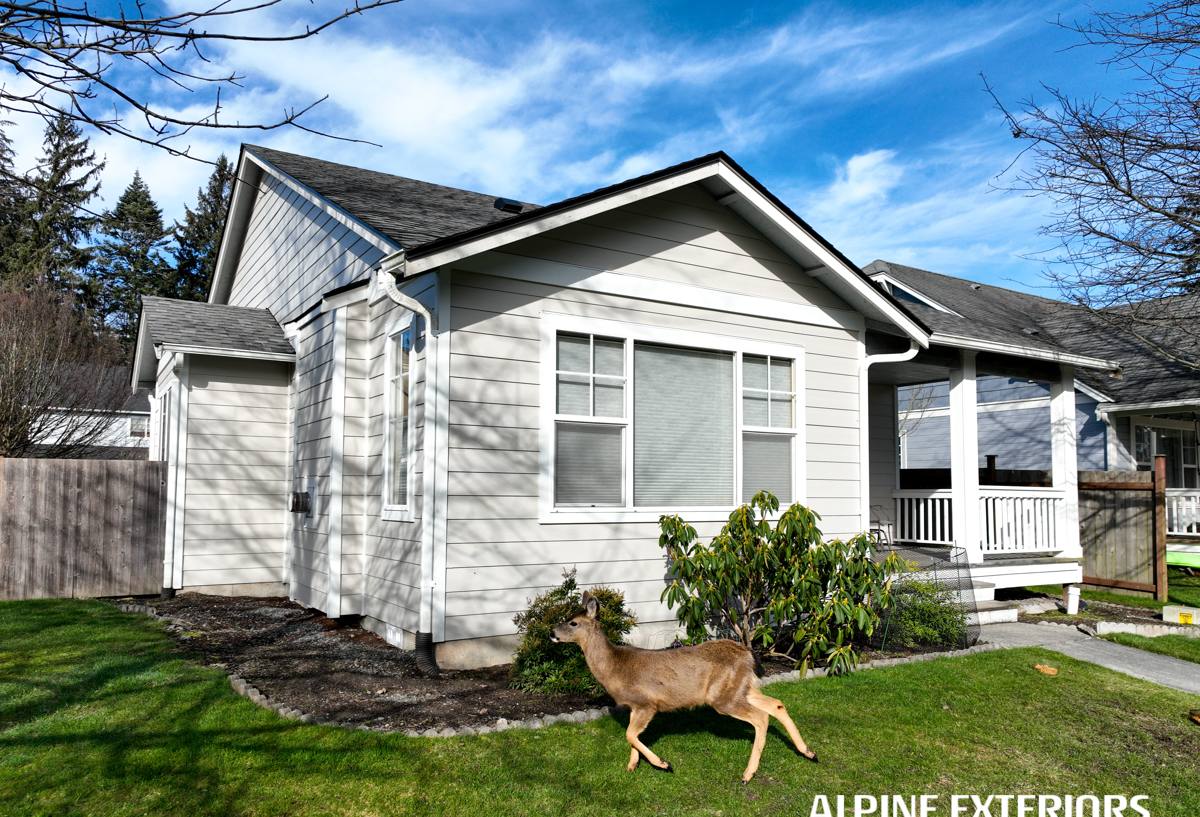
What the Climate Actually Does to a House Here
Salt Air
Airborne salt is corrosive to exposed metal fasteners, flashing, and hardware, and it also accelerates the breakdown of some paint and coating systems faster than the same products would fail further inland. It's a slow process, but it's constant, and it doesn't take a storm to do damage — just proximity to the water and time.
Driving Rain
Fidalgo Island gets weather off the Strait and the Sound that doesn't fall politely. Wind-driven rain gets forced into laps, seams, and fastener penetrations that a calmer climate would never test. Any siding or trim detail that's "good enough" in a sheltered inland yard gets found out here.
Moss and Sustained Moisture
Skagit County's wet season runs long, and north-facing walls, shaded siding, and anything near overhanging trees can stay damp for weeks at a stretch. That's exactly the environment moss, algae, and mildew want. Materials that absorb moisture or hold it against the substrate age faster in these conditions than they would in a drier climate.
Wind Exposure
Open water exposure means gusts that a sheltered inland lot rarely sees. Loose trim, marginal fastening, or a roofing system installed to minimum spec tends to show its weaknesses first in a spot like this.
Why We Install James Hardie Fiber Cement — And Nothing Else
We standardized on James Hardie fiber cement siding for every job we do, including homes in Flounder Bay, and we're upfront about why. We don't install vinyl, LP SmartSide, Cemplank, Allura, primed spruce, or cedar, even though all of those products have a place in the market and each has genuine strengths. Our decision isn't about badmouthing them — it's about what we're willing to warranty and stand behind on a coastal Skagit County home.
The Trade-Offs With Common Alternatives
- Vinyl siding is inexpensive and low-maintenance, but it's a petroleum-based product that can warp or become brittle with UV and temperature swings, and it isn't rated for the wind exposure some waterfront lots see.
- LP SmartSide (engineered wood) performs well when detailed correctly, but it's a wood-based product, and wood-based sidings are more sensitive to sustained moisture exposure than fiber cement — a real consideration a few hundred feet from saltwater.
- Cedar is a genuinely beautiful, traditional Northwest material, but it requires ongoing refinishing, is combustible, and is a continuing maintenance commitment that most homeowners underestimate when they choose it.
- Primed spruce or other primed wood panels depend heavily on the homeowner maintaining the paint film; once that film fails, moisture gets into the substrate and the clock starts.
- Cemplank and Allura are also fiber cement products and share Hardie's basic material chemistry, but we've built our installation training, warranty relationships, and product knowledge around one system so we can install it correctly every time rather than spreading expertise across several product lines.
Fiber cement itself — the category James Hardie pioneered — is non-combustible, doesn't rot, and is engineered specifically to hold up to moisture cycling. James Hardie also builds region-specific HZ5 products formulated for the Pacific Northwest's freeze-thaw and moisture patterns, backs the ColorPlus factory finish with a dedicated finish warranty, and offers a transferable product warranty that matters if a Flounder Bay home changes hands. For a wall assembly that's going to face salt air and driving rain for decades, that combination is what we're willing to put our name behind.
How a Flounder Bay Siding Job Actually Works
Assessment
We start by looking at the whole exterior envelope, not just the siding surface. That means checking existing flashing, house wrap or building paper condition, trim details around windows and doors, and any spots where past moisture intrusion has already left marks — stained sheathing, soft trim, or visible mildew are all clues we look for before we ever talk about new siding.
Water Management First
On a site this exposed, the flashing and drainage plane details matter as much as the siding product itself. We install proper weather-resistant barriers, correctly lapped flashing at windows, doors, and horizontal trim, and rainscreen or drainage gap detailing where it's called for, so that any water that does get past the outer surface has somewhere to go instead of sitting against the wall.
Installation to Manufacturer Spec
James Hardie siding is only as good as its installation. Fastener spacing, gapping at butt joints, caulking at penetrations, and proper clearance from grade, decks, and roof lines are all spelled out in the manufacturer's installation guidelines, and cutting corners on any of them is where coastal homes run into trouble. We follow those specs as a baseline, not a suggestion.
Finish and Color
ColorPlus prefinished panels arrive with the color baked on at the factory under controlled conditions, which holds up better against salt air and UV exposure than field-applied paint, and it saves you the recoat cycle a painted wood siding would eventually need.
Beyond Siding: Roofing, Windows, and Decks
Siding doesn't work in isolation — it's one piece of the building envelope, and a marina-adjacent home needs the whole system pulling in the same direction.
Roofing
Roof-wall intersections are one of the most common leak points on any home, and they're even less forgiving in a high-wind, high-rain setting. When we handle both roofing and siding on a project, we can make sure step flashing, kickout flashing, and transitions are integrated correctly instead of left as a gap between two separate contractors' scopes.
Windows
Window flashing and the seal between the window unit and the siding is a common failure point on older Flounder Bay-area homes. Replacing siding is a natural time to correct flashing details around existing windows or install new ones with proper integration into the new water-resistive barrier.
Decks
Outdoor living matters on the water, and deck ledger connections, flashing at the house band board, and material choice all need to account for the same salt air and moisture exposure that drives our siding decisions. A deck built or refinished the same season as a siding project lets us tie the details together instead of patching around each other's work.
Cost Factors for a Waterfront-Adjacent Home
| Factor | Why It Matters Here |
|---|---|
| Wall complexity | Homes with more corners, dormers, and trim detail take longer to flash and fit correctly, which affects labor more than material cost. |
| Existing damage | Rot or moisture intrusion found during tear-off adds sheathing or framing repair before new siding goes on. |
| Access and exposure | Waterfront lots, steep grades, or limited staging area can affect scaffolding and logistics. |
| Trim and finish level | Board-and-batten, shake-style panels, and custom trim packages cost more than a straightforward lap siding install. |
| Scope bundling | Combining siding with roofing, window, or deck work in one mobilization is usually more efficient than separate projects done years apart. |
We give honest, project-specific numbers after we've actually looked at the house — broad online estimates rarely mean much once wall complexity and existing condition are factored in.
Signs a Flounder Bay Home May Need Siding Attention
- Visible moss or persistent algae staining on north-facing or shaded walls
- Soft or spongy spots when you press on siding, especially near the bottom courses
- Paint that's peeling, bubbling, or failing faster than expected
- Gaps, warping, or separation at siding seams and trim joints
- Visible rust streaking from fasteners or trim hardware
- Higher heating bills that suggest the wall assembly isn't performing the way it should
- Cracked or damaged panels after a windstorm
Why a Local Crew Matters
A contractor based in and around Anacortes sees how Skagit County's coastal microclimates behave season after season — which walls take the worst of the weather, which details fail first, and which ones actually hold up. That's not something you get from a crew that swings through the area once and moves on. We're also positioned to respond if a warranty question or a follow-up item comes up years down the road, because we're not leaving the area when the job is done.
If you're weighing a siding, roofing, window, or deck project for a Flounder Bay property, we're happy to take a look and give you a straightforward, no-pressure estimate — no invented urgency, just an honest read on what your home actually needs.