 Anacortes Siding
 Building a Deck That Can Actually Handle Flounder Bay
Flounder Bay sits close enough to the water that every deck we build there has to answer to the same conditions: salt-laden air, wind-driven rain coming off Rosario Strait, and a wet season that stretches on long enough to grow moss on almost anything that holds moisture. A deck built to a generic spec sheet, without accounting for that combination, tends to show problems within a few seasons — soft spots near the ledger, rust bleeding from fasteners, slick green film on the walking surface by late fall. A deck built for this specific location holds up because every material and detail decision accounts for what the bay actually does to exterior wood and metal over time.
This page covers what we build into every Flounder Bay deck project, why those choices matter for this particular stretch of Anacortes, and what our process looks like from the first estimate to the final walkthrough.
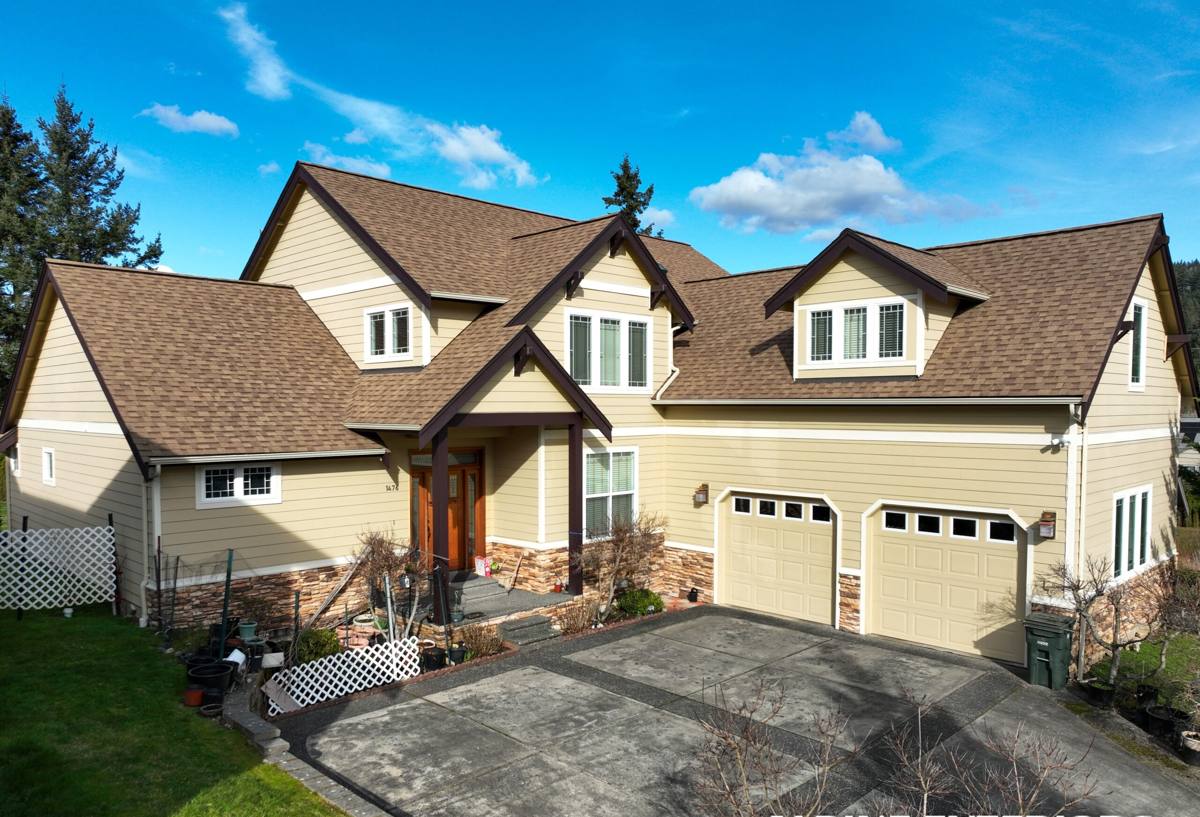
What Salt Air and Driving Rain Do to a Deck
Coastal exposure in Skagit County isn't the same as inland Western Washington rain. Salt air accelerates corrosion on any fastener, bracket, or flashing that isn't rated for it, and it does so quietly — a deck screw can look fine on the surface while it's already losing holding strength underneath. Driving rain, meanwhile, doesn't just fall straight down; wind pushes it sideways and up under rail caps, around post bases, and into any gap where two boards meet. That combination is why we treat fastener selection and water-shedding details as structural decisions, not finishing touches.
Where the Damage Actually Starts
In our experience working this area, deck failures rarely start in the middle of the deck surface. They start at the connection points: where the ledger board meets the house, where posts meet footings, and where rail posts penetrate the decking. These are the spots where water collects, air doesn't circulate, and standard hardware corrodes fastest. A correct build treats each of these as a separate waterproofing problem, not just a structural attachment.
Decking Material Choices for This Climate
There's no single "right" material for every Flounder Bay project — it depends on your budget, how much upkeep you're willing to do, and how much sun versus shade the deck gets. Here's how the common options actually perform under salt air and heavy moss pressure.
| Material | How It Handles Salt Air & Moisture | Moss/Algae Behavior | Maintenance Load |
|---|---|---|---|
| Pressure-treated fir/hem-fir | Good if fasteners and flashing are corrosion-rated; end grain needs sealing | Moss takes hold quickly if not cleaned; can trap moisture in grain | Annual cleaning, re-sealing every 1-2 years |
| Cedar | Naturally rot-resistant, but still needs sealed end cuts near salt exposure | Susceptible to moss and graying without upkeep | Regular cleaning, periodic oil/stain |
| Composite decking | Doesn't absorb moisture the way wood does; core material varies by brand | Still grows moss/algae on the surface film in shaded, damp spots | Low — periodic washing, no sealing/staining |
| PVC decking | Fully resists moisture absorption; good for direct coastal exposure | Surface can still host moss/algae without occasional cleaning | Low — washing only |
Every one of these materials can grow moss if the deck doesn't get airflow and periodic cleaning — the difference is what happens underneath. Wood that stays damp against a poorly ventilated framing member can soften and rot; composite and PVC won't rot, but they can still get slick and need washing. We walk through this table with homeowners during the estimate so the choice matches how the specific deck sits — full sun, shaded under trees, close to the water, or tucked against the house.
Framing, Fasteners, and Flashing Done Right
Ledger Attachment
The ledger board — where the deck ties into the house — is the single most common failure point on decks anywhere in Western Washington, and salt air makes it worse. We flash the ledger properly so water sheds away from the house band board instead of collecting behind it, and we use structural fasteners and hangers rated for corrosive, coastal environments rather than standard galvanized hardware.
Fastener Selection
Stainless steel or coated fasteners rated for coastal/marine exposure cost more upfront than standard deck screws, but on a Flounder Bay deck that difference shows up within a couple of years in the form of rust streaks, loosening boards, and stained decking. We don't mix fastener types on a single structure — galvanic corrosion between dissimilar metals is a real issue this close to salt water, and it accelerates when the wrong hardware combinations sit next to each other in damp conditions.
Post Bases and Footings
Post bases that hold wood in direct contact with concrete or soil trap moisture and are one of the first places rot shows up on an older deck. We keep structural posts elevated off the footing surface with proper post base hardware, so water drains away instead of wicking up into the end grain.
Designing for Drainage and Airflow, Not Just Looks
Moss and algae need three things to establish: moisture, shade, and still air. A deck design that ignores airflow underneath and between boards is setting itself up for a moss problem regardless of what material sits on top. We build in board spacing appropriate to the decking material, avoid designs that trap standing water on low-pitch surfaces, and grade drainage away from the house and any downhill neighbors where the deck's footprint affects runoff.
For decks built low to the ground or over living space below, proper under-deck drainage systems matter even more — without them, water finds its way through gaps and drips onto whatever's underneath, and the framing above stays wet longer than it should through Skagit County's long, damp fall and winter stretch.
Our Deck Building Process
- On-site assessment: we look at sun/shade exposure, wind direction relative to the water, existing drainage, and how the deck will tie into the house.
- Design and material selection: we walk through material trade-offs based on your budget and how the specific site is exposed to salt air and rain.
- Permitting: we handle the permit application through the applicable jurisdiction and make sure the design meets current building code for railing height, guard spacing, and structural loads.
- Framing and structural work: ledger flashing, corrosion-rated fasteners, and properly elevated post bases go in before anything else.
- Decking and rail installation: boards, rail systems, and any stairs are installed with attention to spacing for drainage and airflow.
- Final walkthrough: we go over the finished deck with you, including what maintenance it needs and on what schedule.
Permits and Code Considerations
Most new deck construction and many deck replacements in Anacortes and unincorporated Skagit County require a building permit, particularly when the deck is attached to the house, elevated beyond a certain height, or involves structural changes. Requirements cover things like railing height, guard baluster spacing, footing depth, and ledger attachment method. We handle the permit process as part of the job rather than leaving it to the homeowner, and we build to current code rather than to whatever the previous deck happened to meet when it went up years ago.
Maintenance That Actually Matters Here
A well-built deck in Flounder Bay still needs seasonal attention — the climate doesn't let any exterior surface coast on a "install and forget" basis. Here's the realistic maintenance checklist we give homeowners:
- Sweep debris and standing organic matter off the deck surface regularly, especially in fall when leaves and needles accumulate
- Wash the deck surface at least once or twice a year to remove the moss and algae film before it gets established
- Check and clear gaps between boards so water and debris aren't trapped
- Inspect fasteners and rail connections annually for rust staining or loosening
- Re-seal or re-stain wood decking on the schedule appropriate to the product — don't wait until it's visibly gray and dry
- Keep gutters and downspouts near the deck clear so roof runoff isn't dumping directly onto or under the structure
- Trim back vegetation that's shading the deck and keeping it damp longer than it should stay
Cost Factors for a Flounder Bay Deck
Deck pricing depends on size, material, height off the ground, and how much structural and drainage work the site needs. Rather than quote a number that doesn't mean much without seeing the site, here's what actually drives cost up or down on projects in this area:
| Factor | Why It Affects Cost |
|---|---|
| Decking material | Pressure-treated wood costs less upfront than composite or PVC; composite/PVC cost more but need less ongoing maintenance |
| Height and stairs | Elevated decks need more structural framing, railing, and often stairs, which adds labor and material |
| Site access | Tight lots or difficult grading near the water can slow excavation and material delivery |
| Ledger and flashing complexity | Older homes sometimes need siding removed and repaired to properly flash a new ledger connection |
| Drainage system | Under-deck drainage for low or multi-level decks adds material and labor cost but prevents water damage below |
| Railing style | Cable, glass, and custom rail systems cost more than standard wood or composite balusters |
We give a specific, written estimate after seeing the site — broad national averages don't account for coastal exposure, existing structure condition, or the access challenges some Flounder Bay lots present.
Why It Matters That We Already Work This Area
A crew that's already built and maintained decks in Flounder Bay knows how the wind comes off the water at this spot, how much moss pressure a shaded, north-facing deck gets compared to one in full sun, and which fastener and flashing choices actually hold up here versus what a generic spec sheet recommends. That local pattern recognition is the difference between a deck that's designed for "coastal Washington" in general and one that's built for the specific conditions on your lot in Skagit County.
If you're planning a new deck, replacing an aging one, or just want an honest opinion on whether yours needs repair versus rebuild, we're happy to take a look. Fill out the form below for a free, no-pressure estimate — we'll walk the site, talk through material options for your exposure, and give you a straightforward number before any work begins.