 Anacortes Siding
 Exterior Work in West Anacortes: Living Close to the Water
West Anacortes sits on Fidalgo Island, close enough to Rosario Strait, Guemes Channel, and the working waterfront that the marine environment shapes almost every exterior decision a homeowner makes here. Salt-laden air off the water, long stretches of driving rain through fall and winter, and heavy tree cover that shades roofs and siding into a near-permanent damp season all add up to a harder job for your home's exterior than homes get twenty or thirty miles inland. We've worked on siding, roofing, windows, and decks across Anacortes and Skagit County long enough to know which materials hold up out here and which ones quietly fail a few years after the crew that installed them has moved on to the next job.
This page is about what that means for a West Anacortes home specifically — what to watch for, what we install and why, and what a realistic exterior upgrade looks like when salt air and moss are part of the equation year-round.
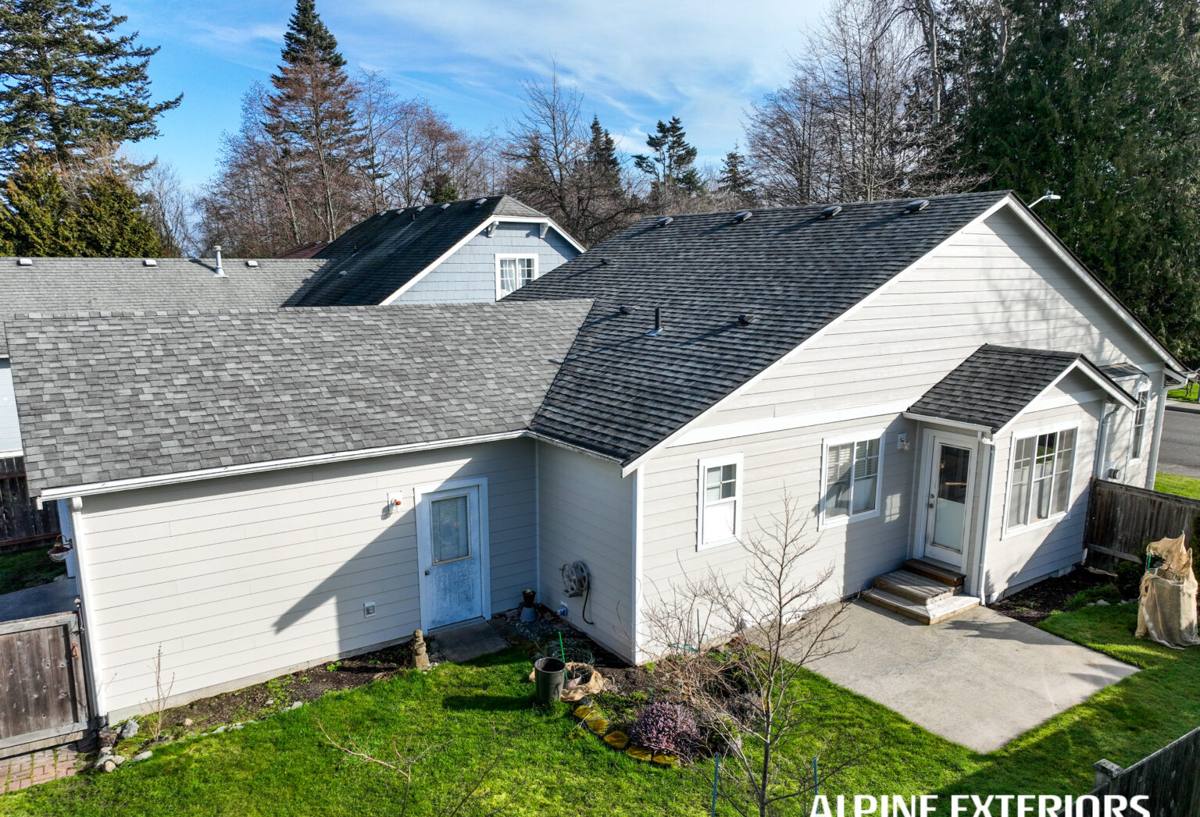
What Salt Air, Rain, and Moss Actually Do to a House
Salt air
Airborne salt doesn't just affect boats and metal railings. It settles on siding, trim, and roofing in a fine film that accelerates corrosion on fasteners, staples, and any exposed metal flashing that isn't properly rated for coastal exposure. Over years, that corrosion can work its way into places you can't see — behind trim boards, around window flanges, under roof edges — long before it shows up as a visible problem.
Driving rain
Anacortes doesn't get the heaviest rainfall totals in Western Washington, but wind-driven rain off the water pushes water sideways into joints, seams, and laps that a calmer climate would never test. Siding and trim that rely on caulk alone, rather than proper flashing and lap detail, tend to let water in at exactly those pressure points.
Moss and prolonged dampness
Shaded lots, tree cover, and a long wet season mean moss and algae get a real foothold on north-facing walls, roof valleys, and anywhere airflow and sun exposure are limited. Moss holds moisture against a surface far longer than open air would, which is a problem for any siding or roofing material that isn't dimensionally stable or resistant to sustained moisture contact.
Why We Install James Hardie Fiber Cement — And Nothing Else
We get asked fairly often why we don't offer vinyl, LP SmartSide, or other engineered wood and composite siding products. It's a fair question, and the honest answer is that we made a standing decision, based on years of exterior work in this climate, to install one product system: James Hardie fiber cement.
Vinyl siding is inexpensive and low-maintenance in mild climates, but it's a petroleum-based product that becomes brittle in cold snaps, can warp or buckle in direct sun exposure, and offers essentially no resistance to wind-driven rain intrusion at its overlapping panel joints — a real liability given how much driving rain this area sees. LP SmartSide and other wood-strand products perform reasonably well when installation and caulking are perfect and stay perfect for decades, but they're wood-based, and wood-based siding is exactly the category that struggles most with sustained moisture exposure, edge swelling, and fungal growth in a climate like West Anacortes'. We're not saying either product is junk — plenty of homes around the country wear them fine. We're saying that in a marine, moss-prone, high-moisture pocket of Skagit County, we don't think they're the right long-term bet, and we'd rather stand behind one system we trust completely than sell several we have reservations about.
James Hardie fiber cement is cement, sand, and cellulose fiber — non-combustible, dimensionally stable, and engineered specifically to resist moisture, pests, and UV breakdown. Hardie's HZ5 product line is formulated for exactly this kind of climate: freeze-thaw cycling combined with sustained damp. The factory-applied ColorPlus finish is baked on under controlled conditions, which means far more consistent, fade-resistant color than field-applied paint, and it comes with its own finish warranty layered on top of Hardie's product warranty. For a house facing salt air and a nine-month damp season, that combination — non-combustible material, factory finish, and a climate-specific product line — is what we're willing to put our name behind.
Beyond Siding: The Whole Exterior Envelope
Siding doesn't work in isolation. A house is a system, and in a climate this hard on exteriors, the roof, windows, siding, and any exterior decking all interact with the same moisture and salt exposure. We handle all four because gaps between trades are where most water damage actually starts — a roofer who doesn't coordinate flashing with the siding crew, or a window installer who doesn't tie the window flange properly into the water-resistive barrier, can undo good work done by everyone else on the job.
Roofing
A roof in West Anacortes needs proper ventilation and moss-resistant detailing, not just watertight shingles. Poor attic ventilation traps moisture that then works its way into sheathing and eventually siding from the inside.
Windows
Window replacement is a natural pairing with siding work because it lets us integrate flashing and the water-resistive barrier correctly around the opening in one continuous system, rather than patching around old flashing that may already be compromised.
Decks
Exterior decks here take the same driving rain and damp-shade exposure as siding, and ledger board connections in particular need careful flashing to keep water from tracking into the house structure itself.
How a West Anacortes Siding Project Actually Runs
The process doesn't change much house to house, but the details we pay closest attention to are shaped by this specific climate.
- Assessment and tear-off — We inspect existing sheathing and framing for moisture damage once old siding comes off. In a house that's seen years of salt air and rain, this step often reveals more than a homeowner expects, especially around window and door openings.
- Water-resistive barrier — A properly lapped, correctly taped weather barrier goes on before anything else. This is the layer that actually keeps a house dry if wind-driven rain ever gets past the siding itself.
- Flashing at every penetration — Windows, doors, hose bibs, vents, and any other penetration get flashed individually. This is the step that separates a siding job that lasts twenty-plus years from one that leaks in five.
- James Hardie panel or lap installation — Installed to Hardie's published specifications: correct fastener type and spacing (corrosion-resistant fasteners matter enormously this close to salt air), proper clearance from grade and roofline, and correctly caulked or open joints depending on the product line.
- Trim and finish detail — Factory-finished ColorPlus trim and touch-up, with careful attention to any field-cut edges that need to be sealed per Hardie's requirements.
Why a Local Crew Matters Here
A crew that works across Skagit County and specifically in and around Anacortes knows which walls on a given lot take the worst of the wind-driven rain, which sides grow moss fastest, and how local building department expectations around flashing and moisture barriers actually get enforced. That's knowledge you don't get from a crew that treats every job the same regardless of climate. It also means someone who answers the phone locally if a question comes up years after the job is done — not a call center for a franchise based somewhere inland.
Comparing Siding Materials for This Climate
| Material | Moisture behavior in marine climate | Salt air / fastener corrosion risk | Typical maintenance |
|---|---|---|---|
| James Hardie fiber cement | Dimensionally stable, engineered for wet climates (HZ5 line) | Low, when installed with corrosion-resistant fasteners | Occasional wash; factory finish resists fading |
| Vinyl | Panels don't absorb water but joints allow wind-driven rain intrusion | Low material risk, but poor rain resistance at seams | Low, but can warp or crack over time |
| LP SmartSide / wood-strand | Vulnerable to edge swelling and moisture wicking if caulking fails | Moderate — relies on paint film staying intact | Regular caulk and paint upkeep required |
| Cedar | Natural material, absorbs moisture, prone to rot without upkeep | Low direct corrosion risk, but high moisture vulnerability | High — regular staining/sealing needed |
What to Watch For on Your Own Home
Whether or not you're planning a project soon, these are worth checking a couple of times a year, especially heading into and coming out of the wet season.
- Dark streaking or green growth on north-facing or shaded walls — early moss and algae buildup
- Soft or spongy spots when you press on siding near ground level or under window sills
- Rust staining below fasteners or metal trim pieces
- Peeling or bubbling paint, especially on wood-based siding or trim
- Gaps or cracked caulk at window and door trim joints
- Visible warping or buckling in vinyl panels after hot afternoon sun
- Moisture or musty smell in interior rooms along exterior walls
What Drives the Cost of a Siding Project
| Factor | Why it matters |
|---|---|
| House size and wall complexity | More corners, gables, and dormers mean more cutting, flashing, and labor time |
| Condition of existing sheathing | Hidden moisture damage found at tear-off can add repair scope |
| Product line and profile | Hardie offers lap, panel, and shingle profiles at different price points |
| Trim and finish detail | Factory-finished ColorPlus trim vs. field-painted trim affects both cost and long-term upkeep |
| Site access | Tight lots, slopes, or limited staging area can affect labor time |
We don't quote broad numbers without seeing the house — every West Anacortes property has a different mix of exposure, condition, and complexity — but we'll walk the exterior with you and give you a straightforward, itemized estimate before any work starts.
Ready to Talk Through Your Home's Exterior?
If your siding, roof, windows, or deck are starting to show what a few decades of salt air and Skagit County rain can do, we're happy to come take a look. There's no pressure and no obligation — just a straight assessment of what's going on and what your options actually are, using a free estimate form below.