 Anacortes Siding
 Decking on the West Side of Fidalgo Island Faces a Different Set of Problems
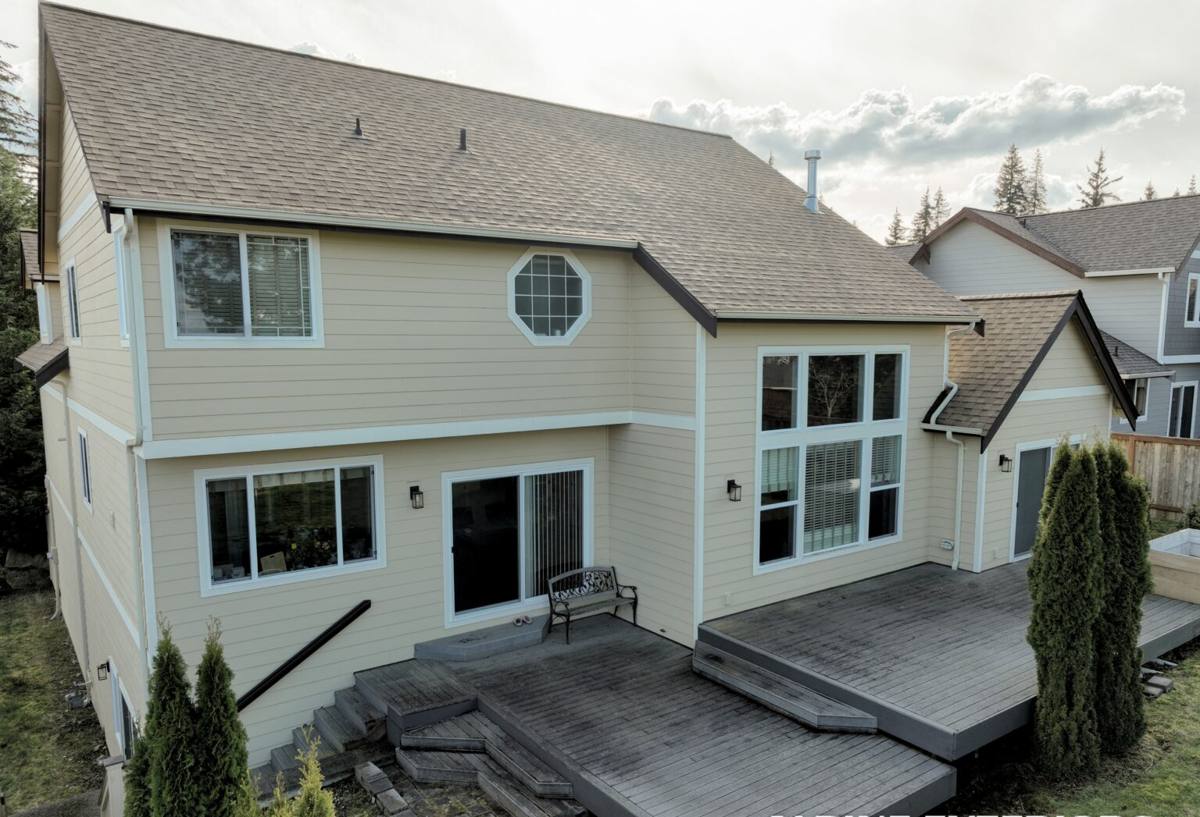
Homes on the west side of Anacortes sit closer to open water than most inland Skagit County properties, and that changes what a deck has to survive. Salt-laden air off Rosario Strait and the surrounding waterways works its way into fasteners, framing connectors, and the wood fibers of an old-style deck year-round. Add the Pacific Northwest's long wet season and the shade cover common in these established neighborhoods, and you get a moss season that can run from October through May in a bad year. A deck built with generic materials and a generic install plan will show it within a few seasons — cupping boards, green film underfoot, rusted fasteners bleeding through the surface. A deck built for this specific stretch of coastline won't.
This page covers what composite decking actually needs to hold up in West Anacortes conditions, what a correct installation looks like, and how our process is built around the climate here rather than a one-size-fits-all national standard.
What Salt Air, Driving Rain, and Moss Actually Do to a Deck
Salt Air and Metal Fasteners
Salt in the air accelerates corrosion on any exposed or marginally protected metal — screws, joist hangers, structural screws, post bases. Once a fastener starts rusting, it weakens, stains the surrounding decking, and eventually needs replacement. This is a bigger deal on west-facing lots than it is a few miles inland, and it's one of the first things we check on any deck we're asked to look at in this part of town.
Driving Rain and Water Intrusion
Anacortes doesn't just get rain — it gets rain pushed sideways by wind coming off the water. That matters at every point where the deck meets the house: the ledger board connection, any built-in stairs, and railing posts. A ledger that isn't properly flashed will let water track behind the siding and into the rim joist, which is a rot problem long before it's ever visible from the deck surface.
Moss, Algae, and Shade
West Anacortes has a mix of open, wind-exposed lots and shadier, tree-lined streets. On the shaded lots, moss and algae growth on a deck surface is a near-constant maintenance issue. It's not just cosmetic — a mossy deck surface gets slick fast, and moss holding moisture against a board (wood or composite) shortens its life if the deck wasn't built with drainage and airflow in mind.
Why Composite Makes Sense for This Climate
We install composite decking on the west side of Anacortes because it removes several of the failure points that wood decking struggles with here. Modern capped composite boards don't absorb water the way wood does, which means less cupping, splitting, and splintering through repeated wet-dry cycles. They also don't require annual staining or sealing to keep moisture out — a real advantage on a property where the marine layer keeps things damp most of the year.
That said, composite isn't magic, and we won't tell a homeowner it's maintenance-free. It still needs periodic cleaning to keep moss and algae from getting a foothold, and the substructure underneath it — the part nobody sees — still has to be built to shed water and resist corrosion. A composite deck installed over a poorly flashed, poorly drained frame will still have problems; the composite boards just hide them longer before they surface as a soft spot or a sagging rail.
Capped Composite vs. Uncapped Composite vs. PVC
| Material | Moisture resistance | Maintenance | Typical use case here |
|---|---|---|---|
| Uncapped composite (older-style) | Moderate — outer layer can absorb moisture over time | Occasional cleaning, watch for swelling at cut ends | Budget-driven projects; less common on new installs now |
| Capped composite | High — polymer shell resists moisture and staining | Periodic washing to prevent moss/algae buildup | Most common choice for West Anacortes decks — good balance of cost and durability |
| Cellular PVC | Very high — no wood fiber content | Low; lightest color-fade risk | Higher-exposure spots (full sun/full salt spray, waterfront-adjacent lots) |
What a Correct Composite Deck Build Involves Here
The decking material is maybe a third of what determines how a deck performs on this side of Fidalgo Island. The rest comes down to what's underneath it and how it's fastened together.
- Ledger flashing: A properly integrated ledger flashing detail (not just caulk) at the house connection, to keep wind-driven rain from tracking behind the siding.
- Corrosion-resistant fasteners and hardware: Structural connectors, screws, and post hardware rated for coastal/high-moisture exposure — not standard interior-grade hardware.
- Proper joist spacing: Composite boards often require tighter joist spacing than wood, especially on angled or picture-frame layouts. Building to wood spacing standards with composite boards is a common shortcut that leads to bounce and premature sagging.
- Airflow underneath: Adequate clearance and drainage below the deck so moisture doesn't sit trapped against the framing — a real issue on lower decks or ground-level patios common in this area.
- Hidden fastening systems: Clip-based fastening keeps the board surface free of exposed screw heads, which both looks cleaner and removes another point where water and grime collect.
- Proper board gapping: Composite expands and contracts with temperature; gapping has to account for that or boards buckle at the ends over time.
Our Process for a West Anacortes Deck Project
1. On-Site Assessment
We look at sun/shade exposure, wind exposure, existing framing condition (if this is a replacement), drainage around the footprint, and how the deck ties into the house. West-facing and water-facing lots get evaluated differently than a sheltered, tree-covered lot even a few blocks away.
2. Substructure Check or Rebuild
If we're re-decking over existing framing, we inspect posts, beams, joists, and the ledger connection before anything new goes down. Framing with rot, rust-compromised hardware, or inadequate flashing gets addressed first — installing new composite boards over a bad substructure just delays the same problem.
3. Installation
Framing corrections and corrosion-resistant hardware, correct joist spacing for the board profile chosen, ledger flashing done properly, hidden fastening, and expansion gapping set to spec.
4. Walkthrough and Care Guidance
We show you what was done underneath the surface (photos of framing and flashing before boards go down, since that work won't be visible afterward), and go over a simple seasonal cleaning routine suited to your lot's sun/shade exposure.
Maintaining a Composite Deck in This Climate
Composite is lower-maintenance than wood, not no-maintenance. In West Anacortes specifically, moss and surface grime are the main things to stay ahead of.
- Sweep debris and standing organic matter (leaves, needles) off the deck regularly, especially under trees — trapped moisture under debris is what feeds moss growth.
- Wash the deck surface at least once or twice a year with a soft-bristle brush and a composite-safe cleaner; avoid pressure washing at close range, which can damage the cap layer.
- Keep gutters and downspouts near the deck clear so runoff isn't dumping extra water onto or under the deck surface.
- Check railing posts and stair connections annually for any looseness — freeze-thaw cycles and constant moisture can work fasteners loose over years.
- Address moss as soon as it appears rather than waiting for it to spread; it's far easier to remove a light film than an established patch.
What to Ask Any Contractor Bidding a Deck in This Area
Whether you hire us or someone else, these are worth asking before signing anything for a deck on the west side of Anacortes:
- What fastener and hardware grade will be used, and is it rated for coastal/high-moisture exposure?
- How will the ledger board be flashed at the house connection?
- What joist spacing is planned, and does it match the composite board manufacturer's spec — or just standard wood spacing?
- Will there be adequate clearance and drainage underneath the deck for airflow?
- What warranty applies to both the decking material and the labor, and is it in writing?
- Does the project need a permit, and who is pulling it?
A contractor who can answer these clearly and specifically — not with a generic "we always do it right" — is one who actually builds for this coastline, not just decks in general.
Why It Matters That We Already Work in West Anacortes
A crew that works across Skagit County sees a lot of different conditions, but a crew that regularly works the west side of Fidalgo Island knows exactly what this particular stretch of coastline does to a structure over time — which lots get hit hardest by wind-driven rain, which streets hold shade and moss longest into the spring, and which older homes tend to have ledger or framing issues from a prior remodel. That local pattern recognition is what keeps a deck project from becoming a series of surprises once we open up the old structure or start digging post holes.
If you're planning a new composite deck or replacing an aging one in West Anacortes, we're happy to take a look and give you a straightforward, no-pressure estimate — just fill out the form below and we'll go from there.