 Anacortes Siding
 Fidalgo Island Asphalt Shingle Roofing, Built for the Conditions Here
Fidalgo Island sits where the Salish Sea meets the mainland, and that location shapes everything about how a roof ages here. Homes on and around the island take on salt-laden air, long stretches of driving rain off the water, and a moss season that can run most of the year in shaded, north-facing sections of a roof. An asphalt shingle roof that would hold up fine forty miles inland can wear out early here if it wasn't installed with these conditions in mind. This page covers what that actually means for a Fidalgo Island roof, from material choice to how we install and maintain it.
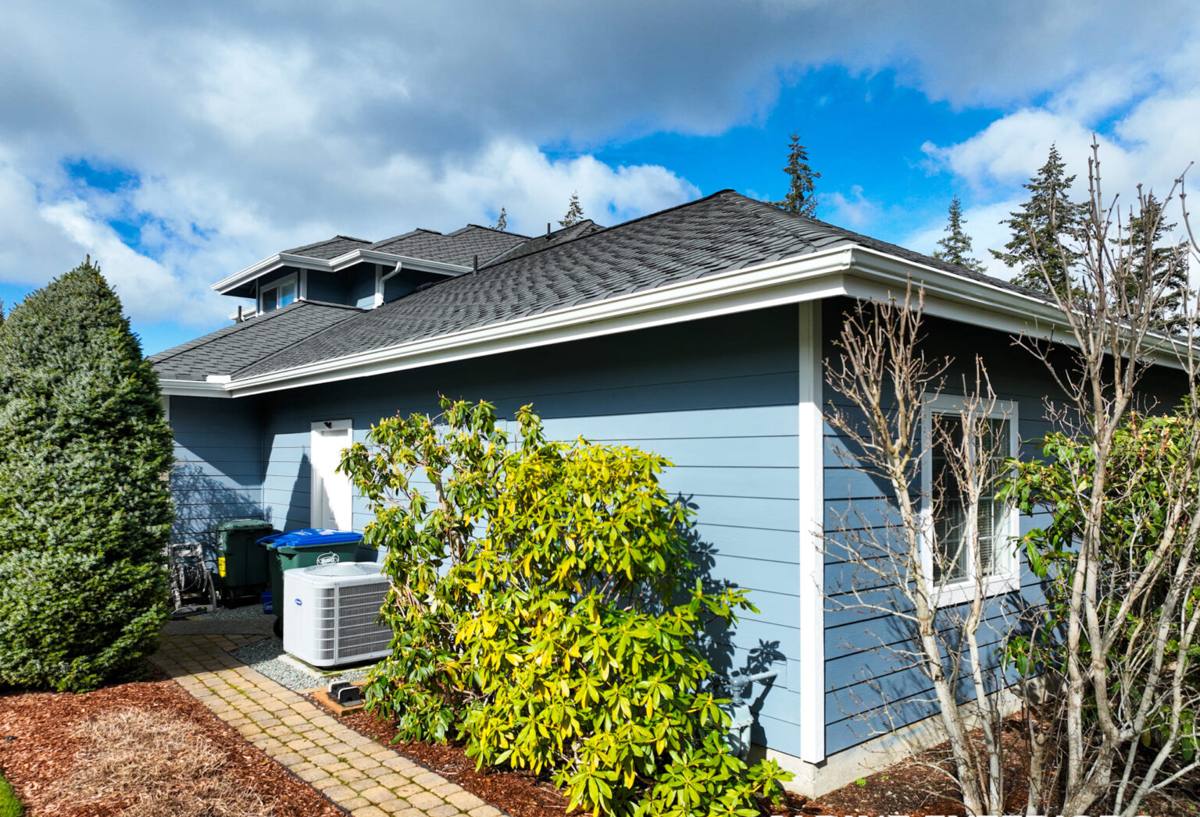
Why the Local Climate Is Hard on Asphalt Shingle Roofs
Three things do most of the damage to shingle roofs on Fidalgo Island, and they don't act alone — they compound each other.
Salt Air and Corrosion
Airborne salt from the surrounding water accelerates corrosion on any exposed metal — nail heads, flashing, vent housings, and gutter hardware. Once a fastener or flashing seam starts corroding, water finds a path underneath the shingle field long before the shingles themselves show visible wear. This is one of the more overlooked failure points on island and near-shoreline roofs, and it's a big reason material selection for the metal components matters as much as the shingle brand.
Driving Rain and Wind-Driven Moisture
Storms off the water don't always fall straight down. Wind-driven rain gets pushed sideways and upward under shingle tabs, around chimneys, and along roof-to-wall transitions — areas that a roof in a calmer climate could get away with sealing more casually. On Fidalgo Island, every penetration and edge detail needs to assume rain will try to travel uphill.
Moss and Sustained Moisture
Skagit County's mild, wet climate keeps shaded roof sections damp for extended periods, which is exactly what moss needs to establish. Once moss takes hold, it lifts shingle edges, holds moisture against the roof deck, and speeds up granule loss. A roof with poor airflow or heavy tree cover will grow moss faster than one with good sun exposure and ventilation, regardless of shingle quality.
What a Correct Asphalt Shingle Roof System Actually Includes
A shingle roof is a system, not a single product. Homeowners often shop by shingle brand or color, but the components underneath and around the shingles determine whether the roof actually performs in this climate.
Underlayment
Synthetic underlayment resists moisture absorption far better than old-style felt paper, which matters when a roof deck can stay damp for days after a storm. In vulnerable areas — eaves, valleys, and low-slope sections — we use self-adhered ice-and-water membrane as a second line of defense, since this is where wind-driven rain is most likely to work its way backward under the shingle courses.
Flashing
Flashing around chimneys, skylights, sidewalls, and roof valleys is where most leaks start, not in the open shingle field. Corrosion-resistant flashing, properly lapped and integrated with the underlayment (not just caulked over old metal), is non-negotiable this close to salt air.
Ventilation
Balanced intake and exhaust ventilation keeps the underside of the roof deck dry and temperature-stable. Poor ventilation traps moisture in the attic, which shortens shingle life from underneath — a slower, less visible failure mode than storm damage, but just as costly over time.
Fasteners
Corrosion-resistant nails, installed at the correct count and placement per shingle, keep the roof intact in wind and prevent the early rust-streaking and loosening that under-spec fasteners cause in a salt-air environment.
Choosing the Right Shingle for This Climate
Not every asphalt shingle product is a good fit for Fidalgo Island conditions. We look at algae resistance, wind rating, and how forgiving the product is to install correctly on a roof with valleys, dormers, or multiple pitches — common on the island's older and custom homes alike.
| Shingle Type | Typical Lifespan Here | Best Fit For |
|---|---|---|
| 3-tab asphalt | 15–20 years | Budget-conscious re-roofs on simpler rooflines |
| Architectural (laminated) | 25–30 years | Most Fidalgo Island homes — better wind and moisture performance |
| Algae-resistant (AR) shingles | 25–30 years, slower moss/algae staining | Shaded lots, north-facing slopes, tree-heavy properties |
| Impact-rated (Class 4) | 25–30+ years | Homes wanting added durability against debris and hail |
Algae-resistant shingles use copper-infused granules that slow the growth that causes those dark streaks on north-facing roof sections. On Fidalgo Island, where moss and algae pressure is higher than in a drier inland climate, we generally recommend AR shingles as the practical standard rather than an upgrade — the difference in appearance and maintenance after 8–10 years is significant.
Signs Your Fidalgo Island Roof Needs Attention
Because storm and moss damage can hide under shingle tabs or in shaded valleys, it helps to know what to check periodically, especially after a hard winter.
- Granules collecting in gutters or at downspout outlets
- Moss or dark algae streaking on north-facing or shaded slopes
- Curling, cupping, or lifted shingle edges, especially near eaves
- Rust staining around nail heads, flashing, or vent boots
- Soft or discolored ceiling spots after heavy rain
- Visible daylight or gaps at chimney and skylight flashing
- Shingles missing or displaced after a windstorm
Any one of these on its own isn't necessarily an emergency, but they're worth a professional look before the next storm season rather than after a leak shows up indoors.
Our Installation Process
We approach every Fidalgo Island roof the same methodical way, because skipping steps here shows up as a leak two winters later, not immediately.
- Inspection and deck assessment — we check the existing deck for rot or soft spots before anything goes back on, since a new roof over a damaged deck fails early no matter how good the shingles are.
- Tear-off and deck prep — full removal of old roofing material so we can see the deck condition directly, replacing any damaged sheathing.
- Ice-and-water membrane at vulnerable areas — eaves, valleys, and low-slope transitions get this extra moisture barrier before underlayment.
- Synthetic underlayment — installed across the full deck for a consistent moisture barrier.
- Flashing installation or replacement — new corrosion-resistant flashing at every penetration, valley, and wall transition.
- Shingle installation — installed to manufacturer nailing specs for full wind-rating and warranty compliance.
- Ventilation check — intake and exhaust airflow verified or corrected as part of the job, not treated as a separate add-on.
- Final walk-through — cleanup and a review of the finished roof with the homeowner before we consider the job done.
Maintenance in a Moss-Prone Climate
A well-installed roof still needs periodic attention in this climate. Gutters should stay clear so water doesn't back up under the lower shingle courses. Overhanging branches that shade a roof section should be trimmed back where practical, since shade is what lets moss establish in the first place. Light moss growth can often be managed with gentle, roof-safe treatment rather than aggressive pressure washing, which can strip granules and shorten shingle life faster than the moss itself. If a roof already has heavy moss buildup, it's worth having it assessed rather than treated blindly — in some cases moss has already lifted shingles enough that treatment alone won't solve the underlying problem.
Cost Factors for Asphalt Shingle Roofing on Fidalgo Island
Pricing varies by roof size, pitch, complexity, and current condition, but a few factors specifically affect jobs on the island.
| Factor | Why It Affects Cost |
|---|---|
| Roof pitch and access | Steeper or harder-to-access roofs require more safety setup and labor time |
| Deck condition | Rotted or soft sheathing found during tear-off adds material and labor |
| Shingle grade | Standard 3-tab, architectural, and algae-resistant/impact-rated products carry different material costs |
| Flashing and penetrations | Chimneys, skylights, and multiple valleys add detail work beyond the open shingle field |
| Ventilation upgrades | Adding or correcting intake/exhaust venting during a re-roof is more efficient than doing it later |
We provide itemized, written estimates so homeowners can see exactly what's driving the number rather than a single lump-sum figure.
Why Hire a Crew That Already Works Fidalgo Island
A roofing crew that regularly works Fidalgo Island and the broader Anacortes area already knows which details matter here: where wind-driven rain tends to find weak spots, which slopes hold moss longest, and how much salt-air corrosion protection is enough versus overkill. That local pattern recognition shows up in fewer callbacks and a roof that's built for the actual conditions it will face, not a generic specification. We're a Skagit County-based crew that treats every Fidalgo Island roof as a system — deck, underlayment, flashing, ventilation, and shingle — because that's what holds up against salt air, driving rain, and moss season year after year.
If you're weighing a repair, a full re-roof, or just want an honest read on your roof's condition, we're happy to take a look. Reach out using the form below for a free, no-pressure estimate.