 Anacortes Siding
 Metal Roofing on Guemes Island: A Different Kind of Exposure
Guemes Island sits out in the water, and that changes what a roof has to deal with compared to a house a few miles inland in Anacortes. Homes here take on salt-laden air coming off the Salish Sea, wind-driven rain that gets pushed sideways into eaves and wall-roof transitions, and a moss season that runs long because the marine layer keeps surfaces damp for weeks at a stretch. A roofing material that works fine in a sheltered Skagit County subdivision doesn't automatically hold up the same way out here.
Metal roofing is a strong option for island homes precisely because it resists a lot of what causes trouble in this environment — but only if the panel type, coating, and fastening system are matched to salt exposure and the installation accounts for how water actually moves across an island roof in a winter storm. This page covers what that looks like in practice.
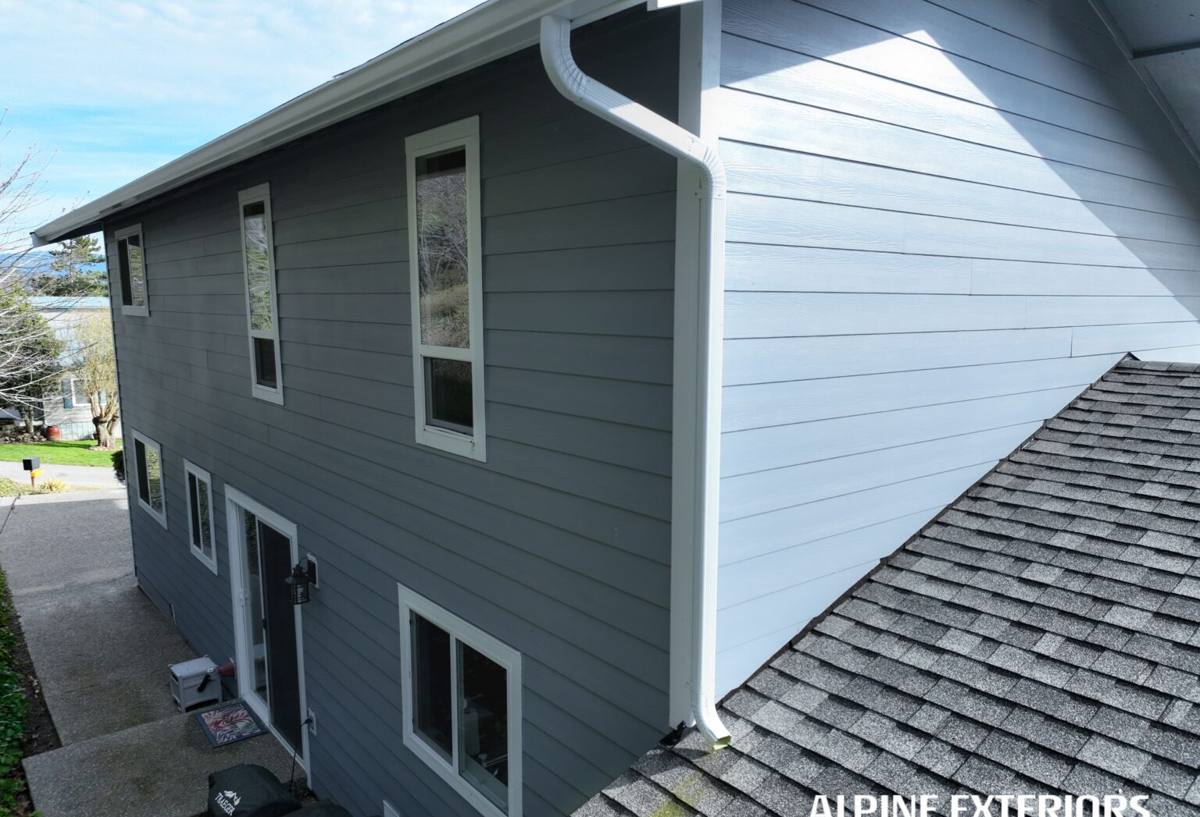
What Salt Air and Marine Exposure Actually Do to a Roof
Salt air isn't just a minor irritant for roofing materials — it accelerates corrosion on anything with exposed steel, speeds up the breakdown of cheap coatings, and works its way into fastener heads and cut edges faster than most homeowners expect. A few specific ways it shows up on Guemes Island roofs:
- Uncoated or poorly coated fastener heads rust first, often years before the panel itself shows any wear.
- Cut edges on field-trimmed panels are the most vulnerable spot if they aren't sealed or protected — bare steel exposed at a cut edge corrodes faster than the factory-finished surface.
- Lower-grade galvanized coatings wear thin faster near the water than they do a few miles inland, which is why coating quality matters more here than it does on a sheltered mainland roof.
- Metal touching dissimilar metal (galvanic contact) causes accelerated corrosion at that contact point — a detail that matters more in salt air than almost anywhere else.
None of this means metal roofing is a bad fit for the island. It means the choices made about coating, fastener hardware, and panel edges matter more here than they would in a low-exposure location, and it's worth working with a crew that treats those choices as non-negotiable rather than an upsell.
Choosing the Right Metal Roofing System for Island Exposure
Panel Types
Not every metal roofing style handles wind-driven rain and salt exposure the same way. The two main categories homeowners compare are standing seam and exposed-fastener panels.
| Factor | Standing Seam | Exposed-Fastener Panel |
|---|---|---|
| Fasteners | Hidden, attached through concealed clips | Visible screws through the panel face |
| Salt air durability | Better — no exposed fastener heads to corrode over time | Depends heavily on screw quality and washer condition |
| Wind-driven rain resistance | Higher — seams interlock, fewer penetration points | Adequate if installed correctly, more penetration points overall |
| Upfront cost | Higher | Lower |
| Long-term maintenance | Minimal — no fasteners to re-torque or replace | Fastener washers typically need inspection/replacement over the roof's life |
| Typical lifespan | Longer, especially in coastal exposure | Solid, but fastener wear can shorten effective life if not maintained |
For a property directly exposed to the water — closer to the shoreline, open to prevailing wind — standing seam is usually the better long-term investment because it removes the weakest link (exposed fastener heads) from the equation entirely. For a more sheltered lot further from the water, a quality exposed-fastener system can still perform well for decades if the hardware and maintenance schedule are right.
Coatings and Gauge
Steel gauge (thickness) and the paint/coating system both affect how a panel holds up. Heavier gauge steel resists denting from wind-blown debris and hail better. A quality PVDF-type factory finish resists fading and chalking far longer than a basic paint system, which matters on a roof that's going to be looking at salt spray and UV for the next 30-plus years. We'll walk through the specific gauge and coating options that make sense for your roof's exposure level during the estimate rather than defaulting to whatever is cheapest.
Wind-Driven Rain and Flashing Detail
A lot of roof leaks on exposed island homes don't happen because the field of the roof failed — they happen at transitions: chimneys, skylights, roof-to-wall junctions, valleys, and eave edges. Wind-driven rain doesn't just fall straight down; it gets pushed under laps and around fasteners that would be fine in calmer conditions. Getting these details right matters more on Guemes Island than it would on a protected inland lot:
- Proper underlayment — a self-adhered, high-temp ice-and-water type membrane at eaves, valleys, and penetrations, not just felt paper.
- Extended flashing laps at wall transitions to account for wind-pushed water traveling further up the roof plane than gravity alone would carry it.
- Closed or foam-filled ridge details so wind can't drive rain up and under the ridge cap.
- Sealed, correctly torqued fasteners — over-driven or under-driven screws are one of the most common causes of early leaks on exposed-fastener systems.
This is where the installation matters as much as the material choice. A premium panel installed with generic flashing details will still leak in a sideways storm; a mid-grade panel installed with the right flashing and underlayment detail for this exposure level will outperform it.
Moss, Debris, and the Long Wet Season
The extended damp season in this part of Skagit County keeps roofs wet longer than drier inland climates, which is exactly the condition moss needs to establish. Metal roofing has a real advantage here — its smooth, non-porous surface doesn't give moss the foothold that shingles or wood shakes do, and there are no exposed granules or wood grain for spores to grip onto. That said, metal roofs on tree-covered island lots still collect needles, leaves, and organic debris in valleys and against any obstruction, and that debris holds moisture against the panel even if moss itself doesn't take root directly on the metal surface.
Keeping valleys and gutter lines clear, and trimming back overhanging branches where practical, does more for a metal roof's long-term performance out here than any moss treatment would.
Our Process for Guemes Island Metal Roofing Projects
Working on the island adds a logistics layer that mainland Anacortes jobs don't have — material deliveries and crew scheduling both have to account for ferry timing, and that's planned into the project from the start rather than treated as a surprise.
- On-site assessment. We look at the roof's actual exposure — direction it faces relative to the water, tree cover, existing flashing condition, and any signs of past leaks or corrosion.
- Tear-off or overlay decision. We'll tell you honestly whether your existing roof deck and roofing can support an overlay or whether a full tear-off is the right call, based on deck condition and code requirements.
- Material selection. We walk through panel type, gauge, and coating options suited to your specific exposure level and budget — not a one-size-fits-all recommendation.
- Logistics planning. Material staging and crew scheduling are built around ferry access so the project doesn't stall out waiting on a delivery.
- Installation. Correct underlayment, flashing, and fastener detail at every transition point — the details that actually determine whether the roof performs in a real island storm.
- Cleanup and walkthrough. Site cleaned up, magnetic sweep for stray fasteners, and a walkthrough so you know what maintenance, if any, the roof needs going forward.
What a Correct Job Involves — A Practical Checklist
If you're comparing bids for a metal roof on Guemes Island, these are the things worth confirming with any contractor before you sign anything:
- Panel gauge and coating type specified in writing, not just "metal roofing."
- Fastener hardware rated for coastal/marine exposure, with neoprene washers.
- Self-adhered underlayment at eaves, valleys, and penetrations — not standard felt.
- Flashing details specified for roof-to-wall, chimney, and skylight transitions.
- A clear tear-off vs. overlay recommendation based on an actual deck inspection.
- A realistic project timeline that accounts for ferry-dependent material delivery.
- Manufacturer warranty terms explained — what's covered on the panel finish versus what's covered (or not) on installation workmanship.
Maintenance: What a Metal Roof Actually Needs Out Here
One of the appeals of metal roofing on an exposed island property is how little ongoing maintenance it needs compared to other roofing materials — but "little" isn't "none." A sensible maintenance rhythm for a Guemes Island metal roof:
- Clear valleys and gutter lines of needles and leaf debris once or twice a year, more often on heavily treed lots.
- Visually check exposed fasteners (on exposed-fastener systems) every year or two for backing out or washer wear.
- After any major windstorm, a quick visual check for lifted flashing or panel edges is worth the ten minutes it takes.
- Avoid pressure washing directly at seams and fasteners — a soft rinse is enough to clear salt residue and debris.
Compare that to the recoating, moss treatment, and granule-loss issues that come with other roofing types in this same salt-air, high-moisture environment, and the lower maintenance burden of metal is a real, practical advantage for an island home — not just a sales point.
Why Local Experience on Guemes Island Matters
A contractor who mostly works dry, inland neighborhoods will default to standard details that are fine for those conditions but undersized for what this island sees in a January windstorm. Working Guemes Island regularly means knowing which exposures need standing seam over exposed-fastener panels, which flashing extensions actually stop wind-driven rain at a given roof pitch, and how to plan a project timeline around the ferry schedule instead of fighting it. That experience shows up in fewer callbacks and a roof that's still performing well after the next decade of storms — not just in how the estimate reads.
If you're weighing a metal roof for a Guemes Island property, we're happy to walk the roof with you, talk through the panel and coating options that make sense for your specific exposure, and give you a straightforward, no-pressure estimate. There's a form below to get that conversation started.