 Anacortes Siding
 Exterior Homes Face in Ship Harbor
Ship Harbor sits close enough to the water that homes here live with conditions inland Skagit County neighborhoods simply don't see as often. Salt-laden air off Rosario Strait and the ferry terminal area works differently on building materials than ordinary rain does — it doesn't just wet a surface, it leaves mineral residue behind as moisture evaporates, and that residue accelerates corrosion on fasteners, flashing, and any exterior material that isn't built to shrug it off. Add in wind-driven rain that hits siding at an angle instead of falling straight down, and you get moisture pushed into seams, laps, and trim joints that a fair-weather product was never tested against.
Then there's shade and moisture retention. Many lots in this part of Anacortes carry mature conifers and maritime vegetation close to the house, which keeps north- and west-facing walls damp longer after a storm passes. That's exactly the environment moss, algae, and mildew prefer. Over a full Pacific Northwest winter, a home with poor airflow around its siding can carry visible green and black staining for months at a time, and once moss gets a foothold in a seam or under a lap, it holds water against the substrate long after the rain has stopped.
Why This Matters More Here Than a Few Miles Inland
Homes just a short drive away in more sheltered parts of Anacortes or unincorporated Skagit County still deal with our regional rain totals, but they aren't fighting salt air on top of it. In Ship Harbor, the combination of coastal exposure and shaded, moisture-holding lots means exterior materials get tested on two fronts at once — corrosion and rot. That's the lens we use when we talk about what belongs on a house out here.
What We Actually Install: James Hardie Fiber Cement
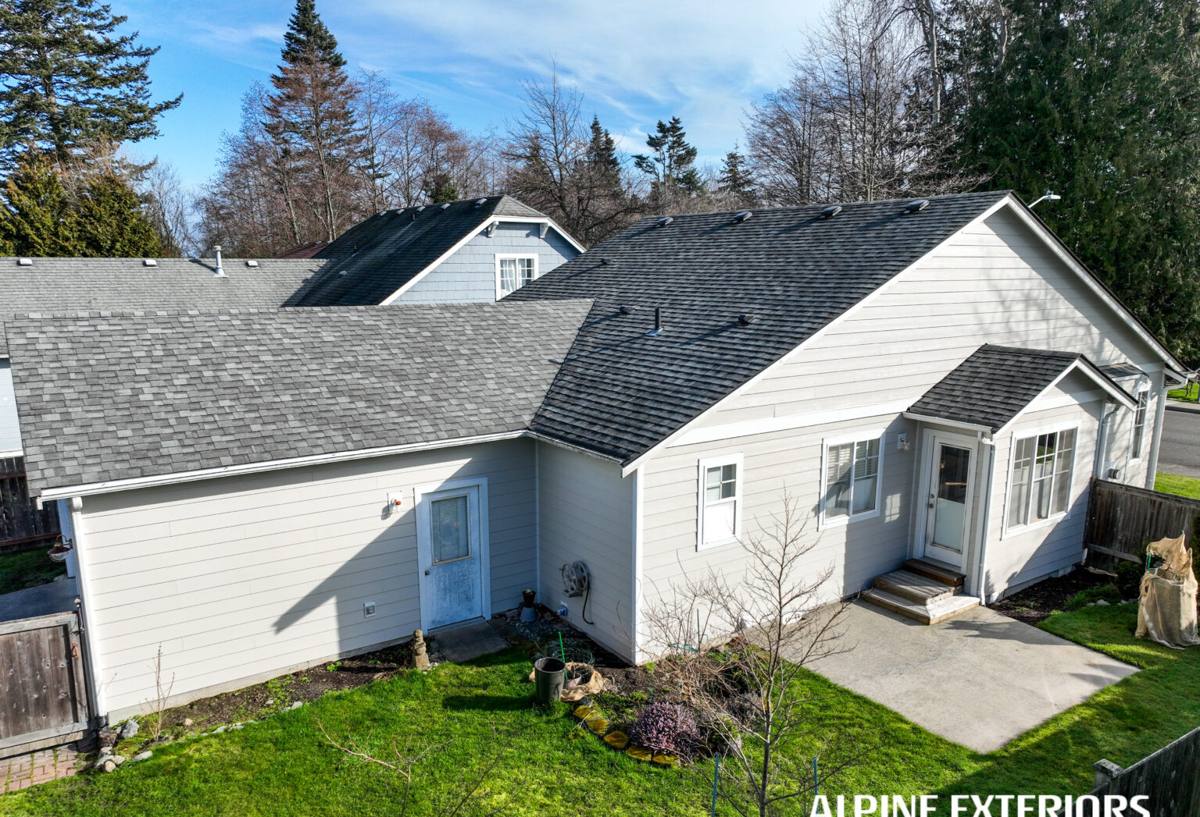
We install James Hardie fiber cement siding exclusively. That's not a marketing preference — it's a standard we hold because of what we've seen hold up in this specific climate. Fiber cement is cement, sand, and cellulose fiber, and none of those ingredients feed moss, absorb water the way wood does, or corrode the way some vinyl trim components and their fasteners can over time in salt air.
James Hardie's HardiePlank and HardiePanel lines come with a factory-applied ColorPlus finish, which matters directly for a coastal neighborhood: the finish is baked on under controlled conditions rather than field-applied, so it resists the fading and chalking that field-painted or lower-grade coatings show first in salt-exposed, sun-and-rain-cycled areas. Hardie also engineers regional HZ formulations specifically for wetter climates like ours, which affects how the product handles moisture at the plank level, not just at the surface.
Why We Don't Install Other Siding Products
We get asked about LP SmartSide, vinyl, and cedar fairly often, and we're upfront about why we don't carry them:
- Vinyl siding expands and contracts significantly with temperature swings, and its fastening system relies on that movement — done wrong, or under UV and salt exposure over years, seams and corner posts can loosen or discolor unevenly.
- LP SmartSide is an engineered wood product; it performs well in many climates, but any wood-based substrate depends on unbroken factory sealing and diligent field caulking at every cut edge to keep moisture out — a maintenance margin we don't think is worth the risk in a salt-air, high-moss zone.
- Cedar and primed spruce are beautiful but require ongoing refinishing, and untreated end cuts or nail penetrations become entry points for the exact rot and moss growth this neighborhood already pushes hard on.
None of these are bad products in every setting. They're just not the products we're willing to warranty and stand behind on a Ship Harbor lot with salt exposure and shade-driven moisture retention working against them year-round.
How a Ship Harbor Siding Project Typically Goes
Assessment First
Before we talk product or price, we look at the actual exposure on your specific home — which walls take direct weather off the water, where moss and staining are already showing, where trim or fascia meets siding, and what's happening behind the current cladding if there's any sign of past moisture intrusion. A house set back from the water with tree cover behaves differently than one with an open view corridor, even within the same neighborhood.
Tear-Off and Substrate Check
Once old siding comes off, we check sheathing and framing for hidden rot before anything new goes up. This step gets skipped by crews trying to move fast, and it's the single most common reason a siding job looks fine for two years and then fails at year five — moisture that was already trapped behind the old cladding just gets sealed back in.
Installation to Manufacturer Spec
James Hardie's warranty coverage depends on installation matching their published specifications — proper clearances above grade and roofing, correct fastener patterns, and factory-recommended gaps at butt joints. We install to that spec as a baseline, not an upsell, because a spec violation is one of the more common ways a Hardie warranty claim gets denied.
Cost Factors for This Area
| Factor | Why It Affects Ship Harbor Homes Specifically |
|---|---|
| Wall exposure to wind/salt | Water-facing walls may need extra flashing detail and closer joint sealing attention |
| Existing moisture damage | Hidden sheathing rot found at tear-off adds repair scope before new siding goes up |
| Tree cover and shade | Heavier moss/algae staining on existing siding can indicate longer-term moisture cycling behind it |
| Home height and access | Multi-story coastal-view homes may need additional staging or lift access |
| Trim and detail complexity | Corner boards, window trim, and fascia integration affect labor time independent of square footage |
We give firm, itemized numbers after an on-site look — not a phone estimate — because the variables above genuinely change scope from one Ship Harbor lot to the next.
Roofing, Windows, and Decks: The Whole Envelope
Siding doesn't work in isolation. A roof with failing flashing will feed water down behind even correctly installed siding, a window with a degraded seal will let moisture into the wall cavity right next to new cladding, and a deck ledger board attached without proper flashing is a classic rot point on coastal homes. We handle all four — siding, roofing, windows, and decks — because in a climate like this, treating them as one connected system catches problems that a siding-only company might miss or simply not be positioned to flag.
Signs It's Worth Having Us Look at More Than Just Siding
- Moss buildup concentrated near roof valleys or gutter lines, not just on wall siding
- Soft or discolored trim around window frames
- Visible gaps or separation where a deck attaches to the house
- Staining on interior walls near exterior corners, which often points to a flashing failure rather than the siding itself
Why a Local Crew Matters Here
Anacortes and the surrounding Skagit County coastline aren't interchangeable with a generic Western Washington job site. A crew that mostly works drier, inland projects may not automatically account for salt exposure in their fastener choices, flashing details, or clearance decisions. We work this specific stretch of coastline regularly, which means we're not guessing at how a Ship Harbor lot behaves through a wet winter — we've seen what holds up and what doesn't on homes with the same wind and moisture exposure.
Being local also means we're reachable after the job is done. If something needs a warranty look two years out, you're calling a crew that's still working in your neighborhood, not chasing down a company that came through once and moved on.
What to Ask Before Hiring Any Exterior Contractor
- Are they licensed and insured in Washington, and can they show proof without hesitation?
- Do they specify manufacturer-spec clearances and fastener patterns in writing, not just verbally?
- Will they check sheathing condition before installing new siding, and what happens if they find rot?
- Do they offer a single point of contact who handles siding, roofing, windows, and decks together, or will you be coordinating multiple separate companies?
- What does their warranty actually cover — labor, product, or both — and for how long?
If you're seeing moss, staining, or soft trim on a Ship Harbor home, or you're just planning ahead for a coastal-grade exterior, we're happy to take a look and give you a straightforward, no-pressure estimate — no obligation, just an honest read on where your home stands.