 Anacortes Siding
 Decking Built for the Ship Harbor Climate
Ship Harbor sits close enough to the water that every deck out here deals with the same combination: salt-laden air moving off Rosario Strait, long stretches of driving rain through fall and winter, and a moss season that can run from October clear into May. A deck board that performs fine on the dry side of the county can start showing problems within a couple of seasons out here — surface staining, slick moss growth in shaded corners, fasteners that streak or loosen, and framing that stays damp longer than it should between rain events. Composite decking, installed correctly for this specific exposure, holds up to that pattern far better than wood, but "composite" isn't a single product with one set of rules. The board, the hardware, and the substructure all have to be matched to a Skagit County waterfront environment, not a catalog photo.
This page covers what a composite deck built for Ship Harbor actually needs — material selection, framing and drainage, the install details that matter most in salt air, and what our process looks like from estimate to final walk-through.
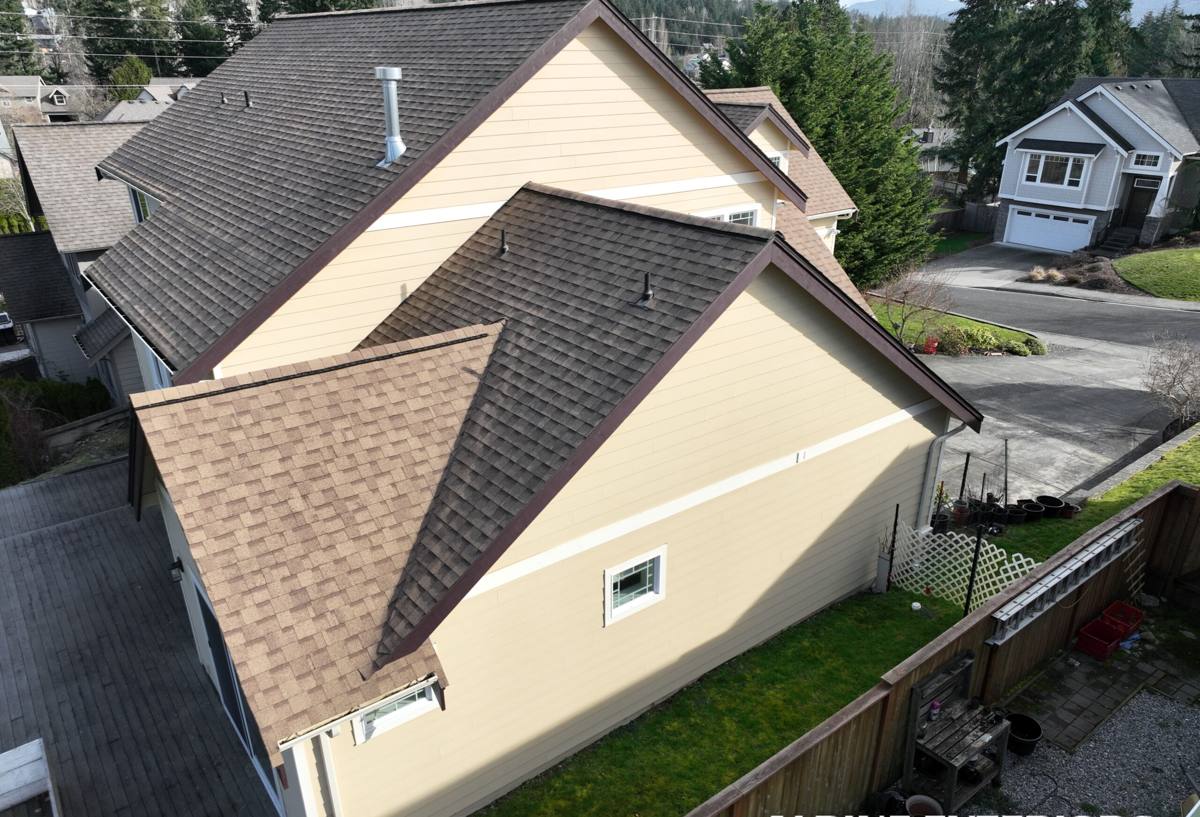
Why Salt Air and Moss Change the Decking Equation
Salt Air
Airborne salt doesn't rot composite boards the way it can degrade untreated wood or corrode bare steel, but it does affect the job in real ways. Salt-laden moisture accelerates corrosion on lower-grade fasteners, hidden fastener clips, and any exposed metal brackets or joist hangers. It also settles into surface texture over time, which is one more reason board finish and cleaning matter more here than in an inland yard.
Driving Rain
Anacortes gets weather that comes in sideways off the water more often than straight down. That matters for decking because water doesn't just land on the surface — it gets driven under rail posts, into end-grain cuts, and along ledger connections at the house. Flashing detail and end-cap treatment on composite boards aren't optional extras here; they're the difference between a deck that sheds water and one that traps it against the framing.
Moss and Shade
Ship Harbor's tree cover and marine layer keep a lot of decks damp and shaded well into the shoulder seasons. Moss and algae need moisture, shade, and organic debris to establish, and a deck with poor airflow underneath or boards butted too tight will grow a green film faster than one built with proper gapping and ventilation. This is a maintenance issue more than a structural one, but it's the single most common complaint we hear from homeowners who had decking installed without accounting for it.
What "Correct" Composite Decking Looks Like Out Here
A composite deck built right for this area comes down to a handful of decisions made before the first board goes down, plus attention to detail during install that a lot of crews skip because it takes longer.
Substructure First
Composite boards are only as good as what's underneath them. In a damp, shaded, salt-exposed environment like Ship Harbor, we look at:
- Joist spacing tightened to the manufacturer's spec for the climate zone, not just the minimum code allowance
- Joist tape or a comparable moisture barrier on top of every joist to protect the framing lumber from trapped water
- Stainless steel or coated fasteners rated for coastal/marine exposure, not standard exterior-grade hardware
- Proper ledger flashing where the deck meets the house, sloped to shed water away from the structure
- Adequate under-deck ventilation and ground clearance so airflow can dry the space between rain events
Board Selection
Not every composite product is built the same way, and the differences matter more in a wet, shaded, salt-air setting than they would in a dry inland yard. We favor capped composite boards — meaning the board has a fully wrapped polymer shell around the wood-fiber core — over uncapped or partially capped products for anywhere near the water. A fully capped board resists moisture intrusion at the surface and is much less prone to swelling, splintering, or mold growth in the core over time. It costs more up front than a basic composite, and we'll always tell you that honestly rather than upsell it without explanation — but for a shaded, salt-exposed lot, it's the difference between a deck that looks the same in year eight and one that needs boards replaced by year five.
Our Process, Start to Finish
- On-site assessment: We walk the space, check drainage, sun/shade exposure, existing framing condition if it's a tear-off, and how the deck ties into the house.
- Material walkthrough: We show you actual board samples, explain the capped-vs-uncapped tradeoff for your specific spot on the lot, and give you a straightforward cost range — no pressure toward the most expensive option if it isn't warranted.
- Framing and substructure work: Any repair or upgrade to joists, beams, or footings happens before decking goes down. This is also when joist tape, flashing, and fastener upgrades get installed.
- Decking installation: Boards are laid with manufacturer-specified gapping for drainage and airflow, hidden or exposed fasteners installed per spec, and all cuts and field-trimmed ends properly capped or sealed.
- Rail, stair, and trim work: Matching or complementary rail systems, stair stringers, and fascia trim installed and checked for level and secure attachment.
- Final walk-through: We go over the finished deck with you, point out any manufacturer-recommended maintenance, and answer questions before we call the job done.
Comparing Common Decking Materials for a Ship Harbor Lot
| Material | Moisture/Salt Resistance | Moss & Algae Susceptibility | Typical Maintenance |
|---|---|---|---|
| Pressure-treated wood | Moderate — needs regular sealing to hold up | High if not cleaned and resealed yearly | Annual cleaning, periodic staining/sealing, board replacement over time |
| Cedar | Good naturally, but surface wears without upkeep | Moderate to high in shaded, damp spots | Regular cleaning and oiling to maintain appearance and resistance |
| Uncapped composite | Fair — core can absorb moisture at cut ends and edges | Moderate | Periodic washing; more prone to staining and mold in constant shade |
| Fully capped composite | Very good — sealed shell resists moisture intrusion | Low with proper gapping and airflow | Occasional washing; no sealing or staining required |
This isn't a knock on wood decking — plenty of homeowners want that look and are willing to keep up with the maintenance it requires. It's about matching the material to how much upkeep you actually want to do in a climate that doesn't give a deck much of a break between rain events.
Framing, Fasteners, and the Details Most Estimates Skip
A lot of decking quotes focus entirely on the board brand and price per square foot. That leaves out the parts that actually determine how the deck holds up in a place like Ship Harbor. When we quote a job, the substructure and hardware are priced as part of the job, not treated as an afterthought:
- Fastener grade: Standard exterior screws can start showing corrosion streaks on composite boards within a couple of seasons near saltwater. We spec hardware rated for coastal exposure.
- Joist protection: Bare treated lumber under composite decking still absorbs and holds moisture. A taped or membrane-protected joist top dries faster and lasts longer.
- Board gapping: Too tight, and boards trap moisture and debris that feeds moss. Too loose, and the deck looks unfinished and debris falls through unevenly. We follow manufacturer spec and adjust slightly for shaded areas that stay wetter longer.
- Ledger flashing: Where the deck attaches to the house is the single most common source of hidden water damage on any deck. Proper flashing here isn't optional.
Maintaining a Composite Deck in a Marine Climate
One of the honest selling points of composite decking is that it needs far less upkeep than wood — but "low maintenance" doesn't mean "no maintenance," especially in a shaded, salt-air location like Ship Harbor. A simple seasonal routine keeps a composite deck looking and performing the way it should:
- Rinse or sweep debris off the surface regularly, especially fallen leaves and needles that trap moisture against the boards
- Wash the deck a couple of times a year with mild soap and water, or a cleaner rated for composite surfaces, to prevent surface film and algae buildup in shaded areas
- Check under-deck ventilation gaps and clear away any vegetation or debris that's blocking airflow
- Inspect fasteners and rail connections annually for any early corrosion or looseness, particularly after a hard winter
- Address moss at the first sign of it rather than letting it establish — early removal is easy, established moss is not
Why Local Ship Harbor Experience Matters
Decking specs written for a national manufacturer's average climate zone don't automatically account for a specific lot's sun exposure, shade pattern, wind direction, or how close it sits to saltwater. A crew that works Skagit County waterfront properties regularly knows which corners of a Ship Harbor lot stay damp longest, where moss tends to establish first, and which fastener and flashing choices actually hold up here versus what looks fine on paper. That local pattern recognition is what keeps a deck from becoming a five-year problem instead of a twenty-year investment.
We're an Anacortes-based siding and exterior contractor, and decking is part of how we think about a home's whole exterior envelope — how water moves around the structure, where moisture gets trapped, and what materials actually hold up to this specific stretch of Washington coastline.
Get a Straightforward Estimate
If you're planning a new composite deck or replacing an aging one in Ship Harbor, we're happy to walk the site, talk through material options honestly, and give you a clear estimate with no pressure attached. Fill out the form below to get started.