 Anacortes Siding
 Living on an Island Surrounded by Salt Water
Fidalgo Island homes face a version of Pacific Northwest weather that inland Skagit County properties simply don't deal with. Being surrounded by saltwater on nearly every side means the air itself is different — carrying salt spray, higher humidity, and near-constant moisture that settles on exterior surfaces year-round. Add in driving rain off the water during fall and winter storms, and you have a climate that is genuinely harder on a house than most homeowners realize until they start seeing the damage.
We work on homes across Anacortes and the surrounding Fidalgo Island area regularly, and the pattern is consistent: siding, trim, roofing, and window components fail faster here than they would twenty or thirty miles inland. That's not a sales pitch — it's a straightforward function of geography. A contractor who doesn't build for salt air and sustained moisture exposure is setting a homeowner up for repeat repairs.
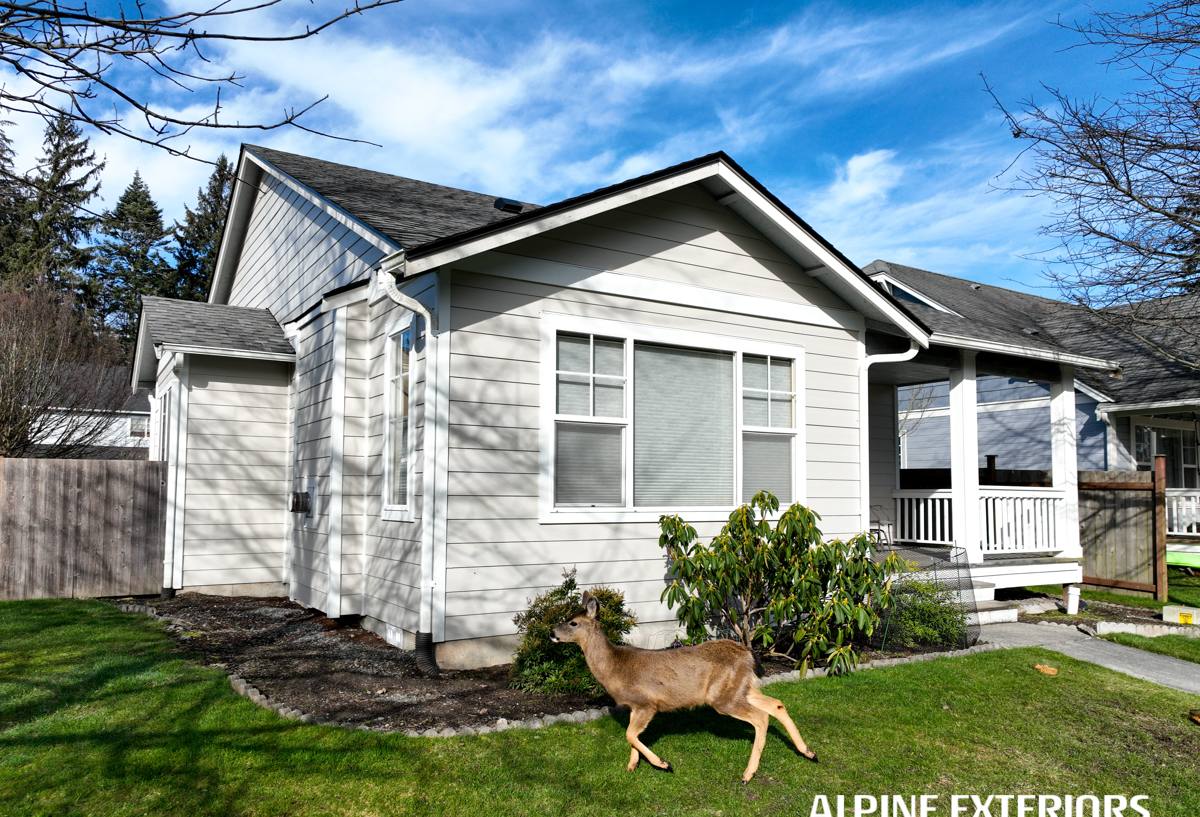
What Salt Air and Driving Rain Actually Do to a House
Salt air is corrosive to metal fasteners, flashing, and hardware. Over years, un-protected or poorly-coated metal components can corrode, weaken, and eventually let water behind the siding or roofing system — long before the visible exterior looks like it's failing. Meanwhile, wind-driven rain doesn't just wet a wall surface, it drives moisture sideways and upward under laps, around window trim, and into any gap in the building envelope that wouldn't be a problem in a calmer climate.
The combination is what causes the classic Fidalgo Island exterior problems we see on inspections:
- Paint and caulk failing years earlier than the manufacturer's stated life expectancy
- Wood trim and fascia going soft or rotting at joints and end cuts
- Fastener corrosion causing streaking or loosening of siding panels
- Moisture intrusion behind siding that isn't visible until a wall is opened up
- Persistent moss and algae growth on north-facing and shaded roof and wall sections
None of this means a house on Fidalgo Island is doomed to constant repair. It means the materials and installation details matter more here than in a drier, calmer inland climate — and that's the standard we build to.
Why We Install Only James Hardie Fiber Cement Siding
We get asked fairly often why we don't offer vinyl, LP SmartSide, or cedar siding as options. It's a fair question, and the honest answer is that we made a decision as a company to standardize on one product system — James Hardie fiber cement — because it holds up to the specific conditions this region throws at a house, and because we'd rather stand behind one product we trust completely than offer a menu of options with very different long-term outcomes.
What we're not saying
Vinyl siding is inexpensive and low-maintenance in mild climates. Cedar has genuine visual warmth that some homeowners love. LP SmartSide (engineered wood) performs reasonably well when installed and maintained correctly. We're not claiming any of these products are junk. What we are saying is that each carries trade-offs — vinyl can warp and fade in sun and temperature swings and offers little impact resistance; wood requires ongoing refinishing and is vulnerable to moisture and rot in a climate this wet; engineered wood products are wood-based at the core, meaning any breach in the factory coating opens the door to moisture absorption and swelling. In a marine climate with driving rain and salt air, those trade-offs show up faster and cost more to manage over a 20-30 year ownership window.
What Hardie gets right for this climate
James Hardie fiber cement is made primarily from cement, sand, and cellulose fiber — not wood. It doesn't rot, it isn't a food source for pests, and it's non-combustible, which matters given the wildfire-smoke seasons the whole region has seen in recent years. It ships with a factory-applied ColorPlus finish that's baked on and warranted against fading and peeling far longer than field-applied paint holds up on wood or engineered wood siding. That matters enormously here, where UV exposure alternates with long stretches of damp weather that stress any painted surface.
How James Hardie Performs in a Marine, High-Moisture Climate
James Hardie engineers different product lines for different climate zones, and the HZ5 line is the one specified for the Pacific Northwest and other regions with sustained damp, freeze-thaw, and moisture-cycling conditions. It's manufactured and formulated specifically to resist the swelling, cracking, and moisture-related failures that generic siding products can experience in exactly the kind of weather Fidalgo Island gets most of the year.
Correct installation is what actually delivers that performance, though — the product alone doesn't guarantee the result. Proper installation on a Fidalgo Island home means:
- Correct fastener spacing and type, matched to the substrate and rated for coastal/marine exposure
- Proper flashing and drainage plane detailing at every window, door, and penetration
- Manufacturer-specified clearances from grade, roofing, and decks to keep splash-back and standing moisture away from panel edges
- Caulking only where Hardie's install guide calls for it — not as a substitute for proper flashing
- Factory-cut and factory-primed panel edges left intact wherever possible, since field-cut edges need to be sealed correctly to maintain warranty coverage
Skipping these details is the single biggest reason fiber cement siding underperforms on any given house — not a flaw in the product itself. It's also why we treat the installation process as seriously as the product selection.
Beyond Siding: Roofing, Windows, and Decks for Fidalgo Island Homes
Siding doesn't work in isolation — it's one part of a building envelope that has to work together to keep water out. We handle roofing, windows, and decks for the same reason we're particular about siding: these systems interact, and a weak point in one undermines the others.
Roofing
A roof in this climate needs to shed heavy, driving rain and resist the moss and algae growth that thrives in shaded, damp conditions common on tree-lined Fidalgo Island lots. Roof condition also directly affects siding performance — poor roof drainage or failing gutters dump extra water onto walls below, accelerating exactly the kind of moisture damage we described above.
Windows
Window flashing and integration with the siding system is one of the most common failure points on any home, and it's where a lot of hidden water intrusion actually starts. When we replace windows, we make sure the flashing ties properly into the surrounding Hardie siding installation rather than treating the two as separate jobs done by separate crews on separate timelines.
Decks
Decks on Fidalgo Island properties take a beating from the same rain and moisture exposure, plus ledger board connections at the house need the same careful flashing attention as a window or door opening — a poorly flashed ledger board is a common source of hidden rot at the wall.
The Long Moss Season and What It Means for Maintenance
Anacortes and the rest of Fidalgo Island get a moss season that runs longer than most of Skagit County due to the combination of shade, moisture, and mild temperatures. Moss and algae aren't just a cosmetic nuisance — sustained moss growth on a roof holds moisture against shingles and underlayment, shortening roof life, and moss or algae staining on siding is often a sign that a wall section isn't drying out properly between rain events.
Homeowners can manage a lot of this with basic seasonal maintenance: keeping gutters clear, trimming back vegetation that shades and dampens wall sections, and doing a visual walk-around after major storms to check for loose trim, staining, or soft spots. James Hardie siding's factory finish resists moss and algae growth significantly better than bare wood or aging paint, but no exterior surface is completely maintenance-free in this climate.
Cost Factors for a Fidalgo Island Exterior Project
Every home is different, but a few factors consistently drive cost on siding, roofing, and window projects in this area:
| Factor | Why It Matters Here |
|---|---|
| Existing siding removal and disposal | Older wood or vinyl siding often hides moisture damage that needs repair before new siding goes on |
| Home size and number of stories | Affects material quantity, scaffolding/lift needs, and labor time |
| Trim and architectural detail | More corners, windows, and rooflines mean more flashing and cut work, which is where quality installation time goes |
| Site access and staging | Some Fidalgo Island lots have limited access or steep grades that affect equipment and material staging |
| Underlying moisture damage found during tear-off | Common in older homes here; sheathing or framing repair adds cost but is not optional if found |
| Product line and profile selection | HZ5-rated Hardie products and specific siding profiles (lap, shingle, panel) vary in material cost |
We give straightforward, itemized estimates rather than vague lump-sum numbers, so homeowners can see exactly what they're paying for and why.
Choosing a Contractor for a Marine-Climate Home
Not every contractor who works in Skagit County has real experience with the specific demands of an island, saltwater-exposed property. Before hiring anyone for siding, roofing, window, or deck work on Fidalgo Island, it's worth asking a few pointed questions:
- Do they install to the manufacturer's written specifications (fastener type, flashing details, clearances), or just "how they've always done it"?
- Can they explain how they handle flashing integration between siding, windows, and roofing rather than treating each as a separate trade?
- Are they licensed and insured to work in Washington, and can they provide proof without hesitation?
- Do they have manufacturer training or certification on the specific siding product they're proposing?
- Will the warranty be backed by both the manufacturer and the installer, in writing?
A contractor who's vague on any of these is worth a second look before signing a contract — especially in a climate where installation quality matters as much as material selection.
What a Fidalgo Island Project Looks Like With Us
We start with an on-site inspection, not a phone estimate — moisture damage on an older home often isn't visible from the ground, and we'd rather find problems before a contract is signed than after tear-off has started. From there we walk through product and profile options within the James Hardie system, explain the flashing and installation plan for the specific home, and give a written, itemized estimate. If roofing, windows, or decking need attention as part of the same project, we coordinate that work so the systems are integrated properly rather than patched together after the fact.
If you own a home on Fidalgo Island and you're noticing paint failure, soft trim, staining, or you're just planning ahead for an aging exterior, we're happy to take a look and talk through honest options — no pressure, no obligation. Reach out using the form below to schedule a free estimate.