 Anacortes Siding
 Why Fidalgo Island Siding Takes a Different Approach
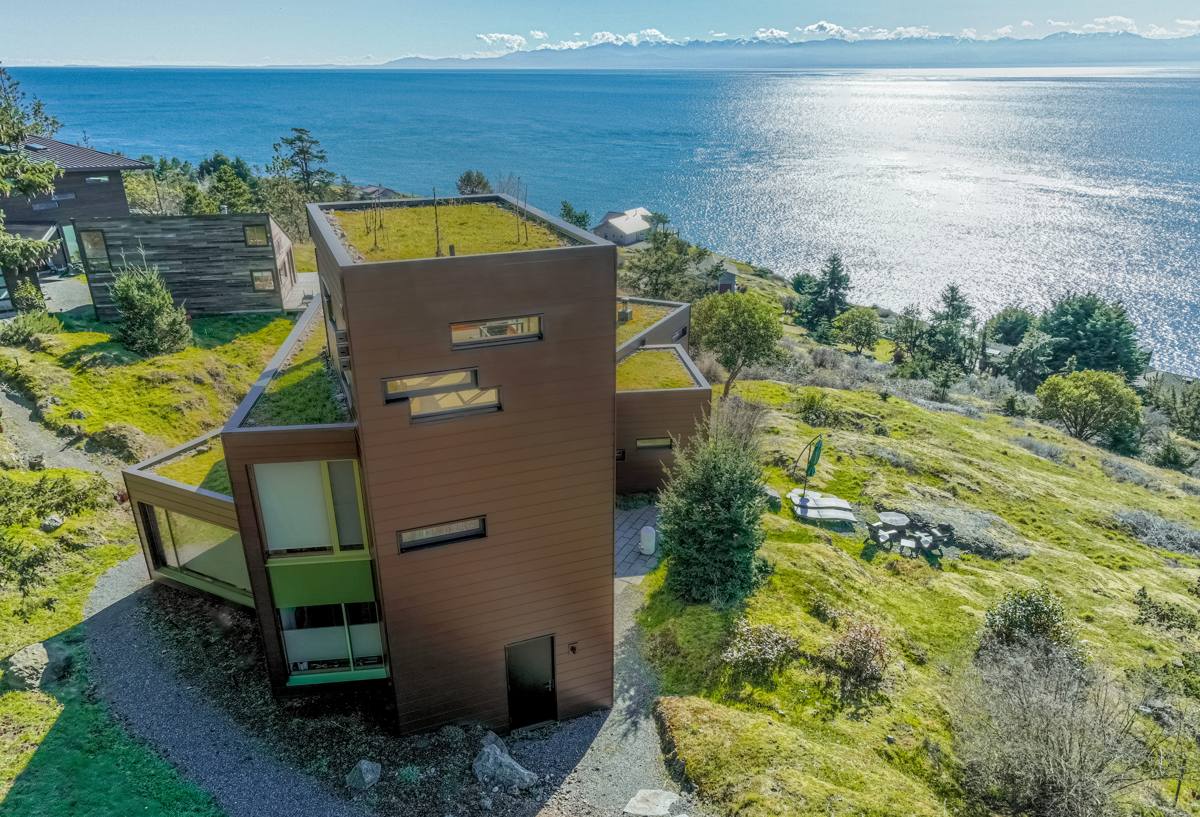
Fidalgo Island sits where the Salish Sea meets Skagit County's marine weather, and that combination is harder on exterior siding than most homeowners realize until they're dealing with the results. Homes here face a three-part problem: salt-laden air off the water, driving rain that comes in sideways during winter storms, and a long moss season that keeps north-facing walls damp for months at a time. Any one of those is manageable. All three together, year after year, is what separates siding that lasts thirty years from siding that starts failing in eight.
We install siding across Anacortes and the surrounding island communities, and Fidalgo Island jobs consistently show the same wear patterns: caulk lines that failed early, paint that chalked and peeled faster than it should have, and fastener heads that corroded and telegraphed through the finish. None of that is inevitable. It's almost always a product or installation issue, not a "this is just what happens near the water" issue.
What Salt Air Actually Does to Siding
Salt air isn't just a coastal cliché — it's a chemical and mechanical stressor. Airborne salt settles on exterior surfaces and accelerates corrosion of anything metal: fasteners, flashing, trim screws. It also draws moisture, meaning surfaces near the water stay damp longer after a storm than the same surface would ten miles inland. For siding, that means:
- Fastener corrosion that shows up as rust streaks or "nail popping" through paint
- Faster breakdown of caulk and sealants at joints and butt seamsPaint and finish systems that chalk, fade, or delaminate earlier than their rated life
- Accelerated rot in any wood-based product where moisture gets behind the surface
This is why fastener choice and flashing details matter as much as the siding material itself on a Fidalgo Island installation. Corrosion-resistant fasteners and correctly lapped flashing aren't upgrades out here — they're baseline requirements.
Driving Rain and Wind-Driven Moisture
Anacortes-area storms don't just drop rain straight down — wind off the water pushes it sideways and up under laps, trim, and butt joints that aren't sealed or shingled correctly. A siding installation that would hold up fine in a calmer inland climate can leak on Fidalgo Island simply because water is hitting the wall from angles the original detailing never accounted for. Correct lap sequencing, weather-resistant barrier installation, and properly flashed penetrations (hose bibs, vents, light fixtures) matter more here than in most parts of Skagit County.
Moss Season and Sustained Dampness
The long, wet stretch from fall through spring means north- and west-facing walls, and anything shaded by trees or neighboring structures, can stay damp for weeks without a real drying window. Moss and algae growth on siding isn't just a cosmetic problem — sustained surface moisture is exactly the condition that causes wood-based products to swell, delaminate, or rot at the edges, and it's what causes lesser paint finishes to fail early. Any siding installed on Fidalgo Island needs to tolerate extended dampness without breaking down, because it's going to see a lot of it.
Why We Install James Hardie Fiber Cement — And Nothing Else
We install exclusively James Hardie fiber cement siding. We don't install vinyl, LP SmartSide or other wood-based composite siding, cedar, primed spruce, or off-brand fiber cement products like Cemplank or Allura. That's a deliberate standard, not a sales pitch, and it matters more on Fidalgo Island than almost anywhere else we work.
Fiber cement is non-combustible and dimensionally stable — it doesn't expand and contract with moisture the way wood-based products do, which means the caulked joints and seams that salt air and driving rain attack hardest have a better chance of staying intact. James Hardie's ColorPlus factory finish is baked on under controlled conditions, which holds up to UV and moisture exposure better than field-applied paint, and it comes with its own finish warranty separate from the product warranty. Hardie's HZ5 product line in particular is engineered for climates with exactly this kind of moisture exposure.
We're not going to tell you every other product on the market is worthless — vinyl and engineered wood sidings have real uses and reasonable price points, and they perform fine in a lot of climates. But we've made a professional decision not to put our name behind installations we don't think will hold up to what Fidalgo Island's weather does to a house over twenty or thirty years. Wood-based composite siding depends on an intact factory seal to resist moisture; once that's compromised at a cut edge or fastener point, in a climate this damp, the clock starts. Vinyl handles moisture fine but moves a lot with temperature swings and can crack or warp in sustained wind exposure. Fiber cement, installed to spec, is the product we're comfortable standing behind out here.
What a Correct Installation Involves
The material is only half the equation. James Hardie siding installed poorly will still fail early, and in a high-moisture coastal environment, installation mistakes show up faster than they would inland. A correct job on Fidalgo Island includes:
- Proper weather-resistant barrier installed and lapped correctly before any siding goes up
- Correct fastener type, spacing, and penetration depth per James Hardie's published specs
- Flashing at every penetration — windows, doors, vents, hose bibs, light fixtures — installed to shed water outward, not trap it
- Proper clearance between siding and grade, decks, and roof lines to avoid wicking moisture
- Correctly lapped and caulked joints using sealants rated for the exposure
- Factory-cut edges used wherever possible, with any field cuts sealed per manufacturer spec
Skipping any one of these doesn't necessarily cause a visible problem in year one. It shows up in year five or eight, as a leak, a soft spot, or premature paint failure — and by then it's a repair job, not a five-minute fix.
Our Process for a Fidalgo Island Job
1. On-Site Assessment
We walk the property and look specifically at exposure: which walls take the worst of the weather off the water, where moss and algae are already established, where existing siding shows early wear, and where trim, flashing, or drainage details need attention beyond a straight siding swap.
2. Scope and Estimate
We put together a written scope covering the Hardie product line and profile that fits the home, the flashing and moisture-management work involved, and a straightforward estimate — no vague allowances that turn into surprise change orders.
3. Prep and Tear-Off
We remove the old siding, inspect the sheathing underneath for any hidden moisture damage, and address it before anything new goes up. Covering up a wet or rotted substrate is one of the most common causes of early siding failure, and it's not something we skip to save time.
4. Installation to Spec
Weather barrier, flashing, and Hardie siding installed per manufacturer specifications, with fastening and joint details suited to the exposure that specific wall or elevation actually sees.
5. Final Walkthrough
We walk the finished job with the homeowner, check the details that matter most in this climate — laps, caulking, flashing, clearances — and make sure everything's accounted for before we call it done.
Why Local Experience on Fidalgo Island Matters
A crew that already works this island knows which elevations take the worst weather, how long moss season actually runs, and what level of moisture exposure to plan for on a given lot. That's not something you get from a general contractor who does a handful of siding jobs a year across a wide territory. It shows up in the small decisions — where to add extra flashing, which joints need the more resilient sealant, how much clearance to leave at grade — that don't show up on a spec sheet but make the difference between siding that lasts and siding that doesn't.
Cost Factors for Fidalgo Island Siding Installation
Every home is different, but the factors that move the price on a Fidalgo Island job tend to be consistent:
| Factor | Why It Matters Here |
|---|---|
| Wall exposure to wind and rain | Higher-exposure elevations need more careful flashing and sealant work, adding labor time |
| Condition of existing sheathing | Moisture-damaged sheathing found during tear-off requires repair before new siding goes up |
| Home size and wall complexity | More corners, penetrations, and trim details mean more flashing and cutting |
| Hardie product line and profile | HZ5 and specific plank or panel profiles vary in material cost |
| Access and site conditions | Tree cover, tight lots, or difficult staging can add time |
A Simple Checklist Before You Hire
- Ask what siding brand and product line they install, and why
- Ask how they handle flashing at windows, doors, and penetrations — get specifics, not just "we flash everything"
- Ask what happens if they find moisture damage in the sheathing during tear-off
- Ask whether they have experience with island or waterfront-adjacent properties specifically
- Get the manufacturer warranty terms in writing, not just a verbal assurance
If you're planning a siding project on Fidalgo Island, we're happy to come take a look, walk the exposure on your specific home, and put together a straightforward, no-pressure estimate. There's no obligation — just a clear picture of what your home needs and what it would take to do it right.