 Anacortes Siding
 Conway Sits Right Where Skagit County's Weather Gets Serious
Conway is a small, low-lying community tucked into the Skagit River delta, close enough to Skagit Bay and Puget Sound that salt-laden air is a daily fact of life, not an occasional nuisance. Add in the open farmland that surrounds much of the area, the moisture that settles over the valley floor, and the long gray stretches between fall and spring, and you've got a climate that is genuinely tough on a home's exterior. Homes here don't fail because owners neglect them — they fail because the materials on the wall weren't built for this specific combination of salt, rain, and shade.
As a siding, roofing, window, and deck contractor working across the Anacortes and Skagit County area, we see the same patterns show up on Conway homes again and again: soft trim boards, algae streaking on north-facing walls, caulk lines that gave up years before the siding did, and paint that needs refreshing far more often than it should. None of that is inevitable. It's mostly a function of what was installed and how.
What the Local Climate Actually Does to a House
Salt Air
Proximity to Skagit Bay means airborne salt finds its way onto exterior surfaces, fasteners, and trim. Over years, salt exposure accelerates corrosion on lower-grade fasteners and flashing, and it breaks down cheaper paint and coating systems faster than manufacturers' published timelines suggest. It's a slow, cumulative effect — which is exactly why it gets underestimated until a wall looks tired well before its time.
Driving Rain
The Skagit Valley doesn't just get a lot of rain — it gets a lot of wind-driven rain, pushed sideways by storms moving in off the Sound. That matters because sideways rain finds every weak seam, every under-flashed window, and every gap where siding wasn't lapped correctly. A material that handles vertical rain fine can still let water in when it's coming in at an angle, which is a big part of why installation quality matters as much as the product itself.
A Long Moss Season
Between the shade from surrounding trees, the ag-country humidity, and the sheer number of overcast days, moss and algae growth gets a long runway here — often close to nine months out of the year. On roofs it's the obvious problem, but it shows up on siding too, especially on north- and west-facing walls that stay damp longest. Porous or absorbent siding materials hold that moisture and feed the growth; dense, engineered materials give it far less to hold onto.
Low-Lying, Damp Ground Conditions
Conway's position in the river delta means many properties sit on lower, wetter ground than homes up on the bluffs around Anacortes. That raises ambient humidity right at grade, which is exactly where wood rot and moisture problems tend to start — at the bottom courses of siding, around deck ledger boards, and at ground-level trim.
Siding: Why We Only Install James Hardie
We install James Hardie fiber cement siding exclusively. We don't install vinyl, LP SmartSide, Cemplank, Allura, primed spruce, or cedar — not because those products can't be installed correctly somewhere, but because after years of exterior work in this specific climate, we don't think they hold up the way homeowners expect for the money and disruption a siding project requires.
The honest trade-offs with the alternatives
- Vinyl siding is affordable and low-maintenance in mild climates, but it expands and contracts with temperature swings, can crack in cold snaps, and fades over time — and it's a petroleum-based product with real limits on how it handles direct heat and impact.
- LP SmartSide and other engineered wood products perform reasonably well when installation and caulking are perfect and stay perfect, but any breach in that seal — a missed nail, a shrinking caulk joint, a scrape from a ladder — gives moisture a path into a wood-based substrate, and wood-based substrates don't handle that well over time.
- Cemplank and Allura are also fiber cement, and reputable products in their own right, but we've standardized on one manufacturer's system so our crews install to one spec, one warranty structure, and one factory finish process, rather than juggling multiple product lines.
- Primed spruce and cedar look great new and age beautifully when maintained relentlessly, but they demand a repainting and caulking schedule most homeowners don't keep up with — and in a climate with this much rain and moss pressure, gaps in that maintenance show up fast as rot.
What James Hardie gets right for this climate
Hardie fiber cement is non-combustible, dimensionally stable across temperature and humidity swings, and dense enough that it doesn't give moss and algae the same foothold that porous wood products do. It comes factory-finished through the ColorPlus process, which bakes color and a protective coating on in a controlled environment — a more consistent, durable finish than field-applied paint can typically achieve, and one less maintenance task for a Conway homeowner already dealing with roof moss and deck upkeep. Hardie also engineers specific product lines (HZ5, HZ10) for different climate zones, and correct installation includes proper flashing, gapping, and fastening details that matter enormously when wind-driven rain is part of the equation.
Roofing, Windows, and Decks: The Same Climate Logic Applies
Siding is only part of a home's exterior envelope, and the same salt air, rain, and moss pressure that affects siding decisions affects the rest of the house.
Roofing
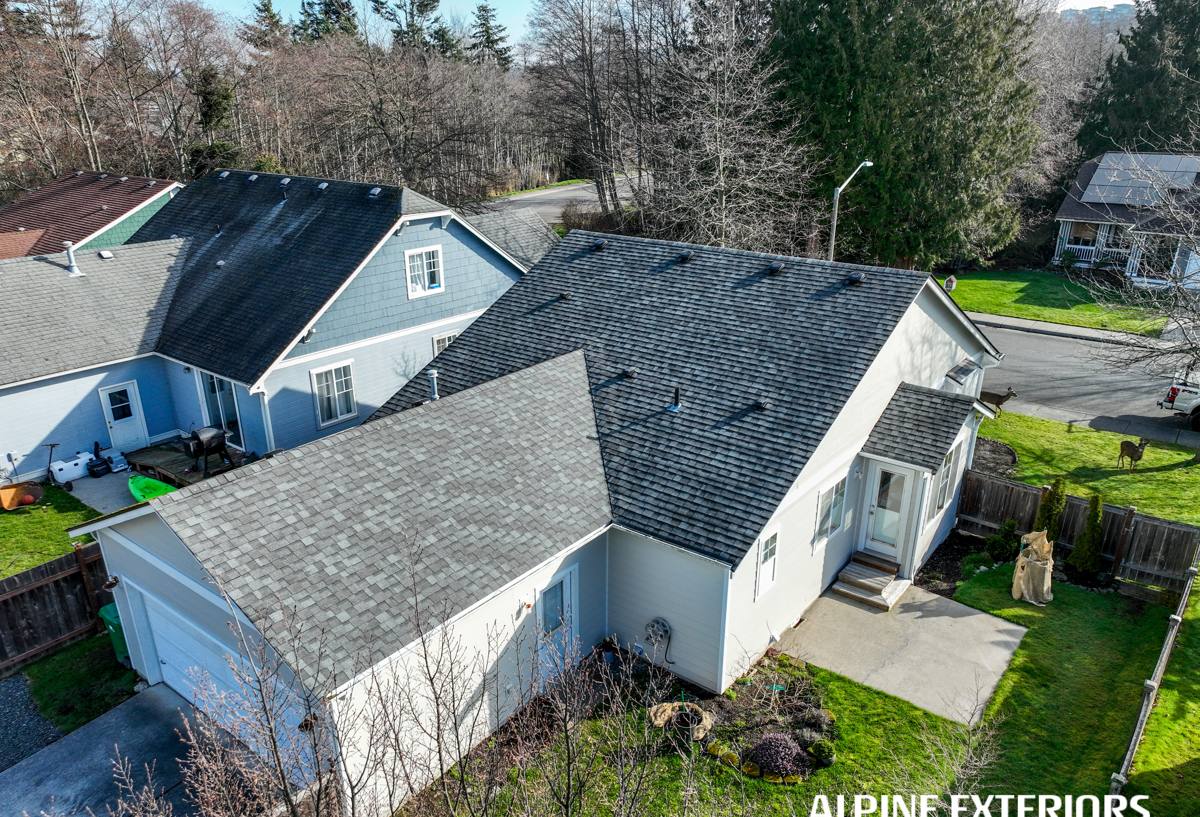
Roofs take the brunt of Conway's moss season. Proper ventilation, underlayment, and flashing details reduce how much moisture gets trapped under moss growth in the first place, which matters more here than in drier parts of the state.
Windows
Window failures in this climate are usually flashing and seal failures, not glass failures — water finds its way behind poorly integrated trim and rots the framing around it long before the window itself is the problem. Replacement windows need to be integrated with the siding's water management plan, not treated as a separate project.
Decks
Ground-level and low-clearance decks, common on Conway's flatter lots, are especially exposed to the same damp-ground conditions that threaten low siding courses. Ledger board attachment, joist protection, and material choice all need to account for sustained moisture exposure rather than occasional rain.
Comparing Siding Options for a Conway Home
| Factor | James Hardie Fiber Cement | Vinyl | Wood / Engineered Wood |
|---|---|---|---|
| Moisture resistance | Strong — dense, doesn't absorb water | Good, but seams and fasteners can let water track behind panels | Weak once any coating or caulk fails |
| Salt air tolerance | High — factory finish resists coastal exposure | Moderate — fades and becomes brittle over time | Low — accelerates coating breakdown |
| Moss/algae resistance | High — dense surface, less to grow on | Moderate | Low — porous surfaces hold moisture |
| Maintenance | Occasional wash, no repainting for years | Low, but limited repair options when damaged | Regular repainting and caulk inspection required |
| Fire resistance | Non-combustible | Combustible | Combustible |
What a Cost Estimate Actually Depends On
| Cost Factor | Why It Matters in Conway |
|---|---|
| Home size and wall complexity | More corners, dormers, and trim details mean more flashing and cutting labor |
| Existing siding removal | Older wood or damaged siding often reveals rot that needs repair before new siding goes on |
| Product line and profile | Lap width, texture, and trim style affect material cost |
| Access and site conditions | Rural and delta-area lots can affect staging and equipment access |
| Scope bundling | Combining siding with roofing, window, or deck work can reduce total mobilization costs |
Why a Local Crew Matters Here
A crew that works across Skagit County regularly knows the difference between installing siding on a bluff-top Anacortes home and installing it on a lower, damper lot near Conway — the flashing details, the ventilation gaps, the attention to grade clearance all get adjusted accordingly. That's not something a general contractor unfamiliar with this specific stretch of coastline and river delta is likely to get right by default. We show up knowing what this climate does to a house before we ever pull a tape measure.
A Simple Maintenance Checklist for Conway Homeowners
- Rinse siding and lower trim annually to clear salt residue and organic buildup
- Check roof valleys and north-facing slopes for moss growth each fall
- Inspect caulk and flashing around windows before the wet season starts
- Keep vegetation trimmed back from siding to reduce shade and trapped moisture
- Look at deck ledger boards and low-clearance framing yearly for early rot signs
- Address any soft or discolored trim immediately rather than waiting for a full inspection
Let's Take a Look at Your Home
If you're noticing moss creeping across the roof, siding that's holding paint less well than it used to, or trim that feels soft to the touch, it's worth having someone look before those small signs turn into structural repairs. We'd be glad to walk your Conway property, explain what we're seeing in plain terms, and put together a free, no-pressure estimate for siding, roofing, windows, or decks — whatever your home actually needs.