 Anacortes Siding
 Conway sits low in the Skagit Valley, close enough to Puget Sound and the Skagit River that homes here deal with a specific mix of weather most inland roofs never see: salt-laden air moving in off the water, long stretches of driving rain, and shaded, damp conditions that keep roofs wet longer than they'd like to be. Asphalt shingle roofing is still the right call for the vast majority of Conway homes — it's proven, it's cost-effective, and it can be installed and maintained in a way that stands up to this climate. But "the right call" only holds true if the installation accounts for what this specific location does to a roof over time. That's the part we focus on.
Why Conway's Climate Is Harder on Roofs Than It Looks
From the street, a shingle roof in Conway doesn't look different from one in a drier part of the state. Underneath, it's working harder. Three factors compound here in a way that shortens the life of a poorly installed or poorly maintained roof:
- Salt air: Proximity to the Sound means airborne salt settles on roofing materials and metal flashing over time, accelerating corrosion on unprotected fasteners and cheaper flashing.
- Driving rain: Skagit County storms don't always come straight down. Wind-driven rain pushes water sideways and upward under shingle edges, which is exactly where a marginal install fails first.
- Extended moss season: Shade from surrounding trees, valley moisture, and mild temperatures give moss a long window to establish itself — often longer than in more open or elevated parts of the county.
None of these factors are unusual on their own. What matters is that a roof in Conway is exposed to all three at once, for a good part of the year. That's the standard we install to.
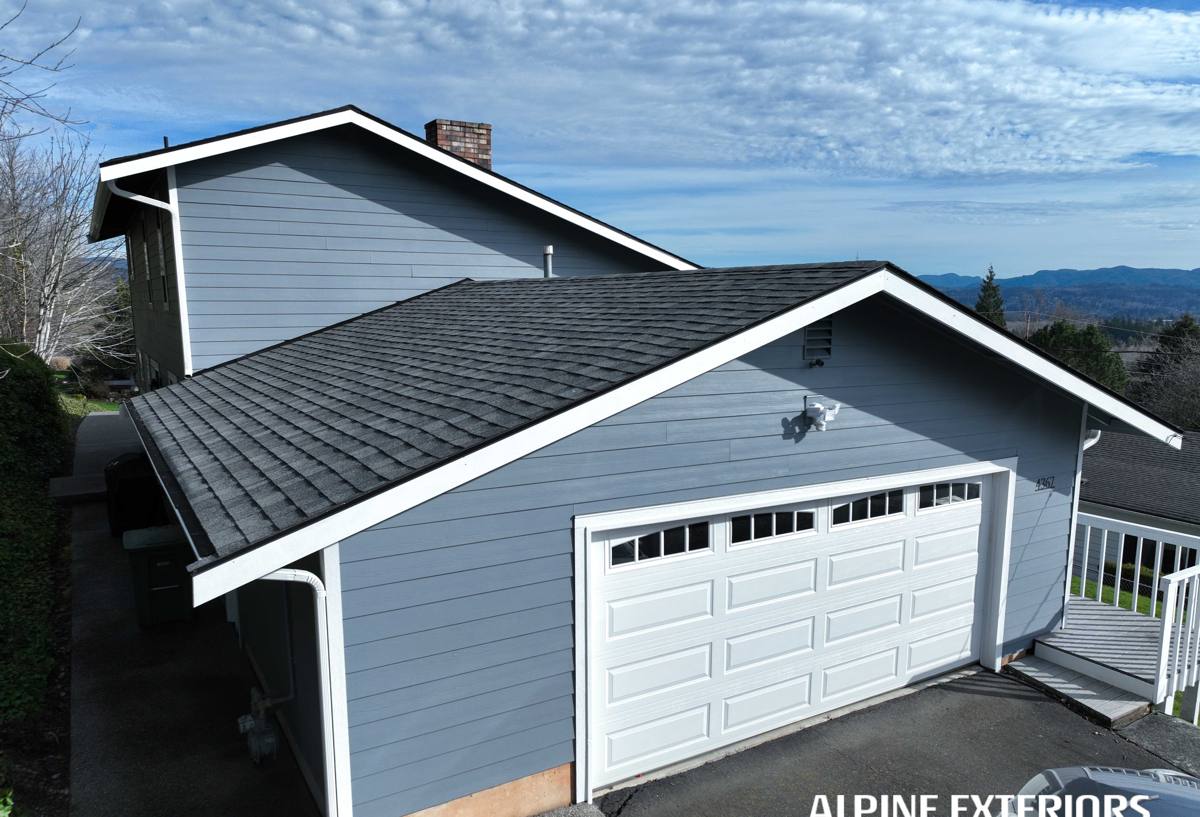
What a Correct Asphalt Shingle Roof Actually Requires Here
Underlayment and Water Management
In a climate with this much sustained and wind-driven rain, the underlayment matters as much as the shingles themselves. We use synthetic underlayment rather than older felt products in most applications, because it holds up better to moisture exposure during the install window and provides more consistent secondary protection once the roof is closed in. Ice-and-water shield membrane goes at eaves, valleys, and any low-slope transitions — the places where wind-driven rain and ponding water are most likely to find a way in.
Flashing That Won't Corrode
Salt air shortens the life of low-grade flashing. We flash chimneys, skylights, sidewalls, and roof-to-wall transitions with materials chosen to hold up to coastal air exposure, not just to meet minimum code. Flashing is one of the most common failure points on Skagit County roofs we're called to repair, and it's rarely the shingles themselves that failed first.
Ventilation That Actually Moves Air
Moss and moisture both thrive in a roof deck that stays damp. Balanced intake and exhaust ventilation keeps the underside of the roof deck dry and reduces the conditions moss needs to take hold from below as well as above. On older Conway homes, we frequently find ventilation that was adequate when the home was built but never updated as additions, insulation upgrades, or landscaping changed how the attic breathes.
Fastening for Wind Exposure
Proper nail placement and fastener count matter more in an area that gets sustained wind-driven storms off the water. We follow manufacturer specifications for fastener count and placement rather than cutting corners on nail count, which is one of the more common shortcuts that leads to lifted or blown-off shingles in a bad storm.
Choosing the Right Asphalt Shingle for a Conway Home
Not every asphalt shingle product is built the same way, and the differences matter more in this climate than in a drier one. We talk homeowners through the real trade-offs rather than just selling the highest-margin product.
| Shingle Type | Typical Lifespan | Best Fit for Conway |
|---|---|---|
| 3-tab shingles | 15–20 years | Budget-conscious projects; less wind and impact resistance than architectural options |
| Architectural (laminate) shingles | 25–30 years | Our standard recommendation — better wind rating and thicker profile sheds water more effectively |
| Impact-resistant / premium architectural | 30+ years | Homes with heavy tree cover or a history of storm damage; higher upfront cost, less frequent repair |
For most Conway properties, we steer homeowners toward a mid-to-upper-tier architectural shingle with a algae-resistant granule treatment. That treatment doesn't make a roof moss-proof, but it slows the growth cycle meaningfully in a climate where moss otherwise has a long season to work with.
Moss and Algae: Realistic Expectations
We won't tell a Conway homeowner their roof will never get moss — that's not an honest claim in this part of Skagit County, especially on shaded, north-facing slopes. What we can do is install in a way that slows it down and give homeowners a maintenance rhythm that keeps it from becoming a structural problem.
- Algae-resistant shingles reduce (not eliminate) the rate of growth on the granule surface.
- Keeping nearby branches trimmed back reduces both shade and debris buildup, which are the two biggest moss accelerants.
- Gentle, low-pressure roof cleaning removes established moss without damaging granules — pressure washing a shingle roof is one of the fastest ways to shorten its life, and we don't do it.
- Zinc or copper strips near the ridge can help suppress regrowth in shaded areas, installed as a preventive measure rather than a cure.
- Annual or biannual inspection catches moss and debris buildup before it starts holding moisture against the shingle surface.
Our Process for a Conway Roofing Project
1. On-Site Assessment
We inspect the existing roof deck, flashing, ventilation, and any problem areas — not just the shingles. Roof replacement done right starts with knowing what's underneath, especially on older Skagit County homes where the deck or ventilation may need attention along with the shingles.
2. Honest Scope and Estimate
We walk homeowners through what the project actually needs, what's optional, and what it costs — in writing, with no pressure to upgrade beyond what the home requires.
3. Tear-Off and Deck Inspection
Full tear-off lets us check the deck for rot or soft spots before anything new goes down — a step that's easy to skip and expensive to regret, especially on roofs that have had long-term moisture exposure.
4. Underlayment, Flashing, and Ventilation Install
This is where most of the long-term performance of the roof gets decided, and it's the stage a lot of lower-cost bids shortcut. We don't.
5. Shingle Installation
Installed to manufacturer fastening specifications, with attention to valleys, edges, and penetrations — the details that determine how the roof handles its first serious coastal storm.
6. Final Walkthrough
We review the completed work with the homeowner and go over basic maintenance expectations for this climate before we consider the job done.
Repair, Partial Replacement, or Full Replacement?
Not every roofing call in Conway ends in a full tear-off. We assess honestly and recommend based on the roof's actual condition:
- Repair makes sense for isolated flashing failures, a handful of wind-damaged shingles, or a localized leak on an otherwise sound roof.
- Partial replacement can address a section with concentrated moss, sun, or storm damage without replacing a roof that's otherwise performing well.
- Full replacement is the right call when the roof is past its realistic service life, when underlayment and flashing are failing broadly, or when repeated repairs are no longer cost-effective.
We'll tell you which category your roof falls into, and why — not just default to the most expensive option.
Signs a Conway Roof Needs Attention
| What You Notice | What It Often Means |
|---|---|
| Granules collecting in gutters | Shingles aging or wearing faster than expected |
| Dark streaking or green tint | Algae or early moss growth, especially on shaded slopes |
| Curling or lifted shingle edges | Wind exposure or underlayment/fastening issues |
| Water stains on interior ceilings | Active leak — often at flashing, not the shingle field itself |
| Visible moss mats on the roof surface | Moisture retention that can lift shingles and hold water against the deck |
Why Hire a Crew That Already Works This Area
A roofing crew that mainly works drier, inland parts of Washington doesn't run into salt air corrosion, wind-driven rain, or a moss season this long as a matter of routine. We do. That shows up in small decisions — which flashing grade we spec, how we detail valleys, where we push back on a shingle choice that looks good on paper but won't hold up here — that only come from working Skagit County conditions repeatedly, not from a one-size-fits-all install standard. It also means we're a known, accountable local business if a warranty question or a storm-damage repair comes up years down the road, not a crew that was passing through.
What a Conway Homeowner Should Ask Before Hiring
- Is the bid based on an actual roof inspection, or a rough estimate from square footage alone?
- What underlayment and flashing materials are included, specifically — not just "code compliant"?
- Is the crew licensed and insured to work in Washington, and will that be provided in writing?
- Does the estimate distinguish between what the roof needs and what's optional?
- Who handles a warranty claim or storm-damage repair after the project is finished?
If you're weighing a repair, a partial fix, or a full replacement on a Conway home, we're happy to take a look and give you a straight answer — no pressure, no inflated scope. Fill out the form below for a free estimate.