 Anacortes Siding
 Why Fidalgo Island Siding Takes a Different Kind of Beating
Homes on Fidalgo Island sit in a spot where marine weather doesn't let up for long. Salt-laden air off the surrounding water works into seams, fasteners, and any gap in a home's exterior. Driving rain off Rosario Strait and the Salish Sea pushes moisture sideways into siding joints that would stay dry in a calmer climate. And the region's damp, mild winters and long shoulder seasons give moss, algae, and mildew months at a time to establish themselves on north-facing walls and shaded siding. None of this is unique to any one street or subdivision on the island — it's a function of geography, and it affects siding differently than it affects a home fifty miles inland in Skagit County.
That combination means siding repair here isn't just about patching a cracked board. It's about understanding why that board cracked, whether moisture got behind it before anyone noticed, and whether the fix will actually hold up through another wet season. A repair that looks fine from the driveway but doesn't address what's happening underneath just buys a homeowner a year or two before the same spot fails again.
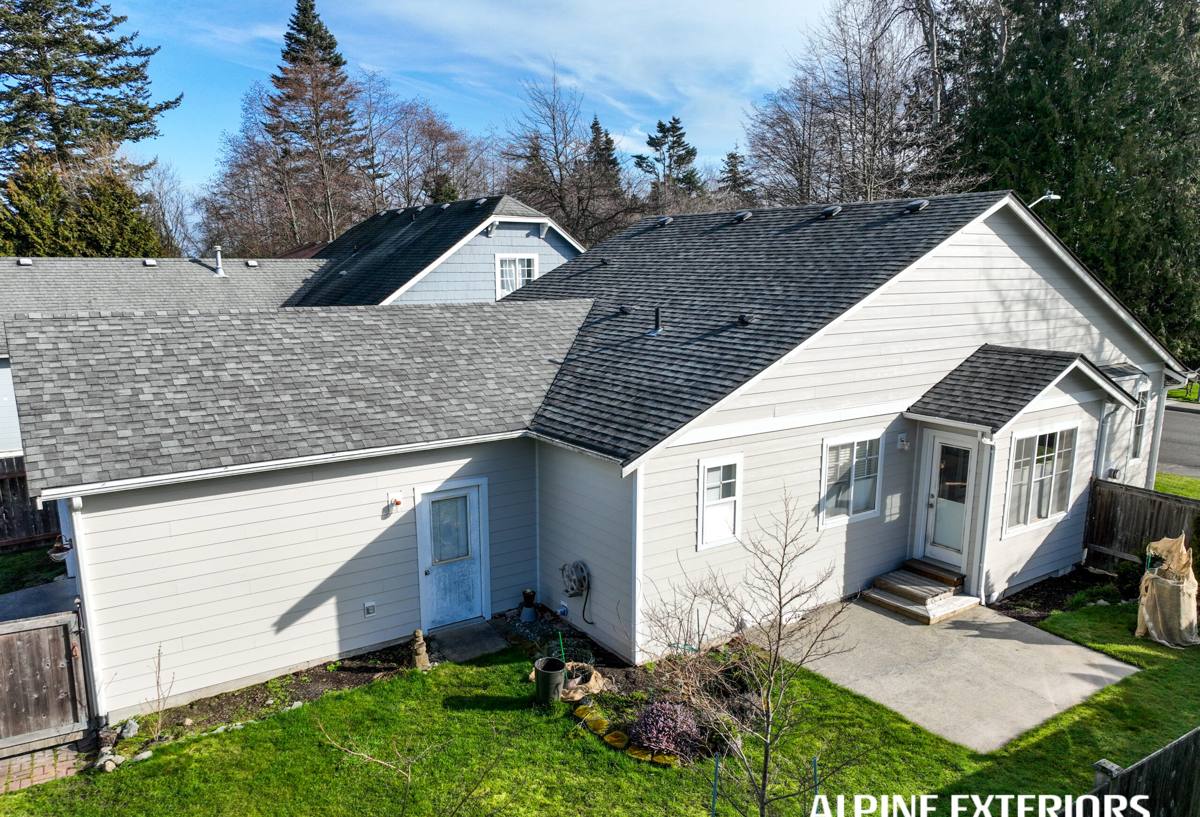
Common Siding Repair Issues We See on Fidalgo Island Homes
Every siding material fails differently, but on Fidalgo Island a few patterns show up more often than others because of the climate this area sits in.
Moisture Intrusion at Seams and Penetrations
Windows, doors, hose bibs, vents, and deck ledger boards are all places where siding gets cut and fitted around something else. Wind-driven rain finds these gaps more aggressively here than in drier climates, and over time, poor flashing or caulking that's failed lets water behind the siding. That's often invisible until paint starts bubbling, boards feel soft, or trim starts to separate.
Moss, Algae, and Organic Growth
Shaded walls, especially those facing north or tucked under overhangs and mature trees, stay damp longer after storms roll through. Moss and algae growth isn't just cosmetic — sustained moisture against a siding surface accelerates deterioration, especially at butt joints and seams where water can wick in.
Fastener and Hardware Corrosion
Salt air is hard on exposed metal. Nail heads, trim fasteners, and hardware that isn't rated for coastal exposure can corrode faster here than in inland installations, leading to streaking, loosened boards, or failure points that let water in.
Impact and Wind Damage
Storm-driven debris, wind gusts off the water, and general wear from exposed siting can crack, split, or dislodge boards, particularly on the windward side of a home.
Repair or Replace? How We Make That Call
Not every damaged section needs a full re-side, and not every problem is fixable with a patch. We look at the extent of the damage, what's happening behind the siding, and how much of the wall is affected before recommending a path.
| Situation | What It Usually Means | Typical Approach |
|---|---|---|
| Isolated crack or impact damage, dry substrate underneath | Localized damage only, no ongoing moisture issue | Cut out and replace the affected board(s) |
| Soft or spongy boards near a window, deck, or roofline | Active or past moisture intrusion behind the siding | Remove siding, inspect and repair the water barrier and framing, then re-side that section |
| Heavy moss/algae on an otherwise sound wall | Cosmetic and early-stage moisture concern | Clean, treat, and address the shading or drainage issue causing it |
| Widespread cracking, fading, or failure across multiple walls | Material or installation nearing end of service life | Full re-side is usually more cost-effective than repeated repairs |
| Corroded or failing fasteners across a wall | Original hardware wasn't suited for coastal exposure | Re-fasten or re-side with corrosion-resistant hardware |
The goal of any inspection we do is to give a homeowner an honest answer, not to upsell a repair into a full replacement or, on the other end, patch something that's going to fail again in a year.
What a Correct Siding Repair Actually Involves
A repair that's done right takes more steps than most homeowners expect, and skipping them is exactly how the same spot ends up failing again.
- Diagnose before cutting. We check for moisture behind the visible damage, not just at the surface, since a stain or crack is often a symptom of something happening underneath.
- Inspect the water-resistive barrier. If siding is coming off anyway, it's the right time to check the weather barrier and flashing details behind it and repair anything compromised.
- Address the cause, not just the symptom. If a gutter, grade, or flashing detail is feeding water into that spot, the repair has to fix that too, or the same failure comes back.
- Match materials correctly. Replacement boards need to match the existing profile, exposure, and finish so the repair blends rather than standing out.
- Fasten and seal to spec. Corrosion-resistant fasteners and proper sealant at joints matter more here than in a drier inland climate.
Why We Repair — and Install — Only James Hardie Fiber Cement
We made a decision as a company to work exclusively with James Hardie fiber cement siding, and it shapes how we approach repairs, too. Fiber cement doesn't rot, swell, or feed moss and mildew the way wood-based products can, and it holds up to salt air and driving rain better than materials that rely on paint film or surface coatings alone to stay protected. Hardie's ColorPlus factory finish means a well-matched repair section keeps its color instead of fading unevenly against older siding, which is a common headache with field-painted materials.
We don't install or repair with LP SmartSide, vinyl, Cemplank, Allura, primed spruce, or cedar. That's not a knock on every homeowner who has one of those products — plenty of them perform fine for years. It's that after years of doing this work in a wet, coastal climate, we've seen where each of those products tends to struggle: engineered wood products depend heavily on caulking and edge-sealing staying intact to resist moisture, vinyl can crack and fade and doesn't offer the same fire-resistance, and untreated wood species need a maintenance commitment most homeowners don't realize they're signing up for. James Hardie's HZ5 product line is engineered specifically for climates like this one, and it's what we stand behind for both new installs and repair work.
Our Process for Fidalgo Island Siding Repairs
1. On-Site Inspection
We walk the exterior with the homeowner, look at the damaged areas, and check nearby sections for early signs of the same problem — a single bad spot often isn't the only one.
2. Honest Diagnosis
We explain what we're seeing, whether it's cosmetic or structural, and what caused it. If it's a drainage or flashing issue rather than a siding failure, we say so.
3. Clear Written Estimate
We put together a scope and price before any work starts, including whether the fix is a targeted repair or whether a larger section makes more sense.
4. Repair Work
We remove only what needs to come off, inspect and correct anything behind the siding, and install matched James Hardie material with proper fastening and sealing.
5. Final Walkthrough
We review the finished work with the homeowner before considering the job done.
Signs It's Time to Have Your Siding Checked
- Paint bubbling, peeling, or discoloring in a specific spot rather than evenly across a wall
- Boards that feel soft, spongy, or flexible when pressed
- Visible cracks, splits, or gaps at seams and corners
- Persistent moss or algae growth that keeps coming back after cleaning
- Streaking or rust-colored stains near fasteners or trim
- Warping, buckling, or boards pulling away from the wall
- Musty smells or interior wall staining near an exterior wall
Why a Crew That Already Works Fidalgo Island Matters
Siding repair on the island isn't identical to siding repair in a dry inland town. A crew that regularly works Anacortes and the surrounding Skagit County area already knows how to read the difference between ordinary wear and the kind of moisture damage that's common here, understands how exposure and shading on different sides of a home changes what to expect, and doesn't have to relearn coastal-specific fastening and sealing practices on the homeowner's dime. That familiarity shows up in faster, more accurate diagnoses and repairs that are built for the conditions the home will actually face, not generic conditions from somewhere else.
It also matters for responsiveness. Weather-driven damage — a windstorm, a stretch of hard rain that finds a weak spot — doesn't wait for a convenient time, and having a local crew that knows the area means less delay between noticing a problem and getting it looked at.
If you've noticed damage, discoloration, or ongoing moss on your siding, we're happy to take a look and give you a straight answer about what's going on and what it would take to fix it. Reach out using the form below for a free, no-pressure estimate.