 Anacortes Siding
 Old Town Anacortes: A Different Kind of Exposure
Old Town Anacortes sits close to the water on Fidalgo Island, and that proximity shapes everything about how a house ages here. Homes in this part of Skagit County deal with a combination most inland Washington towns never see: salt-laden air off the strait, driving rain that comes in sideways during winter storms, and a long stretch of the year where surfaces simply don't dry out. It's a beautiful place to live and a tough place to be a wall.
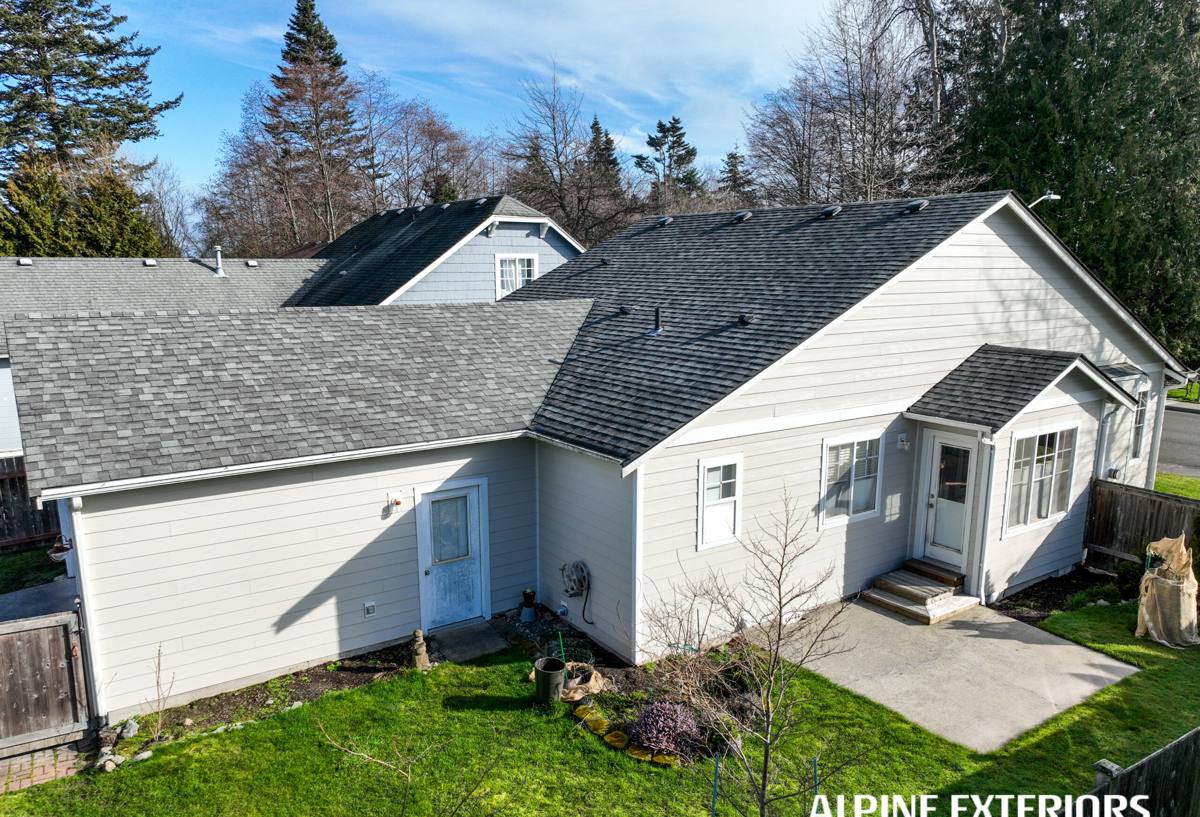
We've worked on enough homes in and around Old Town Anacortes to know the pattern. Siding on the water-facing and prevailing-wind sides of a house wears differently than siding on the sheltered side. Trim details near the roofline and around windows show problems first. And older homes that were sided decades ago, sometimes more than once, often carry moisture damage that isn't visible until you pull the material off.
What Salt Air and Moss Season Actually Do to a House
Salt Air
Salt-laden coastal air accelerates corrosion on anything metal — fasteners, flashing, hardware — and it also degrades certain paint and coating systems faster than a homeowner would expect. Siding materials that rely on field-applied paint tend to chalk and fade sooner near the water, which means more frequent repainting just to keep the house looking presentable, let alone protected.
Driving Rain
Anacortes gets wind-driven rain off the strait, and wind-driven rain doesn't behave like a light shower. It gets pushed sideways and upward into laps, seams, and butt joints that would stay dry in a calmer climate. Every seam in a siding system is a potential entry point, and on an exposed lot the number of "wetting events" a wall sees over a winter is significantly higher than what the same product would face fifty miles inland.
Moss and Sustained Dampness
Skagit County's wet season runs long — realistically October through May with only brief dry stretches. Surfaces that don't get direct sun, particularly on north- and east-facing walls shaded by trees or neighboring structures, can stay damp for weeks at a time. That's exactly the environment moss and algae need to establish, and it's also the environment where any siding material with a weak point for moisture intrusion will find it eventually.
Why We Standardized on One Product
We install James Hardie fiber cement siding exclusively. We don't install vinyl, LP SmartSide, Cemplank, Allura, or wood products like primed spruce or cedar. That's a deliberate professional standard, not a marketing angle, and it's worth explaining honestly rather than just asserting.
Vinyl is inexpensive and low-maintenance in mild conditions, but it's a thin material that can crack in impact and distort in heat, and its seams and J-channels give wind-driven rain more opportunities to work behind the cladding on an exposed coastal lot. Wood-based products — including engineered wood like LP SmartSide and traditional cedar or primed spruce — depend on intact factory or field coatings to keep moisture out of the substrate; once that coating is compromised at a cut edge, fastener hole, or joint, the underlying wood fiber is vulnerable to swelling and rot, and Anacortes's damp season doesn't give those coatings much of a chance to fully dry between wetting cycles. Other fiber cement brands compete reasonably well on paper, but we've made our sourcing and installation decisions around one product line we can stand behind consistently, with one warranty structure and one set of installation specs our crews know cold.
James Hardie fiber cement is non-combustible, dimensionally stable across our wet-to-dry swings, and available with a factory-applied ColorPlus finish that's baked on rather than painted on site — which matters directly for a salt-air environment where field-applied coatings degrade faster. Hardie's HZ5 product line is engineered specifically for cold and moisture-prone climates, which fits Anacortes better than a generic all-climate product.
Product Comparison — Why We Made the Call
| Material | Coastal/Wet-Climate Performance | Maintenance Burden |
|---|---|---|
| James Hardie fiber cement | Non-combustible, dimensionally stable, factory ColorPlus finish resists coastal fading | Low — occasional wash, repaint on a much longer cycle |
| Vinyl siding | Can distort with heat/cold cycling; seams vulnerable to wind-driven rain | Low upfront, but limited lifespan in impact and UV exposure |
| LP SmartSide / engineered wood | Coating-dependent; cut edges and fastener points need diligent sealing | Moderate — coating maintenance is non-negotiable |
| Cedar / primed spruce | Attractive but highest moisture sensitivity in sustained damp conditions | High — regular refinishing and moisture monitoring |
How We Approach a Siding Job in Old Town Anacortes
Every project starts with a real look at the house, not just a measurement for material. On coastal lots we pay particular attention to:
- Flashing and water management details at windows, doors, and roof-to-wall intersections — this is where most long-term failures actually originate, not in the siding panel itself
- Condition of the sheathing and framing underneath the existing siding once it's removed, since salt air and years of moisture exposure can hide damage behind an intact-looking exterior
- Fastener selection — corrosion-resistant fasteners matter more here than in a dry inland climate
- Rainscreen or drainage gap detailing where appropriate, to give any moisture that does get behind the cladding a way out
- Correct caulking and joint treatment per Hardie's published installation specs, since fiber cement performs to its rating only when installed to spec
We also handle roofing, windows, and decks, which matters on a house like this because siding doesn't fail in isolation. A leaking roof valley, a failed window flashing, or a rotted deck ledger board can all be feeding moisture into a wall that otherwise looks fine from the street. When we're on site for siding, we look at the whole envelope, not just the panels.
Why a Local Crew Matters Here
A contractor who only works inland, or who works across a wide multi-state territory, doesn't necessarily know that a north-facing wall two blocks from the water in Anacortes behaves differently than the same wall in Mount Vernon or Burlington. Local knowledge shows up in small decisions: how much rain-screen gap to build in on an exposed elevation, which trim details need extra attention near the waterfront, when moss growth on a roof or wall is cosmetic versus a sign of a bigger drainage problem. We work throughout Skagit County and see these conditions repeatedly, which means we're not guessing on a coastal Fidalgo Island property — we're applying what we've already learned on similar homes.
Signs Your Old Town Anacortes Home May Need Attention
- Persistent moss or algae growth on siding that returns quickly after cleaning
- Soft or spongy spots when you press on siding, especially near the bottom courses or around windows
- Visible gaps, warping, or buckling at seams and butt joints
- Paint that's peeling, bubbling, or chalking faster than it should
- Rust staining running down from fasteners or metal trim
- Interior signs like peeling paint or musty smells on exterior-facing walls, which can indicate moisture getting through from outside
What Replacement Involves — General Timeline and Cost Factors
Every house is different, but a full siding replacement on a typical single-family home generally runs a few weeks from tear-off to final trim, weather permitting — and Anacortes weather means we plan around dry windows rather than fighting the rain. Cost depends heavily on the specifics of the house.
| Factor | Why It Matters |
|---|---|
| Home size and wall complexity | More corners, dormers, and elevation changes mean more labor and trim work |
| Condition of underlying sheathing | Hidden rot or moisture damage found during tear-off adds repair scope |
| Siding profile and finish selection | Lap width, texture, and ColorPlus color options affect material cost |
| Trim and detail work | Window and door trim, corner boards, and fascia detailing add time |
| Access and site conditions | Tight lots, landscaping, and staging space affect labor efficiency |
We walk every home in person before giving a real number, because a phone estimate on a coastal property is just a guess.
Get a Straight Answer for Your Home
If you're in Old Town Anacortes and dealing with siding that's showing its age, or you're just planning ahead before the next wet season sets in, we're glad to come take a look. We'll give you an honest read on what your siding actually needs — whether that's a full replacement, a repair, or attention to a roof or window detail that's feeding the problem — with no pressure to sign anything. Reach out for a free estimate using the form below.