 Anacortes Siding
 Old Town Anacortes: A Different Kind of Wear on a Deck
Old Town Anacortes sits close enough to the water that its homes take on a different kind of weather than you'll find a few miles inland in Skagit County. Salt-laden air off the surrounding waterways works into fasteners and finishes year-round. Wind-driven rain doesn't just fall on a deck here, it gets pushed sideways into railings, ledger boards, and under-deck framing that a calmer site would never see. And because many of the neighborhood's older lots have mature trees and tighter setbacks between homes, a lot of decks sit in partial shade for large parts of the day, which is exactly the recipe for a long moss season that can start in early fall and not really let go until late spring.
None of that makes a deck in Old Town Anacortes impossible to build well. It just means the details that don't matter much in a dry, sunny climate matter a great deal here. A deck built the same way you'd build one in eastern Washington, without accounting for salt exposure, standing moisture, and moss growth, will show its age fast. One built with this specific neighborhood in mind will hold up the way it should.
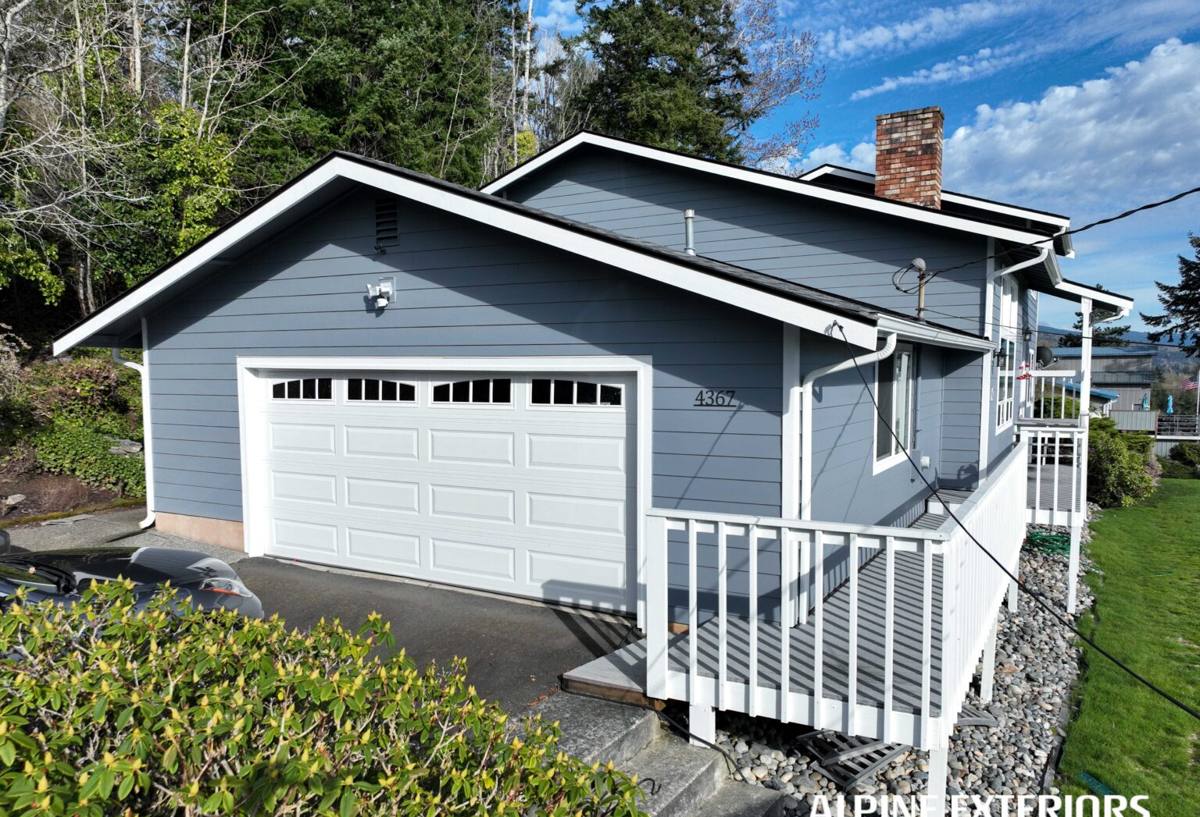
Why Composite Decking Fits This Neighborhood
Composite decking is made from a blend of wood fiber and plastic, formed into boards that don't absorb water the way solid lumber does. That matters directly for a site like Old Town Anacortes. Wood decking left in a shaded, damp, salty environment needs regular staining or sealing to keep water out of the grain, and once that maintenance schedule slips even one season, rot and splintering follow. Composite doesn't have that same vulnerability. The board itself won't soak up rainwater, swell, and crack the way wood fibers do when they go through repeated wet-dry cycles.
That said, composite isn't a maintenance-free material, and we won't tell a homeowner it is. The surface can still grow a film of algae or moss in a shaded, damp spot, especially on boards that aren't fully capped on all four sides. The difference is that cleaning a composite deck is a matter of washing the surface, not stripping and refinishing it. For a neighborhood with this much shade and moisture, that's a meaningful difference in how much upkeep a deck actually demands over the years.
Capped vs. Uncapped Boards
Most composite decking sold today falls into two categories. Fully capped boards have a plastic shell wrapped around the entire board, including the underside and edges, which gives the best resistance to moisture wicking in at cut ends and fastener holes. Uncapped or partially capped boards cost less but leave more of the wood-fiber core exposed, which can allow moisture absorption at cuts and joints over time. In a climate with this much rain and humidity, we lean toward fully capped products for anything within reach of splashback, ground moisture, or shaded, slow-drying areas.
What a Correct Composite Deck Build Involves Here
Substructure and Ledger Attachment
The composite boards on top get most of the attention, but the framing underneath is what actually determines how long a deck lasts on a site like this. Ledger board attachment to the house needs proper flashing so wind-driven rain doesn't track behind the siding and into the wall assembly. On older Old Town Anacortes homes, that often means checking what's actually behind the existing siding before assuming a standard ledger detail will work cleanly.
Fastening and Board Layout
Composite boards expand and contract with temperature more than solid wood, and hidden fastener systems need the gap spacing set correctly for that movement, or boards will buckle or gap unevenly within a year or two. Board orientation and end-cut sealing also matter more here than in a dry climate, since any cut edge that isn't capped or sealed is a spot for moisture to work into the core.
Airflow and Drainage Underneath
A deck built low to the ground, or over a shaded, poorly ventilated crawlspace, holds moisture underneath long after the surface looks dry. That trapped moisture is what feeds moss and mildew growth on the underside of the joists and the bottom of the decking. Correct joist spacing, ground clearance, and drainage slope away from the house keep air moving under the deck instead of letting water sit there through Anacortes' wetter months.
Composite vs. Wood vs. PVC in Salt Air
| Material | Moisture Behavior in This Climate | Ongoing Maintenance | Typical Lifespan Here |
|---|---|---|---|
| Pressure-treated wood | Absorbs water in shaded, damp spots; prone to swelling and splitting through repeated wet-dry cycles | Annual cleaning and staining/sealing recommended | Shorter, especially in shaded, low-airflow areas |
| Composite (capped) | Resists water absorption; surface can still host algae/moss film in shade | Periodic washing; no staining or sealing | Long, with consistent performance in salt air and rain |
| PVC decking | Fully resists moisture absorption; lightweight and very stable | Periodic washing | Long, though appearance and feel differ from composite |
We install composite most often in this neighborhood because it strikes a practical balance: it handles the moisture and salt exposure well, and it still has the weight and look homeowners expect from a traditional deck, without the upkeep wood demands.
Our Process, Start to Finish
On-Site Assessment
We start by looking at the existing structure if there is one, the ledger connection to the house, drainage and grading around the deck footprint, and how much shade the area gets through the day. That last point shapes some of our material and drainage recommendations, since a deck that sits in full sun most of the day has different moss and mildew exposure than one tucked against the north side of a home.
Framing and Installation
We build or repair the substructure to current code requirements, flash the ledger connection properly, and set joist spacing to match the composite manufacturer's specifications, which are usually tighter than what solid lumber decking requires. Boards go down with hidden fasteners where the product allows it, with attention to expansion gaps and sealed cut ends.
Final Walkthrough
Before we call a job finished, we walk the deck with the homeowner, check railings and stairs for solid attachment, and go over basic care so there are no surprises about what maintenance the deck will and won't need going forward.
Living With a Composite Deck in a Moss Season Climate
Composite decking cuts down on maintenance significantly, but a deck in a shaded, damp part of Old Town Anacortes still benefits from a bit of seasonal attention, especially heading into and coming out of the wetter months.
- Sweep off leaves and debris regularly in fall, since trapped organic matter holds moisture against the board surface and feeds moss growth
- Rinse the deck periodically through the winter to clear salt residue and grime buildup before it has time to settle into the board texture
- Scrub visible moss or algae with a soft-bristle brush and a mild deck cleaner rather than a pressure washer on high setting, which can damage the board's cap layer
- Check that gaps between boards stay clear so water can drain through instead of pooling on the surface
- Confirm gutters and downspouts near the deck are directing water away, not dumping runoff onto or under the decking
- Inspect railings and stair connections once a year for any looseness, since coastal wind exposure works on hardware over time
What Affects the Cost of Your Deck
Every composite deck project is priced around a handful of factors: total square footage, how many levels or stairs are involved, railing style and material, whether the existing substructure can be reused or needs to be rebuilt, and which composite product tier you choose. A straightforward replacement of an existing deck footprint costs less than a new multi-level deck with built-in railings and stairs, and fully capped, premium composite boards cost more upfront than entry-level composite or uncapped products. Because so much of the real cost sits in the framing work, not just the visible decking, we give firm numbers only after seeing the site and the current structure, not off a general square-footage guess.
Why a Crew That Already Works Old Town Anacortes Matters
A lot of what makes a deck last in this neighborhood isn't visible once the project is done. It's the flashing detail behind the ledger board, the joist spacing under the boards, and the drainage path that keeps water moving instead of pooling under a shaded corner. A crew that regularly works in Anacortes and the surrounding Skagit County area has already seen how the older housing stock in Old Town Anacortes is framed, what permitting through the city typically involves, and how the local combination of salt exposure, shade, and rainfall actually plays out on a deck over several seasons, not just in the first year after installation.
That local familiarity shows up in small decisions throughout a project: how tight to set fastener spacing for the temperature swings here, which cut edges need extra sealing based on sun and shade exposure, and where drainage tends to be a problem on lots with this kind of slope and tree cover. It's the difference between a deck that's built to a generic spec sheet and one that's actually built for this address.
If you're weighing a new composite deck or a replacement for an aging wood deck in Old Town Anacortes, we're glad to come take a look and talk through what the site actually needs. There's no cost and no pressure to get a straightforward estimate — just fill out the form below and we'll get in touch.