 Anacortes Siding
 Sedro-Woolley's Exterior Climate Challenge
Sedro-Woolley sits inland along the Skagit River, tucked against the foothills where the valley starts to climb toward the Cascades. It doesn't take the direct salt spray that homes right on Fidalgo Island or the Anacortes waterfront deal with, but it shares the same wet, marine-influenced weather pattern that defines this part of Skagit County. Moisture rolls up the valley off the Salish Sea, gets trapped by the surrounding hills, and settles in as fog, drizzle, and heavy dew for long stretches of the year.
That combination — persistent humidity, driving rain off the foothills, and a shaded, tree-lined landscape in a lot of Sedro-Woolley neighborhoods — is exactly what grows moss, algae, and mildew on exterior surfaces. Homes here often deal with a longer moss season than drier parts of the state, and siding that can't handle sustained dampness will show it: swelling, staining, soft spots, and paint that won't hold. We've built our approach around that reality, not a generic Pacific Northwest weather assumption.
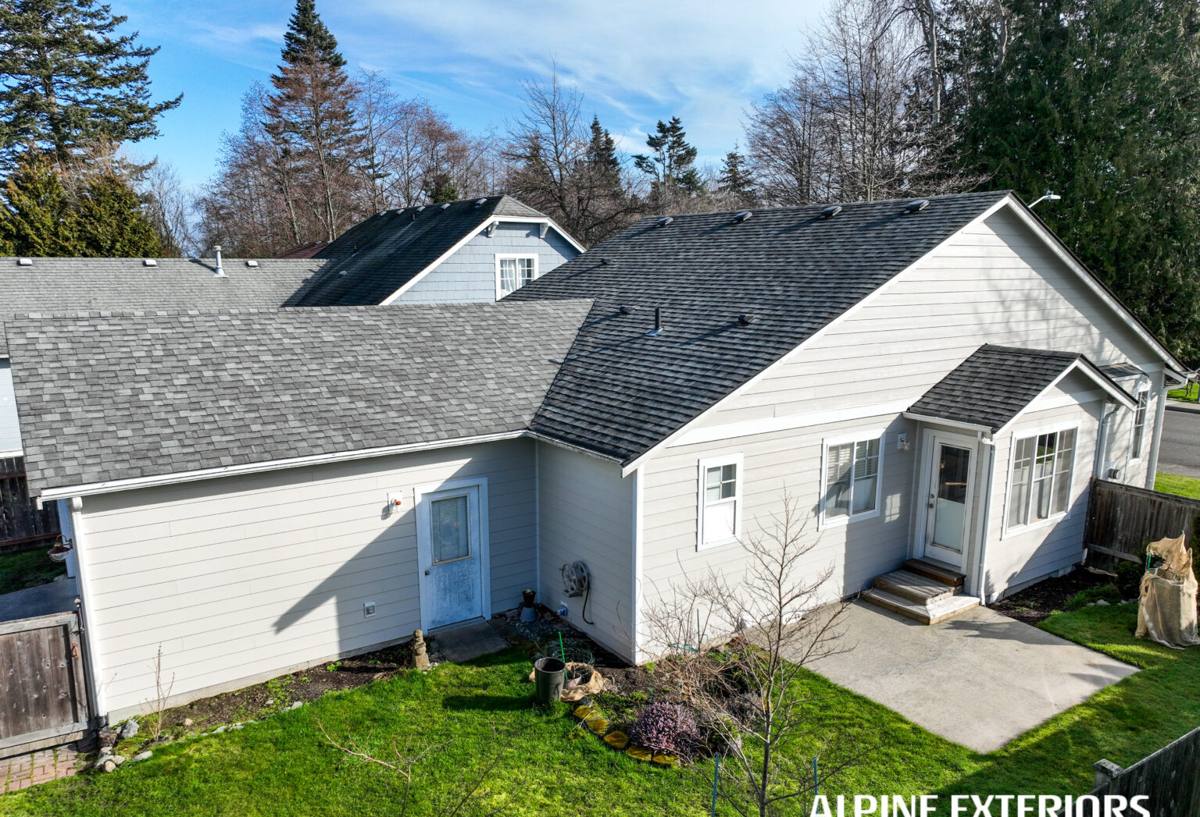
What We See on Sedro-Woolley Homes
Working across Skagit County, we see the same patterns repeat on houses in and around Sedro-Woolley:
- North- and east-facing walls holding moisture longer because they get less direct sun to dry out
- Moss and algae streaking on siding near tree cover or close to the ground where airflow is limited
- Paint failure and caulk breakdown on older wood or engineered wood siding from repeated wet-dry cycles
- Trim and window returns that have absorbed water over years and started to soften or rot
- Roof and gutter issues that quietly funnel extra water onto the siding below without the homeowner noticing
None of this means Sedro-Woolley is a hard place to keep a house looking good — it just means the exterior materials and installation details matter more here than they would in a drier climate.
Why We Only Install James Hardie Fiber Cement
We made a deliberate decision as a company to install one siding system: James Hardie fiber cement. We don't install vinyl, LP SmartSide, Cemplank, Allura, primed spruce, or cedar. That's not a marketing angle — it's a standard we hold ourselves to because of what we've seen these products do over time in exactly the kind of damp, moss-prone climate Sedro-Woolley has.
Vinyl is affordable and low-maintenance in the sense that it doesn't need painting, but it's a petroleum-based product that expands, contracts, and can warp or crack in temperature swings, and it doesn't stop moisture from getting behind it if the installation isn't tight. Wood and primed wood products like cedar or primed spruce look great on day one, but they need consistent maintenance — recaulking, repainting, checking for rot — to hold up against sustained valley humidity, and that upkeep is easy to fall behind on. Engineered wood siding (LP SmartSide, Cemplank) improved on solid wood in a lot of ways, but it's still a wood-based substrate, and wood-based products are more sensitive to prolonged moisture exposure than fiber cement, especially at cut edges and butt joints if they aren't sealed and installed exactly to spec.
James Hardie fiber cement is cement, sand, and cellulose fiber — it doesn't rot, it doesn't feed moss the way organic material can, and it's non-combustible. Hardie's ColorPlus factory-applied finish is baked on under controlled conditions, which gives it better fade and chip resistance than field-applied paint, and it comes backed by a strong transferable warranty. It's engineered in HZ5 and HZ10 formulations for different climate zones, including the wetter regions of the Pacific Northwest. For a house that's going to sit in valley humidity for the next 30-plus years, that's the material we're willing to put our name behind.
What This Means for You
We'll be straightforward if you ask us about a product we don't install — we're happy to explain the trade-offs honestly rather than just say no. But when it comes to what goes on the wall of your Sedro-Woolley home, we only offer what we believe holds up to the job.
Siding Material Comparison
| Material | Moisture Resistance | Maintenance | Typical Lifespan |
|---|---|---|---|
| James Hardie Fiber Cement | Excellent — cement-based, does not rot | Low — factory finish, occasional wash | 30+ years |
| Vinyl | Fair — can trap moisture behind panels | Low, but prone to warping/cracking | 15-25 years |
| Engineered Wood (LP/Cemplank) | Fair — vulnerable at unsealed edges | Moderate — regular caulk/paint checks | 20-30 years |
| Cedar / Primed Wood | Poor to fair — organic, absorbs moisture | High — repainting, sealing, rot checks | 15-25 years with upkeep |
These are general industry ranges, not guarantees — actual performance always depends on installation quality, sun/shade exposure, and how consistently a home gets maintained.
Roofing, Windows, and Decks — One Crew for the Whole Exterior
Siding doesn't fail in isolation. On a lot of the moss and moisture problems we find in Sedro-Woolley, the root cause traces back to the roof or the windows, not the siding itself. A roof that's shedding granules or has failing flashing sends extra water down the wall. Windows with worn seals let moisture creep into the wall cavity behind the siding. A deck built without proper ledger flashing can rot from the house out.
Because we handle siding, roofing, windows, and decks as one company, we can look at your home's exterior as a system instead of four separate trades pointing fingers at each other. If your siding project uncovers a roof or window issue that's driving the damage, we can address it directly instead of patching over a problem that will just come back.
What a Correct Installation Actually Involves
Fiber cement performs the way it's supposed to only when it's installed to manufacturer spec. A lot of the problems homeowners blame on "the siding" are actually installation shortcuts. Our checklist for every Sedro-Woolley job includes:
- Proper rainscreen or drainage plane behind the siding so trapped moisture has somewhere to go
- Correct fastener type, spacing, and placement per Hardie's installation guidelines
- Factory-cut and properly sealed field cuts, especially around windows, doors, and corners
- Flashing integrated correctly at every horizontal joint, window head, and roofline transition
- Proper clearance between siding and grade, decks, and roof lines to prevent wicking
- Caulking only where Hardie specifies it — not as a substitute for correct flashing
Skipping any of these steps is how a good product ends up with a bad reputation. It's also why the crew matters as much as the material.
Cost Factors for a Sedro-Woolley Siding Project
| Factor | Why It Matters |
|---|---|
| Home size and wall complexity | More corners, gables, and dormers mean more cutting, flashing, and labor time |
| Extent of existing damage | Rot repair behind old siding adds cost but has to be addressed before new siding goes on |
| Siding profile and finish | Lap width, shake-style panels, and trim details affect material and labor cost |
| Access and site conditions | Slopes, tree cover, or tight lot lines around older Sedro-Woolley properties can affect setup time |
| Scope beyond siding | Bundling roofing, window, or deck work can be more efficient than separate projects later |
We give straightforward, itemized estimates rather than vague ballpark numbers, because every one of these factors changes the real cost.
Why a Local Crew Makes the Difference
A crew that works across Skagit County day in and day out knows the difference between a Sedro-Woolley home shaded by mature trees and a wide-open lot out toward the valley floor, and they know how that changes drying time, moss growth, and where water tends to collect. That's not something an out-of-area or fly-by-night crew picks up quickly. Local reputation also matters practically — we're not disappearing after the job is done, and if something needs a warranty follow-up, we're a short drive away, not a phone number in another state.
When you're vetting any contractor for exterior work, it's worth asking a few direct questions: are they licensed and insured in Washington, will they put the manufacturer's installation spec in writing, do they offer a workmanship warranty separate from the material warranty, and can they show you recent local work. A contractor confident in their work won't dodge any of those.
Ready to Talk About Your Home
Whether you're dealing with moss buildup, aging wood siding, or you're just planning ahead before winter rains set in, we're happy to walk your Sedro-Woolley property, point out what we see, and give you a clear, no-pressure estimate. There's no obligation — just a straight assessment from a crew that works this climate every day. Use the form below to get started.