 Anacortes Siding
 Windows Built for Sedro-Woolley's Wet, Wooded Climate
Sedro-Woolley sits in a part of Skagit County that stays damp for most of the year. Rain doesn't just fall here — it drives sideways during winter storms, sits in the air as fog and mist through spring and fall, and feeds a moss and mildew season that can run eight months or longer under the tree cover common to this area. Add the salt-tinged air that moves inland off the Salish Sea on windy days, and you have a climate that is genuinely hard on window frames, seals, and trim. A window that would hold up fine in a drier inland climate can fail here in a fraction of the time if it isn't installed correctly.
That's the core issue we see on service calls: it's rarely the window unit itself that fails first. It's the installation — the flashing, the sealant, the flashing details around the rough opening — that lets water in behind the siding where nobody can see it until there's a soft spot in the wall or a musty smell in a bedroom closet.
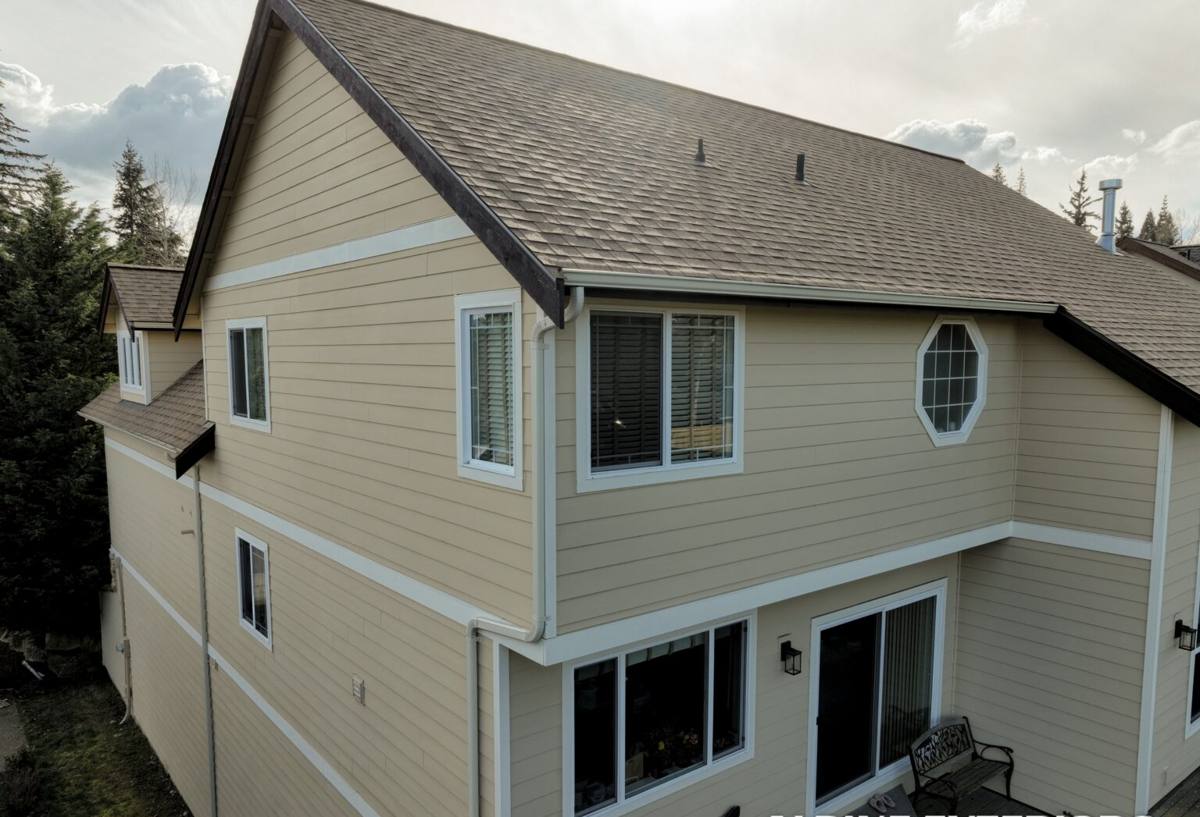
Signs Your Current Windows Are Losing the Fight
Homeowners usually call us for one of a handful of reasons. Knowing which one you're dealing with helps us scope the job correctly before we ever show up.
- Fogging or condensation between the glass panes, which usually means a failed seal on the insulated glass unit itself
- Soft, discolored, or bubbling trim and sill wood — a sign moisture has already gotten behind the exterior casing
- Visible moss or dark streaking building up on the sill or the siding directly below the window
- Drafts you can feel with a hand near the frame on a windy day, even with the window latched shut
- Windows that are difficult to open, close, or lock — often a sign the frame has swollen or shifted from moisture exposure
- A musty smell in the room that doesn't clear with ventilation
Any one of these on its own might just mean it's time for new windows. Several together, especially soft trim combined with interior odor, usually means there's already water damage inside the wall cavity that needs to be addressed as part of the installation, not papered over with a new window dropped into a bad opening.
What a Correct Window Installation Actually Involves
A window installation is really a water-management job with glass attached. The unit itself matters, but the sequence of steps around it — the parts you never see once the trim goes back on — determine whether that window is still performing well in fifteen years or leaking by year five.
Removal and Opening Inspection
We don't just pull the old sash and drop in a new frame. Every opening gets inspected once the old unit is out: the sheathing, the framing members, and any existing flashing or building paper. This is where hidden rot from years of minor leaks usually shows up, and it needs to be repaired before anything new goes in. Installing a premium window into a compromised opening just hides the problem for a while longer.
Flashing and Water Management
This is the step that matters most in a climate like Sedro-Woolley's. Proper flashing directs any water that gets past the exterior cladding back out, rather than letting it pool at the sill or migrate into the wall. That means correctly lapped flashing tape at the sill, jambs, and head, integrated with the building's water-resistive barrier in the right shingle-style order — bottom up, so each layer sheds water onto the one below it, never the reverse.
Sealing and Insulation
Gaps around the window frame get insulated (not packed solid, which can bow the frame) and sealed with an appropriate sealant at the exterior. Interior air sealing matters too — a well-sealed window cuts drafts and helps prevent condensation from forming on cold surfaces, which is a common complaint in this region's damp winters.
Trim, Casing, and Finish
Exterior trim gets back-primed and sealed at every joint before it goes up, and caulk joints are tooled properly rather than smeared on as an afterthought. This is also where we make sure sill pans slope outward so water can't sit against the bottom of the frame — a small detail that has an outsized effect on how long a window lasts here.
Choosing the Right Window for This Climate
There's no single "best" window material — the right choice depends on your home's exposure, your budget, and how much maintenance you want to take on. Here's how the common options compare for a wet, wooded, occasionally salt-tinged climate like this one.
| Frame Material | Moisture Performance | Maintenance | Typical Trade-Off |
|---|---|---|---|
| Vinyl | Won't rot or corrode; performs well in damp conditions | Low — occasional cleaning | Limited color/finish options; can look less premium on higher-end homes |
| Fiberglass | Excellent — dimensionally stable, resists swelling | Low | Higher upfront cost than vinyl |
| Wood (clad exterior) | Good if the exterior cladding stays intact; vulnerable if seals fail | Higher — exterior clad needs monitoring, interior wood needs occasional refinishing | Classic look, but the most installation-sensitive option in wet climates |
| Aluminum | Prone to condensation and conducts cold; can corrode faster near salt air | Moderate | We generally steer homeowners away from bare aluminum this close to the coast |
For most Sedro-Woolley homes we install vinyl or fiberglass, because both hold up to sustained moisture exposure without the ongoing upkeep that wood-framed units demand. If you love the look of wood on the interior, a wood-interior/fiberglass or vinyl-exterior clad unit can split the difference — you get the appearance where you see it and the weather resistance where it counts.
Our Installation Process, Start to Finish
- On-site assessment. We measure every opening, check for existing moisture damage, and note anything unusual about the home's siding and trim before quoting the job.
- Product selection. We walk you through frame material, glass package, and grille options based on your home's exposure and your budget — no upselling to a spec you don't need.
- Opening prep. Old units are removed carefully to protect surrounding siding and trim, and any rot or damage found is repaired before installation continues.
- Flashing and installation. Each window is set plumb, level, and square, then flashed and sealed using the sequence described above.
- Insulation and interior finish. Gaps are insulated, interior trim is reinstalled or replaced, and the area is left clean.
- Exterior finish and walkthrough. Exterior caulking and trim are finished, and we walk the job with you to confirm every window operates smoothly before we consider it done.
Cost Factors to Expect
Every home is different, so we'd rather give you an honest range of what drives price up or down than a number that doesn't hold once we're on-site.
| Factor | Effect on Cost |
|---|---|
| Number of windows replaced at once | Doing multiple windows in one visit typically lowers the per-window cost |
| Frame material | Vinyl is generally the most budget-friendly; fiberglass and clad-wood cost more |
| Hidden rot or framing repair | Adds labor and material cost, but skipping it just moves the cost to a future repair |
| Window size and glass package | Larger units and upgraded glass (tempered, low-E coatings) add cost |
| Trim and siding tie-in | Matching existing trim profiles or siding can add finish work |
We give a written estimate before any work starts, and if we find something once the old window is out that changes the scope — like rot we couldn't see from outside — we stop and talk with you before proceeding, not after.
Why Hire a Crew That Already Works Sedro-Woolley
Skagit County building requirements, typical wall assemblies, and the way local homes were framed and sided over the decades all vary from what you'd find in a drier part of the state. A crew that regularly works Sedro-Woolley and the surrounding Anacortes area already knows what to expect when they open up a wall here — where rot tends to hide, which older siding types need extra care during removal, and how to detail flashing so it actually sheds the kind of driving, wind-blown rain this area gets. That local familiarity shows up in fewer surprises mid-job and a finished installation that's built for the weather it actually has to survive, not a generic climate.
We're also simply easier to reach if a question comes up after the job is done. A crew based near you can get back out to look at something in person rather than troubleshooting over the phone.
Caring for Your New Windows
New windows are close to maintenance-free, but a little seasonal attention goes a long way in this climate.
- Rinse pollen, moss spores, and grime off frames and glass a couple of times a year
- Check exterior caulk lines each fall for cracking or gaps before winter storms arrive
- Keep gutters and downspouts clear so water isn't sheeting down across upper-story windows
- Trim back tree limbs and shrubs that keep window areas shaded and damp, which encourages moss growth
- Operate each window a few times through the seasons so hardware doesn't seize up from disuse
- Watch for condensation between panes, which signals a seal issue worth addressing early
If your windows in Sedro-Woolley are showing their age, letting in drafts, or you're planning ahead for a home update, we're happy to take a look and give you a straightforward, no-pressure estimate — just fill out the form below.