 Anacortes Siding
 Exterior Contracting for Burlington, Washington
Burlington sits in the Skagit River valley, a short drive inland from Anacortes and the salt water of Fidalgo and Padilla Bays. It's a different setting than the waterfront neighborhoods of Anacortes proper, but it shares the same weather system: wet winters, a long gray shoulder season, and enough moisture in the air most months of the year to keep moss, mildew, and wood rot in business. Homes here take a slower, quieter kind of abuse than a house facing open water might, but over ten or twenty years the effect on siding, trim, roofing, and decks is very similar.
We're a local exterior contractor working across Skagit County, and Burlington is regularly on our schedule alongside Anacortes, Mount Vernon, and the surrounding towns. We handle siding, roofing, windows, and decks, and on siding specifically, we've made a deliberate choice: we install James Hardie fiber cement and nothing else. That's not a marketing line — it's a standard we hold to because of what we've seen fail and what we've seen hold up in this exact climate.
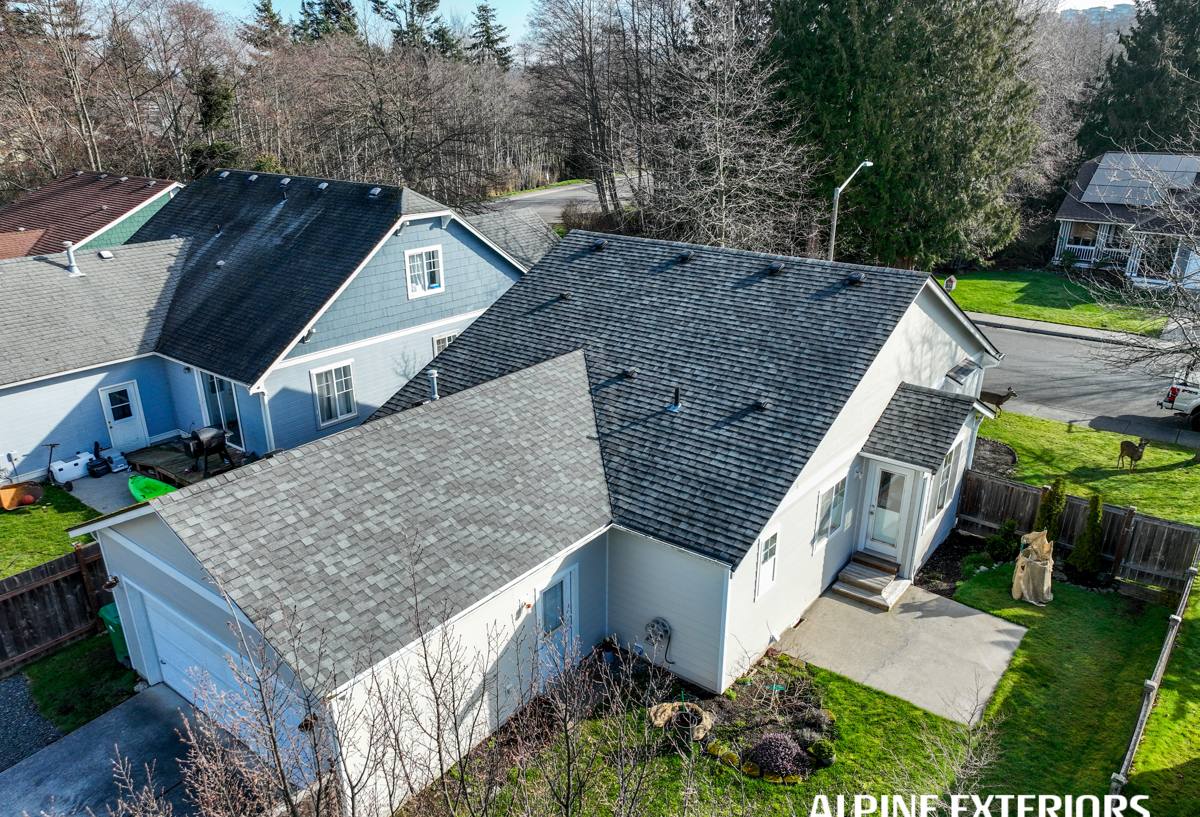
What the Skagit Valley Climate Does to a House
Moisture Load
Burlington doesn't get hammered by storms the way some coastal towns do, but it makes up for that with sheer duration. Rain here tends to arrive as long, low-intensity systems that sit over the valley for days. That means siding, trim, and roofing aren't just getting wet — they're staying wet, sometimes for a week at a stretch. Materials that absorb water or trap it behind their surface are the ones that suffer most over time.
Salt Air and Wind
Burlington is far enough inland that salt exposure isn't as constant or aggressive as it is right on the Anacortes waterfront, but westerly winds off Padilla Bay and the Salish Sea still carry salt-laden moisture into the valley, especially on stormy days. Combined with everyday humidity, that's enough to accelerate corrosion on fasteners, hardware, and any exterior material that isn't built to handle a marine-influenced climate.
Moss and Shade
Skagit Valley properties often have mature trees, and Burlington is no exception — plenty of homes sit partly shaded for a good part of the day. Shade plus moisture equals moss, and moss doesn't stay confined to the roof. It creeps onto north-facing siding, gets into trim joints, and holds water against the wall assembly long after the rain has stopped. A "long moss season" here isn't an exaggeration — for many properties it's close to year-round.
How This Shows Up on Local Homes
- Cupped, swollen, or delaminating wood or composite siding, especially on north- and west-facing walls
- Peeling or chalking paint that needs recoating far sooner than the label promised
- Soft trim boards around windows, doors, and roof edges where water collects
- Moss and dark streaking on siding and roofing, particularly under trees or in shaded side yards
- Rust staining below nail heads or metal flashing
- Roof edges, valleys, and low-slope sections holding moisture longer after storms
- Deck boards and ledger connections showing rot or fastener corrosion before the rest of the structure ages
None of this means a house is falling apart — it's just what happens to conventional materials in a wet, shaded, moderately salt-influenced climate over enough years. The fix isn't more frequent repainting or patch repairs. It's choosing exterior materials that are engineered for this kind of exposure in the first place.
Why We Install Only James Hardie Siding
We used to install a wider range of siding products. We stopped installing vinyl, LP SmartSide, primed spruce, cedar, and other fiber cement brands like Cemplank or Allura because, in this climate, we kept seeing the same pattern: products that looked fine on install day but needed real maintenance, recoating, or repair within a handful of years — maintenance that homeowners weren't always told to expect.
James Hardie fiber cement is what we put on homes instead, for a few concrete reasons:
- Non-combustible material. Fiber cement doesn't feed a fire the way wood-based products can, which matters for insurance conversations as much as safety.
- Moisture resistance without a moisture-trap. Fiber cement doesn't swell, delaminate, or rot the way wood composites and untreated wood products can when they stay damp for extended periods — a real concern given how long Skagit Valley rain systems linger.
- ColorPlus factory finish. The color is baked on at the factory under controlled conditions, not brushed on at the job site. That finish holds up far longer against UV and moisture than field-applied paint, and it comes with its own finish warranty.
- Climate-engineered HZ product lines. Hardie makes region-specific formulations (HZ5 for our zone) built around the humidity, temperature swings, and moisture exposure we actually get in the Pacific Northwest, not a one-size-fits-all product.
- A strong, transferable warranty. That matters to homeowners who plan to sell — it's a selling point for whoever buys the house next, not just for the current owner.
To be fair to the alternatives: vinyl is inexpensive and low-maintenance in mild climates, LP SmartSide is a legitimate engineered wood product with a real warranty, and cedar has an appearance a lot of homeowners genuinely love. We're not claiming those products are junk. We're saying that after years of installing and later repairing all of them in this specific climate, fiber cement — installed correctly — is the one we're willing to put our name behind long-term. That's a standard we hold company-wide, not a Burlington-specific policy.
Comparing Common Siding Choices for This Climate
| Material | Moisture Behavior Here | Maintenance Over 15-20 Years | Do We Install It |
|---|---|---|---|
| James Hardie fiber cement | Resists swelling and rot; factory finish sheds UV and moisture well | Occasional wash; repaint interval measured in decades, not years | Yes |
| Vinyl siding | Doesn't absorb water, but can warp under heat and doesn't stop moisture at seams and gaps | Low, but cracks and fades over time and is difficult to patch invisibly | No |
| LP SmartSide / engineered wood | Treated to resist moisture but still wood-based; edge and cut-end sealing is critical | Moderate; needs attentive caulking and repainting on schedule | No |
| Cedar / primed spruce | Attractive but absorbs moisture readily; prone to cupping and rot in shaded, damp areas | High; regular refinishing and vigilance for rot, especially near ground level | No |
| Other fiber cement (Cemplank, Allura) | Similar base material to Hardie, but formulation, finish process, and warranty structure differ | Varies by product line and finish quality | No — we standardize on Hardie specifically |
Roofing, Windows, and Decks in a Wet Climate
Siding is only part of the exterior envelope, and in a valley climate like Burlington's, the rest of the house needs the same level of attention.
Roofing
Roofs here deal with the same prolonged moisture exposure as siding, plus moss and debris buildup from nearby trees. Proper flashing, ventilation, and moss-resistant materials or treatments matter more here than in a dry climate, where a marginal install might get away with it for years before a problem shows up.
Windows
Old or poorly flashed windows are one of the most common sources of hidden water intrusion we find behind siding during replacement projects. In a climate with this much sustained rain, window flashing and integration with the siding system is not a detail to skip — it's often the difference between a wall assembly that stays dry and one that doesn't.
Decks
Decks in shaded, damp yards are especially vulnerable at ledger boards, post bases, and any spot where water can sit against wood or fasteners. We build and repair decks with drainage and fastener corrosion in mind, not just appearance.
Because we handle all four — siding, roofing, windows, and decks — we look at a Burlington home's exterior as one connected system rather than a collection of separate trades, which matters when water intrusion in one area is often traced back to a gap in another.
What to Expect Working With a Local Crew
A crew that works Skagit County regularly knows what a wet-climate installation actually requires: correct fastener spacing and type for fiber cement, proper flashing and weather barrier detailing around windows and doors, adequate ground clearance, and rain-screen or drainage planning where it's needed. Those details are what separate a Hardie installation that lasts decades from one that develops problems in five years despite using the same material.
Local also means being reachable — for a warranty question, a follow-up on a repair, or a straightforward answer about what your home actually needs versus what would just be an upsell. We'd rather tell a Burlington homeowner their siding has a few more good years left than push a replacement before it's needed.
A Simple Pre-Project Checklist
- Walk your home's exterior and note any soft trim, peeling paint, or moss buildup on siding — not just the roof
- Check for water staining or bubbling on interior walls near windows and exterior corners
- Look at deck ledger boards and post bases for softness or discoloration
- Ask any contractor you're considering which specific siding products they install and why — and whether they stand behind fiber cement warranty and finish claims in writing
- Get a written scope that specifies flashing, weather barrier, and fastening details, not just "siding replacement"
What Affects Project Cost
| Factor | Why It Matters |
|---|---|
| Home size and wall complexity | More corners, gables, and trim detail mean more labor and material cuts |
| Existing siding removal and any rot repair | Hidden moisture damage found during tear-off adds scope but is better addressed now than covered up |
| Hardie product line and finish selection | Panel vs. lap siding, and color/texture options, affect material cost |
| Window and door count | Each opening needs proper flashing and trim integration during siding work |
| Access and site conditions | Slope, landscaping, and shaded/damp job sites can affect scheduling and setup |
We don't quote broad numbers without seeing the house — every Burlington property is different — but we're always upfront about what's driving the cost on your specific project.
Get a Free, No-Pressure Estimate
If you're noticing moss, peeling paint, soft trim, or you're just planning ahead for a home in Burlington or anywhere else in Skagit County, we're happy to take a look. There's no pressure and no obligation — just a straightforward assessment of what your siding, roofing, windows, or deck actually need. Use the form below to request a free estimate.