 Anacortes Siding
 Why Deck Repair Looks Different in Burlington
Burlington sits low in the Skagit Valley, close enough to Skagit Bay to pick up salt-tinged air on a regular basis and low enough on the valley floor to sit under long, gray stretches of driving rain most of the year. A deck has no roofline or siding to shield it from any of that — it's a structure built to sit outside, fully exposed, in exactly the conditions that wear exterior work down fastest. What looks like a minor cosmetic issue on a Burlington deck — a grayed board, a slightly loose railing, a squeak underfoot — is often a sign that something further along is happening underneath, simply because this valley's combination of salt air, sustained moisture, and a long moss season accelerates deterioration faster than a drier, more sheltered site would see.
Deck repair done right here starts with figuring out which problems are cosmetic and which are structural, because those two categories get fixed very differently, and mixing them up either wastes money on unnecessary work or leaves a real safety issue in place. This page covers what actually damages decks in Burlington, how a correct repair job is scoped and done, and why hiring a crew that already works this part of Skagit County makes a real difference in what gets caught during an inspection.
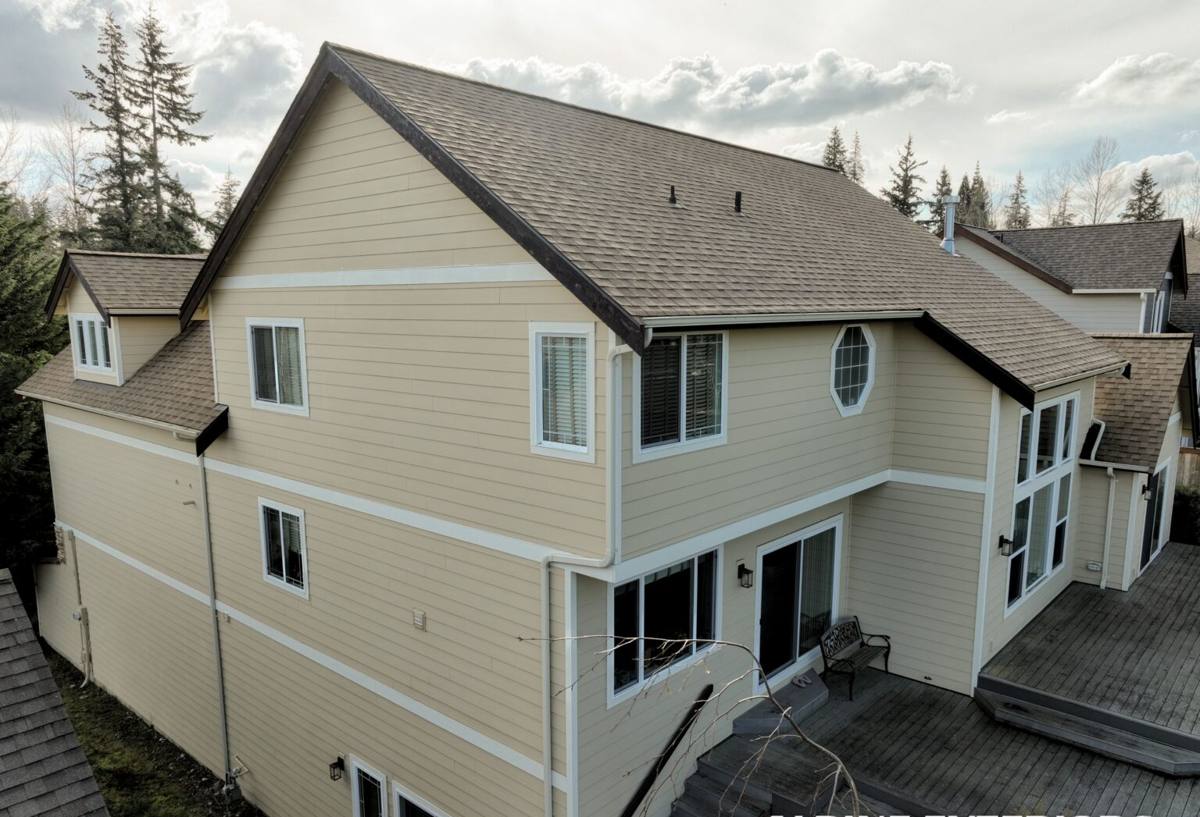
What Actually Damages Decks in Burlington
Salt Air and Corroding Hardware
Salt-laden air moving up from Skagit Bay and the broader Puget Sound system settles onto exposed metal continuously, not just during storms, and it accelerates corrosion in fasteners, joist hangers, and railing hardware well before that corrosion is visible from the top of the deck. A fastener that has lost holding strength to rust doesn't announce itself — it shows up as a board that has started to lift slightly, a railing that flexes more than it should, or a hanger pulling away from the ledger. This is one of the most common reasons we get called out to a Burlington deck that otherwise looks fine from a few feet away.
Driving Rain and Moisture Intrusion
Storms moving through the Skagit Valley don't just fall straight down — wind pushes rain sideways, driving it up under railings, into ledger connections, and between deck boards that aren't gapped correctly. A deck built or repaired without that in mind can shed a light, still-air rain just fine and still trap moisture the moment wind gets involved, which in this valley is often. Over a season or two, that trapped moisture works into fastener holes, board ends, and the framing underneath, well before it's visible on the surface.
A Moss Season That Runs Most of the Year
Mild temperatures and near-constant dampness give moss a long growing season in Burlington, and a horizontal deck surface is one of the first places it takes hold — it holds water longer than a vertical wall and stays damp between rain events. Shaded decks and north-facing surfaces usually show it first, and any decking material with even a little surface porosity gives moss something to grip. Left alone, moss holds moisture against the board surface long after a storm has passed, which is exactly the kind of sustained dampness that leads to soft spots and rot underneath.
Valley Grade and Poor Drainage
A fair number of Burlington properties sit on low, flat ground where water doesn't drain away from a deck's substructure as quickly as it would on a sloped lot. Standing water or persistently damp soil under a deck keeps the framing wet longer between storms, which is one of the more serious conditions we find during an inspection, because it's rarely visible until a board or post is probed directly.
Cosmetic Wear vs. Structural Problems
Not every issue on an aging Burlington deck needs the same response, and telling the difference correctly is the first real job of a repair estimate.
| Symptom | Usually Cosmetic | Often Structural |
|---|---|---|
| Grayed or weathered wood surface | Yes — sun and moisture weathering | Only if boards are also soft or splitting deeply |
| Moss or algae film on the surface | Yes, if surface only | Sometimes — check for soft decking underneath the growth |
| Squeaking or slight bounce underfoot | Sometimes — loose board fasteners | Often — loosened joists or hangers |
| Railing that flexes or wiggles | Rarely | Usually — loose posts or corroded hardware |
| Soft or spongy spot in decking | No | Yes — rot or moisture damage below the surface |
| Rust staining around fasteners | Cosmetic if isolated | Can indicate hardware failure underneath |
| Gap or shift where deck meets house | No | Yes — ledger connection needs immediate attention |
Cosmetic issues affect appearance and can usually wait for routine maintenance. Structural issues affect the deck's ability to safely hold weight and shouldn't be deferred, especially anything involving the ledger board connection, joist hangers, or support posts.
How We Diagnose a Deck Before Recommending Repair
A repair estimate that's actually useful starts with a real inspection, not a guess from the surface. That typically includes:
- Checking the ledger board connection to the house, since this is the most common serious failure point and the hardest to see from a casual look
- Probing boards and framing for soft spots that indicate rot or moisture damage, not just a visual inspection
- Inspecting joist hangers, fasteners, and railing hardware for corrosion, especially on decks with more open exposure
- Checking support posts and footings for movement, settling, or contact with standing water
- Looking underneath the deck for drainage and airflow problems, since poor ventilation there accelerates every other issue on this list
- Assessing railing attachment and code compliance, particularly on elevated decks where a failure has real fall consequences
We walk through what we find honestly — what needs attention now, what can be monitored, and what's purely cosmetic — before recommending a scope of work.
Repair vs. Replace: How That Decision Actually Gets Made
Homeowners often assume any deck problem means a full rebuild, or the opposite — that a repair will always be cheaper and just as good. Neither assumption holds up consistently. The honest factors that actually drive this decision:
- Extent of substructure damage. Localized rot or corrosion at a few joists or hangers is usually repairable. Widespread moisture damage through the framing often isn't worth chasing board by board.
- Age and condition of the remaining structure. A deck near the end of its practical life may only have a few more repair cycles left in it before replacement becomes the more cost-effective path.
- Whether the original build accounted for this climate. Some older decks weren't framed or fastened with Skagit Valley's moisture and salt exposure in mind, and repairing those in place just delays the same failure showing up again.
- Surface material condition versus structure. A structurally sound deck with worn or moss-stained surface boards is a strong repair candidate — resurfacing over solid framing is often the most cost-effective option available.
We'll give a straight answer on which category a given deck falls into, including when replacement is genuinely the more sensible option, rather than defaulting to whichever job is bigger.
What a Correct Repair Involves
Matching Materials to What's Already There
Repairing a deck means working with the existing structure and, often, the existing surface material — wood, composite, or PVC. Matching board profile, fastening method, and, where possible, color or finish keeps a repair from looking like a patch job. On composite and PVC decks especially, discontinued colors or profiles can make an exact match difficult, and we'll be upfront about that before starting rather than after.
Upgrading Hardware, Not Just Replacing What Failed
When we replace corroded fasteners or hangers, we use stainless steel or coastal-grade hardware suited to sustained salt and moisture exposure, not a like-for-like swap with standard-grade hardware that will fail again on a similar timeline. This is one of the most common places a repair either holds up for years or needs redoing sooner than it should.
Addressing the Cause, Not Just the Symptom
A soft board is a symptom. Standing water underneath, poor drainage, or a failed flashing detail at the ledger is usually the cause. A repair that replaces the visible damage without correcting what caused it tends to fail again in the same spot, often faster the second time because the underlying issue was never fixed.
Structural Repairs Get Priority and Proper Attention
Ledger connections, joist hangers, and support posts are load-bearing. Repairs to these elements are done to the same structural standard as new construction — correct fastener grade, correct flashing, and framing sized appropriately — not treated as a lesser scope because it's a repair rather than a new build.
Maintenance That Extends a Repair's Lifespan
- Rinse the deck surface periodically to clear moss spores, salt residue, and organic buildup before it works into the material
- Keep gaps between boards clear of leaves and debris so water and airflow can move through as designed
- Check railing posts and visible hardware once or twice a year for early corrosion or looseness, especially heading into the wet season
- Trim back overhanging branches or plants that hold moisture against the deck or block sun and airflow across the surface
- Address any soft framing or standing water underneath right away — that's a structural sign, not a cosmetic one, and it doesn't improve with time
- Reseal or refinish wood decking on the schedule the product calls for, since this valley's moisture load shortens the interval compared to a drier climate
Why It Matters That We Already Work Burlington
A crew that mostly repairs decks in drier or more sheltered parts of the state can still do competent work here, but a Burlington repair has variables that come up more often on a valley-floor lot than elsewhere in Skagit County — corrosion patterns tied to sustained salt exposure, drainage problems tied to low, flat grading, and a moss season long enough to mask real damage underneath a surface that looks merely dirty. Working this area regularly means we're not guessing at those requirements or learning them mid-project. We know what fastener grade actually holds up here, what a ledger connection needs to survive a full Skagit Valley wet season, and which "cosmetic" symptoms are worth probing further before we ever write an estimate.
That familiarity also means a more accurate first estimate — less back-and-forth once work is underway, because the inspection accounted for how this valley's climate actually behaves rather than applying a generic checklist written for somewhere drier.
Get an Honest Look at Your Deck
Whether you're dealing with a specific problem — a soft spot, a loose railing, moss that won't quit coming back — or just want a straight assessment of where your Burlington deck stands, we're glad to walk the site and explain what we find plainly, including if the answer is "this doesn't need much." Reach out below for a free, no-pressure estimate.