 Anacortes Siding
 Decks Built for Burlington's Weather, Not Just Its Backyards
Burlington sits in the Skagit Valley, close enough to the water that homes here deal with the same salt-laden air and driving rain that batter the rest of western Skagit County, but with a valley's worth of extra humidity and shade from mature trees. That combination is hard on outdoor structures. A deck that would hold up fine in a dry inland climate can start showing problems here within a few seasons if it wasn't built with this specific weather in mind. We've worked on homes throughout Burlington and the surrounding county, and the deck failures we get called out to fix almost always trace back to the same root causes: wrong fastener choice, poor drainage under the frame, or decking installed without enough of a gap to let it breathe.
This page is about what a deck actually needs to hold up in Burlington's climate, what our process looks like from first visit to final walkthrough, and why hiring a crew that already understands local conditions saves you money over the life of the structure, not just at the time of the build.
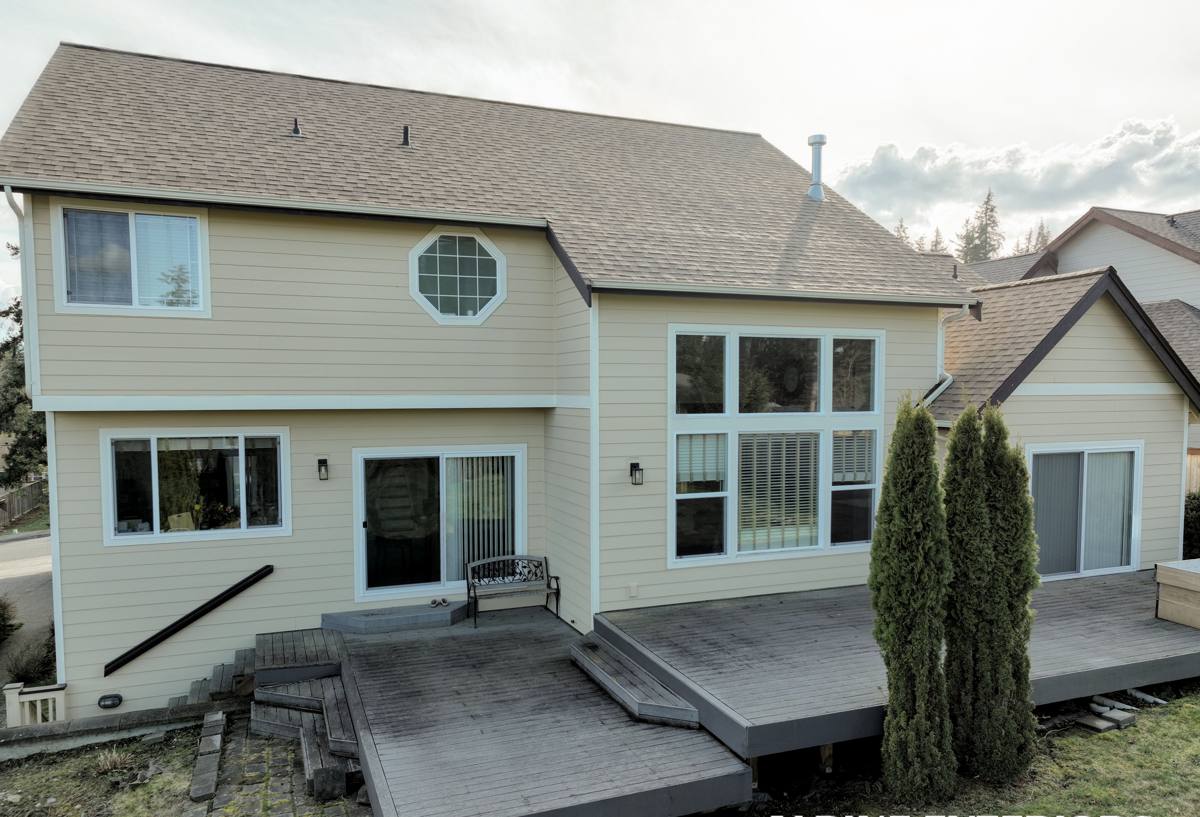
What Burlington's Climate Does to a Deck
Moisture That Doesn't Let Up
Skagit County gets a long wet season, and Burlington's inland position means fog and dew linger on surfaces longer than they would right on the coast. Wood and composite decking both need airflow underneath and between boards to dry out between rain events. When that airflow is blocked — by decking installed tight against a house wall, by boards butted too close together, or by landscaping that traps moisture against the frame — you get soft spots, warping, and eventually structural rot in framing members that should have lasted decades.
Salt Air Reaches Further Inland Than People Expect
Burlington isn't right on Puget Sound, but it's close enough that salt-laden air moves through the valley, especially with the wind patterns common here. Salt air accelerates corrosion on any exposed metal — fasteners, joist hangers, structural screws — well before it becomes visible on the surface. A deck can look fine while its hidden hardware is quietly rusting away underneath.
Moss Season Is Longer Here Than People Realize
Shaded, damp conditions for much of the year mean moss and algae growth on deck surfaces is a near-constant maintenance issue rather than a seasonal one. Beyond looking bad, a moss layer holds moisture against the decking surface and makes boards slippery and dangerous, especially on stairs. The right decking choice, board spacing, and even deck orientation all affect how much moss becomes a long-term nuisance versus an occasional cleanup.
Getting the Foundation Right
Everything above ground depends on what's underground and underneath. This is the part homeowners see least and contractors sometimes cut corners on most.
- Footings sized and set below frost depth, on undisturbed or properly compacted soil
- Post bases that hold posts up off standing water rather than sitting flush against wet concrete
- Ledger board attachment (where a deck ties into the house) properly flashed to keep water from tracking behind siding into the wall assembly
- Joist layout spaced correctly for the decking material chosen, not just the minimum code spacing for lumber
- Positive drainage graded away from posts and footings so water sheds instead of pooling
A deck can look identical from the surface whether the framing underneath was done right or done fast. The difference only shows up five, ten, or fifteen years later, which is exactly why it matters to get it right the first time.
Choosing Decking Material for This Climate
There's no single "best" decking material for every home — it depends on budget, maintenance tolerance, and how much shade and moisture the specific site gets. Here's how the common options actually perform under Skagit County conditions.
| Material | Moisture & Moss Behavior | Maintenance | Typical Lifespan Here |
|---|---|---|---|
| Pressure-treated pine | Prone to moss and staining in shaded, damp spots unless coated regularly | Needs re-staining or sealing every 2-3 years | 15-20 years with upkeep |
| Cedar | Naturally rot-resistant, but still needs sealing to fight moss and gray-out | Regular sealing recommended | 20-25 years with upkeep |
| Composite decking | Resists rot but can still grow surface moss/algae in shaded areas; won't warp or splinter | Periodic cleaning, no sealing/staining | 25-30+ years, warranty-backed |
| PVC/synthetic decking | Fully moisture-resistant surface; best option where shade and dampness are heaviest | Occasional washing only | 30+ years, warranty-backed |
For heavily shaded lots or spots close to mature trees, we generally steer homeowners toward composite or PVC decking. It's a higher upfront cost, but the maintenance burden and moss problems drop dramatically compared to wood, and that trade-off pencils out for most people once they've dealt with a wood deck through a couple of wet Skagit winters.
Fasteners and Hardware Matter as Much as the Decking
Given the salt air exposure common in this region, we use stainless steel or heavy hot-dip galvanized fasteners and structural connectors rather than standard coated screws. It costs a bit more up front, but corroding hardware is one of the most common causes of deck failure we see on older builds, and it's the one thing a homeowner can't easily inspect or fix later without tearing the deck apart.
Our Process, Start to Finish
1. On-Site Assessment
We walk the property, look at drainage patterns, sun and shade exposure, existing structure if there's a deck to replace, and how the new deck will tie into the house. This is where we catch site-specific issues — a downspout draining toward the footing area, a shaded corner that will stay damp all winter, soil that needs better compaction.
2. Design and Material Selection
We go over decking material options honestly, including the trade-offs in the table above, and design the layout, size, and features (railings, stairs, built-in seating) around how the space will actually be used.
3. Permitting
Most deck projects in Burlington and the surrounding county require a building permit, particularly for elevated decks or anything attached to the house structure. We handle the permit process so the work is inspected and documented, which also matters if you sell the home later.
4. Framing and Structural Work
This is where the foundation work described above happens — footings, posts, ledger flashing, joists, and hardware selection appropriate for the exposure.
5. Decking, Railings, and Finish Work
Decking is installed with proper gapping for drainage and material expansion, railings are set to current code height and spacing requirements, and stairs are built to consistent rise and run.
6. Final Walkthrough
We go over the finished deck with you, explain any maintenance the specific material requires, and make sure everything meets both code and your expectations before we consider the job done.
Repair, Replace, or Rebuild?
Not every deck problem means starting over. If you have an existing deck showing wear, here's generally how we sort it out:
- Surface-level moss, graying, or minor board cupping: often addressable with cleaning, sealing, or replacing individual boards
- Soft or spongy spots on the deck surface: usually means moisture has reached the framing below and needs an inspection before it's a safety issue
- Rusted or failing hardware, loose railings, structural movement: a sign the frame needs attention regardless of how the surface looks
- Ledger board separation from the house or visible rot at the house connection: a priority repair, since this is where water intrusion can affect the home itself, not just the deck
We'll always tell you honestly if a repair makes sense versus if you're better off rebuilding, rather than pushing a full replacement when it isn't needed.
Why Hire a Crew That Already Works in Burlington
A contractor unfamiliar with this specific microclimate might build a technically code-compliant deck that still struggles here — wrong hardware grade for the salt exposure, decking that traps moisture in shaded yards, or drainage details that work fine in a drier part of the state but not in the Skagit Valley. Building decks specifically for Burlington and the surrounding area means we've already seen how different materials and details hold up through actual local winters, not just on paper. That experience shows up in the small decisions — flashing details, fastener grade, board spacing, drainage grading — that determine whether a deck is still solid in fifteen years or needs major repairs in five.
Get a Straight Answer on Your Deck Project
Whether you're planning a new deck, replacing an aging one, or just want an honest opinion on whether your current deck needs repair or replacement, we're happy to take a look. Reach out for a free, no-pressure estimate — we'll walk the site, talk through materials and options that make sense for your home and budget, and give you a straightforward assessment, no obligation attached.