 Anacortes Siding
 Roofing in Edison: A Different Kind of Wear
Edison sits low in the Skagit Valley, close enough to Samish Bay and the tidal flats that salt-laden air is a fact of daily life, not an occasional nuisance. Add in the wide-open farmland exposure to driving rain off the water and the deep shade from surrounding trees and hedgerows, and you get a roofing environment that's genuinely harder on materials than a typical inland neighborhood. We've repaired enough roofs out here to know the failure patterns aren't the same as what you'd see on a roof twenty miles east.
Salt air accelerates corrosion on any exposed metal - nail heads, flashing, gutter hangers, even the fasteners holding ridge caps down. Wind-driven rain doesn't just fall straight down here; it gets pushed sideways under shingle edges and around poorly lapped flashing. And because so many Edison properties sit near trees or have mature landscaping, moss and organic debris build up fast, holding moisture against the roof surface for months at a stretch. None of this means Edison homes need exotic solutions. It means the repair has to account for all three factors at once, or it fails again within a season or two.
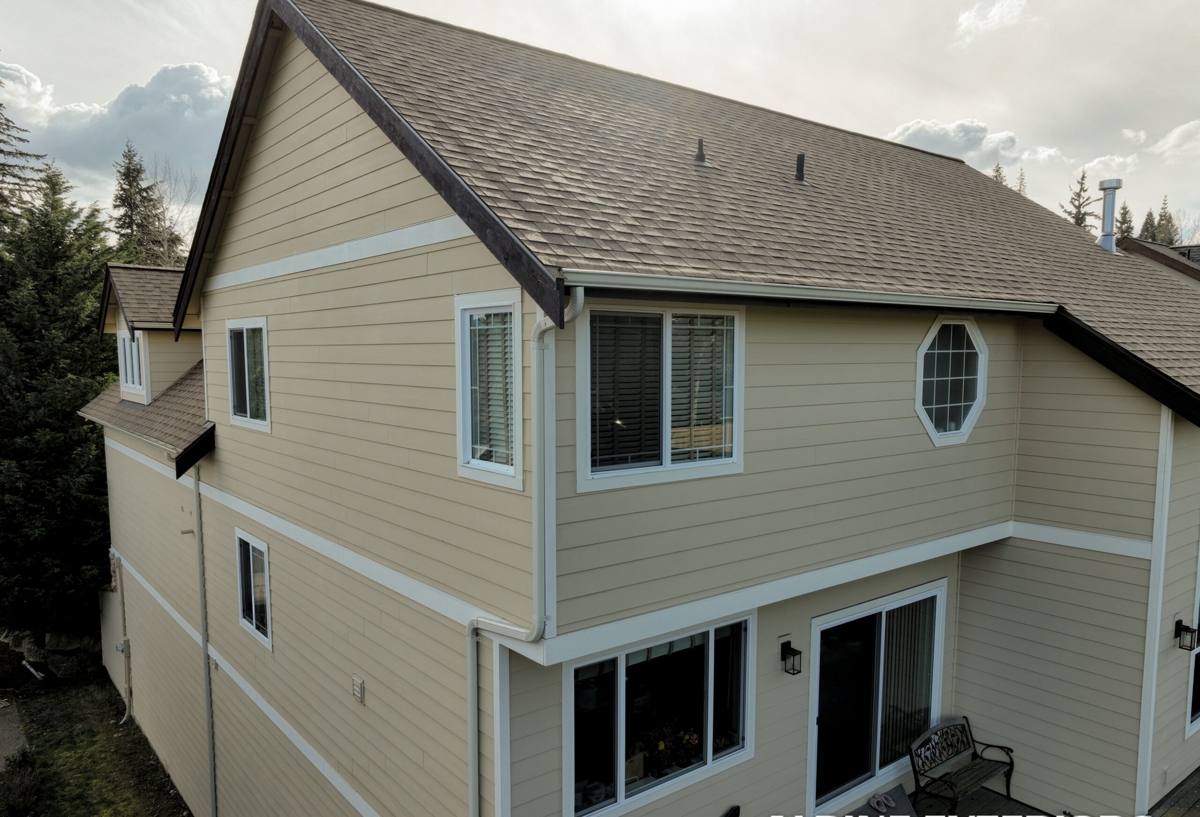
Signs an Edison Roof Needs Repair - Not Just a Look
Most of the calls we get start with a stain on a ceiling or a shingle spotted on the ground after a windstorm. By the time water is visible inside, the roof has usually been letting moisture in for a while. Here's what we watch for during an inspection:
- Curling, cracked, or missing shingles, especially on the west and south-facing slopes that catch the worst of the weather
- Rusted or lifted flashing around chimneys, skylights, and roof-to-wall transitions
- Moss buildup at butt joints and along shaded valleys, which traps water against the roof deck
- Granule loss in gutters, a sign the shingle surface is wearing thin
- Soft or spongy spots when walked, which usually mean the decking underneath has already taken on water
- Daylight visible through the roof deck from inside the attic
Not every one of these means a full tear-off. A roof with isolated damage and sound decking underneath is often a straightforward repair. The judgment call is knowing which is which, and that only comes from getting up on the roof and checking the decking directly, not guessing from a photo or a ladder-height look.
What a Correct Repair Actually Involves
Matching the Existing System
A repair is only as good as how well it integrates with what's already there. That means matching shingle profile and, where possible, color batch, tying new underlayment into the old correctly so water sheds downhill at every lap, and never nailing over rotten or delaminated decking just because it's faster.
Flashing Comes First
Most leaks we trace on Edison roofs come from flashing, not the shingle field itself. Step flashing at wall intersections, counter-flashing at chimneys, and valley metal all have to be replaced or corrected when they're compromised, not caulked over. Caulk is a maintenance item, not a repair strategy, and in a salt-air environment it breaks down faster than most people expect.
Decking Integrity
Any soft or delaminated plywood or board decking found during the repair gets cut out and replaced before new material goes down. Fastening shingles or metal over compromised decking just relocates the problem a year or two down the road.
Roofing Materials Common in Edison and What They Mean for Repair
Edison's mix of older farmhouses, mid-century homes, and newer rural builds means we see a real range of roofing materials. Each has its own repair considerations in this climate.
| Roof Type | Salt Air / Rain Behavior | Repair Consideration |
|---|---|---|
| Asphalt Composition Shingle | Granule loss accelerates with wind-driven rain; moderate salt tolerance | Match shingle batch; check underlayment condition, not just the surface layer |
| Metal (standing seam or panel) | Long-lived but fasteners and cut edges are the weak point near salt air | Corroded fasteners and sealant washers need full replacement, not just tightening |
| Cedar Shake or Shingle | Moss and moisture retention are the biggest risk in shaded, damp settings | Requires ventilation review and moss removal as part of any repair, or the fix won't hold |
We don't push a material swap just because a roof is aging. If a repair can extend the useful life of a sound roof in a way that holds up to Edison's weather, that's usually the more honest recommendation than a premature full replacement.
Our Repair Process
- On-roof inspection. We walk the roof and check the attic from inside where accessible, tracing water paths rather than assuming the leak is directly above the stain.
- Written scope. You get a clear explanation of what's damaged, what's causing it, and what the repair will and won't address - no vague line items.
- Decking check before covering anything. We don't fasten new material over decking we haven't confirmed is sound.
- Flashing and underlayment corrected first. These are the parts that actually stop water; the shingle or panel work goes on top of a system that's already sealed properly.
- Debris and moss cleared from the work area so the repair isn't sitting under a fresh layer of organic buildup on day one.
- Walkthrough when the work is done, so you can see what changed and why.
Moss, Debris, and Salt Air: What Homeowners Can Do Between Repairs
A good repair buys you years, not decades, if the roof goes right back to sitting under wet moss and debris. A little seasonal attention goes a long way in Edison's climate:
- Clear gutters and valleys of needles and leaves at least twice a year, more often under mature conifers
- Trim back branches overhanging the roofline to cut down on shade and debris drop
- Have moss treated or physically removed before it thickens - scraping thick moss can damage shingles, so early treatment is easier on the roof
- Rinse salt residue off metal flashing and fasteners during routine gutter cleaning if the home is close to the water
- Check the attic once a season for daylight, damp insulation, or musty odor - early warning signs before ceiling stains appear
What Drives the Cost of a Roof Repair
Every roof repair is different, but the same handful of factors determine most of the cost. We walk through these with you before any work starts so there are no surprises.
| Factor | Why It Matters |
|---|---|
| Extent of decking damage | Rotten decking has to be replaced, not covered - this is usually the biggest cost swing |
| Roof pitch and access | Steeper roofs and difficult access (long ladders, no ground staging area) add labor time |
| Material match availability | Older shingle profiles or discontinued colors can require sourcing time or a wider repair area |
| Flashing scope | Full flashing replacement at chimneys or valleys costs more than a shingle-only fix but prevents repeat leaks |
| Moss and debris removal | Heavy buildup needs to be cleared before the repair can even be properly assessed |
As a general guide, small, isolated repairs (a section of flashing, a handful of shingles) tend to run in the low hundreds to low thousands of dollars, while repairs involving decking replacement or extensive flashing work run higher. We'll give you real numbers for your roof after an inspection, not a phone estimate.
Why a Crew That Already Works Edison Matters
Edison isn't a large service area, but its roofs have a consistent personality: salt exposure from the bay, heavy tree cover in places, and weather that comes in sideways more often than straight down. A crew that's worked this specific stretch of Skagit County knows to check corrosion on fasteners that would still look fine on a roof twenty miles inland, and knows which valleys and shaded slopes tend to hold moss longest. That local pattern recognition shortens the diagnosis and means the repair addresses the actual cause, not just the visible symptom.
We also know that Edison homeowners are often dealing with older farmhouse construction or additions built over multiple decades, which means roof-to-wall transitions and mixed materials show up more often than on a single-era subdivision home. Recognizing those transition points quickly, rather than treating every roof as a standard textbook case, is part of what makes a repair actually last through the next wet season.
Ready for an Honest Look at Your Roof?
If you're dealing with a stain on the ceiling, missing shingles after a windstorm, or a roof that just feels overdue for a check, we're happy to come take a look. The estimate is free, there's no pressure to sign anything on the spot, and if your roof just needs a repair rather than a replacement, we'll tell you that plainly. Fill out the form below to get started.