 Anacortes Siding
 Why West Anacortes Roofs Age Differently
A roof in West Anacortes doesn't fail the same way a roof does forty miles inland. Sitting close to Rosario Strait and Guemes Channel, homes here take on a steady dose of salt-laden air that inland Skagit County properties simply don't see. Add in the driving, wind-pushed rain that comes off the water during fall and winter storms, and a shaded, moisture-heavy tree canopy that keeps roof surfaces damp for weeks at a stretch, and you get a climate that's genuinely tougher on asphalt shingles than most manufacturers' warranty testing accounts for.
None of this means asphalt shingle roofing is a bad choice for West Anacortes — it remains one of the most practical, cost-effective options available, and it performs well here when it's specified and installed correctly. The problems we see on service calls almost never come from the shingle itself failing early. They come from a roof that was built to a generic standard instead of a coastal one: wind-driven rain finding its way past undersized flashing, moss holding moisture against a granule surface that was never given the ventilation to dry out, or fasteners corroding faster than they should because they weren't rated for a salt-air environment.
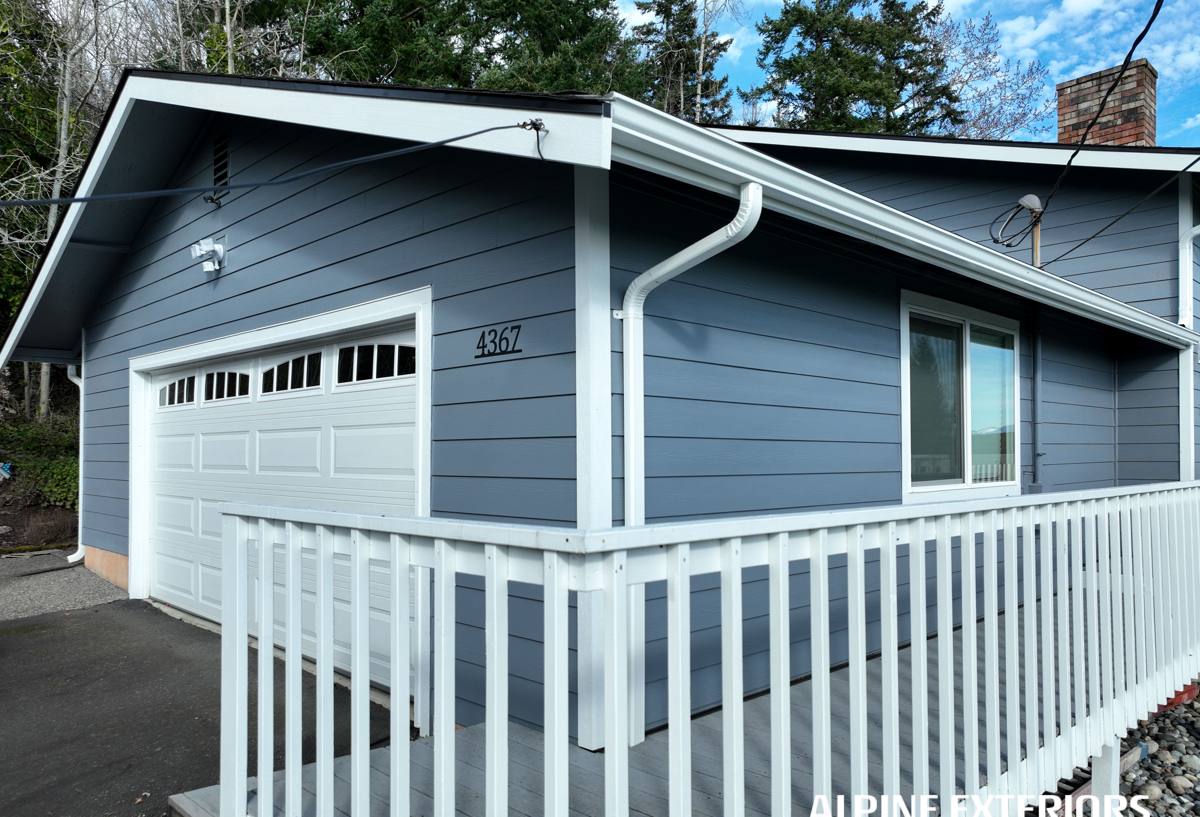
What "Correct" Looks Like for This Climate
There's a difference between a shingle roof that meets code and one that's actually built for a marine, high-moss environment. For West Anacortes homes, that difference shows up in a handful of specific decisions made before the first shingle ever goes down.
Underlayment and Water Path
Driving rain doesn't just fall on a roof — wind pushes it sideways and works it under shingle tabs, especially at low-slope sections and roof-to-wall transitions. We treat synthetic underlayment as the real water barrier, not a formality between deck and shingle, and we run self-adhered ice-and-water membrane at every valley, eave, and penetration where wind-driven moisture is most likely to find a gap.
Ventilation
A roof deck that can't breathe stays damp longer, and damp decking is what accelerates both moss growth and shingle deterioration from underneath. Balanced intake and exhaust ventilation isn't optional in a climate this wet — it's the single biggest factor in how long a shingle roof actually lasts here versus how long the warranty says it should.
Flashing and Fasteners
Every metal component on the roof — step flashing, valley metal, drip edge, and the fasteners themselves — is a corrosion point in a salt-air environment. We spec materials and fastener coatings rated for coastal exposure rather than the standard-grade hardware that's fine forty miles inland but starts rusting prematurely a few blocks from the water.
Choosing the Right Shingle for a Coastal, Shaded Lot
Not every asphalt shingle product is built the same, and the differences matter more here than in a dry inland climate. The main things we weigh for a West Anacortes home are algae resistance, wind rating, and how the shingle sheds water at low slopes.
| Shingle Type | Typical Wind Rating | Algae/Moss Resistance | Best Fit |
|---|---|---|---|
| Standard 3-tab | 60-70 mph | Low unless treated | Budget projects, low-exposure roof faces |
| Architectural (laminate) | 110-130 mph | Moderate to high with algae-resistant granules | Most West Anacortes homes — our default recommendation |
| Impact-rated / high-wind | 130+ mph | High with algae-resistant granules | Exposed, water-facing elevations and full re-roofs |
For most West Anacortes homes, we recommend architectural shingles with algae-resistant (copper- or zinc-infused) granules as the baseline, not the upgrade. The granule treatment specifically targets the black algae streaking that shows up on shaded, north-facing slopes, and the heavier laminate construction holds up better to the wind gusts that come off the water during winter storms.
Color and Heat Considerations
Darker shingles hide algae staining longer but can accelerate moss growth on shaded slopes by holding moisture and warmth in a way that encourages spore growth. Lighter shingles show streaking sooner but tend to dry faster after rain. We'll walk through this trade-off against your home's actual sun exposure rather than recommend a color purely on appearance.
Moss: Built Into the Install, Not an Afterthought
Moss is the defining maintenance issue for shingle roofs in this part of Skagit County, and it's largely preventable at the install stage rather than something you fight with chemicals and a brush every couple of years.
- Zinc or copper strips installed near the ridge, so rainwater carries trace metal ions down the roof face and inhibits moss and algae growth passively over time
- Algae-resistant granules built into the shingle itself, which stay effective for the life of the shingle rather than wearing off like a surface treatment
- Proper ventilation so the underside of the deck and the shingle surface both dry out between rain events instead of staying damp
- Overhanging branches trimmed back where possible to reduce shade, debris, and the organic material that gives moss spores somewhere to establish
- Gutters and valleys kept clear, since trapped debris holds moisture against shingle edges longer than an open, clear roof surface
Once moss has already colonized a roof, the removal process itself has to be handled carefully — pressure washing or aggressive scraping strips granules and shortens the shingle's remaining life. We treat moss removal on an existing roof as a separate, gentler process from the preventive steps we build into a new install.
Salt Air and the Parts of a Roof People Don't Think About
Homeowners generally think about the shingles when they think about their roof, but in a marine environment, the metal components fail first. Nail heads, flashing seams, and vent housings are where we see the earliest signs of coastal wear — often years before the shingles themselves show any real deterioration.
We spec hot-dip galvanized or stainless fasteners rather than standard electro-galvanized nails for West Anacortes installs, and we use flashing metal and sealants rated to hold up against salt exposure rather than generic hardware-store equivalents. It costs a little more up front. It's also the difference between a roof where the shingles outlast the flashing and one where a $30 flashing detail forces an early repair on a roof that otherwise had another decade of life left in it.
Our Process, Start to Finish
- Inspection and assessment — we walk the full roof, check the deck condition, ventilation, and existing flashing, and identify any rot or moisture damage before quoting anything
- Tear-off and deck prep — old material comes off completely; we don't install a new roof over an old one, since that traps moisture and voids most manufacturer warranties
- Deck repair — any soft, rotted, or delaminated sheathing is replaced before underlayment goes down, not patched around
- Underlayment and ice-and-water membrane — synthetic underlayment across the field, with self-adhered membrane at valleys, eaves, and penetrations
- Flashing installation — coastal-rated step flashing, valley metal, and drip edge installed before shingles, not tucked in after
- Shingle installation — installed to manufacturer nailing pattern and exposure specs, which is what actually keeps the wind and product warranty intact
- Ventilation check — intake and exhaust balanced to the attic space, adding or correcting vents where the existing setup falls short
- Final walkthrough and cleanup — magnetic sweep for debris, gutter check, and a walkthrough of what was done and why
Signs a West Anacortes Roof Needs Attention Now
Because of the driving rain and shade conditions common here, problems can develop out of sight in the attic before they show up as a visible leak. Worth checking for, or having us check for, if it's been a while since the roof was last looked at:
- Dark streaking or green-black patches on shaded or north-facing slopes
- Granules collecting in gutters or at the base of downspouts
- Shingle edges curling, cupping, or lifting, especially on wind-exposed faces
- Visible moss growth, particularly near the ridge or in valleys
- Rust staining running down from flashing or vent boots
- Daylight or water staining visible from inside the attic
- Soft or spongy spots when walking the roof deck
Any one of these on its own isn't necessarily an emergency, but they're the early signals that let us fix a flashing detail or a ventilation gap now instead of dealing with deck rot later.
Maintenance and Realistic Lifespan
A well-installed architectural shingle roof in this climate typically holds up for a couple of decades or more, but coastal exposure and moss pressure mean it needs periodic attention to get there rather than being truly "install and forget."
| Task | Recommended Frequency | Why It Matters Here |
|---|---|---|
| Visual inspection | Every 1-2 years | Catches flashing wear and moss growth before they become leaks |
| Gutter and valley clearing | 1-2x per year | Prevents trapped moisture against shingle edges |
| Moss/algae check | Annually, after the wet season | Shaded, moist lots are more prone to regrowth than sunnier sites |
| Post-storm check | After major wind events | Wind-driven rain off the water can lift or crack shingles that otherwise look fine |
Why Hiring a Crew That Already Works West Anacortes Matters
Roofing crews that mostly work drier, inland areas often spec materials and details that are perfectly fine there and undersized here. The difference isn't dramatic on day one — it shows up three, five, or eight years in, as premature moss growth, rusted flashing, or a leak at a valley that was never treated as a high-exposure detail in the first place.
Working regularly in West Anacortes means we already know which roof faces on this side of town take the worst of the wind-driven rain, which lots hold shade and moisture long enough to need extra attention to moss prevention, and which material and fastener specs actually hold up against the salt air here rather than just meeting a generic code minimum. That local pattern recognition is what keeps a shingle roof performing for its full expected lifespan instead of needing early intervention.
If you'd like a straightforward, no-pressure look at your roof's condition and what a correctly built asphalt shingle roof would involve for your specific home, the form below gets you a free estimate with no obligation.