 Anacortes Siding
 Why Burlington Homes Need Siding Built for This Climate
Burlington sits in the Skagit Valley, close enough to Puget Sound and the Salish Sea that homes here deal with a mix of coastal and valley weather: damp salt-laden air, long stretches of driving rain, and the kind of persistent shade and moisture that keeps moss and algae established on exterior surfaces for much of the year. None of that is dramatic on its own, but it adds up. Siding here isn't just a cosmetic layer — it's the thing standing between your framing and months of sustained wet weather every single year.
The products that hold up in a drier climate often don't hold up the same way here. Engineered wood siding can swell and delaminate at cut edges and seams if moisture gets behind it. Vinyl can warp, fade, and never fully seals at the seams, giving water a path inward over time. Cedar needs consistent upkeep to resist rot and moss colonization. A siding installation in Burlington needs to be evaluated not just on how it looks the day it goes up, but on how it performs after its tenth or fifteenth wet season.
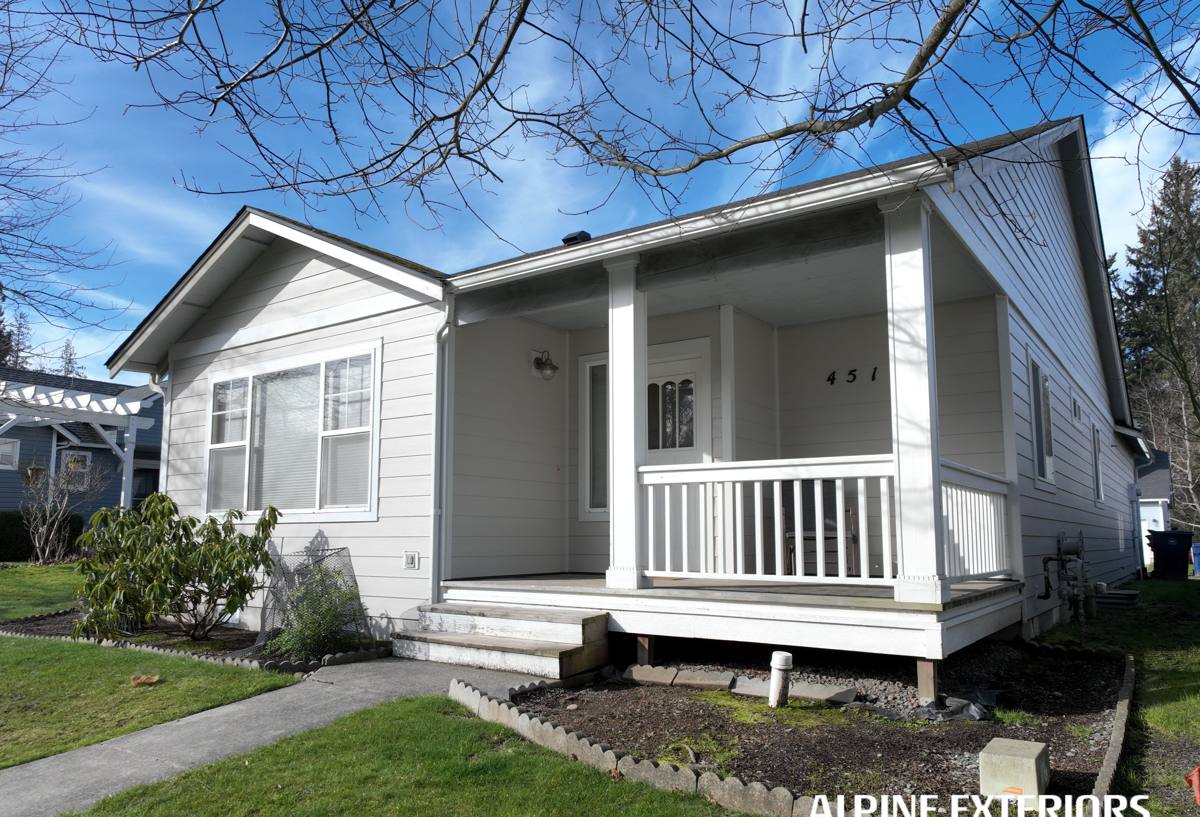
What a Correct Siding Installation Actually Involves
Siding installation is often talked about like it's just fastening panels to a wall. It isn't. The siding itself is the least complicated part of the job — the water management system underneath it is what actually protects the house. A correct installation includes:
- A properly lapped weather-resistive barrier behind the siding, integrated with window and door flashing so water is directed out, not trapped in
- Flashing at every horizontal transition — window heads, roof-to-wall intersections, deck ledgers, and trim boards
- Correct fastener type, spacing, and penetration depth into framing or sheathing, per the manufacturer's installation instructions
- Proper clearance between the bottom of the siding and grade, roofing, decks, and patios so water and splash-back don't sit against the material
- Rainscreen or furring where conditions call for it, giving moisture that does get behind the siding a way to drain and dry
- Caulking only where the manufacturer specifies it — not as a substitute for correct flashing
Skip any of these steps and the siding can look fine for a few years while moisture quietly does damage behind it. In a climate like Skagit County's, where the wall assembly rarely gets a long dry stretch to recover from a mistake, installation quality matters more than it would somewhere drier.
Why We Install Only James Hardie Fiber Cement
We made a deliberate decision to install one product system — James Hardie fiber cement siding — and nothing else. We don't install LP SmartSide, vinyl, Cemplank, Allura, primed spruce, or cedar. That's not a marketing position; it's a standard we hold because of what we've seen these products need over time versus what fiber cement needs.
Fiber cement is non-combustible and dimensionally stable, meaning it doesn't expand and contract with moisture the way wood-based products do. That stability matters directly for a climate with sustained damp periods: less movement at seams and joints means fewer opportunities for water intrusion over the life of the siding. James Hardie's ColorPlus finish is baked on at the factory under controlled conditions, rather than field-applied, which gives it better fade and wear resistance than a job-site paint job and comes with its own finish warranty.
Climate-Engineered for the Pacific Northwest
James Hardie makes region-specific product formulations, including an HZ5 line engineered for climates with higher moisture exposure and freeze-thaw cycling — which describes western Washington reasonably well. That's part of why we standardized on this manufacturer instead of a generic fiber cement product: the material itself is formulated with weather like Burlington's in mind, not just applied here because it's available.
We're not going to tell you vinyl or engineered wood siding is garbage — plenty of it is installed correctly and performs fine for years. But every product involves trade-offs, and after weighing maintenance burden, moisture behavior, installation sensitivity, and warranty structure, fiber cement is what we're willing to put our name behind and stand by long-term.
Our Siding Installation Process
- On-site assessment. We look at your existing siding, sheathing condition, and any problem areas — window flashing, roof transitions, ground clearance — before quoting anything.
- Tear-off and sheathing check. Old siding comes off and we inspect the sheathing underneath for rot or damage that needs to be addressed before anything new goes up.
- Weather barrier and flashing. This is the step that actually keeps water out, and it's the one we won't rush regardless of schedule pressure.
- Hardie panel or plank installation. Installed to the manufacturer's specified fastener pattern, spacing, and clearances.
- Trim, caulk, and touch-up. Factory-finished ColorPlus product needs minimal field caulking and no field painting.
- Final walkthrough. We go over the finished work with you directly before calling the job done.
Every one of these steps matters more in a climate that doesn't give a wall assembly much time to dry out between rain events. We build the schedule around getting the water management layer done right, not around getting panels up fast.
Signs a Burlington Home May Need New Siding
Siding failure is usually gradual, and by the time it's obvious from the street, there's often been water intrusion for a while. Watch for:
- Soft or spongy spots when you press on siding, especially near the bottom courses or under windows
- Visible warping, buckling, or gaps at seams
- Paint that's peeling or bubbling on the interior side of exterior walls — often a sign of moisture coming through from outside
- Persistent moss or algae growth that keeps returning within weeks of cleaning
- Cracking or chalking on cedar or engineered wood siding, particularly at cut ends
- Rising utility bills that don't match any other change in the house
Any one of these on its own isn't necessarily an emergency, but a few together are worth having looked at before another wet season passes.
Cost Factors to Understand Before You Get Quotes
Siding installation pricing depends on more than square footage. The table below covers the main factors that move a quote up or down, so you know what you're actually paying for when estimates come in.
| Factor | How It Affects the Job |
|---|---|
| Tear-off scope | Full removal of old siding down to sheathing costs more upfront but lets us catch hidden rot before it spreads |
| Sheathing repair | Rot found underneath old siding adds material and labor, but skipping repair just traps the problem under new siding |
| Home complexity | Dormers, multiple gables, and cut-up wall lines take more flashing detail and labor time than a simple rectangular elevation |
| Siding profile | Lap plank, shingle-style panels, and board-and-batten each have different material and labor costs |
| Trim scope | Full trim replacement alongside siding gives a more consistent, weathertight result than patching old trim |
| Access and site conditions | Multi-story sections, tight lot lines, or landscaping close to the house can add labor time |
We give a firm, itemized quote after seeing the house in person — not a phone estimate — because these factors vary too much house to house to guess accurately.
What to Check Before Hiring a Siding Contractor
- Washington contractor license and current liability insurance, verifiable on request
- Manufacturer training or certification on the specific siding product being installed
- A written scope that spells out weather barrier, flashing details, and fastener schedule — not just "install siding"
- A clear position on tear-off versus install-over-existing, and why they recommend one for your house
- A warranty that covers workmanship separately from the manufacturer's material warranty, with the terms explained plainly
- Willingness to walk the exterior with you and point out specific problem areas before quoting
Why It Matters to Hire a Crew That Already Works in Burlington
A crew that regularly works siding jobs across Skagit County has already seen how salt air, sustained rain, and moss exposure play out on real houses over years, not just in a manufacturer's spec sheet. That experience shows up in small decisions — how much clearance to leave at grade, where to add extra flashing attention on a north-facing wall that never fully dries, how to sequence a job around the region's wet stretches. It's the difference between a crew that installs siding and a crew that installs siding that's still doing its job in fifteen years.
If you're weighing a siding project on a Burlington home, we're happy to take a look and talk through what your house actually needs — no pressure, no obligation. Reach out using the form below for a free estimate.