 Anacortes Siding
 Roofing in Sedro-Woolley: Built for Skagit County Weather
Sedro-Woolley sits inland from Anacortes along the Skagit River valley, but it shares the same weather pattern that shapes every roof in this part of Skagit County: long, wet winters, heavy fall and spring rain, and enough shade and humidity in the tree-lined neighborhoods to keep moss growing nearly year-round. Add in the damp maritime air that moves through the whole region off Puget Sound, and you get a climate that is genuinely hard on roofing materials, even when a roof looks fine from the ground.
A roof that would hold up fine in a dry inland climate can fail early here because it never gets a real chance to dry out between storms. Moss holds moisture against shingles, gutters clog with needles and leaves from surrounding conifers, and north-facing slopes in particular stay damp for days after a storm passes. Roof replacement in Sedro-Woolley isn't just about swapping old shingles for new ones — it's about building a roof system that's designed to shed water fast and resist moss and rot over the long haul.
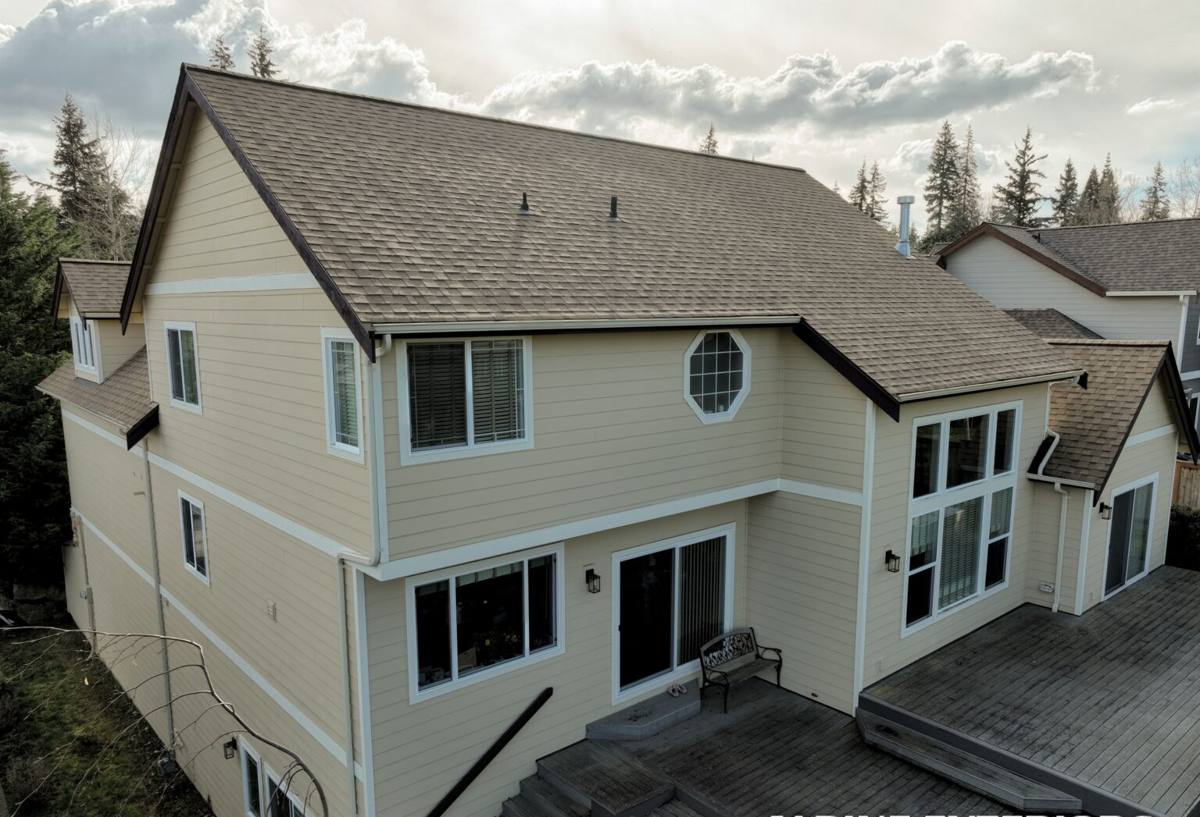
Signs a Sedro-Woolley Roof Needs Replacement, Not Just Repair
Most homeowners call us after noticing one obvious problem, but a full inspection often turns up more going on underneath. Some of the most common signs we see on Sedro-Woolley roofs include:
- Granules collecting in gutters or at downspout outlets, a sign the shingle surface is wearing thin
- Moss or dark algae streaking across shade-facing slopes, especially under overhanging trees
- Curling, cupping, or cracked shingles, particularly on south and west exposures that see more sun and thermal cycling
- Soft or spongy decking felt underfoot during an inspection, which usually means moisture has reached the sheathing
- Daylight visible through the attic roof boards, or damp insulation near the roofline
- A roof approaching or past 20-25 years old on asphalt shingles, even if it looks okay from the driveway
Any one of these on its own might just call for a repair. Several at once, or damage that's spread across multiple slopes, is usually a sign the underlayment and decking have been absorbing moisture for a while and a full replacement is the more honest recommendation.
What a Correct Roof Replacement Actually Involves
Tear-Off and Deck Inspection
We don't install new roofing over old material. A full tear-off lets us see the actual condition of the roof deck, which is the part that matters most and the part a re-roof over old shingles hides. Any soft, delaminated, or water-damaged plywood or planking gets replaced before anything new goes down. Skipping this step is one of the most common shortcuts in the roofing trade, and it's also the reason "cheap" roofs fail early.
Underlayment and Moisture Protection
Given how much rain Skagit County sees in a typical year, we treat underlayment as a second line of defense, not an afterthought. Self-adhered ice-and-water membrane goes along eaves, valleys, and roof penetrations — the spots where wind-driven rain and ice damming are most likely to force water backward under the shingles. A high-quality synthetic underlayment covers the rest of the deck.
Ventilation
Attic ventilation gets overlooked constantly, and it's a big part of why moss and moisture problems come back even after a new roof goes on. Balanced intake at the eaves and exhaust at the ridge keeps the underside of the roof deck dry and close to outdoor temperature, which reduces condensation, extends shingle life, and helps prevent ice damming in cold snaps.
Flashing and Details
Chimneys, skylights, dormers, and roof-to-wall transitions are where most leaks actually start, not in the open field of shingles. We replace flashing rather than reuse it wherever the roofing is being torn off, since bent, rusted, or improperly lapped flashing is a common failure point on older Skagit County roofs.
Roofing Material Options for Sedro-Woolley Homes
Most homes in this area use asphalt composition shingles, and for good reason — they perform well in this climate when installed correctly and offer the best balance of cost and durability. Metal roofing is a solid option for homeowners planning to stay long-term or wanting better shedding of moss and debris. We generally steer homeowners away from wood shake for new installations in this climate, not because it can't look good, but because it demands more maintenance to resist moss and rot here than most owners want to keep up with, and insurance costs reflect that.
| Material | Typical Lifespan | Moss/Moisture Resistance | Relative Cost |
|---|---|---|---|
| Architectural asphalt shingles | 25-30 years | Good, with proper ventilation and periodic cleaning | $ |
| Standing seam metal | 40-50+ years | Excellent — moss struggles to hold on smooth metal | $$$ |
| Metal shingle/shake profile | 40-50 years | Very good | $$$ |
| Wood shake (not our default recommendation) | 20-30 years with heavy upkeep | Poor without frequent maintenance | $$-$$$ |
Cost ranges vary with roof pitch, complexity, tear-off scope, and decking condition, so we prefer to give homeowners a real number after walking the roof rather than a broad estimate that may not reflect their specific house.
Our Roof Replacement Process, Start to Finish
- On-site inspection: We walk the roof, check the attic, and look for the underlying causes of any visible damage, not just the symptoms.
- Written estimate: A clear scope of work and material recommendation, with options explained honestly rather than upsold.
- Scheduling: We plan around the wettest stretches of the Skagit County calendar where possible and monitor forecasts closely once a start date is set.
- Tear-off and deck repair: Old roofing comes off, damaged decking is replaced, and the deck is inspected before anything new is installed.
- Underlayment, flashing, and ventilation installed: The parts of the system that do the real work of keeping water out.
- Roofing material installation: Installed to manufacturer specification, which matters for both performance and warranty validity.
- Cleanup and final walkthrough: Magnetic sweep for nails, debris removal, and a walkthrough so you understand what was done and why.
Moss, Gutters, and Long-Term Roof Care
A new roof in Sedro-Woolley still needs some ongoing attention given the amount of tree cover and moisture in the area. Moss doesn't just sit on the surface — left unchecked, it holds water against the shingle mat and can lift shingle edges over time, shortening the life of even a well-installed roof. We recommend gutter cleaning at least twice a year, keeping overhanging branches trimmed back from the roofline where practical, and a periodic soft wash or moss treatment rather than aggressive pressure washing, which can strip granules and do more harm than good.
Zinc or copper strips near the ridge are a low-maintenance option some homeowners choose to help slow moss regrowth between cleanings, though they work best as a supplement to regular maintenance rather than a replacement for it.
Why a Local Anacortes-Area Crew Matters
Roofing crews that mainly work drier climates sometimes treat ventilation, underlayment, and flashing details as optional extras. In Skagit County, they're not optional — they're the difference between a roof that lasts its full rated lifespan and one that develops rot or moss damage within a few years. Working across Anacortes and the surrounding Skagit County communities, including Sedro-Woolley, means we see the same rain patterns, the same moss pressure, and the same salt-tinged coastal air moving inland on a regular basis, and we build roofs accordingly rather than treating this as a one-off job in an unfamiliar climate.
Local presence also matters after the job is done. If a question comes up during the next heavy rain event or a warranty item needs a look, you're dealing with a crew that's a short drive away and familiar with your roof, not a call center for a company based somewhere else.
Permits, Timeline, and What to Expect
Most roof replacements in Skagit County require a building permit, which we handle as part of the job rather than leaving it to the homeowner. A typical single-family roof replacement takes one to a few days on-site depending on size, pitch, and complexity, weather permitting. Because rain is a regular factor here, we build a reasonable weather buffer into scheduling rather than promising a hard date we can't control.
Questions to Ask Before Hiring a Roofing Contractor
- Is the tear-off full, down to the deck, or is this a layover?
- What underlayment is being used at the eaves and valleys specifically?
- Will ventilation be assessed and corrected if it's inadequate?
- Is flashing being replaced or reused?
- What does the manufacturer's warranty require, and does the installer meet that standard?
- Are you licensed, bonded, and insured for work in Washington State?
- What's the plan if weather delays the project mid-tear-off?
A contractor who answers these clearly and specifically, rather than in vague reassurances, is usually the one who's actually thought through how a roof performs in this climate.
If your Sedro-Woolley roof is showing its age or you just want an honest read on where it stands, we're happy to take a look. Estimates are free, there's no pressure to commit on the spot, and you'll get a straight answer about whether you need a repair or a full replacement.