 Anacortes Siding
 Roof Repair Built for Sedro-Woolley's Weather
Sedro-Woolley sits in the Skagit Valley, close enough to the water that the same marine-influenced weather system covering Anacortes and the rest of Skagit County reaches inland here too. That means long stretches of steady, driving rain in the fall and winter, humid air that never fully dries out a roof deck between storms, and a moss season that can run from October through May in shaded, north-facing sections of a roof. None of that is dramatic on its own. The problem is what it does over years: it finds every weak seam, every under-driven nail, every spot where flashing was cut short, and it turns a small oversight into a leak.
Roof repair in this area isn't about patching a hole and moving on. It's about understanding how water moves across a roof in a place where it rains sideways as often as it rains straight down, and where moss and moisture work together to lift shingles and hold water against wood longer than manufacturers ever designed for.
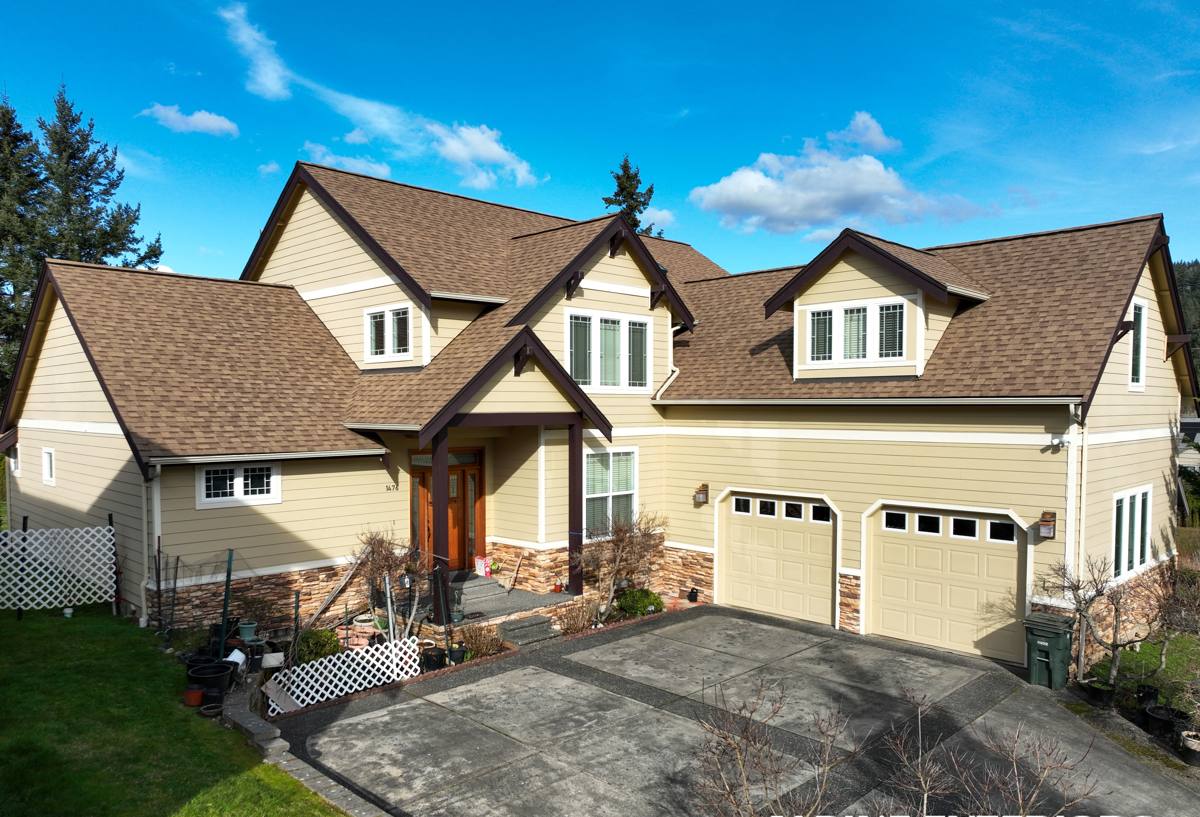
Common Roof Problems We See on Sedro-Woolley Homes
Moss and Organic Growth
Moss doesn't just sit on top of shingles — it roots into the granule surface, holds moisture against the roofing material, and physically lifts shingle edges as it grows. On older composition roofs especially, moss along the north slope or under tree cover is one of the most common reasons we get called out for a repair that turns out to be more involved than the homeowner expected.
Flashing Failures
Flashing around chimneys, skylights, roof-to-wall transitions, and valleys is where the majority of real leaks start — not in the open field of the roof. Skagit County's wind-driven rain will find any gap in step flashing or counter-flashing and push water sideways and upward under materials that were only designed to shed water moving straight down.
Wind and Storm Damage
Winter storms off the Strait bring gusty, unpredictable wind. It doesn't take a major windstorm to lift a row of shingles or crack a ridge cap — sometimes it's just one bad gust that catches an already-weakened edge. Left alone, that small lift becomes an entry point for the next rain event.
Gutter and Drainage Backups
Fir and cedar needles, maple leaves, and moss debris clog gutters quickly in this part of Skagit County. When water backs up under the drip edge instead of draining off the roof, it soaks fascia boards and can work its way under the first course of shingles.
Aging Underlayment and Nail Pops
Homes built or re-roofed more than 15-20 years ago often have underlayment that's simply reached the end of its useful life, combined with nails that have backed out slightly as the roof deck expands and contracts with seasonal moisture. Individually minor, these add up to a roof that's no longer watertight even though it still looks fine from the ground.
What a Correct Repair Actually Involves
A roof repair that holds up through a full Skagit County winter isn't a quick patch job. It starts with figuring out where the water is actually entering — which is often several feet away from where the stain shows up inside the house, because water travels along rafters and sheathing before it drips.
- Inspect the full roof plane, not just the area around the visible leak or damage
- Check flashing at every penetration — chimneys, vents, skylights, and wall transitions
- Pull back surrounding shingles to assess the underlayment and decking condition, not just the surface
- Confirm the roof deck hasn't taken on soft spots or rot from prolonged moisture exposure
- Match repair materials to the existing roof as closely as possible in type, weight, and color
- Re-seal and re-flash correctly rather than relying on caulk or roofing cement as a standalone fix
- Clear moss and debris from surrounding areas so the repair isn't undermined again within a season
Roofing cement and sealant have their place, but they're not a substitute for correctly lapped flashing and properly fastened shingles. A repair that leans on sealant alone tends to fail again within a year or two, especially with the freeze-thaw and constant wet-dry cycling typical of a Skagit County winter.
Repair or Replace? How We Help You Decide
Not every roof problem needs a full replacement, and not every leak can be permanently solved with a patch. Part of doing this job honestly is telling a homeowner which situation they're actually in.
| Signs a Repair Makes Sense | Signs Replacement Should Be Considered |
|---|---|
| Isolated leak tied to one flashing point or damaged section | Multiple leaks in different, unrelated areas of the roof |
| Roof is under 15 years old with otherwise sound shingles | Roof is near or past its expected lifespan |
| Decking underneath is solid, dry, and undamaged | Soft, spongy, or delaminated decking found during inspection |
| Moss/debris issue caught early, before shingle lift | Widespread granule loss or curling shingles across the roof |
| Damage limited to a recent storm event | Recurring damage in the same area despite prior repairs |
We'll always tell you if a repair is genuinely the right call, even if replacement would be the bigger job for us. A roof that's repaired well can often buy years of additional service life — but only if the underlying structure is sound.
Our Roof Repair Process
1. On-Site Inspection
We walk the roof (weather permitting — Skagit County rain doesn't always cooperate) and inspect from the interior attic space where accessible, since attic moisture staining often tells us more than the exterior does.
2. Clear Explanation and Options
Before any work starts, we explain what we found, what's causing it, and what the repair will involve — in plain terms, not a sales pitch. If there's a cheaper, smaller fix that will genuinely hold, we'll say so.
3. The Repair Itself
We remove and replace damaged materials rather than working around them, correctly lap and seal flashing, match shingle type and color where possible, and check fastening throughout the repaired section — not just at the point of failure.
4. Final Check
We confirm drainage paths are clear and that surrounding areas weren't disturbed or left vulnerable during the repair, including gutters and valleys near the work area.
Materials and Why We Choose Them
For repair work, matching the existing roof matters as much as the quality of the new material — a mismatched patch stands out and can create its own water-shedding problems if the profile or thickness doesn't align with the surrounding shingles. We use materials from manufacturers with a track record in wet, marine-influenced Pacific Northwest climates, and we're selective about underlayment and flashing metal in particular, since those components do the real work of keeping water out over time. Where a product carries installation requirements that are easy to get wrong — certain synthetic underlayments and specialty flashing systems, for example — we follow manufacturer specification exactly, because a repair that voids a warranty due to improper installation isn't a repair worth doing.
Cost Factors for Roof Repair
Every roof and every repair is different, so we don't quote sight-unseen, but the factors that typically drive cost are consistent:
| Factor | Why It Matters |
|---|---|
| Roof pitch and accessibility | Steeper or harder-to-reach areas take longer and require more safety setup |
| Extent of hidden decking damage | Rotted or soft decking found underneath adds material and labor |
| Number and type of flashing points involved | Chimneys and skylights take more time than open shingle field |
| Material matching availability | Older or discontinued shingle profiles can be harder to match |
| Moss/debris removal needed | Heavy growth requires careful clearing before repair can begin |
A Homeowner's Checklist: When to Call for a Roof Repair
- Water stains on ceilings or interior walls, even if they've dried and don't seem active
- Visible moss buildup, especially on north-facing or shaded roof sections
- Granules collecting in gutters or at downspout outlets
- Shingles that look lifted, curled, or cracked from the ground
- Daylight visible through the roof deck from inside the attic
- Gutters overflowing during heavy rain instead of draining normally
- Any recent windstorm followed by debris or shingle pieces in the yard
If more than one of these applies, it's worth having the roof looked at before the next round of Skagit County rain turns a small issue into water damage inside the home.
Why It Matters That We Already Work in Sedro-Woolley
Roofing crews that only occasionally work outside their home base tend to treat every roof the same way, regardless of climate. A crew that regularly works Sedro-Woolley and the surrounding Skagit County area already knows which roof orientations collect moss fastest, which flashing details tend to fail first in this rainfall pattern, and how long a repair actually needs to cure or set before the next storm rolls through. That local pattern recognition shortens the diagnosis and reduces the chance of a repair that looks right but doesn't hold.
It also means we're not far away if a repair needs a follow-up check after the first real storm tests it — something that matters more here than in drier climates, where a roofing mistake might not show itself for a year or more.
After the Repair: Keeping It That Way
A good repair still benefits from basic seasonal upkeep, particularly in a climate that stays damp for months at a time.
- Clear gutters and downspouts before the fall rains set in
- Trim back overhanging branches that keep sections of roof shaded and damp
- Have moss treated or removed before it spreads, rather than after shingles start lifting
- Schedule a periodic visual check after major windstorms
None of this requires major investment, but it does extend the life of both the repair and the roof around it.
If you're dealing with a leak, storm damage, or a moss problem that's gotten ahead of you, we're happy to take a look and give you an honest read on what's needed — no pressure, no upsell. Use the form below to request a free estimate for roof repair in Sedro-Woolley.