 Anacortes Siding
 Oak Harbor sits close enough to the water that a deck built without the local climate in mind starts showing problems within a few seasons, not a few decades. Salt air, driving rain off the Sound, and a moss season that can run most of the year all put real stress on outdoor structures. Composite decking, installed correctly, is one of the more dependable answers to that combination — but "composite" isn't a single product, and "installed correctly" isn't automatic. This page walks through what we've learned building decks in this area: what the climate actually does to decking materials, what a correct composite install involves, and why local experience changes the outcome.
Why Composite Makes Sense for a Marine Climate
Wood decking has to be sealed, stained, and inspected on a schedule to keep water out of the boards. Skip a season out here and the damage shows up fast — cupping, splintering, soft spots where water sits. Composite decking was developed largely to solve that problem: it doesn't absorb water the way solid wood does, it doesn't need annual staining, and it resists the kind of splintering and warping that a damp, salt-laden environment accelerates in natural lumber.
That doesn't mean composite is maintenance-free or immune to the local environment. It means the maintenance burden shifts from "reseal every year or the wood degrades" to "clean it periodically so moss and mildew don't take hold on the surface." For a lot of Oak Harbor homeowners, especially those who want a deck they can actually use without a standing project list, that trade-off is the whole appeal.
What "Composite" Actually Means
Composite decking boards are made from a blend of wood fiber and plastic, formed under heat and pressure into a board that behaves more like plastic than wood once it's finished. Most boards sold today are capped composite — the core is wrapped in a polymer shell that handles UV exposure, moisture, and staining. Older or budget-tier uncapped composite exposes the wood-plastic blend directly to weather, which lets moisture reach the wood fibers over time and can lead to mold growth or surface degradation, especially in a wet climate like this one. We treat capped composite as the baseline for any deck we build here — it's the version actually engineered for sustained exposure, not just cost.
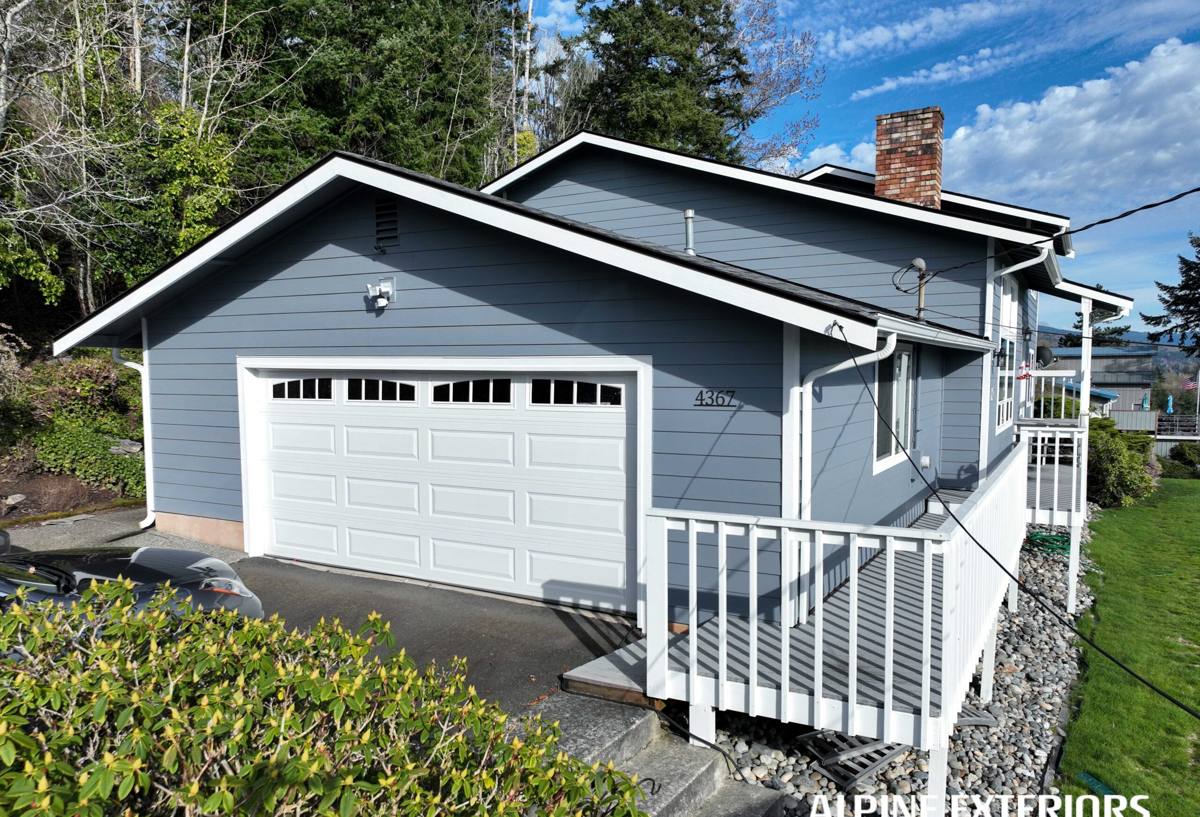
What Salt Air, Rain, and Moss Season Actually Do to a Deck
It's worth being specific about the failure modes we're building against, because they're different from what you'd worry about with an inland deck.
Salt Air and Metal Hardware
Salt-laden air accelerates corrosion on anything metal — fasteners, brackets, railing hardware, structural connectors. A deck built with standard interior-grade hardware will show rust and weakened fastener strength well before an equivalent deck built further from the water. This is a substructure issue as much as a surface issue, and it's one of the most common shortcuts we see on decks that weren't built by someone used to coastal conditions.
Driving Rain and Water Management
Rain that comes in sideways off the water doesn't just fall on the deck surface — it drives into ledger connections, under railing posts, and into any gap where flashing or sealant wasn't detailed correctly. A deck that looks fine on top can still be taking on water at the house connection, which is where the structural damage that actually matters tends to start.
Moss and Surface Buildup
A long moss season means shaded or low-airflow sections of any deck — composite or wood — will collect organic growth if they don't get sun or airflow to dry out between rains. On composite decking this is mostly a surface and slip-hazard issue rather than a material-degradation issue, but it still needs to be part of how the deck is designed, not just something addressed after the fact with cleaning.
What a Correct Composite Deck Build Involves
The composite boards themselves get most of the attention, but most of the problems we get called out to fix start below the surface, in the substructure.
Framing and Ledger Connection
The ledger board — where the deck attaches to the house — is the single most important connection on the whole structure, and it's the one place water intrusion does the most damage if it's not flashed correctly. A correct ledger install uses proper flashing to shed water away from the house sheathing, not just caulk and hope. This matters more here than in a dry climate, because the volume and frequency of rain gives any gap in the flashing far more opportunities to cause damage.
Joist Protection
Composite boards resist moisture, but the wood joists underneath them generally don't unless they're protected. Wrapping joists with a moisture-barrier tape before the decking goes down keeps rain that gets between the boards from soaking into the framing — a detail that's easy to skip and impossible to see once the deck is finished, which is exactly why it matters who's building it.
Fastening and Board Spacing
Composite boards expand and contract with temperature more than solid wood does, so correct gap spacing between boards isn't cosmetic — it's what keeps the deck from buckling or the fasteners from working loose over time. Most composite systems today use hidden fastener clips rather than face screws, which gives a cleaner look and also reduces the number of penetration points where water could otherwise find a path into the board or joist below it. Fastener and hardware material matters here too — stainless or coated fasteners rated for coastal exposure hold up where standard hardware corrodes.
Railings, Fascia, and Airflow
Railing posts need to be through-bolted to blocking, not just screwed to the rim joist, to handle the wind loads that come with living this close to open water. Fascia boards and skirting should be installed with enough airflow behind them to let the substructure dry out between storms — solid, unvented skirting traps moisture against the framing and works against everything else the composite build is trying to accomplish.
Composite vs. Other Decking Materials
Homeowners weighing decking options in this area usually land on one of three choices. Here's how they actually compare for a marine-climate property:
| Material | Moisture Behavior | Maintenance | Typical Lifespan Here |
|---|---|---|---|
| Capped composite | Resists water absorption; core is sealed from moisture | Periodic cleaning; no staining or sealing | 25-30+ years with correct install |
| Pressure-treated wood | Absorbs water; treatment resists rot but not swelling/checking | Annual sealing/staining recommended | 10-15 years before major repair or replacement |
| Cedar | Absorbs water; natural oils offer some resistance, wear off over time | Refinishing every 1-3 years in this climate | 15-20 years with disciplined upkeep |
None of these are objectively "bad" — cedar has real appeal for homeowners who want a natural look and are committed to the upkeep, and pressure-treated wood is the lower-cost entry point. Composite tends to win out for homeowners who want to spend their weekends on the deck instead of maintaining it, which is a big part of why it's become the default recommendation we give for this area.
What Drives Cost on a Composite Deck
Composite decking material itself is usually the smaller half of a total project cost. The bigger variables are structural and site-specific:
| Factor | Why It Matters |
|---|---|
| Substructure condition | An existing frame that's rotted, undersized, or lacks proper footings has to be rebuilt before new decking goes down, regardless of material choice |
| Height and railing requirements | Elevated decks need code-compliant railings and stair systems, which add material and labor beyond the deck surface itself |
| Ledger and house connection complexity | Older homes or unusual wall assemblies can require more work to flash the ledger connection correctly |
| Board pattern and picture-framing | Diagonal layouts, borders, and mixed-color designs use more material and labor than a straight run |
| Site access | Waterfront or sloped lots common around Oak Harbor can add cost for equipment access and material staging |
We'd rather walk a specific property and give a real number than throw out a broad estimate that doesn't account for what's actually under an existing deck or what a particular lot requires.
Keeping a Composite Deck Looking Right in This Climate
Composite decking cuts the maintenance list dramatically compared to wood, but "low-maintenance" isn't "no-maintenance," especially with a moss season this long. A realistic upkeep routine looks like this:
- Sweep debris and standing organic matter off the deck surface regularly, especially in shaded areas that don't get direct sun
- Rinse or wash the surface a few times a year with mild soap and water to prevent moss and mildew from taking hold before it becomes a slip hazard
- Check railing hardware and fasteners periodically for corrosion, particularly on decks closer to the water
- Keep gutters and downspouts near the deck clear so runoff isn't dumping extra water onto the deck surface or ledger connection
- Inspect under-deck skirting or fascia venting once a year to make sure it hasn't been blocked by debris or landscaping growth
None of this requires specialized products or a big time investment — it's closer to the maintenance a homeowner already does on the rest of the exterior, just applied to the deck.
Why a Crew That Already Works Oak Harbor Matters
A lot of what separates a deck that holds up here from one that doesn't isn't visible in a quote or a brochure — it's in details like ledger flashing, joist protection, and hardware selection that don't show up until years later, when a shortcut either held or didn't. A crew that already builds decks in this area has already worked through what the local exposure does to a structure over time, and builds to that standard by default rather than treating it as an upsell.
It also matters for something more basic: knowing the practical realities of building on the waterfront lots, sloped sites, and older homes common around Oak Harbor, and pricing and scheduling a project accordingly instead of running into surprises mid-build.
Our Process
We start with a walk-through of the site — existing deck condition if there is one, the house's ledger wall, sun and shade patterns, and how the deck will actually be used. From there we talk through material and layout options honestly, including trade-offs, before putting together a written plan and cost estimate. Once a project starts, that means correct footings and framing first, joist protection and flashing before a single composite board goes down, and a final walkthrough where we point out what maintenance the finished deck will actually need — not a generic handout, but specifics for that deck.
If you're weighing a new composite deck or replacing an aging one in Oak Harbor, we're glad to take a look at your property and give you a straightforward read on what it needs. Reach out for a free, no-pressure estimate.