 Anacortes Siding
 Roofing That Has to Earn Its Keep in Sedro-Woolley
Sedro-Woolley sits in a stretch of Skagit County that gets the full range of what Northwest Washington weather can throw at a roof. It's close enough to the water to pick up salt-laden air moving in off the Sound, low and green enough to grow moss on anything that holds shade and moisture, and wet enough for long enough each year that a roof with even minor flaws will find that out the hard way. Asphalt shingle roofing remains the most practical choice for most homes here — it's durable, repairable, and reasonably priced — but only when it's specified and installed with this climate in mind. A shingle system built for a dry inland town does not perform the same way once it's sitting under Skagit County's fall-through-spring rain pattern.
This page is about that one job, done right, for homes in and around Sedro-Woolley: what the local climate demands of a shingle roof, what a correct installation actually includes, and why it matters to hire a crew that already does this work in this area rather than a company passing through.
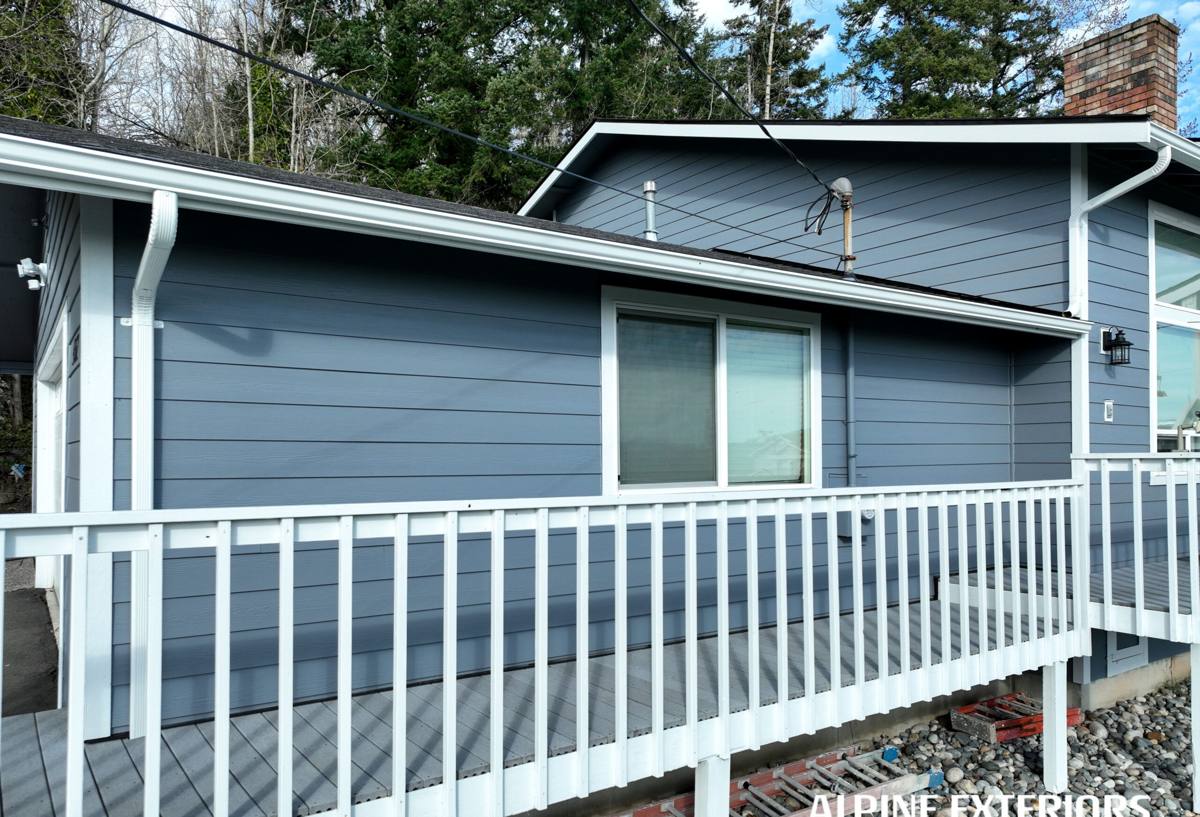
What the Local Climate Does to a Shingle Roof Over Time
Every roofing material has a failure pattern that shows up faster in some climates than others. In Sedro-Woolley, the combination that matters most is moisture load, wind-driven rain, and shade.
Salt Air and Moisture
Homes here don't get hit with the direct salt exposure of an oceanfront property, but airborne moisture moving inland off the Sound still reaches fasteners, flashing, and any exposed metal on a roof. Over years, that moisture accelerates corrosion on lower-grade fasteners and flashing, which is one of the more common causes of leaks that have nothing to do with the shingles themselves.
Driving Rain
Skagit County storms frequently bring rain sideways, not straight down. That matters because a roof can shed water perfectly well in a calm rain and still take on water at valleys, ridge caps, and wall-to-roof transitions when wind pushes water uphill under shingle edges. Underlayment quality and flashing detail work carry more of the load here than the shingle brand does.
Moss and Shade
Sedro-Woolley's tree cover and long damp season give moss a wide window to establish itself, especially on north-facing slopes and anywhere debris collects. Moss holds moisture against the shingle surface, which shortens the life of the mat underneath and can lift shingle edges over time. A roof with poor airflow or heavy overhanging shade will grow moss faster than a similar roof on an open lot a few miles away — this is a real difference between properties, not just a general regional issue.
Choosing an Asphalt Shingle for This Climate
Not every asphalt shingle product is worth the same money in a market like this. The differences that matter for Sedro-Woolley homes are algae resistance, wind rating, and how the shingle's mat holds up under sustained moisture — not just the pattern or color options.
| Shingle Type | Typical Lifespan Here | Best Fit |
|---|---|---|
| 3-tab (standard) | 15–20 years, often less with heavy moss exposure | Budget-driven projects, rentals, outbuildings |
| Architectural / dimensional | 25–30 years with proper ventilation and maintenance | Most Sedro-Woolley homes — best balance of cost and durability |
| Algae-resistant (AR) architectural | 25–30 years, slower moss/algae staining | Shaded lots, north-facing roof planes, tree-heavy properties |
| Impact-rated / high-wind rated | 25–30+ years, better fastener and seal performance in wind-driven rain | Exposed lots, taller roofs, homes with open exposure to weather |
Our default recommendation for most homes in this area is a mid-to-upper-tier architectural shingle with algae resistance built in. It costs more up front than a basic 3-tab, but the difference in moss resistance and wind performance over a 25-year roof life is worth more than the initial savings, especially on shaded lots.
What a Correct Installation Actually Includes
The shingle itself is often the least important variable in how long a roof lasts here. The details underneath it and around its edges determine whether a roof handles a wet Skagit County winter or starts leaking in year six.
Underlayment
We use synthetic underlayment as standard, with self-adhered ice-and-water membrane at valleys, eaves, and any low-slope transition — the places wind-driven rain is most likely to work its way underneath the shingle field. This is a small material cost relative to the whole job and one of the biggest factors in leak prevention.
Ventilation
A shingle roof that can't breathe traps moisture in the attic, which condenses, soaks the underside of the roof deck, and shortens shingle life from below — a failure mode that has nothing to do with the shingles being defective. We check intake and exhaust balance on every reroof rather than assuming the existing ventilation was adequate to begin with.
Flashing and Transitions
Chimneys, skylights, dormers, and wall intersections are where most shingle roof leaks actually originate, not the open field of shingles. We install new flashing rather than reusing old pieces, and we pay particular attention to any roof-to-wall transition, since those are the spots wind-driven rain exploits first.
Fasteners
Given the corrosion pressure from airborne moisture, we use corrosion-resistant fasteners rated for the exposure, not the cheapest nail that will technically hold a shingle down on day one.
Ridge and Hip Detail
Ridge caps take direct wind exposure and are a common spot for early wear. We install manufacturer-matched ridge cap product and fasten to spec, not field-cut 3-tab scraps.
Signs a Sedro-Woolley Roof Needs Attention
Because moss and moisture damage build slowly, many homeowners don't realize a roof needs work until there's an active leak. These are the earlier signs worth acting on:
- Moss growth on north-facing slopes or anywhere shade lingers longest
- Granules collecting in gutters or at downspout outlets
- Shingle edges that look lifted, curled, or cupped
- Dark streaking that isn't just surface dirt
- Soft spots or sagging felt underfoot when walking the roof
- Daylight visible through the roof deck from inside the attic
- Water stains on interior ceilings, especially near chimneys or skylights
- Missing or damaged ridge cap shingles after a windstorm
Any one of these on its own isn't necessarily an emergency, but they're worth a professional look before the next wet season sets in, not after a leak shows up on a ceiling.
How Our Process Works
We keep the process straightforward and give homeowners a clear picture of scope before any work starts.
- On-site inspection. We walk the roof, check the attic for ventilation and moisture signs, and look at flashing, valleys, and any areas prone to moss.
- Honest scope and estimate. We tell you what actually needs to happen — full reroof, repair, or a maintenance plan — and explain the reasoning, not just a price.
- Material selection. We walk through shingle options suited to your roof's sun and shade exposure, not a one-size answer for every house.
- Tear-off and deck inspection. We remove old roofing down to the deck and repair or replace any damaged sheathing before anything new goes down.
- Underlayment, flashing, and shingle installation. Done in the sequence and to the spec described above, not shortcuts to save a day of labor.
- Cleanup and final walkthrough. Site cleared of debris and nails, and we walk the finished roof with you.
We schedule around Skagit County's weather windows where we can, since a shingle roof installs best — and seals properly — in dry conditions.
Maintenance That Actually Extends a Shingle Roof's Life Here
A well-installed shingle roof in this climate still benefits from periodic attention, mostly aimed at keeping moss and standing debris from getting a foothold:
- Keep gutters clear so water doesn't back up under lower courses of shingles
- Trim back overhanging branches that keep roof sections shaded and damp
- Remove moss carefully rather than pressure-washing it, which can strip granules and shorten shingle life
- Have valleys and flashing checked after major windstorms
- Address small leaks or lifted shingles promptly rather than waiting for a full section to fail
None of this is expensive or time-consuming, but skipping it is one of the most common reasons a shingle roof underperforms its rated lifespan in a moss-prone area like this one.
Why Local Experience in Sedro-Woolley Matters
A roofing crew that works this part of Skagit County regularly already knows which roof orientations grow moss fastest, which older neighborhoods tend to have ventilation issues from past renovations, and how local wind patterns actually move rain across a roof rather than relying on generic manufacturer specs. That local knowledge shows up in small decisions — where to add extra ice-and-water membrane, which flashing details need extra attention, how to sequence a job around a wet forecast — that a crew unfamiliar with the area is more likely to miss. We work throughout the Anacortes and greater Skagit County area, and Sedro-Woolley's mix of tree cover, older housing stock, and damp winters is territory we're familiar with, not a one-off trip.
Ready for a Straight Answer on Your Roof
If your shingle roof is showing moss, granule loss, or you're just not sure how much life it has left, we're happy to take a look and give you a straightforward assessment — no pressure, no inflated scope. Fill out the form below to schedule a free estimate for your Sedro-Woolley home.