 Anacortes Siding
 Why Similk Beach Homes Need a Different Approach to Windows
Similk Beach sits close enough to the water that homes here take a different kind of weathering than houses further inland in Skagit County. Salt-laden air moves in off the bay, wind-driven rain hits west and south-facing walls at an angle instead of straight down, and the surrounding tree cover keeps humidity lingering longer than it does in more open parts of Anacortes. Windows in this setting aren't just letting light in — they're the first line of defense against moisture and salt exposure hitting your home's exterior walls day after day.
A window that performs fine in a dry inland climate can fail early here. Hardware corrodes faster, seals break down sooner, and cheap flashing details that would have survived twenty years elsewhere start leaking in five. Custom windows for a Similk Beach home aren't about upgrading for looks — they're about matching the product and the installation to the actual conditions the house sits in.
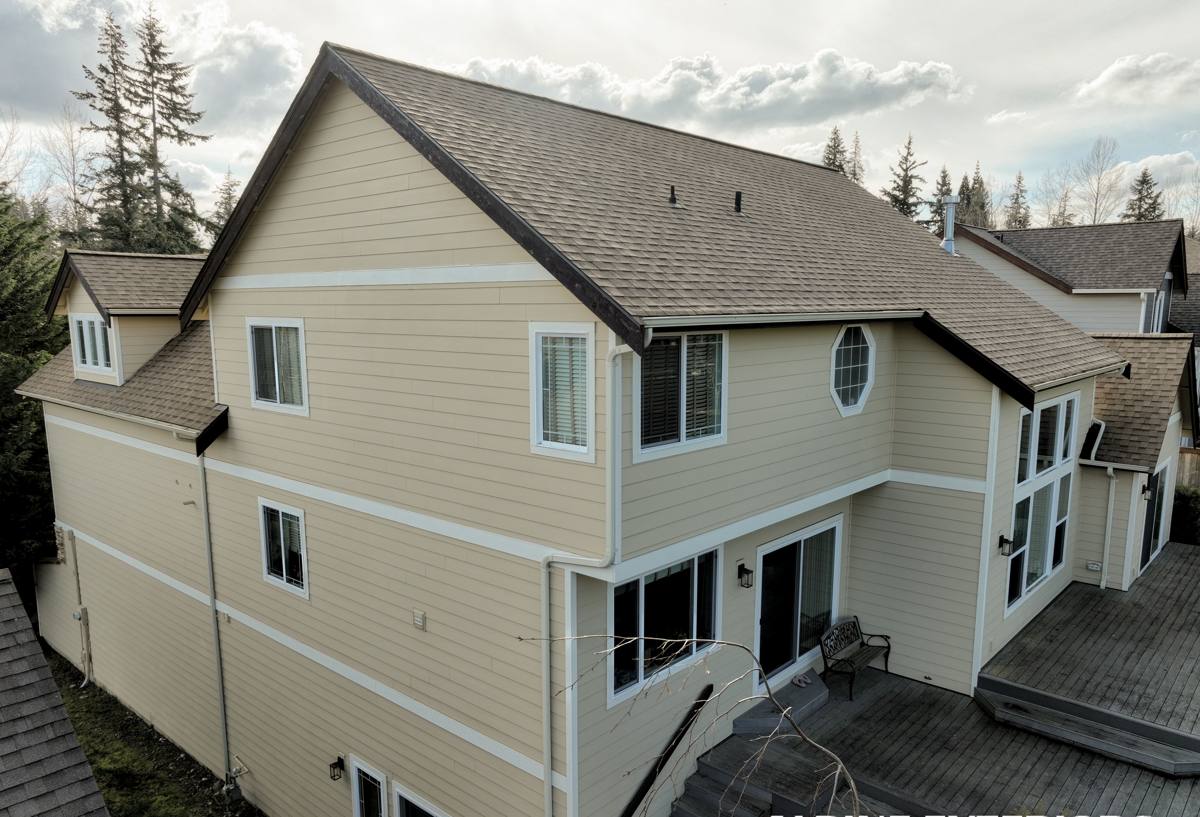
What Salt Air, Driving Rain, and Moss Season Actually Do
Salt Air and Metal Components
Salt air accelerates corrosion on anything metal — window locks, cranks, balance hardware, and screen frames. Cheaper hardware finishes pit and seize up years before they should. On homes near the water, we look for windows with corrosion-resistant hardware coatings and stainless or marine-grade fasteners, not standard-grade parts that were designed for drier markets.
Driving Rain and Wind-Driven Water
Anacortes gets its share of storms rolling in off the Salish Sea, and at Similk Beach that rain often arrives at an angle rather than falling straight. That means water gets pushed sideways into gaps that would stay dry in calmer weather. Window units with a poor drainage design, or installations with weak sill flashing, let that wind-driven water find its way behind the trim and into the wall assembly — often invisibly, for years, before a soft spot or stain gives it away.
The Long Moss Season
Skagit County's wet, mild winters and shaded lots create ideal conditions for moss and algae growth on siding, trim, and window sills. Moss holds moisture against the surface it grows on. On a window, that means constant dampness sitting right at the sill and lower sash — exactly where wood rot and seal failure start. Homes with heavy tree cover, which describes a good number of properties around Similk Beach, see this problem more than homes in open, sun-exposed yards.
Choosing the Right Frame Material for This Environment
There's no single "best" window material for every home — it depends on exposure, budget, and how much upkeep an owner wants to take on. Here's how the common options actually hold up in a marine, high-moisture setting like Similk Beach:
| Frame Material | Salt Air Resistance | Moisture Behavior | Maintenance Load |
|---|---|---|---|
| Vinyl | Very good — won't corrode or rust | Doesn't absorb water; seams are the weak point | Low — occasional cleaning |
| Fiberglass | Excellent — highly stable in coastal air | Minimal expansion/contraction, sheds water well | Low |
| Aluminum-clad wood | Good if hardware and cladding seams are sound | Wood core vulnerable if cladding is breached | Moderate — watch seams and corners |
| Solid wood | Poor without diligent upkeep | Absorbs moisture, prone to rot near sills | High — regular painting/sealing required |
For most Similk Beach homes, we steer owners toward vinyl or fiberglass for straightforward replacements, and reserve wood or clad-wood for homes where the architectural style calls for it and the owner understands the maintenance commitment. That's not a knock on wood windows as a product — it's an honest read on what a shaded, salt-exposed lot will do to an exterior wood surface over time.
Getting the Glass Package Right
Glass choice matters as much as frame material here. Skagit County's marine climate means homes deal with cool, damp air much of the year, so the glass package should manage both condensation and heat loss.
- Double-pane, low-E glass as a baseline — reduces heat loss and cuts down on interior condensation during cold, damp stretches
- Argon or krypton gas fill between panes for better insulation without added frame bulk
- Warm-edge spacer systems, which resist seal failure better than older metal spacers in humid climates
- Tempered glass in any window near grade, decks, or bathrooms, per code and common sense near water
- Consider laminated glass on exposed, storm-facing elevations for added durability against wind-driven debris
Triple-pane glass is worth discussing for homes with heavy west or water-facing exposure, but it's not automatically the right call for every wall — it adds weight and cost, and the payoff depends on the specific elevation and how the home is oriented to prevailing weather.
Installation Details That Matter More Here Than Elsewhere
A quality window unit installed poorly will still fail. In a high-exposure spot like Similk Beach, the installation details carry as much weight as the product itself.
Flashing and Water Management
Proper flashing — sill pan flashing, head flashing, and correctly lapped house wrap — directs water back out rather than into the wall cavity. This is the single most common point of failure we find when repairing older or poorly installed windows in coastal-exposed homes.
Sealant Selection and Placement
Not all sealants perform the same in salt air and constant damp. We use exterior-grade sealants rated for the movement and UV exposure specific to marine climates, and we never rely on caulk alone to do a flashing detail's job.
Nailing Fin vs. Block Frame Approach
Depending on the wall assembly, a new-construction nailing fin installation or a retrofit block frame approach may be the correct method. Getting this decision right affects how well the window integrates with the existing water-resistive barrier — a detail that matters far more on an exposed waterfront lot than on a sheltered inland one.
Our Process: From Estimate to Finished Install
Every Similk Beach project follows the same disciplined sequence, because skipping steps is exactly how leaks and premature failures happen in this climate.
- On-site assessment of each opening, checking existing framing, sill condition, and signs of past moisture intrusion
- Honest recommendation on frame material and glass package based on that specific wall's sun and rain exposure
- Removal of old units with careful inspection of the framing underneath before anything new goes in
- Repair of any rot, soft framing, or compromised sheathing found during removal — never covered over
- Installation with full flashing integration, correct sealant placement, and manufacturer-spec fastening
- Final check of operation, weatherstripping seal, and exterior trim finish
We don't quote a job sight-unseen for this area, because the condition behind the existing trim on a Similk Beach home varies a lot from house to house depending on age, orientation, and how much moss and moisture exposure it's had over the years.
Maintenance That Actually Extends Window Life Here
Even the right product installed correctly needs some seasonal attention in this climate. A short annual routine catches problems while they're still cheap to fix.
- Rinse salt residue off frames and glass a few times a year, especially after storms
- Clear moss and organic debris from sills and tracks before it holds moisture against the frame
- Check exterior caulking annually for cracking or gaps, particularly on storm-facing elevations
- Test locks and hardware for smooth operation — stiffness can signal early corrosion
- Look for soft spots or discoloration on interior sills and trim, an early sign of a flashing issue
Why Local Experience at Similk Beach Matters
A crew that mostly works drier, inland jobs will spec and install windows the same way regardless of site conditions — because that's what works where they usually build. A crew that regularly works waterfront and near-waterfront properties around Anacortes and Skagit County builds different habits: heavier flashing details as a default, hardware upgrades without being asked, and a trained eye for the early signs of salt and moss damage that an out-of-area crew might miss entirely.
That local pattern-recognition is worth more than it sounds. It means catching a compromised sill before it becomes a rot repair, recommending the right glass package for a specific elevation instead of a one-size-fits-all spec, and knowing which installation details actually earn their keep in this exposure versus which ones are overkill.
Get a Straight Answer for Your Home
If you're weighing custom windows for a Similk Beach property, we're happy to take a look, walk the exposure on each wall, and give you a straightforward recommendation — no pressure, no upsell script. Reach out for a free estimate and we'll tell you honestly what your home needs.