 Anacortes Siding
 Building a Deck That Actually Holds Up on March Point
March Point sits right on the water's edge outside Anacortes, and that location cuts both ways. The views and the access to Fidalgo Bay and Padilla Bay are part of why people build outdoor living space here in the first place — but that same exposure is exactly what breaks decks down faster than it would a few miles inland. Salt-laden air, near-constant winter rain, and a long moss season put real, measurable stress on a deck's hardware, framing, and surface. A deck built to a generic spec sheet will show problems within a few years out here. One built for this specific stretch of Skagit County shoreline won't.
This page is about that difference: what March Point's climate actually does to a deck over time, what a correctly built deck needs to resist it, and how we approach the job as a crew that already works in this specific area rather than one passing through.
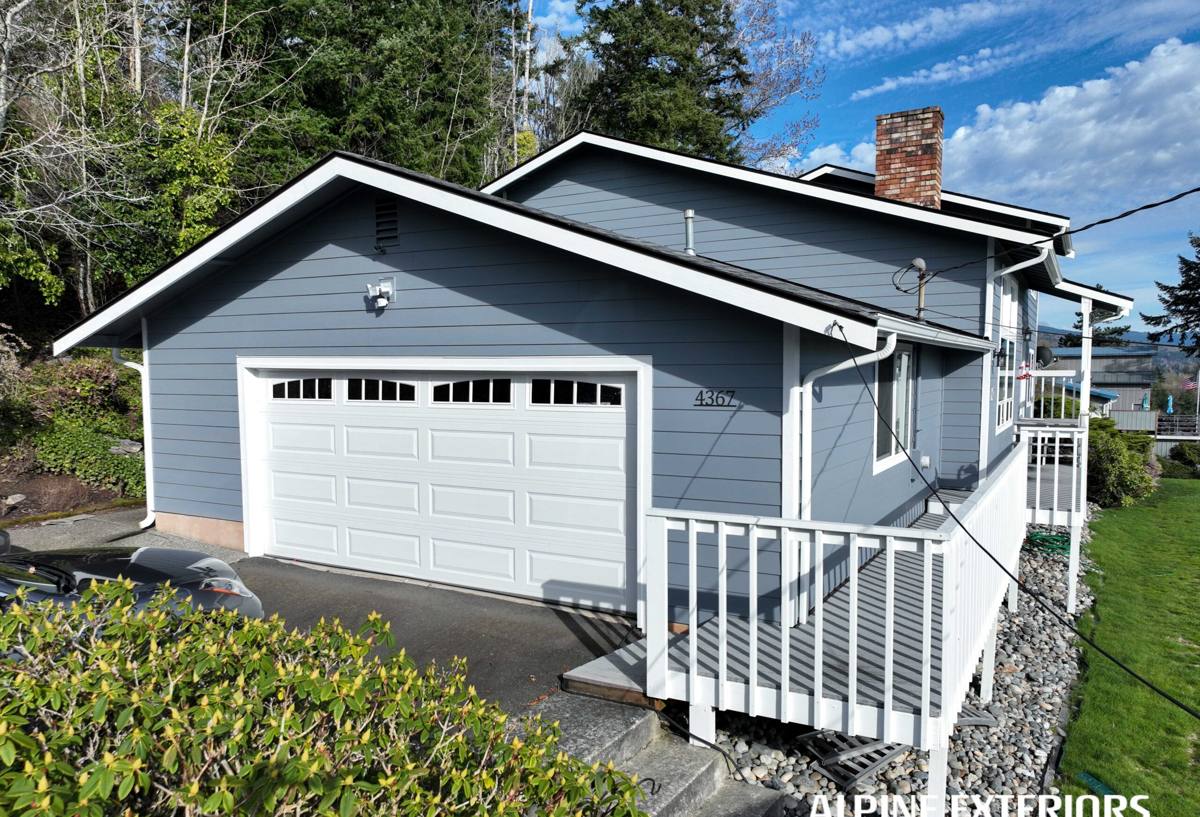
What March Point's Climate Does to a Deck
Salt Air and Corrosion
Being close to open water means airborne salt is part of daily weather here, not an occasional event. Salt accelerates corrosion in any exposed metal — nails, screws, joist hangers, post bases, bolts. On a deck built with standard interior-grade or even basic exterior-rated fasteners, that corrosion shows up as rust streaks on the decking, weakened connections at joist hangers, and eventually fasteners that back out or shear because the metal has thinned. This isn't cosmetic. A corroded joist hanger is a structural problem, not a paint problem.
Driving Rain and Ledger Rot
Anacortes gets plenty of rain that doesn't fall straight down — wind off the water pushes it sideways into siding, ledger boards, and any gap in flashing. The ledger board, where a deck attaches to the house, is the single most common failure point on decks in this region. If water gets behind the ledger and can't get back out, the rim joist and house framing rot from the inside, and you don't see it until the deck starts to feel spongy or pull away from the house.
Moss Season and Slip Risk
Western Washington's moss season runs long — shaded, north-facing, and low-airflow deck areas can stay damp for months at a stretch. Moss and algae on decking aren't just a maintenance annoyance; they turn a deck surface into a slip hazard, and they hold moisture against the board surface, which shortens the life of both wood and composite decking. Decks with poor drainage or airflow underneath grow moss faster and dry out slower after every rain.
What a Correctly Built Deck Requires Here
Footings and Framing
Footings need to be sized and set below frost depth and bear on undisturbed, stable soil — not fill dirt or organic topsoil, which is common in this area near the water. Framing lumber should be a pressure-treated grade rated for ground contact where it's within a few inches of soil or in persistent shade, not just the lighter above-ground rating that's cheaper but under-protected for a damp climate.
Ledger Attachment and Flashing
The ledger board needs proper flashing that directs water away from the house wall and down past the ledger, with a gap or drainage plane behind it so any water that does get in has somewhere to go besides the framing. This is the detail that separates a deck that lasts decades from one that needs the ledger rebuilt in year eight.
Fasteners and Hardware
Given the salt air, we treat corrosion-resistant hardware as a baseline requirement here, not an upgrade. That means stainless steel or heavy hot-dip galvanized fasteners and connectors rated for coastal exposure, matched to whatever treated lumber is used (some treatment chemicals corrode standard galvanized hardware faster, so the pairing matters).
Decking Material Choice
Whatever surface material goes on top has to handle standing moisture, moss growth, and UV without needing constant upkeep. That's a real trade-off decision, not a one-size answer — covered below.
Decking Material: What Actually Fits This Climate
There's no single "best" decking material for every house — it depends on how much maintenance you want to take on, your budget, and how shaded or exposed the deck site is. Here's how the common options actually compare for a March Point property:
| Material | Moisture & Moss Behavior | Maintenance | Typical Lifespan Here |
|---|---|---|---|
| Pressure-treated wood | Absorbs moisture readily; needs sealing to shed water and resist moss staining | Annual cleaning and re-sealing recommended | 10-15 years with upkeep, less without it |
| Cedar | Naturally rot-resistant but still needs treatment in a wet, shaded site | Periodic oiling/sealing to hold color and resist moisture | 15-20 years with regular care |
| Composite decking | Doesn't absorb moisture like wood but can still grow surface moss/algae in shaded, damp spots | Occasional washing; no sealing or staining | 25+ years |
| PVC/capped composite | Fully moisture-resistant surface; least prone to holding algae growth | Lowest — periodic rinse is usually enough | 25-30+ years |
For a shaded, water-adjacent site like March Point, we generally steer clients toward composite or capped decking when budget allows, simply because the maintenance burden of real wood is higher here than it would be in a drier, sunnier location. That said, plenty of homeowners prefer the look and feel of real wood and are willing to keep up with sealing — it's a legitimate choice as long as the upkeep happens on schedule.
Our Process for a March Point Deck Build
- Site assessment — we look at sun/shade exposure, prevailing wind and rain direction, soil condition, and how the deck will tie into the house before anything is designed.
- Design and material selection — layout, footing locations, and decking material are chosen based on that site assessment, not a standard template.
- Permitting — we handle the paperwork for the footing/framing plan so the structural work is inspected and documented.
- Footings and framing — footings set to proper depth, framing built with ground-contact-rated lumber where required and coastal-grade hardware throughout.
- Ledger and flashing — the house connection gets proper flashing and a drainage gap, checked before it's ever covered by decking.
- Decking installation — boards installed with correct spacing for drainage and airflow underneath.
- Final walkthrough — we go over care and maintenance specific to the material installed and the site's sun/shade conditions.
Permits and Local Requirements
Deck construction in and around Anacortes and unincorporated Skagit County generally requires a building permit once the deck is above a certain height or attached to the house, along with inspection of the footings and framing before decking goes on. Requirements can vary depending on exactly where a property sits relative to city limits, so we confirm the specific permit path for each address rather than assuming — this is part of what we handle as part of the project rather than leaving to the homeowner.
Maintenance Checklist for Salt-Air, Moss-Prone Decks
Whatever material you choose, a few habits make a real difference in how long a deck lasts on March Point:
- Sweep debris and standing moisture off the deck surface regularly, especially in shaded corners
- Clean moss and algae off the surface before it builds up a slick film — a stiff brush and a deck-safe cleaner is usually enough
- Check fastener heads and any visible hardware once a year for rust or corrosion
- Inspect the ledger board area and flashing annually for any sign of water staining or soft wood
- Reseal or restain wood decking on schedule rather than waiting until it looks worn
- Keep gutters and downspouts near the deck clear so runoff isn't dumping extra water onto or under it
- Make sure under-deck airflow isn't blocked by stored items, landscaping, or skirting that traps moisture
Why a Crew That Already Works March Point Matters
A lot of deck problems we get called to look at weren't built badly out of carelessness — they were built to a spec that works fine somewhere drier and less exposed to salt air, and just wasn't matched to this location. Knowing which fastener grade actually holds up here, how ledger flashing needs to be handled given the wind-driven rain, and which decking materials are worth the extra cost in a moss-prone, shaded site comes from working on this stretch of coastline repeatedly, not from a general contracting background alone. That's the difference between a deck that needs real repair work in year six and one that's still solid at year twenty.
If you're planning a new deck or replacing one that's showing its age on March Point, we're happy to take a look and talk through what your specific site needs. Reach out for a free, no-pressure estimate using the form below.