 Anacortes Siding
 Old Town Anacortes Puts Decks Through More Than Most Neighborhoods
Old Town Anacortes is one of the older, more established parts of the city, and a lot of the homes here have decks that have been through decades of Skagit County weather without much attention. That combination — older framing and constant marine exposure — is exactly what shortens a deck's life. Salt-laden air off the water accelerates corrosion on fasteners and hardware. Driving rain off Rosario Strait and the surrounding waterways finds every gap in flashing and every unsealed end cut. And the long, damp moss season that runs from fall through spring keeps wood surfaces wet for weeks at a time, which is when rot actually takes hold.
None of that means a deck in this neighborhood can't last. It means it has to be built and maintained differently than a deck in a drier inland climate, and it means small mistakes in the original construction tend to show up sooner here than they would elsewhere.
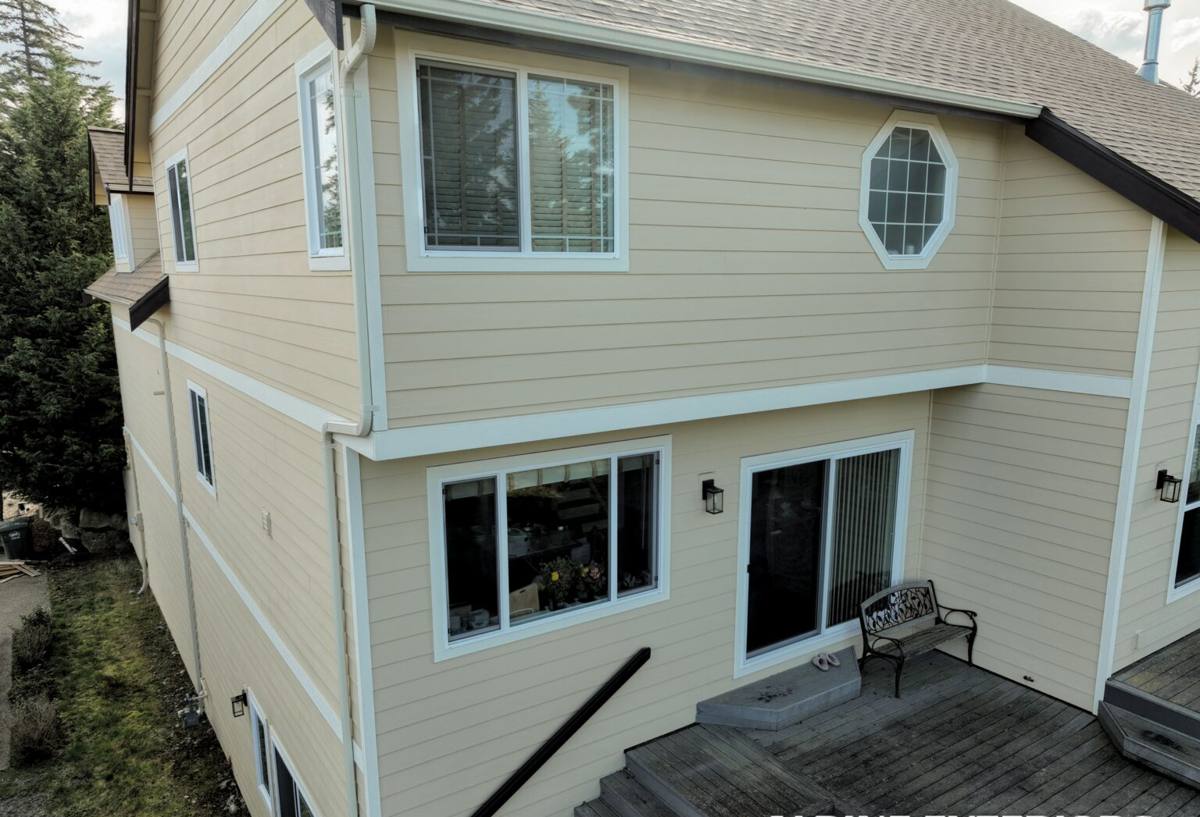
How to Tell a Deck Needs Replacing, Not Just Repairing
We get called out for a lot of "my deck feels soft" or "a board gave way" situations, and the honest answer is sometimes a repair really is enough. Other times the deck looks fine from a distance but the structure underneath it has already failed. Here's how we sort that out.
Signs the framing itself is failing
If a screwdriver sinks into a joist or ledger board with light pressure, that wood has lost structural integrity and no amount of surface repair fixes it. Soft spots near the house, rust streaking down from fasteners, a deck that feels bouncy or has started to pull away from the ledger connection — these all point to framing problems, not cosmetic ones. Once the structure is compromised, patching the decking boards on top just hides the problem instead of solving it.
Signs it's cosmetic, not structural
Graying wood, surface splinters, or a coating that's worn thin are appearance issues. If the framing underneath probes solid and the connections are tight, a resurface or refinish can be the right call instead of a full tear-off. Part of our job on a visit is telling you honestly which category your deck falls into, even when a full replacement would be the bigger job for us.
What a Correct Deck Replacement Actually Involves
A deck that's going to hold up in this climate isn't just about swapping old boards for new ones. The parts you don't see after the job is done are the parts that determine whether it lasts.
Ledger board and flashing
The ledger — where the deck attaches to the house — is the single most common failure point on older decks in wet climates. If it wasn't flashed correctly when it was built, water has been running behind it into the house framing for years, often invisibly. A correct replacement means proper flashing that sheds water away from the house, not just a caulked seam that will fail again in a few seasons.
Footings and posts
Footings need to sit below frost depth and bear on solid, undisturbed soil. On older Old Town lots, we sometimes find footings that were poured shallow or that have shifted over time. Posts should be set on proper post bases that keep the wood off the concrete, since end-grain wood sitting in standing water is one of the fastest ways to rot a post from the bottom up.
Joists, hangers, and fasteners
In a marine air environment, fastener choice matters more than most homeowners realize. Standard hardware corrodes faster here, which is why hot-dip galvanized or stainless connectors and coated, marine-rated fasteners are worth the modest upcharge. Joist hangers should be sized correctly and nailed with the fasteners the hanger manufacturer specifies — mismatched fasteners are a common shortcut that quietly weakens the connection.
The decking surface
This is the visible layer, but it's also where drainage and airflow decisions get made. Proper board spacing lets water pass through instead of pooling, and adequate ventilation underneath keeps the framing drying out between rain events instead of staying damp all winter.
Choosing a Decking Material for a Marine Climate
There's no single "best" decking material — it depends on your budget, how much maintenance you want to do, and how the deck sits relative to sun and rain exposure. Here's how the common options actually perform in a climate like Anacortes sees.
| Material | How it handles this climate | Maintenance |
|---|---|---|
| Pressure-treated wood | Affordable and strong, but needs consistent sealing to resist moss and moisture. Skips in maintenance show up fast here. | Annual cleaning and re-sealing recommended |
| Cedar | Naturally more rot- and insect-resistant than most softwoods, and a good look for older homes, but still needs finish upkeep to fight graying and moss. | Periodic cleaning and finishing |
| Wood-plastic composite | Resists rot and doesn't need sealing, though it can still grow moss or mildew on the surface in shaded, damp spots without cleaning. | Occasional washing, no sealing |
| Capped PVC | Fully synthetic and the most moisture-indifferent option; performs consistently in wet, salt-air conditions with minimal upkeep. | Low — mostly rinsing off debris |
We're glad to walk through the trade-offs in person, but as a rule of thumb: if you don't want to think about your deck's finish every year or two, a composite or capped PVC product will save you the most hassle in a climate that stays damp this much of the year. If you want the traditional wood look and don't mind the upkeep, cedar holds up better here than standard pressure-treated lumber.
Our Deck Replacement Process
- On-site assessment. We probe the framing, check the ledger connection, and look at drainage and grading around the deck before quoting anything.
- Honest scope. We tell you plainly whether you need a full replacement, a partial rebuild, or just a resurface, and explain why.
- Tear-off and disposal. Old decking, framing, and hardware are removed and hauled off, with the site protected during demolition.
- Structural rebuild. New footings, posts, ledger flashing, and framing go in to current code, sized for the deck's actual use and load.
- Decking installation. Boards are installed with proper spacing and fastening for the material you've chosen.
- Final walkthrough. We check railings, stairs, and connections with you before calling the job done.
Permits and Building Rules in Anacortes
Most deck replacement projects that involve rebuilding the structure — not just swapping decking boards on an otherwise sound frame — require a permit through the City of Anacortes, and setback or height requirements can come into play depending on your lot and how close the deck sits to a property line. Older Old Town lots sometimes have tighter setbacks than newer subdivisions, so this is worth checking before work starts rather than after. We handle the permit process as part of the job so you're not tracking down requirements yourself.
Keeping Moss and Moisture From Shortening a New Deck's Life
A well-built deck in this climate still needs some ongoing attention to get its full lifespan. The good news is it's simple, low-effort maintenance if you stay ahead of it rather than catching up after moss has already taken hold.
- Sweep leaves and debris off the deck regularly through fall and winter so moisture doesn't sit trapped against the boards
- Keep gutters and downspouts clear so runoff isn't dumping directly onto or under the deck
- Trim back overhanging branches to let sunlight and air reach shaded sections where moss grows fastest
- Check and clear the gaps between boards once or twice a year so water keeps draining through instead of pooling
- Re-seal wood decking on the manufacturer's recommended schedule — don't wait until it's visibly graying
- Inspect the ledger flashing and railing connections annually for any sign of movement or water staining
Why Local Experience in Old Town Anacortes Matters
A crew that only occasionally works this close to the water tends to build to a generic standard — the same flashing detail, the same fastener grade, the same material assumptions they'd use anywhere. A crew that works Old Town Anacortes regularly knows which lots hold water longer, which older homes tend to have shallow or undersized original footings, and how much moss pressure a shaded, north-facing deck is actually going to see through a Skagit County winter. That knowledge shows up in decisions you won't notice until years later, when the deck built to a generic standard needs work again and the one built for this specific climate doesn't.
If your deck is showing its age or you're not sure whether it needs a repair or a full replacement, we're happy to take a look and give you a straight answer. Request a free, no-pressure estimate using the form below, and we'll walk the deck with you and explain exactly what we find.