 Anacortes Siding
 Building Decks in Old Town Anacortes: What the Climate Demands
Old Town Anacortes sits close to the water, under a canopy of mature evergreens, and squarely in the path of whatever the Salish Sea and Puget Sound weather systems send through Skagit County. That combination is hard on outdoor structures. Salt-laden air accelerates corrosion on anything metal. Driving rain off the water finds every gap in flashing and fastener coverage. And a long, damp moss season coats north-facing surfaces, walking paths, and shaded corners for months at a time. A deck built without those three factors in mind will look fine the first summer and start showing problems by the second or third winter.
We build decks for homes in this neighborhood the way we'd want one built for our own house here: with material choices, flashing details, and fastener specs sized to the actual conditions on this part of Fidalgo Island, not to a generic national spec sheet.
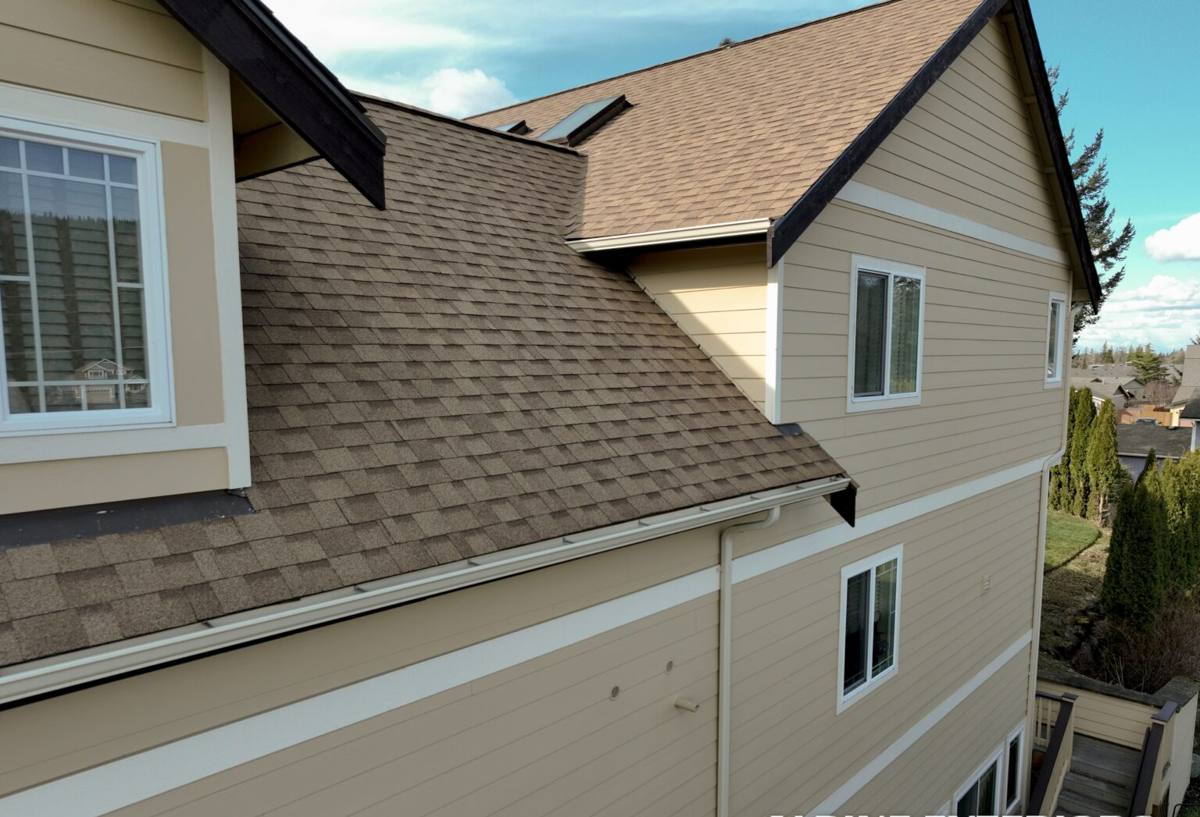
What Old Town Anacortes Homes Need From a Deck
Mature tree cover and moss
Many lots in Old Town Anacortes have established trees — firs, cedars, big-leaf maples — that shade decks for large parts of the day. Shade plus regular rain is exactly what moss and algae need to take hold. A deck surface that stays damp and shaded will grow moss whether it's wood or composite; the difference is how much traction it loses, how it's cleaned, and how much that cleaning shortens its life.
Older homes, older ledger conditions
A good number of the houses in this neighborhood predate current deck-attachment codes. When we tie a new deck into an existing house, we're often dealing with older rim joists, siding that wasn't detailed for a ledger board, and framing that needs reinforcement before it can carry new loads safely. That inspection step matters more here than it would on a newer subdivision home.
Small lots and close neighbors
Lots in Old Town tend to be smaller and closer together than in newer parts of Anacortes. Deck footprints, stair placement, and railing sightlines often have to work around property lines, existing landscaping, and view corridors that a newer, larger lot wouldn't need to consider.
Choosing Decking Material for This Climate
There's no single "best" decking material — there's a best fit for a given budget, sun exposure, and maintenance appetite. Here's how the common options actually perform under Anacortes conditions:
| Material | How it handles salt air & rain | How it handles moss/shade | Maintenance |
|---|---|---|---|
| Pressure-treated fir/pine | Good if properly sealed and re-sealed on schedule | Grows moss readily in shade; needs regular cleaning | Annual inspection, re-seal every 1-3 years |
| Cedar | Naturally rot-resistant; still needs finish maintenance near salt spray | Moss risk similar to other wood in shaded spots | Periodic cleaning and re-finishing |
| Composite decking | Handles moisture and salt exposure well; won't rot | Can still get moss/algae film in deep shade; some boards are more slip-resistant wet than others | Periodic washing, no sealing/staining |
| PVC/capped polymer | Excellent moisture and corrosion resistance | Same moss-film risk in shade as composite; surfaces vary in wet-traction rating | Lowest maintenance of the common options |
For heavily shaded Old Town lots, we often steer homeowners toward composite or capped polymer boards with a textured, slip-rated surface, simply because they hold up better to repeated wetting and cleaning over the years. Wood is still a good choice where a homeowner wants that look and is willing to keep up with sealing — it's an honest trade-off, not a product we avoid on principle.
How We Build a Deck That Holds Up Here
Footings and framing
Footings are sized and set to current code depth and bearing requirements, adjusted for what we find in the soil on site — some Old Town lots have fill or heavier clay that changes how footings are dug and poured. Framing lumber is treated for ground contact where it's within splash range or close to grade, since near-constant dampness plus salt air is a fast way to shorten the life of untreated framing.
Ledger flashing and moisture management
The ledger board — where the deck ties into the house — is the single most common failure point on older decks in wet climates. We flash it with a proper drip cap, waterproof membrane, and correct lapping order so water sheds away from the house rather than behind the siding. On older Old Town homes we'll open up the wall covering at the ledger line to confirm what's underneath before we attach anything, rather than assume the original construction anticipated a deck.
Fasteners and hardware
Salt air corrodes standard hardware faster than most homeowners expect. We use stainless steel or high-grade coated fasteners and structural connectors rated for exterior/coastal exposure, and we avoid mixing incompatible metals that can accelerate galvanic corrosion where hardware touches. It costs a little more up front and saves rust streaks, loose joints, and premature hardware replacement down the road.
Our build sequence
- Site walk and structural assessment, including inspection of the existing house connection if applicable
- Design and material selection based on sun/shade exposure, lot constraints, and budget
- Permit drawings and submission to the City of Anacortes
- Footings, framing, and ledger flashing
- Decking, stairs, and railing installation
- Final inspection and walk-through
Permits and Code in Anacortes and Skagit County
Most new decks and any deck attached to a house require a building permit through the City of Anacortes, with inspections at the footing, framing, and final stages. Requirements around railing height, guard spacing, stair geometry, and ledger attachment are non-negotiable safety items, not paperwork for its own sake — they exist because deck failures are almost always tied to one of those details being skipped. We handle the permit submission and inspection scheduling as part of the job so homeowners aren't navigating that process alone.
Railings, Stairs, and Salt-Air Corrosion
Railings and stair stringers see more exposure to blowing rain and salt-laden air than the deck surface itself, since they're vertical and unshielded. Metal balusters and cable rail systems look great but need corrosion-resistant hardware and, in some cases, more frequent inspection near the coast than they would further inland. Wood rail components need the same sealing discipline as wood decking, and stair stringers — especially where they meet grade — are worth checking annually for moisture damage since they're harder to see than the deck surface.
Living With Moss Season: What Upkeep Actually Looks Like
No decking material is maintenance-free in a shaded, wet climate — the goal is minimizing the effort and catching problems early. A short seasonal routine keeps a deck safe and extends its life regardless of material:
- Sweep debris (needles, leaves, seed pods) off the deck regularly through fall — trapped organic matter holds moisture and feeds moss
- Wash the surface with a deck-safe cleaner once or twice a year, more often on heavily shaded sections
- Check stair treads and shaded corners for slickness before winter — these are the spots that get dangerous first
- Inspect fasteners and visible hardware yearly for rust streaks or loosening
- Re-seal or re-stain wood decking on the schedule the finish product calls for — don't wait for it to look obviously worn
- Keep gutters and downspouts near the deck clear so runoff isn't dumping extra water onto or under the structure
None of this is complicated, but it has to actually happen on schedule. A deck built with the right materials and flashing details still needs an owner who does the basic upkeep — we walk every client through this routine at project completion.
Why Hire a Crew That Already Works Old Town Anacortes
A contractor who works this neighborhood regularly already knows which streets have heavier shade, which lots tend to have older framing behind the siding, and what the City of Anacortes permitting office wants to see on a submittal. That familiarity shows up in fewer surprises mid-project — footing depth guesses that turn out right, ledger conditions that don't derail the schedule, and material recommendations based on how similar decks in the neighborhood have actually held up over time, not a generic climate zone assumption. It also means a crew that's still local and reachable years later if a warranty question or maintenance question comes up.
Get a Free, No-Pressure Estimate
Whether you're replacing an aging deck, adding one to a home that's never had one, or trying to figure out why an existing deck feels soft or slick every winter, we're happy to walk the site, look at what you're working with, and give you an honest assessment. Fill out the form below for a free estimate — no pressure, no obligation.