 Anacortes Siding
 Decks in Old Town Anacortes Take a Different Kind of Beating
Old Town Anacortes is one of the older residential pockets in the city, and the decks out here tend to be older too — built decades ago to codes and standards that have since changed, and weathered by conditions that are tougher on wood and fasteners than most homeowners realize. Sitting close to the water on Fidalgo Island means these homes get a steady diet of salt-laden air off the surrounding channels, driving rain that comes in sideways more often than straight down, and a moss season that can stretch from fall through spring in a wet Skagit County winter. None of that is unique to any one deck, but the combination adds up faster here than it does further inland.
We're not describing anything dramatic — decks in this neighborhood don't usually fail all at once. They soften at the ledger board, they go spongy under a rug nobody's moved in a year, the railings get a little more give in them each spring. By the time it's obvious, the repair is bigger than it needed to be. This page is about what actually goes wrong with decks in this specific area, what a correct repair looks like, and how we approach the work when we're called out to Old Town Anacortes specifically.
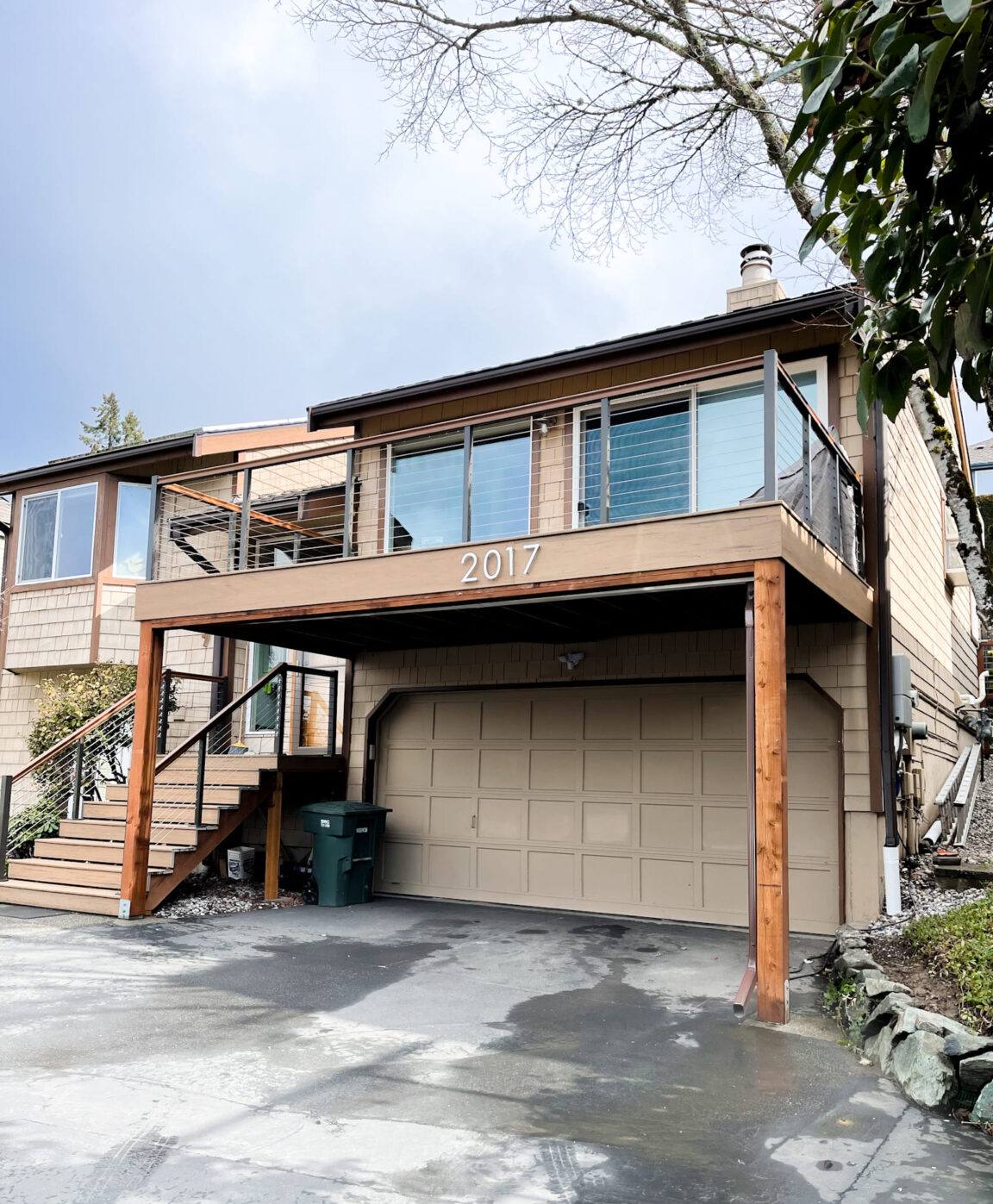
What Salt Air, Rain, and Moss Actually Do to a Deck
Salt Air and Fasteners
Airborne salt accelerates corrosion on anything metal — nails, screws, joist hangers, bolts. On a lot of older Anacortes decks, the original fasteners were never rated for coastal exposure, and after enough years they weaken from the inside out. A screw head can look fine on the surface while the shank underneath has lost most of its holding strength. This is one of the most common things we find once we pull a board that "looked okay."
Driving Rain and Water Intrusion
Wind-driven rain doesn't just fall on a deck, it gets pushed into every gap — under flashing, behind ledger boards, into end-grain cuts that were never sealed. Once water gets past the surface, wood doesn't dry out quickly in our climate, and that's where rot starts. The ledger board (where the deck attaches to the house) and the framing directly beneath the decking are the two spots we check most carefully, because they're the two spots that fail quietest.
Moss and Surface Moisture
Moss doesn't just look bad — it holds moisture against the wood or composite surface long after the rest of the deck has dried, and it makes stairs and walking surfaces genuinely slick. On shaded decks, especially those tucked under mature trees (common on the older, more established lots in this neighborhood), moss can establish itself within a single wet season if the surface isn't kept clear.
Signs Your Deck Needs Repair — Not Just a Pressure Wash
A lot of what we get called out for starts as a homeowner noticing something felt "off." Here's what those signs usually mean:
- Boards that flex or feel spongy underfoot, especially near the house or stairs — usually a sign of rot in the framing below, not just the board itself
- Railings or guard posts with noticeable movement when pushed — often a loosened or corroded connection at the post base
- Dark staining or a soft spot where the deck meets the house siding — a strong indicator of ledger board or flashing failure
- Nail heads popping up or screws that spin freely without biting — a sign of fastener corrosion or wood that's lost its grip strength
- Persistent green or black growth that returns within weeks of cleaning — usually a drainage or shade issue, not a one-time cleaning problem
- Visible gaps or separation where stair stringers meet the deck frame — a structural issue that shouldn't wait
If you're only seeing weathered, graying wood with no softness or movement, that's often cosmetic and can be addressed with cleaning, sanding, and refinishing rather than structural repair. Part of our job on the first visit is telling you honestly which category your deck falls into.
What a Correct Deck Repair Actually Involves
Structural Framing First
Before we touch a single decking board, we check the ledger board attachment, the joists, and the posts or footings. This is the part of the deck that carries the load, and it's also the part most likely to have been under-built by original code standards from decades ago. If the ledger isn't properly flashed and bolted, or if joists show rot, that gets addressed before anything cosmetic.
Decking Boards and Fasteners
We replace boards with corrosion-resistant, coastal-rated fasteners — not whatever was on the shelf. In a salt-air environment, using the wrong hardware is a guaranteed callback in a few years. Where boards are still sound but fasteners have failed, sometimes the fix is simply re-fastening correctly rather than replacing wood that has plenty of life left.
Railings and Guards
Railing systems get checked for post attachment strength, spacing, and height against current code — a lot of older Old Town Anacortes decks have railings that predate today's guard requirements. We'll flag anything that's a safety concern even if it wasn't part of the original repair request.
Flashing and Drainage
Proper flashing where the deck meets the house, and a slight slope away from the structure for water runoff, are the two details that prevent the next round of rot. These are easy to skip and hard to notice until the damage is already done — which is exactly why they're the first things we verify.
Repair or Replace? What Actually Drives That Decision
Homeowners often assume any rot means a full rebuild. That's usually not true — but it depends on where the damage is and how far it's spread. Here's how we think through it:
| Factor | Leans Toward Repair | Leans Toward Replacement |
|---|---|---|
| Location of damage | Isolated boards, one railing section, one stair | Widespread rot across multiple framing members |
| Ledger board condition | Sound, properly flashed | Compromised attachment to the house |
| Age of structure | Framing is newer, decking is worn | Original framing is at or past its practical service life |
| Code compliance | Meets current guard/railing requirements | Undersized footings or non-compliant railings throughout |
| Cost pattern | Targeted repair costs a fraction of rebuild | Repair costs are approaching 60-70% of a full rebuild |
That last line matters most in practice. If we're pulling apart most of the deck to fix it anyway, it's often more honest — and more cost-effective long term — to rebuild that section correctly than to patch around problems that will resurface.
Materials: What Holds Up Here and What We're Honest About
Both wood and composite decking have a place in this climate, and each comes with real trade-offs worth understanding before you decide.
Pressure-treated and cedar framing remain the standard for structural framing because they're proven, code-accepted, and cost-effective — but framing lumber needs proper flashing and ventilation underneath to perform well near the coast, since trapped moisture is what causes early failure, not the wood itself.
Composite decking resists moss growth and moisture absorption better than wood on the walking surface, which is a real advantage given how long our moss season runs. The trade-off is upfront cost and the fact that composite still needs a properly built, well-ventilated frame underneath — composite decking on a poorly flashed or under-ventilated frame will trap moisture just as badly as wood, sometimes worse, because you can't see it happening from the top.
Cedar decking looks great and is naturally rot-resistant compared to other softwoods, but it does require more regular maintenance — cleaning, sealing, and occasional refinishing — to keep that resistance intact, especially with the salt exposure common in Old Town Anacortes.
We'll walk you through what fits your budget and how much upkeep you're realistically willing to do, rather than pushing one material as a default.
How Our Deck Repair Process Works
- On-site assessment. We check framing, fasteners, flashing, and railings — not just the visible surface — and tell you honestly what's structural versus cosmetic.
- Written scope and estimate. You get a clear breakdown of what's being repaired, what materials we're using, and why — no vague line items.
- Repair work. Structural issues get addressed first, then decking, then railings and finish details, using coastal-rated fasteners and hardware throughout.
- Final walkthrough. We check the repair with you before calling it done, including railing stability and drainage.
Keeping a Repaired Deck in Good Shape Between Visits
A repair holds up longer with a little seasonal attention, especially given how much rain and shade this area gets:
- Sweep leaves and debris off the deck surface regularly in fall — trapped organic matter is what feeds moss and holds moisture against the wood
- Clean moss and algae buildup before it spreads, rather than waiting for it to become visible from the yard
- Check that gaps between boards stay clear so water can drain through instead of pooling
- Inspect railings once a year for any new movement or looseness, particularly after a windy winter
- Keep an eye on the area where the deck meets the house — this is the first place problems tend to reappear
- Reseal or refinish wood decking on the manufacturer's recommended schedule rather than stretching it out
Why Local Experience With Old Town Anacortes Homes Matters
Older neighborhoods like this one come with their own quirks — lots that were platted before modern setback rules, mature trees that shade decks year-round and feed the moss problem, and homes where the deck was added or modified at some point after the original build. A crew that hasn't worked this specific area might not know to check for those things, or might treat the repair like it's on a standard newer lot with full sun exposure and modern framing.
We've worked on siding and exteriors across Anacortes and the surrounding Skagit County area long enough to know how differently the coastal side of the island wears compared to homes further inland. That matters for deck repair just as much as it does for siding — the same salt air and moisture patterns that affect exterior walls affect an exposed deck structure, often faster, because a deck has no siding or house wrap protecting it.
Get an Honest Look at Your Deck
If your deck has soft spots, loose railings, or moss that keeps coming back no matter how often you clean it, it's worth getting a real assessment before those small issues turn into a full rebuild. We'll take a look, tell you plainly what's structural and what's cosmetic, and give you options that fit your budget. Use the form below to request a free, no-pressure estimate for your Old Town Anacortes deck repair.