 Anacortes Siding
 Windows Built for an Older Anacortes Neighborhood
Old Town Anacortes has some of the oldest housing stock in Skagit County, and it shows in the windows. A lot of homes in this part of town are still running original wood sashes, early aluminum replacements from decades past, or a mix of both after room additions and remodels over the years. None of that is a problem by itself — older windows can be beautiful and some are worth restoring. The problem is what happens when those windows have spent fifty or more years absorbing salt-laden air off the water, driving rain from the west, and a wet moss season that runs longer here than almost anywhere else in Washington. Wood swells and rots at the joints, glazing putty cracks and lets water in, and old aluminum frames corrode and stop sealing. By the time a homeowner calls us, it's usually because a window won't latch anymore, there's visible rot at the sill, or the energy bill has quietly crept up for a few winters in a row.
This page is specifically about custom window work for Old Town Anacortes homes — not a generic replacement-window pitch. The approach here is different from what we'd recommend on a newer Anacortes build, because the housing stock, the exposure, and the goals are different.
What This Climate Actually Does to Windows
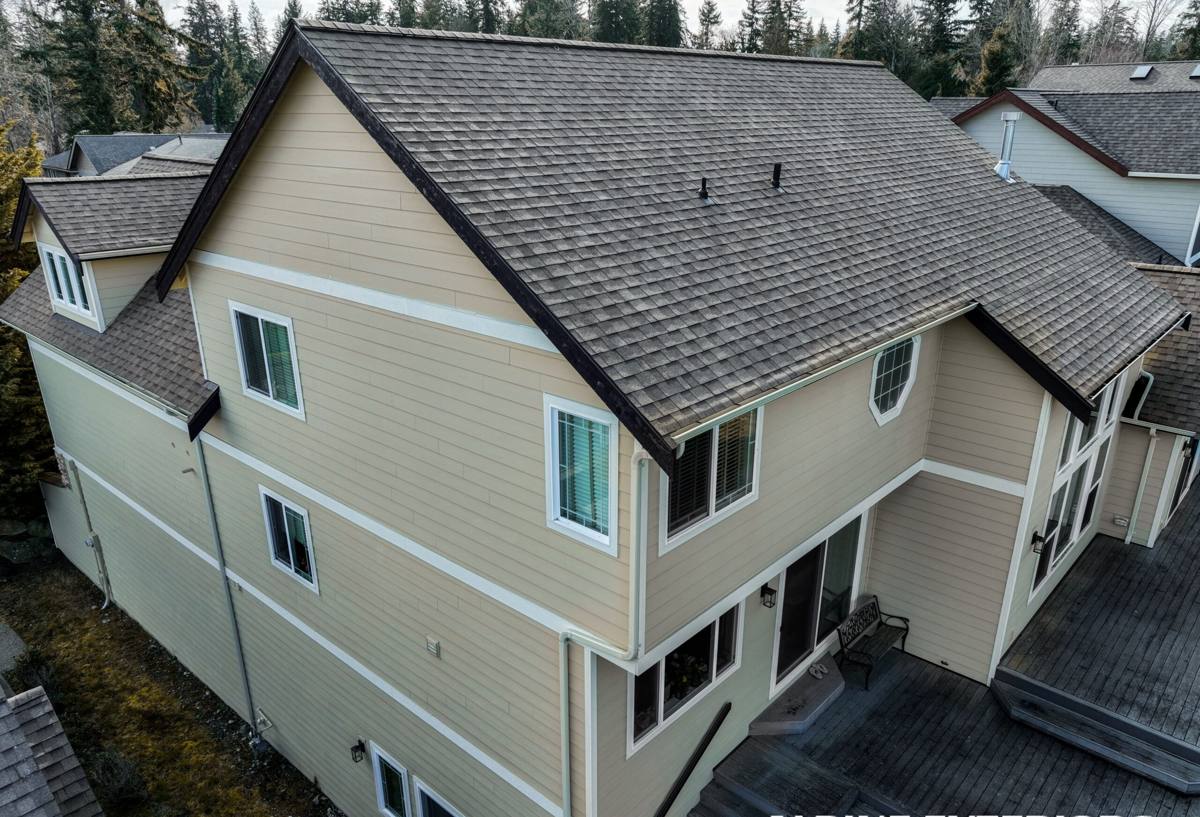
Anacortes sits right on the water, and that changes what a window has to survive compared to a house even a few miles inland in Skagit County. Three things matter most for Old Town's older homes:
- Salt air corrosion — window hardware, screws, and metal components corrode faster near the water. Cheap fasteners and low-grade hardware fail years before they should.
- Driving rain — wind off the water pushes rain sideways into wall assemblies, not just straight down. Flashing and sill details that work fine in a calmer inland setting can leak here.
- Long moss season — extended damp periods mean any wood surface that stays wet too long starts breaking down, especially at horizontal surfaces like sills and bottom rails where water sits.
Put those three together on a house that's fifty, seventy, or more years old, and you get the pattern we see over and over in Old Town: rot concentrated at the bottom of the window, hardware that's seized or corroded, and glazing or weatherstripping that gave up long ago. None of that means the whole window opening is a lost cause — but it does mean the replacement or restoration work has to actually account for the exposure, not just swap in a new unit and caulk around it.
Repair, Restore, or Replace — How We Decide
Not every old window in Old Town needs to come out. Part of doing this job honestly is telling a homeowner when a window can be repaired instead of replaced, even though replacement is more profitable for us. We look at a few things before recommending either path:
Signs a Window Can Often Be Restored
- The frame and sash wood is still solid — soft spots and rot are localized, not throughout
- The sash cords, weights, or balances are intact or easily serviceable
- The homeowner wants to keep original wavy glass or true divided-light character
- The opening is structurally sound and just needs new glazing, weatherstripping, and paint
Signs It's Time for Replacement
- Rot has reached the frame itself, not just the sash
- The window won't stay open, won't latch, or has been painted shut for years
- Single-pane glass with no storm window is driving up heating costs noticeably
- Previous repairs (caulk, filler, patched wood) are failing again
A lot of Old Town houses end up with a mixed approach — restoring a few character-defining windows on the street-facing side of the house while replacing the ones in worse shape or in less visible locations. That's a reasonable way to control cost without losing what makes the house look right.
Choosing the Right Window Material for This Exposure
Material choice matters more here than in a lot of Skagit County locations, because of the combined salt air and moisture load. Here's how the common options actually hold up in an Old Town setting:
| Material | How It Handles Salt Air & Rain | Maintenance | Fit for Old Town Character |
|---|---|---|---|
| Fiberglass | Excellent — doesn't corrode, very stable in moisture and temperature swings | Low — factory finish holds up well near the water | Good; available in profiles that read as traditional |
| Vinyl | Decent, but expect earlier hardware wear and some frame expansion/contraction | Low | Limited — harder to match narrow historic sightlines |
| Wood-clad (wood interior, aluminum or fiberglass exterior) | Good if detailed and flashed correctly — the cladding protects the exposed side | Moderate | Excellent — closest match to original wood windows |
| All-wood replacement | Weakest against this specific climate unless finish is maintained regularly | High — needs repainting/sealing on a real schedule | Best possible historic match |
| Bare aluminum | Poor — corrodes visibly over time in salt air | Moderate | Rarely appropriate for older homes |
We don't push one material for every house. A homeowner restoring a period home's front elevation may reasonably choose wood-clad or true wood despite the higher maintenance, because the look matters to them. A homeowner who wants to stop thinking about their windows for the next twenty-five years is usually better served by fiberglass. What we won't do is put bare aluminum or a bargain-grade vinyl unit on a house facing direct weather off the water and call it a long-term fix — the corrosion and seal failures show up too fast in this exposure, and it's not fair to the homeowner to sell that as a solution.
What a Correct Installation Involves Here
The window unit itself is only part of the job. In Old Town, where driving rain is a real factor, the installation details around the window matter as much as what's chosen. A correct job includes:
- Removing old, failed flashing and building the opening back up with proper flashing that sheds water down and out, not into the wall
- Sealing and flashing the sill pan so any water that does get past the window drains back outside instead of sitting on wood framing
- Checking the condition of the framing and sheathing behind the old window before closing it up — this is often where hidden rot from years of leaks turns up
- Using fasteners and hardware rated for coastal/salt-air exposure, not standard hardware that will corrode early
- Matching trim profiles and exterior casing to the house's existing character, especially on street-facing elevations
- Sealing with products suited to the temperature and moisture swings of this climate, not a generic caulk that hardens and cracks within a couple of seasons
Skipping the flashing and sill pan work to save time is the single most common shortcut that causes callbacks in older coastal homes. A window can be top quality and still leak within a year or two if it's set into an opening that wasn't properly flashed first.
Quick Homeowner Checklist Before You Call Anyone
- Note which windows are hardest to open/close or won't latch
- Look for soft or discolored wood at the sill and bottom corners
- Check for drafts on a windy day by holding a hand near the frame edges
- Note any interior condensation between panes (sign of failed seals on older double-pane units)
- Decide which windows are visible from the street versus less visible — this affects material choice
Our Process for Old Town Projects
Because Old Town homes vary so much in age and prior renovation history, we don't quote from a photo or a phone call for this kind of work. The process is:
- On-site assessment — we look at each window opening individually, not just the glass. Rot, framing condition, and flashing history all get checked.
- Honest repair-vs-replace recommendation — window by window, with reasoning, not a blanket "replace everything" pitch.
- Material and profile discussion — matched to the homeowner's priorities: budget, maintenance tolerance, and how much the original character matters to them.
- Proper opening prep — removing old flashing and sealant, checking framing, addressing any hidden moisture damage before the new window goes in.
- Installation with coastal-grade detailing — flashing, sill pans, fasteners, and sealants selected for salt air and driving rain, not generic materials.
- Final exterior finish work — trim, casing, and paint or stain matched to the rest of the house.
Why Local Experience With Old Town Specifically Matters
A crew that mostly works newer construction elsewhere in Skagit County can still install a window competently — but they may not know to expect original sash weights hidden in the wall cavity, or balloon framing behind a 1900s-era opening, or that a particular block tends to catch more wind-driven rain than the rest of the neighborhood. Working Old Town regularly means we're not guessing at what's behind the old trim before we open it up, and we're not surprised by the kind of rot patterns this specific combination of age, construction method, and coastal exposure produces. That translates into fewer surprises mid-project and a quote that holds up once the old window actually comes out.
What This Typically Costs
Costs vary widely depending on how many windows, whether it's repair or full replacement, material choice, and how much hidden damage turns up once an opening is exposed. As a broad range, single-window restoration work tends to run less than full replacement, while premium materials like wood-clad units on a house with several openings and custom trim work land at the higher end. We'd rather give an honest number after seeing the actual windows than a rough figure that doesn't hold up once we're on-site — every Old Town house we've looked at has its own history behind the trim.
If you're dealing with drafty, stuck, or rotting windows on an Old Town Anacortes home, we're happy to take a look and give you a straight assessment — no pressure, no obligation. Fill out the form below for a free estimate.