 Anacortes Siding
 Why Fidalgo Island Homes Are Different
Fidalgo Island sits right where Skagit County meets the Salish Sea, and that location shapes everything about how a roof ages here. Homes close to the water take on salt-laden air almost daily, while homes tucked under the island's tree cover deal with shade, damp, and moss that never really gets a break from the sun. Add in Anacortes' pattern of driving, wind-pushed rain off the water, and you have a combination that is hard on roofing materials that aren't installed with this climate specifically in mind. A roof that performs fine in a drier inland county can fail early out here if the details aren't right.
Metal roofing, done correctly, holds up well against all three of those pressures — but "done correctly" is doing a lot of work in that sentence. The metal itself is only part of the equation. Fastener choice, flashing detail, underlayment, and ventilation matter just as much, and those are the things that separate a metal roof that lasts decades from one that starts showing rust streaks or leaks within a few years.
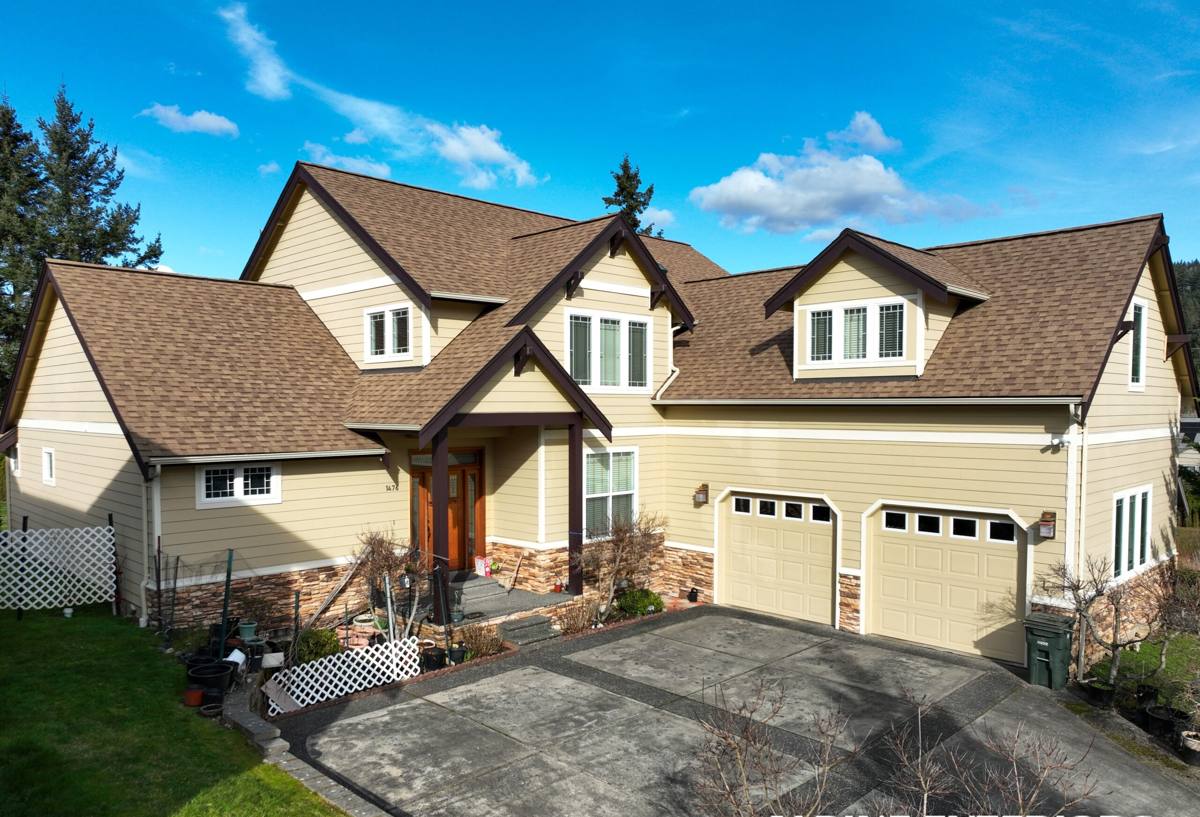
What Salt Air, Rain, and Moss Actually Do Over Time
It helps to understand the specific ways this environment attacks a roof, because it explains why certain products and details are worth the extra attention.
Salt Air and Corrosion
Airborne salt accelerates corrosion at any point where a fastener, cut edge, or dissimilar metal is exposed. This isn't unique to waterfront lots — prevailing marine air moves across most of the island. The practical result is that coating quality and fastener material matter more here than they would fifty miles inland.
Driving Rain
Wind-driven rain doesn't just fall straight down — it gets pushed sideways and upward under panel laps, around penetrations, and into any gap in flashing. A roof system that relies on gravity alone to shed water, without proper underlayment backup, is more likely to leak here than in a calmer climate.
Moss and Sustained Moisture
Skagit County's long wet season and Fidalgo Island's tree cover mean moss has months at a time to establish itself, especially on north-facing slopes and shaded sections of roof. Moss holds moisture against the roof surface far longer than open air would, and on the wrong material or fastening system that sustained dampness speeds up wear at seams and fastener points.
Metal Roofing Options and How They Fit This Climate
Not all metal roofing is the same product wearing different clothes. The panel style and fastening method change how well a roof handles this island's specific mix of salt, rain, and moss.
| Panel Type | How It Sheds Water | Fastener Exposure | Best Fit |
|---|---|---|---|
| Standing seam | Concealed interlocking seams, no exposed fastener path for water | Fasteners hidden under panel, not exposed to weather | Full roofs, especially exposed or waterfront sites |
| Exposed fastener panel | Overlapping ribs, fasteners sealed with washers through the panel face | Fasteners exposed to rain and salt air directly | Lower-budget projects, outbuildings, some accents |
| Metal shingle / shake profile | Interlocking tabs mimic shingle or shake lap | Fasteners generally concealed | Homes wanting a traditional look with metal durability |
Standing seam is generally our recommendation for Fidalgo Island homes, particularly anything with direct water exposure or a lot of shaded, moss-prone roof area. The concealed fastener design removes one of the most common failure points — exposed screws that loosen, corrode, or lose their washer seal over time. Exposed fastener panels aren't wrong for every application, but on this island's climate they need more frequent inspection and eventual fastener replacement, which is a maintenance cost worth knowing about upfront rather than discovering later.
Getting the Underlying Details Right
The panel is what you see. What actually determines whether the roof performs for 30-50 years is everything underneath and around it.
Underlayment
A synthetic or self-adhered underlayment rated for high-moisture climates gives the roof a second line of defense if wind-driven rain ever gets past the panel laps. This is standard practice we treat as non-negotiable on this island, not an upsell.
Fastener Material
Fasteners need to be matched to the panel metal to avoid galvanic corrosion, and in a marine air environment we lean toward the more corrosion-resistant options even where it costs a little more upfront. Mismatched metals at a fastener point are one of the more common causes of early rust staining we see on roofs that weren't installed with this coastline in mind.
Flashing at Valleys, Walls, and Penetrations
Every valley, wall intersection, chimney, and vent penetration is a place where two different water-shedding surfaces meet. Flashing has to be formed and lapped correctly at each of these, with enough overlap to handle rain being pushed sideways or upward by wind, not just falling straight down.
Ventilation
Proper attic and roof-deck ventilation keeps moisture from condensing on the underside of the metal, which matters in a climate where the air itself carries a lot of humidity for much of the year. Poor ventilation can cause deck-side moisture problems that have nothing to do with the panel's exterior performance at all.
Moss Management: Prevention Built Into the Install
Rather than treating moss as something to chase after the fact, a well-planned metal roof install accounts for it from the start.
- Panel profile and finish chosen to shed water quickly rather than hold a damp film
- Careful attention to shaded, north-facing, and low-slope sections where moss establishes first
- Clean panel-to-panel and panel-to-flashing transitions that don't create small ledges or dams where debris and moisture collect
- Homeowner guidance on which sections of the roof will need periodic debris clearing given the site's specific tree cover
No roofing material is moss-proof if organic debris is left to accumulate on it indefinitely, but metal's smooth, hard surface gives moss far less to grip onto compared to a porous roofing material, and it makes periodic cleaning simpler and safer.
Our Installation Process
Every metal roofing project on Fidalgo Island follows the same basic sequence, adjusted for the specific site conditions we find once we're on the roof.
- On-site assessment — we look at slope, shading, tree cover, existing decking condition, and exposure to wind and water before recommending a panel type.
- Tear-off and deck inspection — old roofing comes off and the deck gets checked for rot or soft spots, which are more common on this island given the moisture history of some older homes.
- Underlayment installation — a moisture-rated underlayment goes down as the roof's backup layer before any metal is installed.
- Flashing fabrication — valleys, walls, and penetrations get custom-formed flashing rather than generic stock pieces wherever the roof geometry calls for it.
- Panel installation — panels go on with fasteners and sealants matched to the metal and to this climate's corrosion demands.
- Final walkthrough — we go over the finished roof with the homeowner, including what maintenance to expect given the site's specific sun and tree exposure.
What Drives the Cost of a Metal Roof Here
Metal roofing costs more upfront than asphalt shingles, and the final number depends on several factors specific to the home and site rather than a flat per-square-foot rate.
| Factor | Why It Matters on Fidalgo Island |
|---|---|
| Panel type | Standing seam runs higher than exposed fastener panel, reflecting the added corrosion protection |
| Roof complexity | Valleys, dormers, and multiple roof planes require more custom flashing labor |
| Deck condition | Moisture-damaged decking found during tear-off needs repair before panels go on |
| Access and site conditions | Tree cover, slope, and site access affect equipment and labor time |
| Ventilation upgrades | Older homes sometimes need ventilation improvements bundled into the reroof |
We won't quote a number without seeing the roof, but as a general rule metal roofing on the island runs meaningfully higher per square than asphalt shingles upfront, offset by a much longer service life and lower long-term maintenance in this climate.
Simple Maintenance That Extends the Roof's Life
A metal roof installed correctly for this climate needs relatively little upkeep, but a short annual checklist goes a long way:
- Clear needles, leaves, and debris from valleys and low-slope sections, especially under overhanging trees
- Check for moss establishing on shaded slopes and remove it gently before it spreads
- Look at fastener heads (on exposed-fastener panels) for early signs of rust or a failing washer seal
- Confirm gutters and downspouts are clear so water isn't backing up under the roof edge
- Have a professional check flashing at chimneys, vents, and walls every few years, since these are the points most likely to need attention first
Why Local Experience on Fidalgo Island Matters
A crew that already works this island knows which slopes tend to hold moss, which older homes commonly have deck moisture issues under the roofing, and how far wind-driven rain actually travels under a poorly lapped panel in a real Anacortes storm — not just in a manufacturer's spec sheet. That local pattern recognition shows up in small decisions throughout a project: how much underlayment overlap to use, which flashing details to over-build, and which parts of a roof deserve extra attention during tear-off. None of that is exotic knowledge, but it only comes from having done this work, on this island, in this weather, repeatedly.
If you're weighing a metal roof for a Fidalgo Island home, we're happy to take a look and walk you through what your specific roof needs — no pressure, no obligation. Reach out for a free estimate using the form below.