 Anacortes Siding
 Why Ship Harbor Homes Take a Harder Hit From the Weather
Ship Harbor sits at the edge of Fidalgo Island, right where the ferry terminal traffic meets open water on Rosario Strait. Homes here don't get the mild, sheltered exposure that a house a few miles inland in Skagit County might see. They get salt-laden air moving off the water, wind-driven rain that hits siding sideways instead of straight down, and a long stretch of the year — roughly October through April — where surfaces stay damp enough for moss and algae to take hold and never fully dry out between storms.
That combination is hard on exterior materials in a specific way. Salt air accelerates corrosion on fasteners and metal trim. Wind-driven rain forces water into laps, seams, and butt joints that would stay dry in a calmer location. And constant dampness feeds moss, which holds moisture against the siding surface long after the rain stops. None of this is unique to any one house — it's the baseline condition for anything built close to the water on this part of the island — but it means the siding product and the installation details matter more here than they would in a drier, more sheltered part of the county.
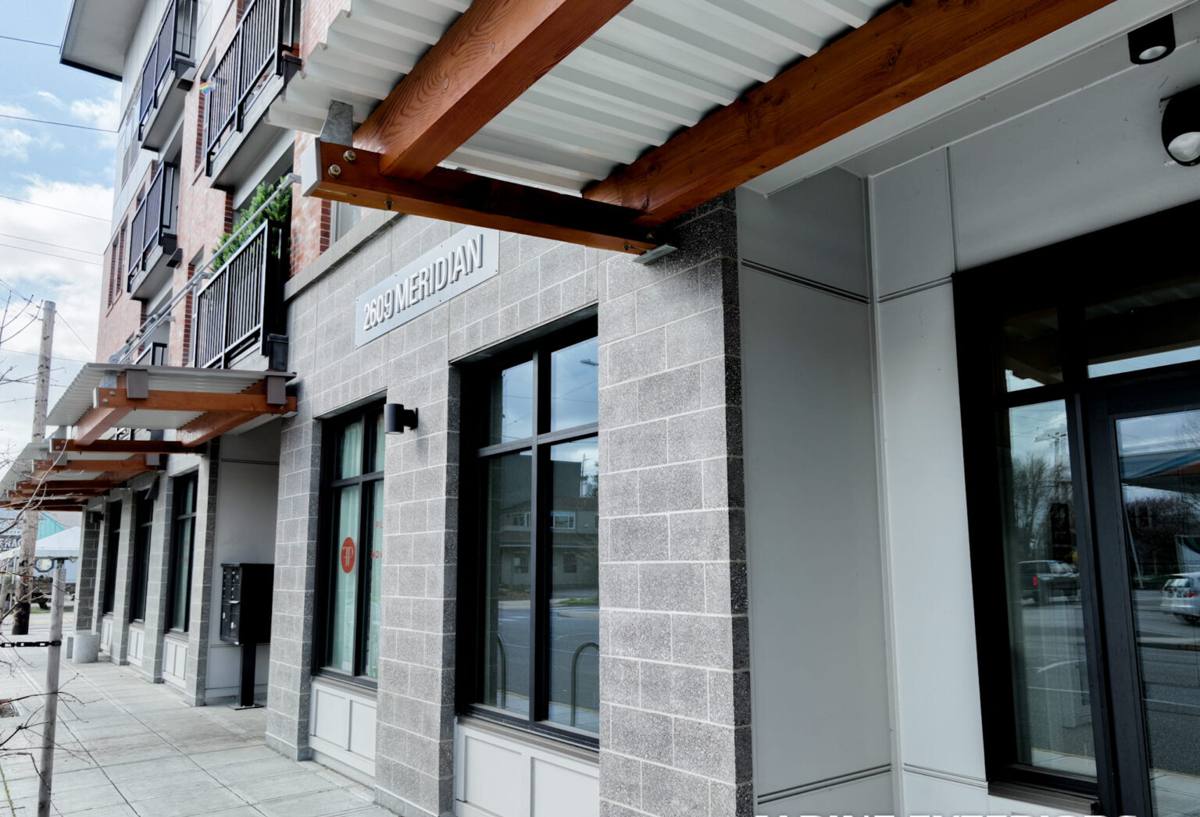
What Correct Fiber Cement Installation Looks Like Here
Clearances and Drainage
Fiber cement siding is only as good as the water management behind it. In a marine-exposed location like Ship Harbor, that means correct ground clearance, proper flashing above windows and doors, a drainage plane (usually a weather-resistant barrier with a rainscreen gap) behind the siding, and butt joints that are either caulked correctly or backed with H-channel or flashing tape so water can't wick in and sit. Skipping any of these steps doesn't show up as a problem on day one — it shows up two or three winters later as staining, swelling at the joints, or paint failure.
Fastening for Wind and Salt Exposure
Fastener choice and placement matter more near the water. Hand-nailing or using a properly calibrated pneumatic nailer, keeping nails within the manufacturer's specified distance from panel edges, and using corrosion-resistant fasteners all reduce the chance of nail pops, streaking, or loosening as the siding expands and contracts through wet and dry cycles.
Caulking and Sealant Details
Not every seam on a fiber cement job should be caulked — some are designed to stay open as part of the drainage system — but the seams that do need sealant (around penetrations, at some trim junctions) need the right product and a clean, correctly sized joint. Getting this backwards, sealing something that should drain or leaving open something that should be sealed, is one of the more common mistakes on homes exposed to this much wind-driven rain.
Why We Install Only James Hardie — Not Other Fiber Cement or Vinyl
We don't install LP SmartSide, vinyl siding, Cemplank, Allura, primed spruce, or cedar. That's not a marketing position — it's a standard we've settled on after weighing how each of those products actually performs over time, especially in an environment like Ship Harbor's.
Vinyl siding is affordable and low-maintenance in mild climates, but it's a plastic product: it can warp or distort in direct sun and heat cycling, it becomes brittle in cold snaps, and wind-driven rain can get behind loosely fitted panels more easily than it can behind a properly flashed fiber cement wall. LP SmartSide and other engineered-wood products use a wood-strand core, which means their long-term performance depends heavily on edges and cut ends staying sealed — any gap in that sealing is an entry point for moisture, and moisture is the one thing this location has in steady supply. Other fiber cement brands (Cemplank, Allura) are legitimate products on paper, but we've chosen to standardize on one manufacturer, one factory finish process, and one warranty structure rather than juggle multiple product lines and specs across jobs. Primed spruce and cedar are real wood — beautiful when maintained, but they require an ongoing paint and inspection schedule that most homeowners underestimate, and that burden only grows in a damp, salt-air climate.
James Hardie fiber cement is non-combustible, engineered specifically for different climate zones, and finished at the factory with ColorPlus technology rather than field-painted — which matters a great deal when the alternative is asking a field-applied paint job to hold up against salt air and constant moisture. That's the product we put on homes, and it's the only one we install.
HardiePlank, HardiePanel, and HZ5 — What's Right for This Climate
James Hardie makes its siding in different formulations for different parts of the country, called HZ (Hardie Zone) products. For the Pacific Northwest, including Anacortes and the rest of Skagit County, the HZ5 formulation is engineered for a wetter, more moderate climate — it's built to handle sustained moisture exposure differently than the HZ10 product sold in hot, dry regions.
Beyond the zone formulation, the practical choice for most Ship Harbor homes comes down to profile:
- HardiePlank lap siding — the most common choice, available in several exposure widths and textures (smooth or cedar-shake style), gives a traditional horizontal-lap look.
- HardiePanel vertical siding — often used on gable ends, accent walls, or paired with lap siding for a mixed look; requires battens or trim at the seams.
- HardieTrim — used around windows, doors, and corners; matters as much as the field siding for keeping water out of transitions.
ColorPlus factory-applied finishes are worth strong consideration for this location specifically. A factory finish is baked on under controlled conditions and backed by its own finish warranty, which takes some of the maintenance burden — repainting on a schedule — off the table in a climate where field-applied paint tends to fail faster than it would somewhere drier.
Our Process From Estimate to Finished Siding
Assessment and Estimate
We start with a walk-around of the home, looking at current siding condition, trim, window flashing, and any signs of past moisture intrusion — which is common to find on older homes in this area that were built or re-sided before rainscreen and flashing standards tightened up. You get a written estimate with the product, profile, and scope spelled out, not a vague number.
Tear-Off and Sheathing Check
Old siding comes off and the sheathing underneath gets inspected. This step matters more here than almost anywhere else in the process — it's the only point where hidden rot or past water damage becomes visible before it's sealed back up behind new siding.
Weather Barrier and Rainscreen
A new weather-resistant barrier goes on, with a drainage gap behind the siding so any moisture that does get past the outer layer has somewhere to go instead of sitting against the wall.
Installation and Trim
Siding, trim, and flashing go on to manufacturer spec — correct clearances, correct fastener placement, correct joint treatment. This is where the details from the earlier sections of this page actually get executed.
Final Walkthrough
We walk the finished job with you, check caulking and trim lines, and make sure everything matches what was estimated.
Cost Factors for a Ship Harbor Siding Job
Every home is different, and we don't publish blanket per-square-foot pricing because it misleads more than it helps. What actually moves the number on a project like this:
| Factor | Why It Affects Cost |
|---|---|
| Home size and wall complexity | More corners, gables, and dormers mean more cutting, trim, and labor time. |
| Current siding condition | Rot or moisture damage found at tear-off means sheathing repair before new siding goes on. |
| Siding profile and finish | Lap vs. panel, smooth vs. textured, and factory ColorPlus finish vs. field paint all carry different material costs. |
| Trim and detail work | Windows, doors, corners, and transitions with proper flashing take more time than a plain wall run. |
| Access and site conditions | Steep lots, tight setbacks, or multi-story sections affect scaffolding and labor. |
The only way to get an accurate number is a walkthrough of your specific home — which is what our estimate is for.
Maintenance After Installation
Fiber cement with a factory finish is genuinely low-maintenance compared to wood or field-painted siding, but "low-maintenance" doesn't mean "no maintenance," especially in a moss-prone marine climate. A simple annual routine keeps a Ship Harbor installation performing the way it's designed to:
- Rinse siding once or twice a year to remove salt residue, pollen, and surface grime — a garden hose is usually enough; avoid high-pressure washing directly into seams.
- Check for moss or algae buildup in shaded or north-facing sections and address it early, before it holds moisture against the surface for months.
- Inspect caulking at trim and penetrations annually; sealant does have a service life and needs occasional touch-up.
- Keep gutters clear and downspouts directed away from the wall — overflowing gutters are a common source of concentrated water damage on siding.
- Trim back vegetation and landscaping that holds moisture against the wall or blocks airflow and sun exposure.
Why a Local Crew That Already Works This Area Matters
A crew that works Anacortes and the rest of Skagit County regularly already knows what a marine-exposed wall looks like after a few winters — where moss tends to build up first, which details on older homes tend to have been done wrong the first time, and how much clearance and drainage actually matter versus what's just written in a spec sheet. That's different from a general contractor who occasionally does siding as one of several trades, or a crew that mostly works drier, inland jobs and treats every coastal home as an exception rather than the norm.
It also means someone answers the phone in a reasonable amount of time if a question comes up after the job is done, and that the warranty conversation isn't with a company that won't be around or reachable in a few years.
If you're weighing a siding replacement on a Ship Harbor property, we're glad to walk the home with you, look at what's there now, and put together a straightforward estimate for James Hardie fiber cement siding — no pressure, no obligation. Use the form below to get started.