 Anacortes Siding
 Ship Harbor's Climate Is Hard on Siding, Even by Skagit County Standards
Ship Harbor sits on the western edge of Fidalgo Island, close to the Anacortes ferry terminal, where homes face a combination most inland Skagit County properties don't deal with all at once: salt-laden marine air off the water, driving rain that comes in sideways during winter storms, and heavy tree cover that keeps north- and west-facing walls shaded and damp for weeks at a time. Any one of those conditions will wear down siding over the years. Together, they shorten the useful life of the wrong siding material dramatically and turn "we'll repaint it in a few years" into a recurring maintenance headache.
Salt air is corrosive to fasteners and finishes, and it accelerates the breakdown of caulk and paint film faster than most homeowners expect. Driving rain finds every gap in flashing and trim that a calmer climate would never expose. And the long moss season — often stretching from fall through spring here — means anything that holds moisture against a wall, or stays shaded and slow to dry, becomes a growth surface. Siding replacement in Ship Harbor isn't just about appearance. It's about choosing a material and installation approach built for this specific combination of exposures.
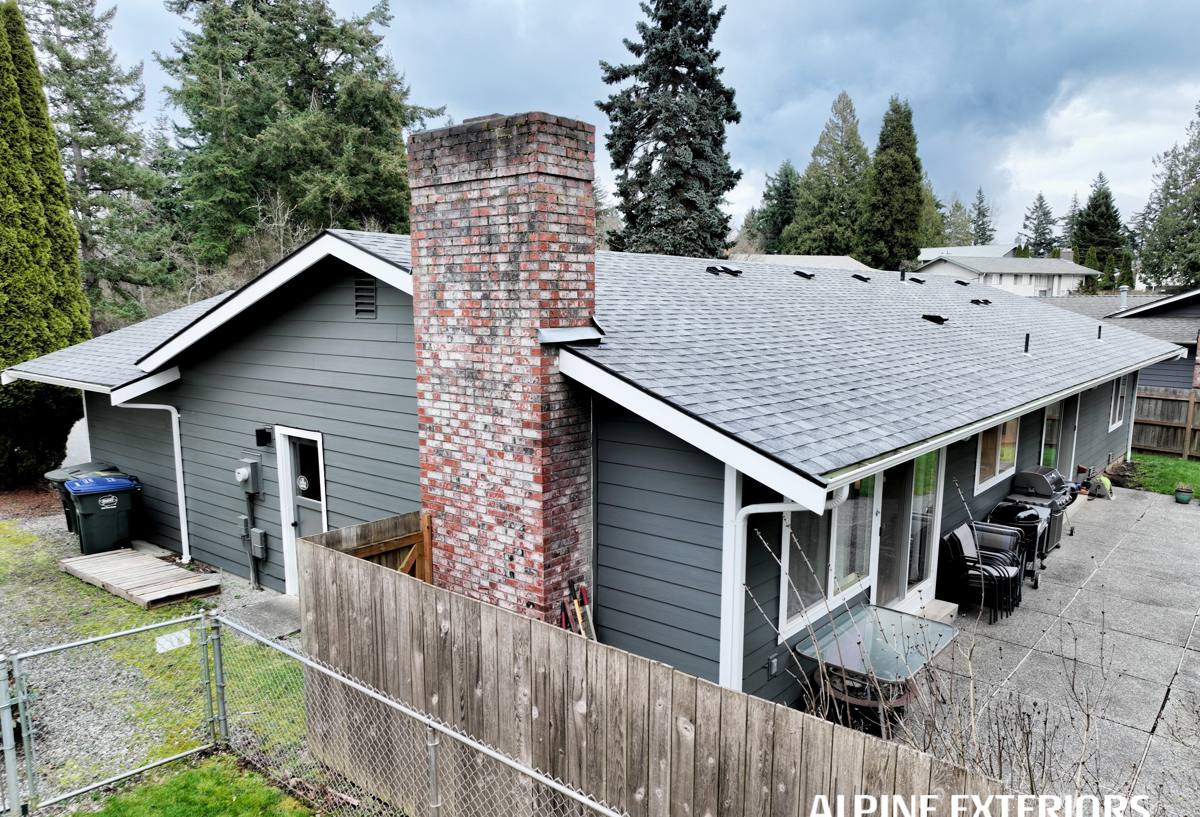
Signs a Ship Harbor Home Needs Siding Replacement, Not Just Repair
Because of the moisture load here, siding problems in Ship Harbor tend to show up differently than they would in a drier part of the state. Watch for these signs, especially on walls facing the water or shaded by trees:
- Soft or spongy spots when you press on the siding, especially near the bottom courses and around window trim
- Persistent moss or dark green-black staining that comes back within a season of cleaning
- Paint that's bubbling, peeling, or failing faster than the rest of the house
- Visible gaps, warping, or buckling in board seams
- Rust streaking from fasteners, which points to corrosion working from the inside out
- A musty smell near exterior walls or soft drywall on the interior side of an exterior wall
- Caulk joints that have cracked, shrunk, or pulled away from trim and corners
One or two of these on a single wall might mean a repair. Several of them, or any sign of moisture reaching the wall sheathing, usually means the siding system as a whole has failed and a full replacement is the honest recommendation.
What a Correct Siding Replacement Actually Involves
Tear-Off and Inspection
Replacement starts with removing the old siding down to the sheathing, not covering over it. This is the only point where we can actually see what's happening behind the old material — rot, hidden moisture damage, insect activity, or failed flashing that a re-side over the top would just seal in. In a climate like Ship Harbor's, skipping this step is how homeowners end up paying for the same problem twice.
Moisture Barrier and Flashing
Given the rain exposure here, the water-resistive barrier and flashing details around windows, doors, and roof lines matter as much as the siding itself. Properly lapped house wrap, correctly integrated window and door flashing, and kick-out flashing where rooflines meet walls are what keep driving rain from ever reaching the sheathing in the first place. This is also where a lot of lower-cost jobs cut corners, because it's labor-intensive work that doesn't show once the siding goes up.
Fastening and Fit to Manufacturer Spec
Fiber cement siding has specific nailing patterns, fastener types, and clearances from grade, decks, and roof surfaces that are part of the manufacturer's warranty requirements. Getting these wrong doesn't just void a warranty — in a salt-air environment it invites the exact corrosion and moisture intrusion problems that shorten siding life.
Factory Finish, Not Field Paint
Wherever possible, we rely on a factory-applied finish rather than field-painting after installation. A factory finish is baked on under controlled conditions and holds color and adhesion far longer than paint applied on-site, which matters directly in a climate where UV, salt, and moisture are working against the finish year-round.
Why We Install Only James Hardie Fiber Cement
We made a deliberate decision to install one siding system: James Hardie fiber cement. We don't install vinyl, LP SmartSide, Cemplank, Allura, primed spruce, or cedar, and that's worth explaining honestly rather than just stating as a rule.
Vinyl is affordable and low-maintenance in mild climates, but it can warp or become brittle over time with temperature swings, and its seams and J-channels give driving rain more opportunities to work behind the material — a real concern on exposed Ship Harbor walls. Engineered wood products like LP SmartSide perform well when installation and maintenance are perfect, but they're wood-based, meaning any breach in the finish lets moisture in, and moisture is exactly what this area has in abundance. Cedar and primed spruce are attractive but demand ongoing refinishing and are especially vulnerable to the moss and rot pressure that comes with shaded, damp exposures. Other fiber cement brands are reasonable products, but we've standardized on one manufacturer and one set of installation specs so every crew member trains and installs to a single, well-understood standard.
James Hardie's fiber cement is non-combustible, holds paint and factory finish exceptionally well, and its ColorPlus finish is engineered to resist fading and chipping better than field-applied paint. Its HZ5 and HZ10 product lines are specifically engineered for damp, moderate climate zones like the Pacific Northwest, and the manufacturer backs it with a strong, transferable warranty when installed to spec. For a wall that has to shrug off salt air, driving rain, and months of shade every year, that combination is what we're willing to put our name behind.
Comparing Siding Options for a Ship Harbor Home
| Material | Moisture Behavior in Marine Climate | Maintenance | Typical Lifespan |
|---|---|---|---|
| James Hardie fiber cement | Non-combustible, dimensionally stable, resists moisture-driven warping | Low — occasional cleaning, no repainting with factory finish | Decades, per manufacturer warranty when installed to spec |
| Vinyl | Seams and channels can allow wind-driven rain behind panels; can warp with heat/cold swings | Low, but repairs are patch-and-replace, not repaint | Variable, shorter in harsh exposure |
| LP SmartSide / engineered wood | Wood-based core is vulnerable if the finish is breached | Moderate — finish and joints need monitoring | Depends heavily on maintenance consistency |
| Cedar / primed spruce | Natural wood, absorbs moisture, prone to rot and moss in shaded/damp spots | High — regular refinishing required | Shortest without diligent upkeep |
How Our Process Works, Start to Finish
Assessment and Estimate
We walk the exterior with you, look at drainage, tree cover, and sun exposure on each elevation, and identify any signs of existing moisture damage before quoting the job. Ship Harbor homes often need extra attention on the shaded, water-facing walls specifically.
Prep and Protection
Landscaping, walkways, and outdoor living areas are protected before tear-off begins. We also review what's underneath as we go, since sheathing condition can change the scope once the old siding is off.
Installation to Spec
Flashing, house wrap, fastening, and clearances are installed to James Hardie's published specifications — not shortcuts, because those specs exist for exactly the kind of exposure this area gets.
Final Walkthrough
We review the finished work with you, point out anything the manufacturer warranty requires you to maintain (like keeping siding clear of soil and mulch contact), and make sure you know what normal weathering looks like versus something to call us about.
What Drives Cost on a Ship Harbor Siding Job
| Factor | Why It Matters Here |
|---|---|
| Extent of hidden moisture damage | Long moss season and shaded walls increase the odds of sheathing repair being needed once old siding is removed |
| Number and complexity of wall elevations | Homes close to the water often have more window and trim detail on view-facing sides, adding flashing and cut work |
| Access and site conditions | Slopes, mature trees, and tight lot lines common in this area can affect staging and disposal logistics |
| Trim and accessory selection | Corner boards, trim profiles, and color choice affect material cost independent of the siding panels themselves |
| Existing siding removal | Multiple layers of old material (common on older homes) add labor and disposal time |
We give a firm, itemized estimate after the walkthrough rather than a ballpark over the phone, because these factors vary enough house to house that a phone quote isn't a responsible number.
Why Hiring a Crew That Already Works in Ship Harbor Matters
Siding installation looks similar on paper everywhere, but the details that make it last change with the environment. A crew that regularly works this stretch of Fidalgo Island already knows which elevations take the worst weather, where moss tends to establish first, and how much extra attention flashing and drainage need near the water. That's not something you can substitute with a generic checklist — it comes from having done the work here repeatedly and having seen, firsthand, what fails and what holds up over years of Anacortes winters.
It also means faster, more accurate estimates. When a crew has already worked on homes with similar exposure nearby, they're not guessing at how the marine climate will affect a particular wall — they've watched it play out on other houses close by.
Living With Your New Siding in a Marine Climate
Even the best siding system benefits from a little basic upkeep in this environment. Keep gutters clear so water doesn't sheet down walls during heavy rain. Trim back vegetation that keeps a wall shaded and slow to dry, since that's exactly the condition moss needs. Rinse siding periodically, especially on north- and west-facing walls, to keep salt residue and organic growth from building up. And keep an eye on caulk joints around windows and trim, since that's the first place a marine climate tends to show wear. None of this is heavy maintenance — it's the difference between siding that looks good for decades and siding that starts showing its age early.
If you're seeing any of the warning signs above, or you're just planning ahead for a home in Ship Harbor, we're happy to walk the exterior with you and give you an honest, no-pressure estimate — no obligation, just a clear look at what your home actually needs.