 Anacortes Siding
 Building New in West Anacortes: Windows Are a Weather System, Not Just a Product
West Anacortes sits close enough to the water that wind-driven rain off Rosario Strait and Guemes Channel is a regular part of the weather, not an occasional event. When a house is framed new, the windows aren't just an appliance you bolt into a hole — they're one of the primary weather barriers for the entire building envelope. Get the flashing, the sill pan, and the water-resistive barrier (WRB) integration wrong at framing stage, and you're setting up a leak that might not show up for five or ten years, hidden inside a wall where nobody can see it until there's rot, mold, or a soft spot under a windowsill.
New-construction windows are different from replacement windows in one key way: they still have their nailing fin (also called a flange) attached, which gets integrated directly into the wall's WRB and flashing system before siding goes on. That gives a builder or contractor the chance to do the water management right, from the sheathing out — something a replacement window, installed into an existing finished wall, usually can't fully achieve. On a West Anacortes lot, especially one with any west or southwest exposure, that first-time installation is the best shot anyone will ever get at doing it correctly.
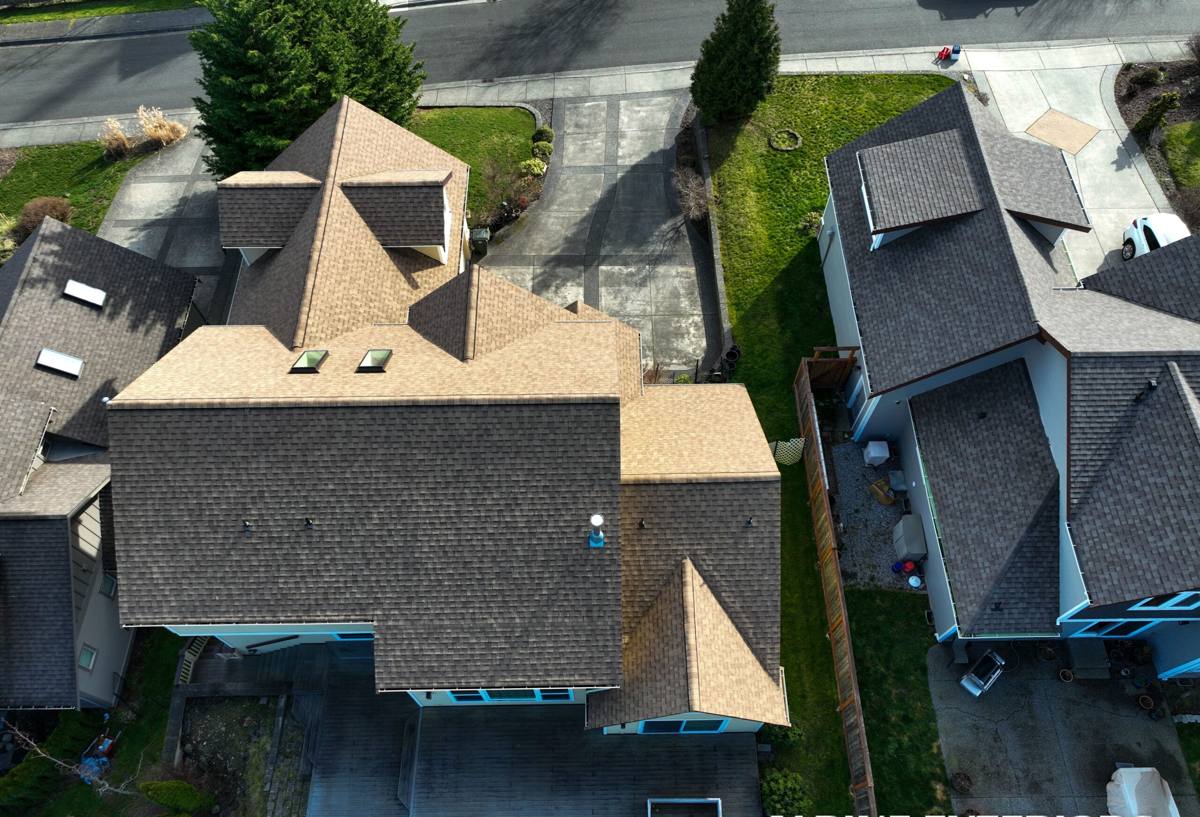
What Skagit County's Coastal Climate Actually Does to a Window Opening
A few things about our local climate matter more here than they would inland:
- Wind-driven rain — rain that isn't falling straight down but is being pushed sideways into the wall by wind off the water, which stresses window flashing details far more than vertical rain does.
- Salt air — corrosion-accelerating air that shortens the life of poor-quality fasteners, cheap window hardware, and unprotected metal flashing, especially on homes closer to the shoreline.
- A long moss and algae season — persistent damp, shaded conditions for much of the year that let moss and mildew take hold on north- and west-facing trim and siding if drainage details don't keep water moving away from the wall.
- Seasonal humidity swings — wet winters followed by drier summers put expansion and contraction stress on sealant joints around every window opening, year after year.
None of this means West Anacortes is an extreme climate — it isn't. But it's a climate where shortcuts at the window opening tend to get found out. A house built somewhere drier can sometimes get away with a mediocre flashing job for a decade or more. A house here, especially on an exposed lot, usually can't.
What a Correct New-Construction Window Install Actually Involves
The Sequence Matters More Than the Product
Homeowners and even some builders assume the window brand is the main decision. In practice, the installation sequence is what determines whether water stays out. A correct install, done in the right order, looks roughly like this:
- Rough opening is checked for square, level, and correct dimensions before the window ever arrives on site.
- A sloped sill pan is installed at the bottom of the opening so any water that does get past the window has somewhere to drain — outward, not into the wall cavity.
- Flexible flashing tape is applied at the jambs and head, integrated shingle-style with the WRB (house wrap) so water sheds down and over each layer, never up and under it.
- The window is set, shimmed for level and square, and fastened through the nailing fin per the manufacturer's schedule — not just "close enough."
- The head flashing is installed last, lapped over the WRB above it, so the whole assembly drains like shingles on a roof.
- Backer rod and sealant are used at the interior and exterior trim joints — sealant alone, without backer rod, tends to fail early and is a common source of callbacks.
Skipping the sill pan or reversing the lap order on the flashing tape are the two most common mistakes we see on framing jobs that weren't done by a crew experienced with this specific sequence. Both mistakes are invisible once siding and trim go on — until there's a problem.
Why West Anacortes Exposure Changes the Details
On a wall facing prevailing weather — generally west and southwest here — we treat every flashing lap and every sealant joint as if it will see real wind-driven rain, because it will. That means tighter attention to head flashing extension, drip cap detail, and making sure the WRB laps are never reversed even by an inch. On more sheltered elevations, the margin for error is a little wider, but we don't build to the easy side of the house and hope the rest holds.
Choosing Window Materials for a Coastal Skagit County Build
Frame material affects both weather performance and long-term maintenance in a salt-air, high-moisture climate. Here's how the common options compare for a new build in this area:
| Frame Material | Moisture & Salt-Air Behavior | Maintenance | Typical Fit |
|---|---|---|---|
| Vinyl | Won't rot or corrode; performs well in coastal air | Low — occasional cleaning | Most new-construction budgets; good all-around choice |
| Fiberglass | Very stable in temperature swings; excellent moisture resistance | Low | Larger openings, higher-end builds, energy-focused projects |
| Wood-clad | Exterior clad protects wood, but any breach in cladding invites rot near salt air and moss-prone shade | Higher — interior wood and any cladding seams need monitoring | Homeowners prioritizing interior wood appearance who accept the upkeep |
| Aluminum | Conducts heat and cold readily; hardware can corrode faster in salt air without quality finishes | Moderate | Less common for residential new-construction here |
We don't push any one brand or material as "the only right answer." What we do insist on is that whatever material a homeowner or builder chooses, the installation details — sill pan, flashing sequence, fastening schedule — are the same non-negotiables regardless of what's in the window itself. A great window installed with a reversed flashing lap will still leak. A modest window installed correctly usually won't.
How Our Process Works on a New-Construction Job
Coordinating With the Build Schedule
New-construction window work has to land at the right moment — after the rough opening is framed and the WRB is on, but before siding closes everything up. We coordinate directly with the builder or general contractor's schedule so we're not the bottleneck, and so the sequence isn't rushed just to keep other trades moving.
What Happens on Site
- We verify every rough opening against the actual window order before install day — catching sizing mismatches before they become a delay.
- Sill pans and flashing are installed opening by opening, not batched or rushed at the end of the day.
- Each window is set plumb, level, and square, then fastened to the manufacturer's schedule so warranty coverage stays intact.
- We photograph flashing details before they're covered by siding, so there's a record of what's behind the wall if it's ever needed later.
- A final walkthrough checks operation, weatherstripping seating, and interior/exterior trim sealant before we call the job done.
What Drives Cost on a New-Construction Window Job
| Factor | Why It Matters |
|---|---|
| Number and size of openings | More openings and larger units mean more labor and material, straightforwardly |
| Frame material chosen | Vinyl, fiberglass, and wood-clad carry different unit costs before labor |
| Wall exposure | West/southwest-facing walls sometimes warrant extra flashing detail given wind-driven rain exposure |
| Site access and stage of build | Coordinating around scaffolding, other trades, or tight schedules affects labor time |
| Special shapes or oversized units | Custom or picture-window-scale openings need extra structural and flashing planning |
We're glad to walk through actual numbers for a specific build — broad ranges on a page like this rarely reflect what a particular set of plans will actually cost once opening count, sizes, and exposure are factored in.
A Practical Checklist Before Windows Go In
Whether you're a homeowner managing your own build or working with a general contractor, these are worth confirming before window install day on a West Anacortes lot:
- Rough openings have been double-checked against final window order dimensions, not just the original plan set.
- The WRB (house wrap) is installed and inspected before windows arrive, with no tears or gaps around openings.
- Sill pan flashing is part of the written scope of work — not assumed or left as "standard practice" without confirmation.
- The installer can explain their flashing lap sequence in plain terms — a good installer won't hesitate on this question.
- Fastening schedule follows the specific window manufacturer's instructions, since this affects warranty validity.
- There's a plan for photographing flashing details before siding covers them.
Why a Crew That Already Works West Anacortes Is Worth Choosing
Anyone can install a window on a calm, dry day. The value of a crew that already works this specific area — familiar with how weather comes off the water, how exposure varies lot to lot even within the same neighborhood, and how moss and moisture behave on shaded north walls through a long Pacific Northwest winter — shows up years later, when the house has weathered a few real storm seasons and the flashing is still doing its job. We're not guessing at what Skagit County weather does to a new build; we're accounting for it in the sequence every time, on every opening, on every job in this part of Anacortes.
If you're planning new construction in West Anacortes and want windows installed with the flashing, sill pan, and fastening details done right the first time, we're happy to provide a free, no-pressure estimate — just use the form below to get started.