 Anacortes Siding
 Deck Repair in Flounder Bay: Built for a Marine Climate
Flounder Bay sits on the west side of Fidalgo Island, close enough to the water that the air itself is part of the maintenance equation. Decks here take a different kind of beating than decks a few miles inland in Anacortes proper. Salt-laden air, wind-driven rain off the strait, and long stretches of shade and moisture in the fall and winter months all work against wood, fasteners, and even composite materials in ways that a generic deck repair approach doesn't fully account for. If you own a home in or around Flounder Bay, chances are your deck is already showing some version of this wear, whether it's soft boards near the house, rust streaks around screws, or a slick green film that shows up every year around the same time.
This page is about deck repair specifically for this stretch of Anacortes — what the local climate does to a deck over time, what an honest repair actually involves, and how we approach the work when we're called out to a Flounder Bay property.
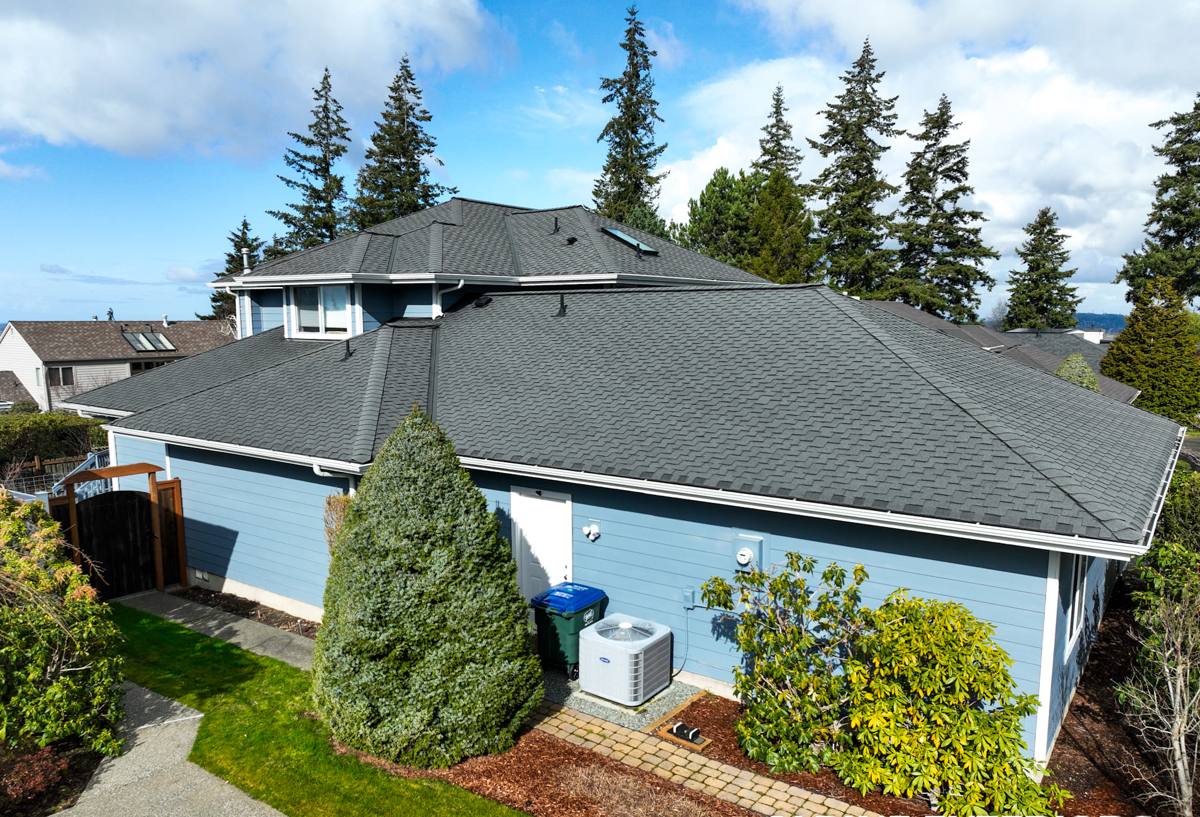
What Flounder Bay's Climate Does to a Deck
Every coastal Skagit County property deals with moisture. Flounder Bay's specific mix of salt exposure and proximity to the water tends to accelerate a few failure points faster than you'd see on a deck set back further from the shoreline.
Salt Air and Metal Fasteners
Salt in the air speeds up corrosion on any exposed metal — nails, screws, joist hangers, bolts. Once a fastener starts rusting, it loses holding strength long before it looks obviously bad from a distance. On older decks we often find galvanized hardware that's pitted or bleeding rust stains into the surrounding wood, which is usually a sign the fastener is weaker than it looks and due for replacement, not just a coat of paint over the stain.
Driving Rain and Water Intrusion Points
Wind-driven rain doesn't fall straight down — it gets pushed sideways into the joints where a deck ledger board meets the house, under loose flashing, and into any gap where boards have shrunk and separated. That's where rot starts, almost always from the inside out. By the time discoloration shows up on the surface of a board, the damage underneath is often further along than it looks.
Moss and Trapped Moisture
Anacortes gets a long moss season, and a deck with limited sun exposure — common on lots with mature trees or homes shaded by neighboring structures near the bay — can stay damp for extended stretches. Moss and algae hold moisture against the wood surface, which keeps boards wet longer after every rain and softens the wood fiber over time. It also makes the deck surface genuinely slippery, which is a safety issue as much as a maintenance one.
Signs Your Deck Needs Repair, Not Just Cleaning
Not every stained or mossy deck needs structural work, but some signs mean it's time to have someone look underneath the surface rather than just pressure-washing and re-staining. Walk your deck and check for the following:
- Boards that feel spongy or flex noticeably when you step on them
- Visible gaps or separation where the deck ledger meets the house wall
- Rust streaks running down from screw heads or metal connectors
- Railings or posts that wobble or feel loose when pushed
- Persistent green or black staining that comes back within weeks of cleaning
- Soft or discolored wood around footings, posts, or stair stringers
- Water pooling on the deck surface instead of draining off
- A musty smell coming from underneath the deck structure
Any one of these on its own might be minor. Several together usually means the structure has been absorbing moisture for a while and it's worth a proper inspection before more boards or hardware need replacing.
What a Correct Deck Repair Actually Involves
A repair that just swaps out the worst-looking boards without checking what's underneath is a short-term fix. A repair done right starts below the surface:
Framing and structure. Joists, beams, and ledger boards get checked for rot and proper attachment. If the ledger connection to the house has failed or was never flashed correctly, that gets corrected before anything else — it's the single most common source of hidden water damage on this type of deck.
Flashing. Metal or membrane flashing at the ledger and around any post that penetrates the deck surface needs to shed water away from the wood, not trap it. Missing or improperly lapped flashing is one of the more common issues we find on older decks in this area.
Fasteners and hardware. In a salt-air environment, hardware matters more than it does further inland. Stainless steel or heavy-duty coated fasteners rated for coastal or treated-lumber use hold up significantly longer than standard galvanized hardware.
Decking boards. Individual board replacement only makes sense once the structure underneath is confirmed sound. Replacing boards over compromised framing just delays the same repair.
Footings and posts. Ground contact posts and footings get checked for settling, rot at the base, or contact with standing water — a common issue on lots with poor drainage near the bay.
Repair vs. Replacement: What Actually Drives the Decision
Homeowners often ask whether it makes more sense to repair sections of a deck or replace the whole thing. The honest answer depends less on the age of the deck and more on where the damage is concentrated.
| Factor | Favors Repair | Favors Full Replacement |
|---|---|---|
| Framing condition | Joists and ledger are sound | Structural rot in multiple framing members |
| Damage location | Isolated to a few boards or one section | Widespread across the deck surface |
| Ledger/flashing | Flashing intact, minor gaps | Flashing missing or long-term water intrusion at the house wall |
| Age of decking | Under 12-15 years, boards otherwise stable | Original decking near end of expected service life |
| Footings/posts | Solid, no movement | Settling, rot at base, or undersized for current code |
We'll always tell you honestly which side of that line your deck falls on. There's no benefit to us in talking a homeowner into a full rebuild when a targeted repair will genuinely hold up, and there's no benefit in patching a deck whose framing is already failing.
Our Process for Flounder Bay Deck Repairs
- On-site inspection. We check the framing, ledger connection, flashing, fasteners, and footings — not just the visible board surface — before recommending anything.
- Written scope. You get a clear breakdown of what needs repair, what's optional, and what we'd flag to watch but not fix yet.
- Structural correction first. Any rotted framing, failed flashing, or compromised footings get addressed before cosmetic work begins.
- Fastener and hardware upgrade. Where existing hardware is corroding, we replace it with fasteners suited to a marine-air environment.
- Decking and surface repair. Damaged boards are replaced and matched as closely as possible to the surrounding material.
- Final check and cleanup. We walk the deck with you before we consider the job finished, and the site is left clean.
Materials: Matching the Repair to the Climate
What we use to repair a deck depends on what's already there and what the homeowner wants going forward. Wood repairs matched to existing cedar or pressure-treated decking keep the look consistent and are often the right call for a partial repair. Composite decking is a reasonable option where a section is being replaced outright and the homeowner wants less ongoing maintenance, though it comes with its own trade-offs — composite doesn't flex or age the same way as wood, so blending a small composite patch into an existing wood deck rarely looks seamless. Our general standard: match materials for partial repairs, and reserve composite conversion for situations where a full section or full deck is being replaced anyway.
For hardware, we default to stainless steel or coastal-rated coated fasteners on any project in this area, even when it costs a bit more up front. In a salt-air environment, cheaper galvanized hardware is one of the more common reasons a repair fails again within a few years.
Why Local Experience with Flounder Bay Decks Matters
A deck repair company that mostly works inland doesn't always account for how much faster salt air ages hardware, or how shaded, damp lots near the water hold moss and moisture longer into the season. Working regularly in Anacortes and around Skagit County means we've seen how decks in this specific setting actually fail — which connections give out first, which fastener choices hold up, and which shortcuts from a prior repair tend to resurface a few years later. That local pattern recognition is a big part of what separates a repair that lasts from one that needs to be redone.
We also know that every deck repair here has to account for driving rain angles, drainage on sloped lots common near the bay, and a moss season that runs longer than it does in drier parts of the state. None of that is guesswork once you've done the work here repeatedly.
Getting an Honest Look at Your Deck
If your deck in Flounder Bay has soft spots, rust stains, persistent moss, or just feels less solid than it used to, it's worth having someone check the framing before the damage spreads further. We offer free, no-pressure estimates — use the form below to get one scheduled, and we'll give you a straight answer on what your deck actually needs.