 Anacortes Siding
 Flounder Bay's Climate Is Harder on Siding Than Most People Realize
Flounder Bay sits on the water side of Fidalgo Island, which means homes here take on a combination most inland Skagit County neighborhoods don't deal with: near-constant marine air, wind-driven rain coming straight off the water, and long stretches of shade and dampness that keep moss and algae established for most of the year. Any one of those factors will shorten the life of ordinary siding. Together, they're the reason siding that looks fine in a brochure photo can be failing behind the surface within a decade when it's installed on a waterfront lot without accounting for the exposure.
Salt-laden air corrodes fasteners and metal trim faster than it does a few miles inland. Wind-driven rain doesn't just wet a wall — it drives moisture up and under lap joints and around penetrations if the water-resistive barrier and flashing details aren't done correctly. And the deep, damp shade found on many Flounder Bay lots keeps north and west-facing walls wet longer after every storm, which is exactly the environment moss, mold, and mildew need to take hold. None of this is exotic engineering — it's just the reality of building on the water in Western Washington, and it's why the right siding replacement here looks different from a straightforward re-side on a dry, open lot across town.
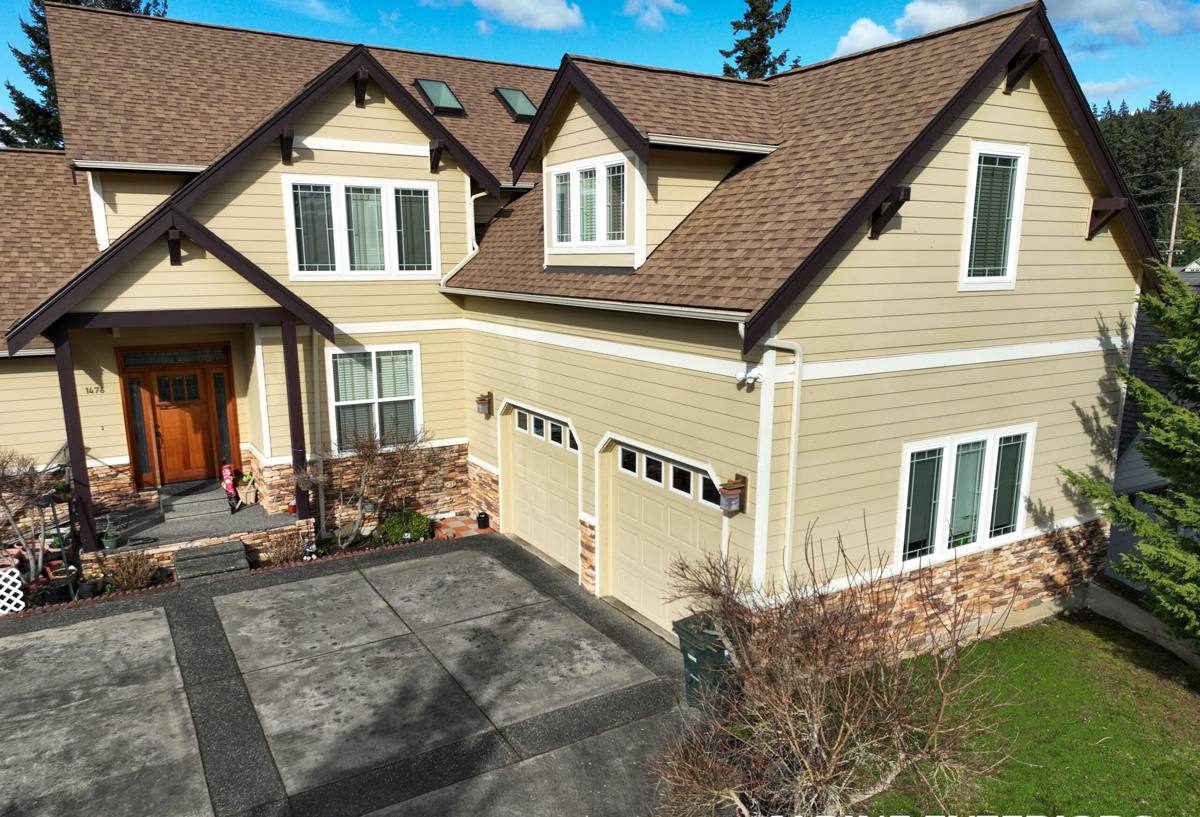
Signs a Flounder Bay Home Needs Siding Replacement
Because the damage often starts behind the siding, not on the surface, it's easy to miss the early warning signs. Homeowners near the water should watch for:
- Soft, spongy, or crumbling spots when you press on the siding, especially near the bottom courses and around windows
- Persistent moss, algae, or black streaking that comes back within weeks of cleaning
- Visible cupping, warping, or separation at panel seams and butt joints
- Paint that's peeling, bubbling, or needs repainting far more often than the rest of the house
- Rust staining running down from nail heads or trim fasteners
- A musty smell or rising utility bills that suggest moisture has reached the wall cavity
- Visible rot at corner boards, window trim, or anywhere siding meets a roofline or deck
Any one of these on its own might just need a repair. Several at once, especially on the walls that face the water or sit in shade most of the day, usually means the assembly behind the siding has been compromised and a full replacement is the more honest recommendation than another round of patching.
What a Correct Siding Replacement Actually Involves
Full Tear-Off and Wall Inspection
We don't install new siding over old siding, and we don't skip the inspection step to save a day. Once the old material is off, we check the sheathing, framing, and any existing water-resistive barrier for rot, soft spots, or prior water damage. On a waterfront property this step matters more than usual — hidden moisture damage from years of driving rain is common, and it needs to be found and repaired before anything new goes up, not covered over.
Water-Resistive Barrier and Flashing
This is the layer that actually keeps a house dry, and it's the layer that's invisible once the job is done — which is also why it's the easiest thing for a corner-cutting crew to rush. We install a continuous water-resistive barrier with properly lapped and taped seams, and correctly integrated flashing at every window, door, and penetration. On a lot exposed to wind-driven rain off the bay, sloppy flashing details are the single most common cause of the rot we find when we tear off older siding.
James Hardie Installation to Manufacturer Spec
Fiber cement performs the way it's supposed to only when it's installed correctly — proper fastener type and placement, correct gaps at butt joints and trim, and factory-recommended clearances above rooflines, decks, and grade. We install to James Hardie's published specifications because that's what keeps the product's warranty valid and what actually gives it the moisture resistance it's engineered for.
Trim, Caulking, and Final Details
The last stage is where a job either looks sharp for twenty years or starts showing gaps and cracked caulk within a season. We finish corners, trim, and joints with the products and techniques suited to this climate, not generic hardware-store caulk that gives up after one wet winter.
Why We Only Install James Hardie Fiber Cement
We standardized on James Hardie because it's non-combustible, engineered for exactly this kind of wet, humid, marine climate, and backed by a strong, transferable warranty when installed to spec. That matters more in a place like Flounder Bay than almost anywhere else in the area. Vinyl siding can warp and gap under sustained wind exposure and doesn't hold paint if a homeowner wants to change color later. Engineered wood products like LP SmartSide depend on an unbroken factory coating and careful field sealing of every cut edge — miss one edge in a wet climate and moisture has a way in. Cedar and primed spruce look good going up, but they need real, ongoing maintenance to survive salt air and shade, and most homeowners underestimate how often that upkeep needs to happen. James Hardie's ColorPlus factory finish and HZ5 product line are built for the Pacific Northwest's combination of rain, humidity, and temperature swings, and that's why it's the only material we put on homes we stand behind.
How Siding Materials Actually Compare on a Waterfront Lot
| Material | Salt Air / Moisture Resistance | Moss & Algae Resistance | Maintenance Needed | Typical Lifespan Here |
|---|---|---|---|---|
| James Hardie Fiber Cement | Strong — engineered for wet marine climates | Good, especially with factory ColorPlus finish | Occasional washing | 30+ years with proper install |
| Vinyl | Moderate — can warp/gap under sustained wind | Moderate | Low, but limited repair options once damaged | 15–25 years |
| Cedar / Primed Spruce | Weak without diligent upkeep | Poor — needs regular treatment | High — repainting, sealing, moss treatment | 10–20 years, highly maintenance-dependent |
| LP SmartSide / Engineered Wood | Moderate — depends on sealed edges and coating integrity | Moderate | Moderate — must monitor cut edges and coating | 20–25 years |
These are general performance patterns, not guarantees for any specific product or installation — but they explain why the material choice matters more on a lot like Flounder Bay than it does a few miles inland.
Our Process, Start to Finish
- Free on-site estimate and wall inspection, including a look at existing moisture or rot issues
- Written scope covering tear-off, any needed sheathing repair, water-resistive barrier, and James Hardie installation
- Full tear-off of old siding and inspection of what's underneath before anything new goes up
- Water-resistive barrier and flashing installed and sealed at every window, door, and penetration
- James Hardie siding installed to manufacturer specification, with proper fastening and clearances
- Trim, caulking, and final detail work
- Final walkthrough with the homeowner before the job is considered complete
Why a Crew That Already Works Flounder Bay Matters
Siding work on a waterfront property in Anacortes isn't the same job as siding work on a dry lot in a different part of Skagit County, and a crew that only occasionally works near the water doesn't always know that going in. We've worked on homes exposed to this specific mix of wind, salt air, and shade long enough to know where moisture problems tend to hide, which walls take the worst of the weather, and what level of detail the flashing and water-resistive barrier need to actually hold up. That local experience shows up in fewer surprises during tear-off and a finished job that's built for the conditions it will actually face, not generic conditions from a manufacturer's install guide written for a drier climate.
Living With Fiber Cement Siding Near the Water
Once new James Hardie siding is installed correctly, upkeep in a place like Flounder Bay is modest but not zero. Plan on an occasional gentle wash to keep moss and algae from establishing on shaded walls, and a periodic look at caulking and trim joints after the wettest months. Because the ColorPlus finish is baked on at the factory rather than field-applied, it holds up far better through the long moss season than a site-painted product, which is one of the practical reasons this material makes sense for the local climate rather than just a general upgrade.
If your Flounder Bay home is showing signs of siding failure, or you're planning ahead before the next wet season sets in, we're happy to take a look and give you a straightforward, no-pressure estimate — no guessing, just an honest read on what your home actually needs.